Key Takeaways
- Ask whether your symptoms point most strongly to sleep apnea or could have another cause, since fatigue can also stem from thyroid problems, anemia, depression, or poor sleep habits.
- A negative or inconclusive home sleep test does not necessarily rule out sleep apnea; ask what happens next if you still feel exhausted, since in-lab polysomnography may be recommended.
- Ask your doctor to explain your AHI and oxygen results in plain language, and how they combine with your symptoms to determine severity and shape your treatment plan.
- If CPAP is recommended, ask about mask options, expected benefits and side effects, equipment cleaning, insurance coverage, and what to do if you cannot tolerate it.
- Ask how treatment progress will be measured, including device usage and event control data, and when you should schedule follow-up or a repeat sleep study.
- Bring a bed partner's observations, a one-week sleep diary, a full medication list, and your top three concerns so the visit covers what matters most to you.
Loud snoring, gasping at night, and foggy mornings are easy to dismiss. Yet these signs can point to obstructive sleep apnea (OSA), a condition that affects breathing during sleep and can strain the heart, mood, and daily energy. Once you decide to get help, the next step is knowing what questions to ask a sleep apnea doctor. A prepared patient gets clearer answers, a faster diagnosis, and a plan that fits real life.
This guide walks through the key topics to raise at your visit. It covers symptoms, testing, results, treatment, and follow-up. It is general information and does not replace advice from your own clinician. In primary care and wellness settings, the goal is to connect your symptoms and overall health with an evidence-based diagnosis and a plan you can sustain. A clinician can also refer you to sleep medicine when needed. If you are unsure where to begin, our guide on how to prepare for a sleep consultation is a useful companion.

Why Preparing Questions Matters
Sleep visits can feel rushed. Many people leave with half of their concerns unanswered. A short list of questions keeps the conversation focused on what matters to you.
Preparation also helps your doctor. When you describe your symptoms clearly, the clinician can choose the right test and avoid delays. The strongest questions to ask a sleep apnea doctor fall into five groups:
- Your symptoms and risk factors
- The type of sleep test you need
- What your results mean
- Your treatment options
- How progress will be checked over time
Write these down before you go. Bring a bed partner's observations if you can, since many people do not know they snore or stop breathing.

Questions About Your Symptoms and Evaluation
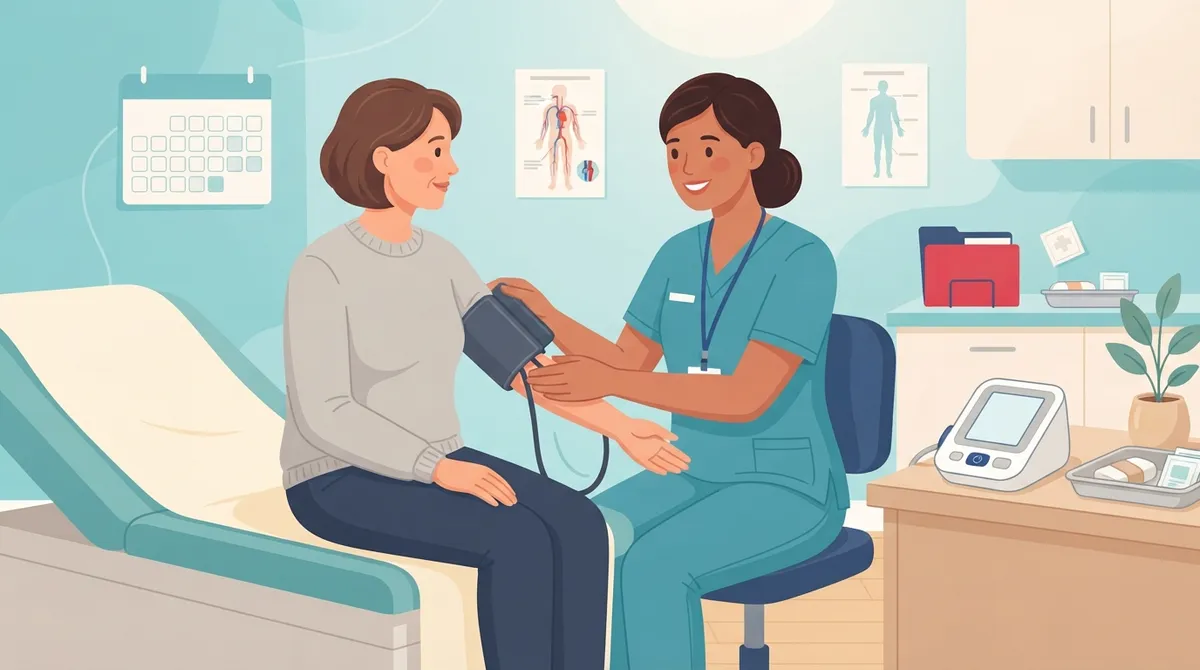
A good evaluation begins with a full sleep and medical history and a physical exam. Expect questions about your sleep habits, medications, weight changes, and medical conditions. This step shapes everything that follows.
What symptoms should I describe?
Tell your doctor about any of these common signs:
- Loud snoring
- Pauses in breathing that someone else has witnessed
- Gasping or choking during sleep
- Sleep that does not feel refreshing
- Daytime sleepiness or trouble focusing
- Morning headaches or a dry mouth
Ask, "Which of my symptoms point most strongly to sleep apnea, and which could have another cause?" Fatigue has many causes, including thyroid problems, anemia, depression, and poor sleep habits. Our overview of the symptoms of sleep apnea can help you organize your thoughts before the visit.
What else could explain how I feel?
A thorough clinician looks at the whole picture. Ask whether blood pressure, blood sugar, weight, medications, or mood could be contributing. This is where primary care shines, because one team can review all of these factors together. If your fatigue has lasted a while, you may also find when to see a doctor for poor sleep helpful.
Questions About Sleep Testing
Testing confirms the diagnosis. Treatment should rest on objective sleep testing, not on symptoms or screening questionnaires alone. This is one of the most important questions to ask a sleep apnea doctor, because the type of test affects accuracy.
Should I have a home test or an in-lab sleep study?
For some otherwise uncomplicated adults who have a high likelihood of moderate-to-severe OSA, a technically adequate home sleep apnea test may be appropriate. In-lab polysomnography is the standard diagnostic test. It is preferred in more complex situations, such as when someone has significant heart or lung disease. Ask your doctor why they recommend one test over the other for you.
|
Feature |
Home Sleep Apnea Test |
In-Lab Polysomnography |
|---|---|---|
|
Where it happens |
Your own bed |
Sleep center |
|
Best suited for |
Uncomplicated adults with a high likelihood of moderate-to-severe OSA |
Complex cases or unclear results |
|
What it measures |
Breathing, oxygen, and related signals |
Breathing, oxygen, brain waves, movement, and more |
|
Role |
Appropriate in selected patients |
Standard diagnostic test |
Can a negative home test still miss sleep apnea?
Yes. A negative, inconclusive, or technically inadequate home test does not necessarily rule out OSA. American Academy of Sleep Medicine (AASM) guidance recommends in-lab polysomnography when suspicion remains after such a result. Ask your doctor, "If my home test is normal but I still feel exhausted, what happens next?" You can read more in our comparison of a home versus in-lab sleep study.
Practical test questions
- Which test do you recommend, and why?
- How should I prepare on the night of the test?
- How soon will I get results?
- What happens if the test is inconclusive?
- What will it cost, and will my insurance help cover it?
Questions About Your Results
Results can look like a wall of numbers. Do not leave the room until you understand them. Ask the doctor to explain each key finding in plain language.
What do my AHI and oxygen results mean?
The apnea-hypopnea index (AHI) counts how many times per hour your breathing pauses or becomes shallow. Oxygen findings show how low your blood oxygen drops during those events. Together they help define how severe your sleep apnea is. Ask, "How severe is my condition, and how do my symptoms line up with these numbers?" Severity and symptoms both shape the treatment plan.
What do the results mean for my overall health?
Untreated sleep apnea can affect blood pressure, heart health, blood sugar, and mood. Ask whether your results change how you should manage other conditions. For a broader look, see how untreated sleep apnea affects your health.
Questions About Treatment Options
There is rarely a single right answer. The best plan depends on your diagnosis, your severity, your anatomy, and your preferences. Ask your doctor to lay out the choices and the trade-offs of each.
What about CPAP?
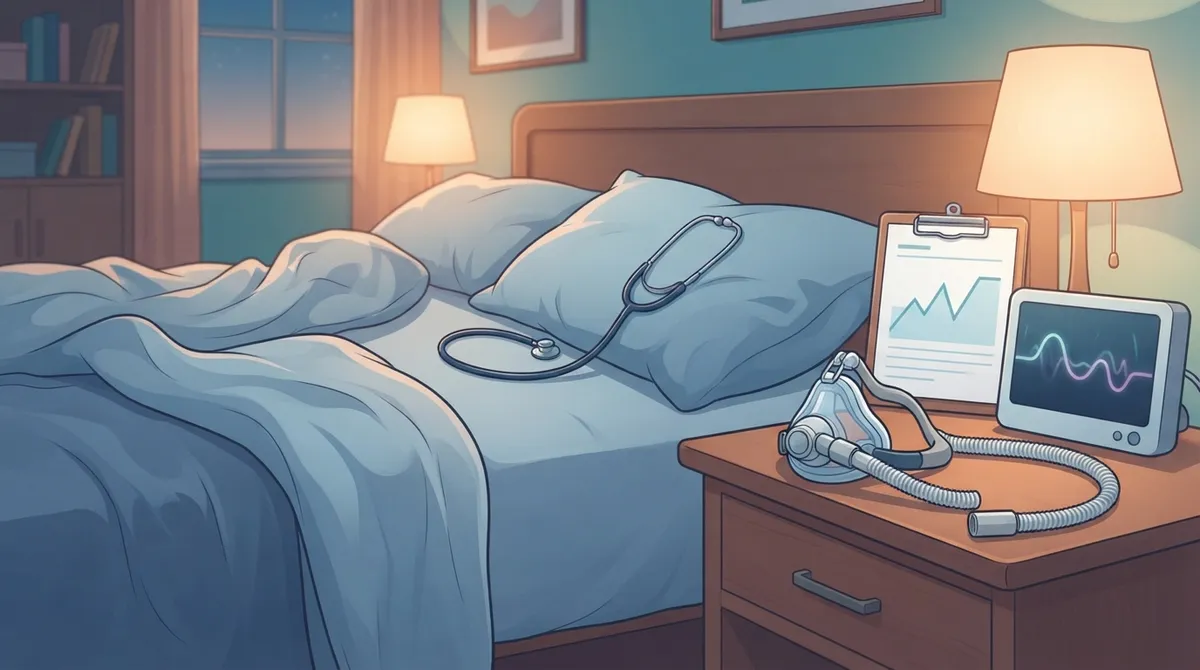
Positive airway pressure (PAP), including CPAP, is a common first treatment. It uses gentle air pressure to keep your airway open. Ask these questions:
- What device and mask options fit my sleep style and face shape?
- What benefits can I realistically expect, and how soon?
- What side effects are common, such as dry mouth or skin irritation?
- How do I clean and maintain the equipment?
- What will it cost, and what does my insurance cover?
- What should I do if I cannot tolerate it?
AASM guidance supports education when PAP is started. Ask who will teach you to use it and who you can call with problems.
What are my options besides CPAP?
Other approaches may fit certain people. These include oral appliances, positional or behavioral strategies, weight management when appropriate, and selected surgical or device-based treatments. Ask which ones suit your case and what the downsides are. You can explore more in alternatives to CPAP for sleep apnea.
Some patients ask about upper-airway stimulation. In July 2023, the FDA described use of the Inspire device in selected adults age 22 and older with moderate-to-severe OSA (AHI 15 to 100) who cannot use or tolerate PAP under specified criteria. Eligibility is individualized, and labeling can change, so confirm current criteria with a clinician and with FDA device labeling.
Can lifestyle changes help?
Weight, alcohol use, sleep position, and nasal congestion can all affect sleep apnea. Ask which changes would help you most. If weight is a factor, a coordinated plan with your primary care team can make a real difference. Our article on whether weight loss can help sleep apnea covers what the research shows.
Questions About Follow-Up and Monitoring
Follow-up is part of care, not an optional extra. Treatment only works if you use it and if it controls your breathing events. AASM guidance recommends follow-up after PAP starts that includes troubleshooting and a review of objective usage and effectiveness data.
How will we know my treatment is working?
Ask your doctor how progress will be measured. Many devices record how many hours you use them and how well they control events. Ask when you will review that data together, and how your daytime energy and sleep quality will be tracked.
When should I check in again?
Ask these questions before you leave:
- When should I schedule my first follow-up after starting treatment?
- Whom do I contact if the mask hurts or I cannot sleep with it?
- When would I need a repeat sleep study?
- What changes, such as weight shifts, should prompt a recheck?
A repeat study may be needed if symptoms persist or return, if treatment changes, or if your weight changes substantially. Our guide on how long sleep apnea treatment takes sets realistic expectations.
Who Should You See: Primary Care or a Sleep Specialist?
You may wonder whether to start with your primary care doctor or go straight to a specialist. Both paths can work. A primary care clinician can review your symptoms, order testing, start discussions about treatment, and coordinate care with your other health needs. A referral to sleep medicine makes sense for complex cases or when first-line treatment does not work.
Ask your doctor, "Do you recommend a sleep specialist for me, and why?" For more on this decision, read primary care versus a sleep specialist. If you live near Tampa Bay, our guides to choosing a sleep apnea doctor in Riverview and finding a sleep medicine doctor in Tampa can point you in the right direction.
How to Get the Most From Your Visit
Small steps before and during the appointment make the visit more useful.
- Keep a one-week sleep diary noting bedtime, wake time, and how rested you feel.
- Bring a list of all medications and supplements.
- Ask a bed partner to describe your snoring and breathing pauses.
- Write down your top three concerns and ask them first.
- Request a written summary of your plan before you leave.
These habits help the clinician see your full story. They also help you remember the plan once you get home.
Take the Next Step With InCare
At InCare, our team in Tampa and Riverview takes a whole-body approach to health. We look at your sleep alongside your heart health, weight, blood sugar, and daily energy, so one team can see the full picture. InCare holds a 4.8 out of 5 rating on Google, and you can visit us on Google — InCare to read what patients say about their care.
We also share health tips and updates on Instagram, Facebook, and TikTok. Whether you are a busy parent, a young professional, or someone who simply wants to wake up refreshed, the right questions lead to the right answers.
Ready to talk about your sleep? Book your appointment with InCare today, or contact our team with any questions. Bring this list of questions to ask a sleep apnea doctor, and take the first step toward better rest in 2026.
FAQs
Q: What symptoms of sleep apnea should I tell my doctor about?
A: Describe loud snoring, witnessed pauses in breathing, gasping or choking at night, unrefreshing sleep, and daytime sleepiness. Morning headaches and trouble concentrating are also worth mentioning. A bed partner's observations can be very helpful.
Q: Can a negative home sleep test still miss sleep apnea?
A: Yes. A negative, inconclusive, or technically inadequate home sleep apnea test does not necessarily rule out OSA. AASM guidance recommends in-lab polysomnography when suspicion remains after such a result.
Q: What do my AHI and oxygen results mean?
A: The apnea-hypopnea index counts breathing pauses or shallow breaths per hour of sleep, and oxygen findings show how low your blood oxygen falls. Together they help define severity. Your doctor should explain how these numbers and your symptoms shape your treatment plan.
Q: What are my treatment options besides CPAP?
A: Depending on your diagnosis and circumstances, options may include oral appliances, positional or behavioral approaches, weight management, and selected surgical or device-based treatments. Ask which choices suit you and what the trade-offs are. Follow-up testing may be needed to confirm effectiveness.
Q: When do I need follow-up or another sleep study?
A: Follow-up should be planned after you start treatment, with a review of usage and effectiveness data. A repeat sleep study may be needed if symptoms persist or return, if your treatment changes, or if your weight changes substantially.