Key Takeaways
- Chronic insomnia is defined as sleep trouble at least three nights a week for three months, but you do not need to wait that long to seek care if sleep problems are distressing or worsening.
- Red flags that warrant a visit include loud snoring, witnessed breathing pauses or gasping at night, morning headaches, and daytime sleepiness that affects focus, mood, or safety.
- Poor sleep often signals an underlying cause such as sleep apnea, thyroid problems, chronic pain, medication side effects, or anxiety and depression, so treating only the symptom may miss the real issue.
- Before your appointment, keep a sleep diary for one to two weeks noting bedtime, time to fall asleep, awakenings, caffeine, alcohol, and naps, and ask a bed partner about snoring or gasping.
- A primary care clinician is usually the best first stop, and can refer you to a sleep specialist or order a sleep study if needed.
- Do not drive when very drowsy; if sleepiness feels unsafe, arrange other transportation, and call or text 988 if you have thoughts of self-harm.
You toss and turn for an hour. You wake at 3 a.m. and cannot fall back asleep. By morning, you feel foggy, short-tempered, and tired. Almost everyone has a rough night now and then. But when do bad nights become a real health concern? Knowing when to see a doctor for poor sleep can spare you months of frustration and help you find the true cause sooner.
Poor sleep is common across the United States. According to CDC data from 2024, 30.5% of U.S. adults reported sleeping less than 7 hours on average, and 15.4% had trouble falling asleep most days or every day. Another 18.1% had trouble staying asleep. Yet many people wait far too long to ask for help.
This guide explains the clear signs that it is time to book a visit. You will learn which symptoms matter most, what to track before your appointment, what a primary care clinician will do, and how to get started. Busy professionals, young families, and health-minded adults in Tampa and Riverview will find practical steps they can use right away.
How Poor Sleep Differs From Occasional Bad Nights
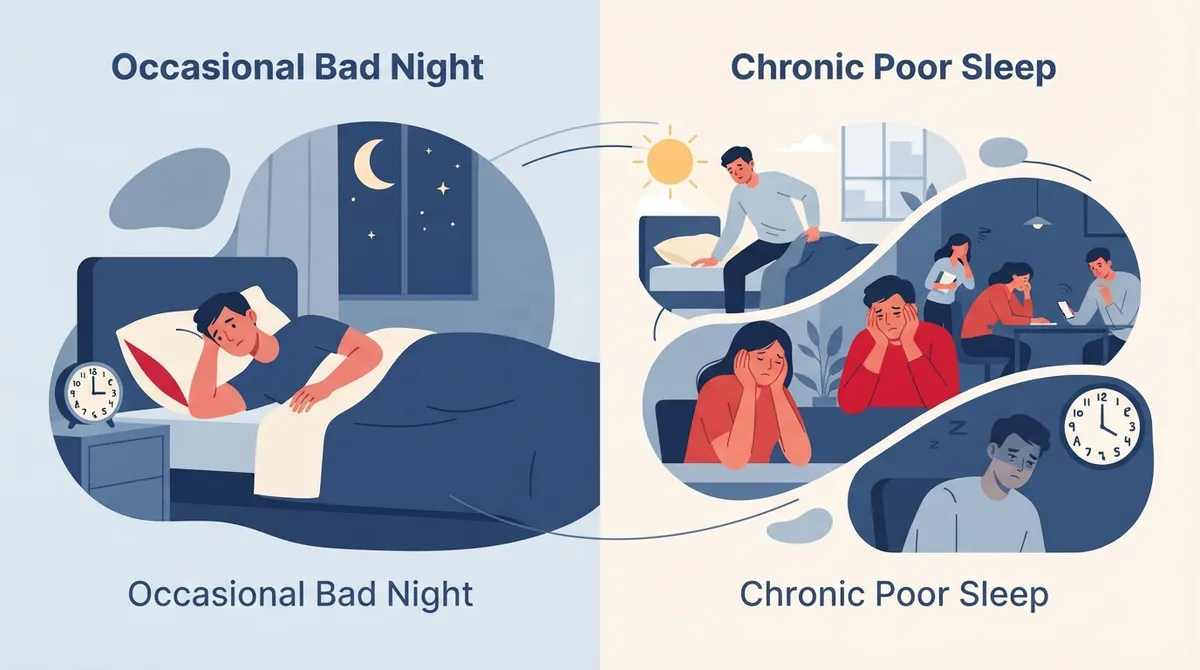
One restless night after a stressful day is normal. A pattern is different. Poor sleep usually means trouble falling asleep, staying asleep, or waking too early, even when you have enough time in bed. It also leaves you feeling tired or unwell the next day.
Doctors look at two things: how often it happens and how much it affects your life. Both matter. A short stretch of bad sleep that wrecks your work or mood deserves attention. So does a long stretch that you have simply learned to live with.
The Three-Month Rule Is Not a Waiting Period
Many people hear that insomnia must last three months before it counts. That is partly true. The NHLBI defines chronic insomnia as sleep trouble at least three nights per week for three months or longer. But that number describes a diagnosis. It is not a rule you must meet before seeking care.
If your sleep problem is distressing, getting worse, or hurting your daily life, you do not need to wait. Early evaluation can find treatable causes before the problem becomes a long-term habit.
7 Signs It Is Time to See a Doctor for Poor Sleep
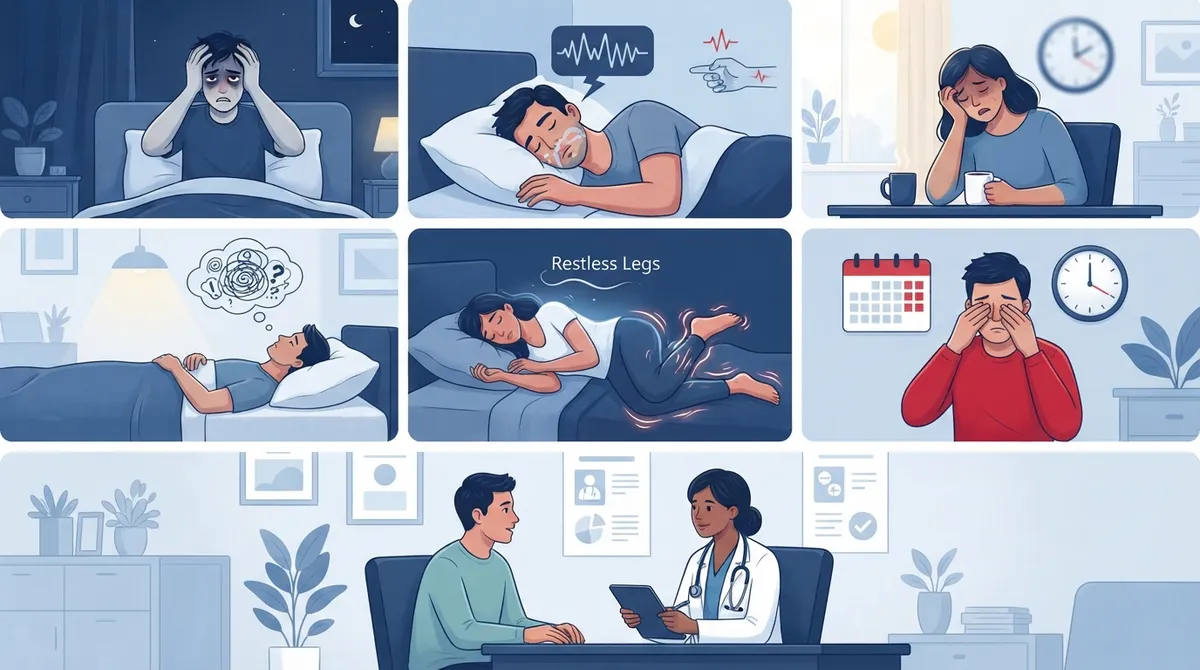
Not every rough patch needs a medical visit. These signs suggest it is time to schedule one.
- Your sleep trouble lasts more than a few weeks. If you struggle at least three nights a week and nothing you try helps, book a visit.
- Daytime function is suffering. Trouble focusing, memory slips, low mood, irritability, or reduced work performance are all red flags.
- You feel very sleepy during the day. Needing caffeine just to stay upright, or nodding off in meetings, is not normal.
- You snore loudly or someone sees you stop breathing. Witnessed breathing pauses, gasping, or choking at night can point to sleep apnea.
- You wake with headaches. Frequent morning headaches may be linked to disrupted breathing or poor sleep quality.
- Your mood is changing. Ongoing worry, sadness, or loss of interest can both cause and result from poor sleep.
- Safety is at risk. If you feel drowsy while driving or using machinery, seek care right away.
Even one or two of these signs justify a conversation with a clinician. You know your body best. If something feels wrong, trust that instinct.
Why Sleep Problems Often Point to Something Else
Poor sleep is rarely a stand-alone issue. It often signals another health concern that a primary care visit can uncover. Common contributors include:
- Sleep apnea: Breathing repeatedly pauses during sleep. Not everyone with sleep apnea snores, so quiet sleepers can still be affected.
- Chronic pain: Joint, back, or nerve pain can keep you awake or wake you often.
- Thyroid problems: An overactive thyroid can cause restlessness and trouble sleeping.
- Medication effects: Some prescriptions and over-the-counter products can disrupt sleep.
- Anxiety or depression: Mental health and sleep influence each other closely.
- Hormonal shifts: Changes in hormones can affect sleep for both men and women.
- Lifestyle and substances: Caffeine, alcohol, nicotine, and late-night screens all play a role.
Treating only the symptom, such as taking a sleep aid, may leave the real cause untouched. A thorough evaluation looks at the whole picture. That is the strength of primary care. Learn more about why comprehensive primary care matters for finding root causes.
Primary Care Doctor or Sleep Specialist: Who Should You See First?
For most people, a primary care clinician is the best first stop. They can review your history, rule out common causes, and decide whether you need further testing. If your case is complex, they can coordinate a referral to a sleep specialist.
|
Situation |
Best First Step |
|---|---|
|
Trouble falling or staying asleep, with no other symptoms |
Primary care visit |
|
Sleep trouble plus mood changes, pain, or medication concerns |
Primary care visit |
|
Loud snoring, gasping, or witnessed breathing pauses |
Primary care visit, likely followed by sleep testing |
|
Severe daytime sleepiness that affects driving or safety |
Prompt primary care visit; seek urgent help if unsafe |
|
Symptoms that persist after treatment of common causes |
Referral to a sleep specialist through your primary care clinician |
Starting with primary care saves time and avoids unnecessary specialist visits. Your clinician already knows your overall health, which helps shape a safer, more personal plan. If you are still choosing a clinician, read how to choose a primary care physician in Riverview, FL.
How to Prepare for Your Sleep Appointment
A little preparation makes your visit far more useful. Follow these steps in the one to two weeks before your appointment.
- Keep a sleep diary. Record when you go to bed, how long it takes to fall asleep, how often you wake, and when you get up. Add notes on caffeine, alcohol, and naps.
- Rate your daytime energy. Note your mood, focus, and any sleepiness during the day.
- List your medications and supplements. Include everything, even items you buy without a prescription.
- Ask a bed partner what they notice. Snoring, gasping, or kicking are important clues you may not know about.
- Write down your questions. Include any worries about medications, testing, or lifestyle changes.
For a full checklist, see our guide on how to prepare for a primary care appointment in 2026.
What Happens During a Visit for Poor Sleep
Knowing what to expect can ease any hesitation. A primary care evaluation for sleep typically includes several parts.
A Detailed Conversation
Your clinician will ask about your sleep habits, daily routine, stress levels, and mental health. They will also review your medical history, medications, and use of caffeine, alcohol, or other substances.
A Physical Exam
The exam may include checks of your weight, blood pressure, neck, and airway. These details help screen for conditions such as sleep apnea or thyroid issues.
Possible Testing
Depending on your symptoms, your clinician may order blood tests to check for issues such as thyroid imbalance. If sleep apnea or another sleep disorder is suspected, a sleep study may be recommended. At InCare, our sleep apnea care in Tampa and Riverview helps patients move from questions to answers.
A Personal Plan
Treatment depends on the cause. It may include sleep habit changes, treating an underlying condition, adjusting medications, or referral to a specialist. A good plan is practical and fits your life.
Everyday Habits That Support Better Sleep
Healthy habits will not fix every sleep problem, but they help. Try these while you wait for your appointment.
- Keep a steady sleep and wake time, even on weekends.
- Limit caffeine in the afternoon and evening.
- Avoid heavy meals and alcohol close to bedtime.
- Dim lights and put screens away at least 30 minutes before bed.
- Keep your bedroom cool, dark, and quiet.
- Get daylight and regular exercise earlier in the day.
If you have tried these for several weeks with little change, that is a strong sign the issue goes deeper. Our article on sleep mistakes that quietly wreck your health covers common habits that undermine rest.
When Poor Sleep Needs Urgent Attention
Most sleep problems are not emergencies, but some situations call for immediate action.
- Severe breathing difficulty: Seek emergency care right away.
- Dangerous drowsiness: Do not drive or operate machinery when you are very tired. Arrange a ride and see a clinician promptly.
- Thoughts of self-harm: Contact a crisis line or emergency services immediately. In the United States, you can call or text 988.
If you need prompt same-day help for an unrelated illness while your sleep issue is being sorted out, urgent care at InCare is available.
Why Choose a Whole-Body Approach to Sleep
Sleep touches nearly every part of health, from hormones and weight to mood and heart health. That is why a joined-up approach works best. At InCare, patients in Tampa and Riverview can address sleep within the context of full primary care. Your clinician can look at weight management, hormones, stress, and chronic conditions together rather than in isolation.
Technology adds useful detail too. Services such as metabolic breath analysis and body composition analysis can reveal how your body is functioning, which may help explain fatigue and uneven energy. Patients who value prevention often appreciate this data-informed, personalized style of care.
Our patients regularly praise the friendly team and attentive care. You can see what they say by reading InCare reviews on Google, and you can follow our updates on Instagram and Facebook.
Take the Next Step Toward Better Rest
You do not need to suffer through weeks of exhaustion to earn a doctor visit. If poor sleep is affecting your mood, focus, safety, or health, it is reason enough to get checked. The sooner you find the cause, the sooner you can feel like yourself again.
Ready to take action? Book your appointment with InCare today to start a personalized plan, or contact our team with any questions. Your best sleep, and your best days, can start with one conversation.
FAQs
Q: How long is too long to have trouble sleeping before seeing a doctor?
A: You do not need to wait. Chronic insomnia is generally defined as sleep trouble at least three nights per week for three months or longer, but you should seek care sooner if symptoms are distressing, worsening, or affecting your daily life. Early evaluation can identify treatable causes.
Q: What sleep apnea symptoms should I tell my doctor about?
A: Tell your doctor about loud, habitual snoring, witnessed pauses in breathing, gasping or choking during sleep, morning headaches, and marked daytime sleepiness. Not everyone with sleep apnea snores, so report any of these signs even if you sleep quietly.
Q: What will a primary care doctor do for poor sleep?
A: A primary care clinician will review your sleep patterns, medical and mental health history, medications, and substance use, and perform a physical exam. Depending on your symptoms, they may order blood tests, recommend a sleep study, or refer you to a sleep specialist.
Q: Should I keep a sleep diary before my appointment?
A: Yes. A sleep diary kept for one to two weeks helps your clinician see patterns in when you fall asleep, how often you wake, and how you feel the next day. Include notes on caffeine, alcohol, naps, and daytime energy.
Q: Is it safe to drive when I am very tired from poor sleep?
A: No. Drowsy driving is dangerous, and you should avoid driving or operating machinery when you feel very sleepy. If sleepiness makes driving unsafe, arrange alternate transportation and see a clinician promptly.