
Key Takeaways
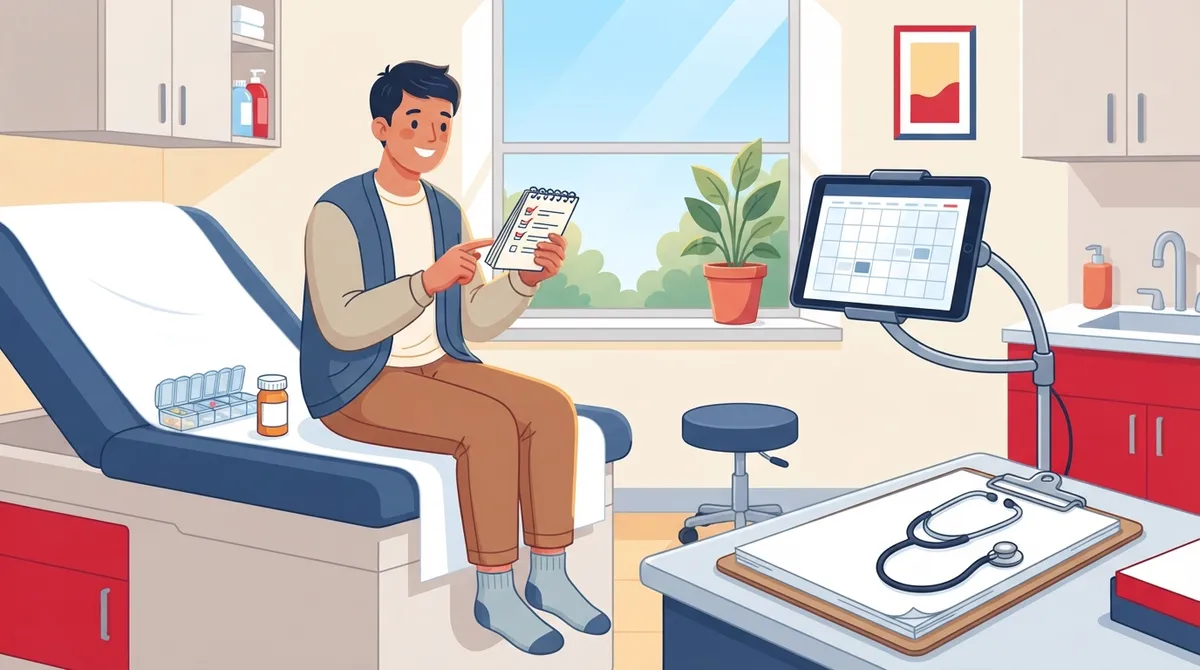
- Prepare your top two or three concerns in priority order, along with a current medication and supplement list with doses, so the visit focuses on what matters most.
- Average wait for a new family-medicine appointment reached 23.5 days in 2025 across 15 U.S. metro areas, 14% higher than in 2022, so ask about cancellations, waitlists, or telehealth if you need care sooner.
- Lead with your biggest concern, be specific and honest, and repeat the plan back to your clinician to confirm next steps before you leave.
- Follow up by filling prescriptions, booking ordered labs and referrals, and using your patient portal, and seek urgent or emergency care instead of waiting for severe or rapidly worsening symptoms.
Many people wait until they feel sick before they book a visit. Then the appointment feels rushed, and important questions go unasked. A little planning changes that. A well-prepared primary care appointment helps you and your clinician focus on what matters most.
Access can also be a challenge. AMN Healthcare's 2025 survey of 1,391 physician offices reported an average wait of 23.5 days for a new family-medicine appointment across 15 U.S. metro areas. That was 14% higher than in 2022. When you finally get a slot, you want to make it count.
This guide shows you how to prepare, what to expect, and how to follow up. It works well for busy parents, young professionals, and anyone who wants to take a more active role in their health. You will also learn how InCare in Tampa and Riverview, Florida, makes the process easier.

What Is a Primary Care Appointment?
A primary care appointment is a planned visit with a clinician who provides ongoing, first-contact care. This may be a family physician, an internist, a pediatrician, a nurse practitioner, or a physician assistant. These visits cover many needs, including new symptoms, chronic conditions, preventive care, and medication questions.
Think of your primary care clinician as the home base for your health. They know your history, track changes over time, and coordinate care when you need a specialist. To learn more about this role, read what a primary care physician does for your health.
Types of Primary Care Appointments
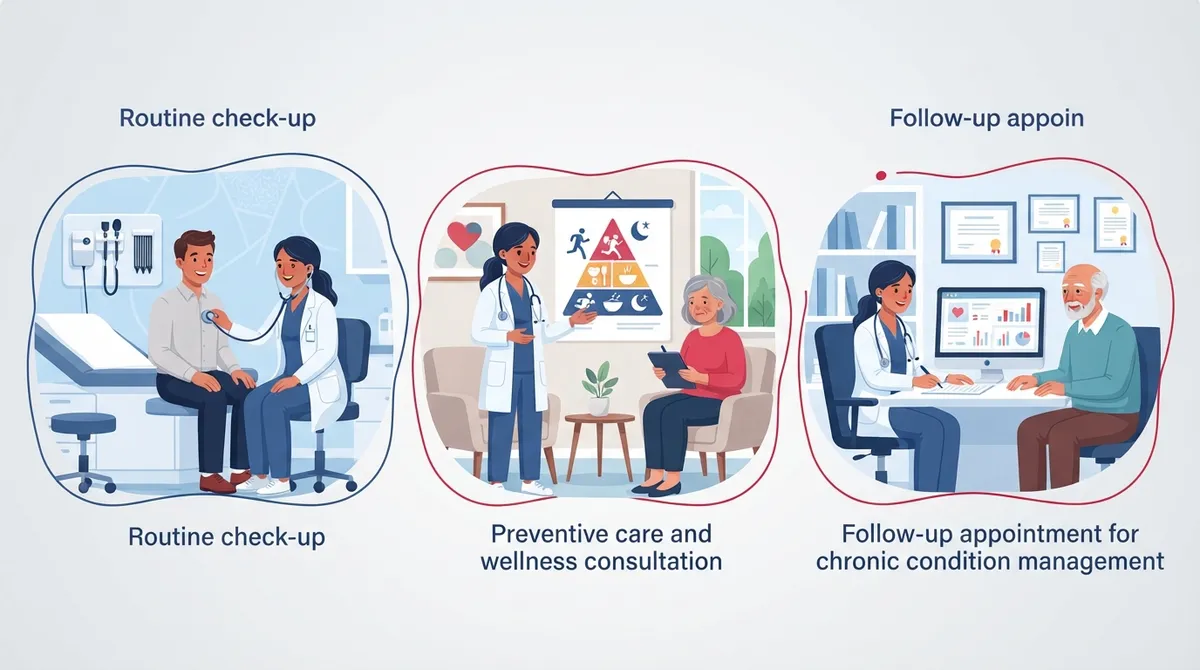
Not every visit looks the same. The right type depends on your needs and the clinic's policies. Choosing the right one helps you get enough time with your clinician.
|
Appointment Type |
Best For |
What to Expect |
|---|---|---|
|
New-patient or establish-care visit |
People starting with a new clinic |
Longer visit with a full history review and health goals |
|
Preventive checkup |
Healthy adults and families |
Screenings, vaccines, and risk-factor checks |
|
Sick visit |
New or worsening symptoms |
Focused exam and treatment plan |
|
Chronic-condition follow-up |
Diabetes, blood pressure, asthma, and more |
Progress review and medication adjustments |
|
Telehealth visit |
Follow-ups and concerns that need no hands-on exam |
Video or phone visit from home |
If this is your first visit, you can learn more in our guide to a new patient appointment.
How to Prepare for Your Primary Care Appointment
Good preparation is the simplest way to improve your visit. The U.S. National Institute on Aging recommends raising your most important concerns early. Follow these steps to get ready.
- Write down your top concerns. List the two or three issues that matter most. Put them in order of priority.
- Track your symptoms. Note when they started, how often they happen, and what makes them better or worse.
- Gather your medication list. Include prescriptions, over-the-counter drugs, and supplements. Write down the dose for each.
- Collect your records. Bring recent test results, hospital papers, or imaging reports if you have them.
- Bring your insurance card and ID. Check that your coverage is active before you arrive.
- Prepare your questions. Write them down so you do not forget them in the room.
If your records are held by another office, you can request them ahead of time. Our guide to a medical records request walks you through the process.
What to Bring Checklist
- Photo ID and insurance card
- Current medication and supplement list with doses
- Your written list of concerns and questions
- Past test results or specialist notes
- Family health history, if you know it
- A notebook or phone to record advice
What Happens During the Visit
Most visits follow a clear pattern. Knowing the flow helps you feel calm and ready.
- Check-in and vitals. A team member records your weight, blood pressure, pulse, and temperature.
- History review. Your clinician asks about symptoms, medications, habits, and goals.
- Physical exam. The exam is done when it fits your needs.
- Screening and vaccines. Your clinician may suggest tests or immunizations based on your age and history.
- Care plan. You agree on next steps, including tests, referrals, or follow-up visits.
Tests and referrals depend on your age, history, symptoms, and clinical guidelines. You can ask why each one is recommended. For a closer look at a yearly visit, see what happens during an annual physical exam.
Make the Most of Your Time With Your Clinician
Appointment time is limited. These habits help you use it well.
- Lead with your biggest concern. Do not save it for the last minute.
- Be honest and specific. Share details, even if they feel awkward. Clinicians have heard it all.
- Ask about screenings. Preventive care is not the same for everyone. Ask which screenings and vaccines fit your age and risk.
- Repeat the plan back. This confirms that you understood the next steps.
- Ask about written instructions. A summary helps you follow through at home.
Prevention is where primary care shines. You can explore this further in how to make preventive care work for your health.
How Often Should You Schedule a Visit?
There is no single schedule for everyone. Many healthy adults see their clinician about once a year for a preventive visit. People with chronic conditions may need visits every few months. Your clinician will suggest a rhythm based on your health, age, and risk factors.
Families with young children usually follow a different schedule. Well-child visits happen more often in the early years. If you are a parent, read why pediatric primary care is essential for your child's health.
What If You Cannot Get an Appointment Soon?
Long waits are common. A December 2024 MGMA poll of 251 practice leaders found that 34% said wait times improved in 2024, 43% said they stayed the same, and 23% said they worsened. Access varies by location, insurance, and clinic capacity. If a routine slot is not open, try these steps:
- Ask about cancellations. Request to be called if an earlier time opens.
- Join a waitlist. Many clinics keep one for new patients.
- Ask about another clinician. A different provider in the same practice may have an opening.
- Consider telehealth. A virtual visit may work for follow-ups and simple concerns.
- Look for same-day options. Some clinics hold space for urgent needs.
You can learn more about quick access in same-day appointments and fast primary care. If you are still searching for a clinic, try our tips on finding doctors accepting new patients near you.
When Telehealth Is a Good Fit
Telehealth can save time. It works well for many follow-ups, medication reviews, and concerns that do not need a hands-on exam or testing. It is especially useful for busy parents and professionals who cannot easily leave work or home.
Your clinician may still ask you to come in. If an exam, lab work, or urgent assessment is needed, an in-person visit is the safer choice. InCare offers virtual visits along with in-person care, so you can choose what fits your day.
When to Skip the Routine Appointment
A routine visit is not the right choice for every problem. For severe or rapidly worsening symptoms, seek urgent or emergency care right away. Examples include chest pain, trouble breathing, signs of stroke, or serious injury. Do not wait for a scheduled visit in these cases.
For problems that are urgent but not life-threatening, such as the flu, infections, or minor injuries, an urgent care visit can help. Learn more in what urgent care services can actually treat.
How to Follow Up After Your Visit
The work does not end when you leave the room. Follow-up keeps your care on track.
- Fill new prescriptions and take them as directed. For help, see these prescription management tips.
- Book any lab work or screening tests your clinician ordered.
- Schedule referrals and follow-up visits before you forget.
- Use your patient portal to review results and ask questions.
- Call the office if your symptoms change or you feel unsure about the plan.
Why Choose InCare for Your Primary Care Appointment
InCare combines state-of-the-art technology with medical expertise to deliver personalized care. The clinic offers primary care, urgent care, and advanced wellness services in one place. With locations in Tampa and Riverview, plus virtual visits, it is built for busy lives.
Patients can access services that go beyond a standard checkup. These include cancer screening, DNA gene testing, body composition analysis, and medical weight loss programs. This approach supports prevention and whole-body optimization, not just treatment when something goes wrong.
InCare also holds a 4.8 out of 5 rating on Google across 359 reviews. Patients often praise the friendly staff and the quality of care from Dr. Ahluwalia. You can read InCare reviews on Google to see what patients say. Browse our primary care services, meet our providers, or check our locations to find the most convenient option.
Follow InCare on Instagram, Facebook, or TikTok for health tips and clinic updates.
Final Thoughts
A strong primary care appointment starts before you walk in. Know your top concerns, bring your medication list, and ask clear questions. Then follow through on the plan you agree on. These small steps lead to better care and fewer surprises.
Ready to take the next step? Book your appointment with InCare now, or contact our team with any questions. Your health deserves a partner who listens.
FAQs
Q: What should I bring to a primary care appointment?
A: Bring your photo ID, insurance card, and a current list of medications and supplements with doses. Also bring your written concerns, past test results, and any family health history. These items help your clinician give you accurate, complete care.
Q: How long does it take to get a primary care appointment?
A: It depends on your location, insurance, and the clinic. AMN Healthcare's 2025 survey found an average wait of 23.5 days for a new family-medicine appointment across 15 U.S. metro areas. Ask about cancellations, waitlists, or telehealth if you need care sooner.
Q: Can I have a primary care appointment by telehealth?
A: Yes, for many follow-ups and concerns that do not need an in-person exam or testing. Your clinician may recommend an in-person visit if an exam, lab work, or urgent assessment is needed. InCare offers both virtual and in-person visits.
Q: How often should I schedule a primary care appointment?
A: Many healthy adults benefit from a preventive visit about once a year. People with chronic conditions may need more frequent visits. Your clinician will recommend a schedule based on your age, health history, and risk factors.
Q: What should I do if I cannot get a primary care appointment soon?
A: Ask the clinic about cancellation lists, waitlists, another clinician in the practice, or a telehealth visit. If your symptoms are severe or getting worse quickly, seek urgent or emergency care instead of waiting for a routine visit.


