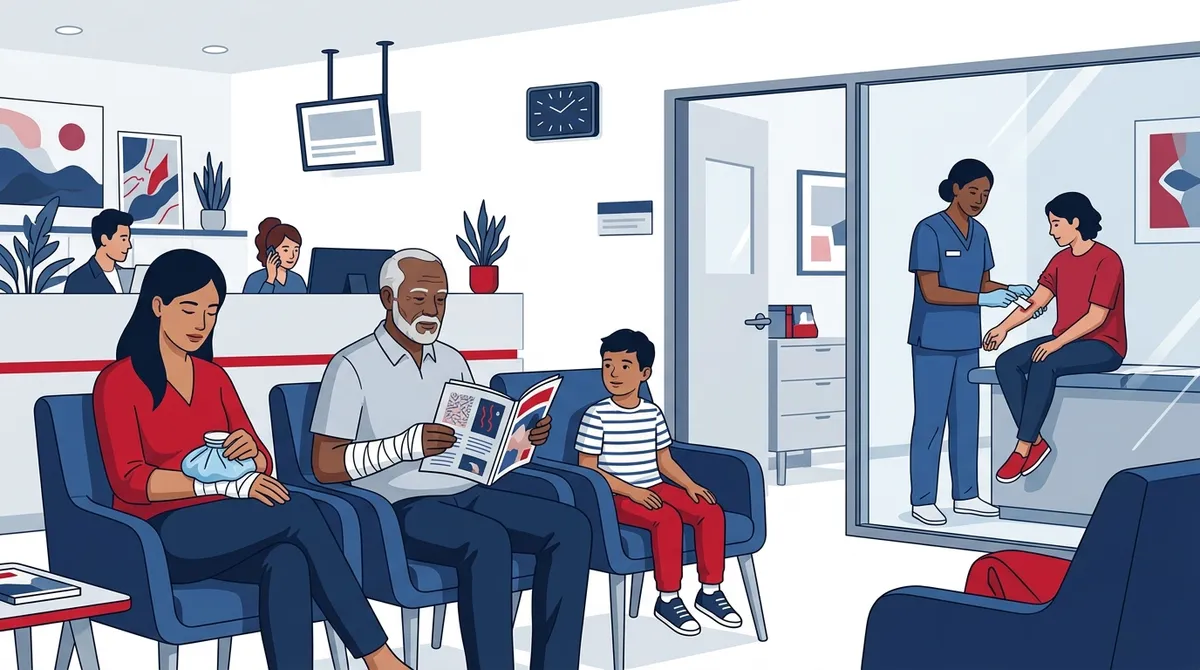
Key Takeaways
- Urgent care centers treat non-emergency conditions like infections, sprains, and minor injuries with average wait times of 15-45 minutes, costing $20-$50 for insured patients versus $500-$3,000+ for emergency room visits.
- Modern urgent care now offers comprehensive services beyond treatment, including diagnostic labs, X-rays, vaccinations, physicals, and virtual visits, making it suitable for preventive wellness care.
- The U.S. urgent care market is projected to grow from $56.7 billion in 2022 to $135.6 billion by 2030, reflecting patient demand for fast, accessible, and affordable healthcare alternatives.
- Virtual urgent care enables remote treatment for common conditions like cold and flu symptoms, skin rashes, and mild UTIs, offering convenience for busy professionals and those with mobility challenges.
- Urgent care functions best as the middle tier of a three-tier healthcare approach: primary care for long-term management, urgent care for same-day non-emergency needs, and emergency care for life-threatening situations.
- Walk-in access without appointments and extended hours make urgent care especially valuable for busy parents, young professionals, and uninsured patients seeking immediate medical attention outside traditional office hours.
You wake up with a high fever. Your child has an earache that won't quit. You twist your ankle during a morning run. These situations don't feel like emergencies, but they need attention — fast. That's exactly where urgent care services step in to help.
Urgent care fills the gap between your primary care doctor and the emergency room. It offers same-day treatment for conditions that are painful or disruptive but not life-threatening. With approximately 15,000 urgent care clinics operating across the United States, more people are turning to this option for fast, affordable care.
In 2026, urgent care is no longer just a walk-in clinic with a waiting room. It's a full-service medical experience that covers diagnostics, preventive care, and even virtual visits. Whether you're a busy parent, a wellness-focused professional, or a young adult skipping the traditional doctor's office, this guide will help you understand what urgent care can do for you.

What Conditions Do Urgent Care Services Treat?
Urgent care centers handle a wide range of non-emergency medical conditions. If your issue is painful but not immediately life-threatening, urgent care is likely the right choice. Here's a look at the most commonly treated conditions:
- Cold and flu symptoms, including fever, chills, and body aches
- Sinus infections and ear infections
- Sore throats and strep throat
- Urinary tract infections (UTIs)
- Minor cuts and lacerations requiring stitches
- Sprains and strains from injuries
- Minor burns and skin irritations
- Allergic reactions (non-severe)
- Rashes and skin infections
- Nausea, vomiting, and stomach discomfort
Urgent care is not a replacement for emergency services. If you experience chest pain, difficulty breathing, stroke symptoms, or severe bleeding, call 911 or go to the nearest emergency room immediately.

Urgent Care vs. Emergency Room: Key Differences
Many people end up in the emergency room for conditions that urgent care could easily handle. This leads to longer wait times and significantly higher bills. Understanding the difference can save you time and money.
FactorUrgent CareEmergency RoomWait Time15–45 minutes on average2–6 hours or moreCostLower copays, affordable feesSignificantly higher costsAvailabilityExtended hours, 7 days a week24/7, but for true emergenciesAppointment RequiredWalk-ins welcomeNo appointment neededBest ForNon-life-threatening conditionsSevere or life-threatening issuesServices AvailableLab work, X-rays, physicalsSurgery, critical care, trauma
The U.S. urgent care market was valued at $56.7 billion in 2022. It is projected to reach $135.6 billion by 2030, growing at a rate of nearly 11% per year. That growth reflects how much patients value fast, accessible care.

Services Included in Modern Urgent Care
Today's urgent care centers offer far more than just treatment for illness. Many clinics now provide a broad range of diagnostic and preventive services. This makes urgent care a smart option even when you're not sick.
Diagnostic Services
- On-site lab testing and blood work
- Rapid strep and flu tests
- COVID-19 testing
- X-rays and imaging
- Urinalysis and culture testing
Preventive and Wellness Services
- Immunizations and vaccinations
- Physical exams for school, sports, or employment
- Occupational medicine screenings
- Blood pressure and cholesterol monitoring
- Travel health consultations
At InCare, urgent care is integrated with a full suite of primary care and wellness services. This means your visit doesn't have to end at treating your symptoms. You can also explore cancer screenings, DNA gene testing, and IV hydration therapy — all in one convenient location.

How Urgent Care Fits Into Your Overall Health Plan
Urgent care is most effective when it works alongside your regular healthcare routine. It's not designed to replace your primary care physician, but it fills in the gaps when your doctor is unavailable or when you need immediate attention.
A Smart Three-Tier Health Approach
- Primary Care: Your foundation for long-term health management, chronic condition monitoring, and annual wellness visits.
- Urgent Care: Your go-to for sudden illnesses, injuries, or non-emergency conditions that need same-day attention.
- Emergency Care: Reserved for life-threatening situations requiring immediate and intensive medical intervention.
Using each tier appropriately leads to better health outcomes and lower overall healthcare costs. With the average U.S. healthcare spending at $14,570 per person annually, making smart choices about where you seek care matters more than ever.
If you're looking to establish consistent care that covers all three tiers, explore primary care services that complement urgent care access.
Who Benefits Most from Urgent Care Services?
Urgent care serves a wide variety of patients. However, certain groups benefit especially from its convenience and accessibility.
Patient TypeWhy Urgent Care Works for ThemBusy ParentsWalk-in access for sick kids without waiting weeks for appointmentsYoung ProfessionalsEvening and weekend hours fit around work schedulesWellness-Focused AdultsAccess to preventive labs and physicals alongside acute careGen Z AdultsVirtual care options and digital-friendly appointment processesUninsured or UnderinsuredLower out-of-pocket costs compared to emergency rooms
Whether you're a parent managing your family's health or a young adult exploring wellness for the first time, urgent care can meet you where you are. Follow InCare on Instagram for health tips and updates tailored to every life stage.
Virtual Urgent Care: Healthcare from Anywhere
One of the most significant changes in urgent care services is the rise of virtual visits. You no longer have to leave home to get medical attention for many common conditions. Virtual urgent care allows you to connect with a licensed provider through your phone, tablet, or computer.
Conditions Commonly Treated via Virtual Urgent Care
- Cold and flu symptoms requiring diagnosis and prescription
- Sinus infections and allergy management
- Mild urinary tract infections
- Rashes and skin conditions that can be evaluated visually
- Mental health consultations and prescription refills
Virtual urgent care is especially valuable for tech-savvy patients, working parents, and anyone with mobility challenges. InCare offers telemedicine appointments to ensure you always have access to care — no matter where you are in the Tampa Bay area and beyond.
What to Expect During an Urgent Care Visit
Many patients feel uncertain about what happens when they walk into an urgent care center. The process is straightforward and designed to get you in and out quickly.
Step-by-Step: Your Urgent Care Visit
- Arrive and Check In: Walk in without an appointment. Provide your insurance information and describe your symptoms to the front desk.
- Triage Assessment: A medical professional will quickly assess the urgency of your condition and prioritize your care accordingly.
- Provider Evaluation: A licensed physician or nurse practitioner will examine you, ask questions, and order any necessary tests.
- Diagnosis and Treatment: Based on your evaluation, you'll receive a diagnosis and treatment plan. This may include prescriptions, wound care, or referrals.
- Follow-Up Instructions: Before you leave, you'll receive clear instructions for recovery and information about when to seek further care if needed.
The entire process typically takes less than an hour for most non-complex cases. That's a fraction of the time you'd spend in an emergency room waiting room.
Urgent Care and Advanced Wellness at InCare
What makes InCare different is the ability to combine urgent care with advanced wellness services under one roof. After addressing an immediate health concern, patients can take the next step toward whole-body optimization.
For example, if you visit for a recurring illness, your provider might recommend a metabolic breath analysis to assess your overall health. Or, if weight-related issues are contributing to your frequent illness, you can explore a personalized weight loss program. You can also check out body composition analysis to get a deeper picture of your health status.
InCare's experienced providers — including Dr. Naveen Paddu, Dr. Pramjeet Ahluwalia, and Dr. Teshy John — bring a personalized approach to every visit. Patients consistently rate the clinic 4.8 out of 5 stars on Google, highlighting the quality of care and warmth of the team.
Urgent Care Costs and Insurance Coverage
Cost is one of the top concerns patients have before visiting any medical facility. Urgent care offers a cost-effective solution for most non-emergency conditions.
Service TypeTypical Cost RangeInsurance CoverageUrgent Care Visit (insured)$20–$50 copayUsually coveredUrgent Care Visit (uninsured)$100–$200 out-of-pocketSelf-pay rates availableEmergency Room Visit$500–$3,000+Higher deductibles applyVirtual Urgent Care Visit$49–$99 per visitMany plans now cover telehealth
Most urgent care clinics accept major insurance plans. InCare works with a variety of insurance providers to make care as accessible as possible. To confirm your coverage or learn about self-pay options, reach out to the InCare team directly before your visit.
Finding the Right Urgent Care Location
Location matters when you need care quickly. InCare operates two physical locations in the Tampa Bay area, plus a virtual option for patients across Florida.
- Riverview: 11922 Boyette Rd, Riverview, FL 33569
- Tampa: 1213 N Franklin St, Tampa, FL 33602
- Virtual: Telemedicine appointments available statewide
- Phone: 813-553-3330
You can explore all InCare locations and choose the one most convenient for you. You can also visit InCare on Google to read patient reviews, get directions, and see current hours of operation.
Stay connected with the InCare community on Facebook and TikTok for the latest health tips, service updates, and wellness content.
Conclusion: Urgent Care Is More Than a Quick Fix
Urgent care services have evolved into a powerful part of the modern healthcare system. They offer fast, affordable, and accessible treatment for a wide range of conditions — without the stress and expense of an emergency room visit. Whether you need same-day treatment for a sinus infection or a physical exam before starting a new job, urgent care can handle it.
When urgent care is combined with comprehensive wellness services — like those offered at InCare in Tampa and Riverview — patients gain access to a complete health solution. From treating today's symptoms to optimizing tomorrow's health, InCare is built to support your well-being at every stage.
Don't wait until a small health issue becomes a bigger problem. Schedule your urgent care visit with InCare today and experience personalized, compassionate care that puts you first.
FAQs
Q: What conditions can urgent care services treat?
A: Urgent care services treat a wide range of non-life-threatening conditions, including cold and flu symptoms, ear infections, sinus infections, sore throats, UTIs, minor cuts, sprains, burns, and rashes. These centers are equipped with on-site diagnostic tools such as lab testing and X-rays to support accurate and prompt treatment.
Q: How do urgent care services differ from emergency room visits?
A: Urgent care is designed for non-emergency medical conditions and typically offers shorter wait times, lower costs, and extended hours compared to emergency rooms. Emergency rooms are best reserved for life-threatening situations such as chest pain, severe trauma, or stroke symptoms that require intensive medical intervention.
Q: Do urgent care clinics accept walk-in patients without an appointment?
A: Yes, most urgent care clinics operate on a walk-in basis, allowing patients to receive care without a prior appointment. Many centers also offer online check-in or virtual visits to further reduce wait times and improve convenience.
Q: Are virtual urgent care visits available?
A: Virtual urgent care visits are available and allow patients to consult with a licensed provider from home, work, or any other location. This option is ideal for diagnosing and treating conditions such as cold symptoms, skin rashes, sinus infections, and minor UTIs without an in-person visit.
Q: How much does an urgent care visit typically cost?
A: For insured patients, urgent care visits usually require a copay of $20 to $50, which is significantly lower than a typical emergency room visit. Uninsured patients can often access self-pay rates ranging from $100 to $200, making urgent care a cost-effective alternative for non-emergency medical needs.