
Key Takeaways
- A sleep consultation is mostly a conversation about your symptoms, habits, health history, and medications, not a test, and you will not be asked to sleep in a lab on day one.
- Keep a sleep diary for one to two weeks before your visit, noting bedtime, wake time, time to fall asleep, nighttime awakenings, and naps, and bring your full medication and supplement list.
- Ask your bed partner what they have noticed, since partners often see breathing pauses, gasping, or movements that you cannot observe yourself.
- AASM guidance flags moderate-to-severe OSA risk when excessive daytime sleepiness occurs with at least two of: loud habitual snoring, witnessed apnea or gasping, and diagnosed high blood pressure.
- Testing is not automatic: you may leave with no test, a home sleep apnea test for selected adults, or an in-lab polysomnogram when complicating conditions like significant heart or lung disease are present.
- A negative or inconclusive home sleep test does not settle the question if symptoms persist, so ask whether an in-lab polysomnogram follow-up is recommended.
Many adults struggle with sleep and never find out why. In 2024, 30.5% of U.S. adults reported sleeping fewer than 7 hours a night, according to the CDC. About 15.4% had trouble falling asleep most days, and 18.1% had trouble staying asleep. Only 54.8% said they woke up well-rested. If those numbers sound familiar, a sleep consultation may be the right next step.
Many people ask, "what should I expect at a sleep consultation?" The visit is mostly a conversation. A clinician reviews your symptoms, habits, health history, and medications. Together you decide whether you need practical changes, more testing, or a referral. It is not a test, and you will not be asked to sleep in a lab on day one.
This guide walks you through each step. You will learn how to prepare, what questions to expect, which tests may follow, and how treatment is chosen. It is written for busy adults, parents, and health-minded readers in the Tampa Bay area who want clear, trustworthy answers.

What Is a Sleep Consultation?
A sleep consultation is a medical visit focused on how you sleep and how you feel during the day. The goal is to find the likely cause of poor sleep or daytime sleepiness. The clinician looks at symptoms, routines, health conditions, and medications.
In primary care, this visit often comes first. A primary care clinician can check for common causes and begin treatment when it fits. If your case is complex, the clinician can refer you to a sleep specialist. You can read more about how primary care and sleep specialists divide the work if you want to understand the difference.
A sleep consultation is different from a sleep study. The consultation is the conversation and exam. A sleep study is a test that may be ordered afterward. Many people leave the first visit with a plan that does not involve any test at all.
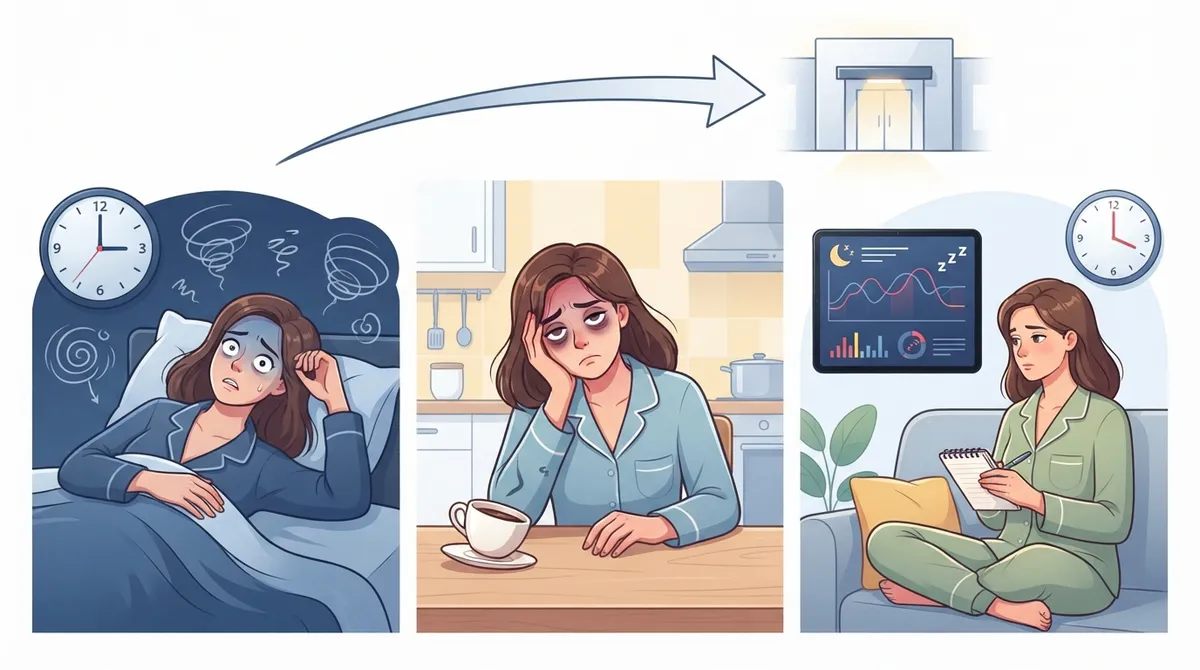
How to Know When It Is Time to Book
Not every restless night needs a medical visit. Still, certain patterns suggest it is time to talk with a clinician. If you are unsure, this guide on when to see a doctor for poor sleep can help you decide.
Consider booking a visit if you notice any of the following:
- You feel very tired during the day despite spending enough hours in bed.
- You snore loudly, or a partner has seen you stop breathing, gasp, or choke at night.
- You wake up with morning headaches or a dry mouth.
- You struggle to fall asleep or stay asleep most nights.
- You have restless legs or unusual movements during sleep.
- You have high blood pressure and also feel sleepy during the day.
These signs matter because sleep problems can affect mood, focus, weight, and heart health. Early evaluation gives you more options.
How to Prepare for Your Sleep Consultation
Good preparation makes the visit faster and more useful. The clinician can only help with what you can describe. Follow these steps in the week before your appointment.
- Keep a simple sleep diary for one to two weeks. Note your bedtime, wake time, how long it took to fall asleep, nighttime awakenings, and naps.
- Write down your symptoms. Include snoring, gasping, restless legs, morning headaches, and how sleepy you feel during the day.
- Make a list of medications and supplements. Include prescriptions, over-the-counter products, and anything you take to help sleep.
- Track caffeine and alcohol. Note how much you have and when you have it.
- Ask your bed partner what they notice. Partners often see pauses in breathing or movements that you cannot.
- Bring your health history. Include conditions such as high blood pressure, heart disease, diabetes, or past strokes.
A sleep diary and questionnaires help describe your patterns. They cannot diagnose obstructive sleep apnea (OSA) by themselves, but they give the clinician a clear starting point. If you are new to a practice, you may also want to review what to bring to your first primary care visit.
What Should I Expect at a Sleep Consultation? A Step-by-Step Look
Here is the usual flow of a visit. Exact steps vary by clinic, but most follow this order.
Step 1: A Detailed Conversation
The visit usually begins with a discussion about your symptoms, sleep habits, medical history, and medications. The clinician also asks how poor sleep affects your day. Expect questions about work, driving, mood, and energy.
Common topics include:
- Your usual bedtime and wake time
- How long it takes you to fall asleep
- How often you wake up at night
- Naps, shift work, and travel schedules
- Caffeine and alcohol use
- Your bedroom setting, including noise, light, and temperature
Step 2: Questions About Warning Signs
The clinician will ask about signs that point to specific sleep disorders. These include snoring, witnessed pauses in breathing, gasping or choking, morning headaches, and daytime sleepiness. They may also ask about restless legs, unusual movements, or odd behaviors during sleep.
Your honest answers matter here. Many people feel embarrassed about snoring or other symptoms, but these details help the clinician choose the right next step. You can learn more about the common symptoms of sleep apnea before your visit.
Step 3: A Physical Exam
The exam may include a check of your heart, lungs, and nervous system. The clinician may also look at factors related to airway blockage, such as your neck, throat, and nasal passages. Blood pressure and weight are often reviewed because they relate to sleep apnea risk.
Step 4: Risk Screening
The clinician may use questionnaires to screen for risk. American Academy of Sleep Medicine (AASM) guidance notes a pattern that raises concern for moderate-to-severe OSA in adults. That pattern is excessive daytime sleepiness plus at least two of these: habitual loud snoring, witnessed apnea or gasping or choking, and diagnosed high blood pressure.
A screening result is not a diagnosis. It simply helps the clinician decide whether testing makes sense.
Step 5: A Plan for Next Steps
At the end of the visit, you should leave with a clear plan. That plan might include practical changes, treatment of an underlying issue, a sleep test, or a referral. You should also know when to follow up.
Will You Need a Sleep Test?
Testing is not automatic. Depending on what the clinician suspects, they may recommend no test, a home sleep apnea test (HSAT), or an overnight in-lab sleep study called a polysomnogram (PSG). The right choice depends on your symptoms and health.
|
Feature |
Home Sleep Apnea Test (HSAT) |
In-Lab Polysomnogram (PSG) |
|---|---|---|
|
Where it happens |
At home, in your own bed |
Overnight at a sleep facility |
|
Best suited for |
Selected adults at increased risk of moderate-to-severe OSA without complicating conditions |
Suspected OSA when complicating conditions are present; considered the standard diagnostic test for adult OSA |
|
Monitoring level |
Focused on breathing-related measures |
More comprehensive monitoring during sleep |
|
Follow-up |
Results reviewed with your clinician |
Results reviewed with your clinician |
When PSG Is Preferred
AASM guidance recommends in-lab PSG instead of a home test when certain complicating conditions are present. These include:
- Significant heart or lung disease
- Neuromuscular weakness that affects breathing
- Suspected hypoventilation
- Chronic opioid use
- A prior stroke
- Severe insomnia
What If a Home Test Is Negative?
Sometimes a home test is negative, inconclusive, or technically inadequate, yet symptoms still suggest OSA. In that case, AASM recommends a follow-up in-lab PSG. A device result alone should not be treated as the final word. Your clinician should review results with you and arrange the right follow-up. If you want to compare options locally, see this overview of home versus in-lab sleep studies in Tampa.
What Treatments May Follow?
Treatment depends on the cause. A sleep consultation is not only about sleep apnea. Insomnia, restless legs, shift work problems, and medication effects can all play a role.
Possible approaches include:
- Behavioral and schedule changes. This can mean a steady wake time, limits on caffeine and alcohol, and a better sleep setting.
- Cognitive behavioral therapy for insomnia (CBT-I). This structured program helps retrain sleep habits and thoughts that keep you awake.
- Treatment of an underlying medical issue. Pain, reflux, mood concerns, and hormone changes can all disrupt sleep.
- OSA therapies. If sleep apnea is confirmed, options may include positive airway pressure. Others are available depending on your case. You can explore alternatives to CPAP for sleep apnea to understand the range.
The consultation is also the time to raise practical concerns. Ask about cost, follow-up visits, and how long treatment may take. If you want a sense of timing, read how long sleep apnea treatment takes.
Why Primary Care Is a Smart Place to Start
A primary care clinic sees your whole health picture. Sleep problems often connect to weight, blood pressure, mood, and medications. A clinician who knows your full history can spot those links.
InCare is a personalized healthcare clinic in Tampa and Riverview, Florida. The practice combines modern technology with medical expertise and focuses on prevention and whole-body care. That approach fits sleep concerns well, because poor sleep rarely has a single cause. Patients can also explore related services such as weight management and metabolic breath analysis, which may connect to sleep quality for some people. InCare holds a 4.8 out of 5 rating on Google, and you can read InCare reviews on Google to see what patients say.
If you live in Riverview, this guide to finding the best sleep doctor in Riverview may help. If you are in Tampa, see how to find the right sleep medicine care in Tampa. You can also follow InCare on Instagram, Facebook, and TikTok for wellness updates.
Tips to Get the Most From Your Visit
A few habits can make your sleep consultation more productive. Use this checklist as a guide.
- Arrive with your sleep diary and medication list in hand.
- Be honest about alcohol, caffeine, and any sleep aids you use.
- Describe how sleep problems affect your daily life, not just your nights.
- Ask what each recommended test would show and how it changes your care.
- Request a written plan so you can follow it at home.
- Schedule a follow-up before you leave.
Busy parents and working professionals can often fit this visit into a short appointment. Telemedicine is also available at InCare for some follow-up needs, which can save travel time.
Common Mistakes to Avoid
Some habits slow down the path to better sleep. Avoid these common errors.
- Relying on a questionnaire alone. A screening score is not a diagnosis.
- Assuming snoring is harmless. Loud, habitual snoring can be a warning sign. See facts on whether snoring always means sleep apnea.
- Skipping follow-up. Test results and treatment need review and adjustment.
- Self-treating with sleep aids. Over-the-counter products can mask the real cause.
- Ignoring daytime sleepiness. Fatigue during the day is a key symptom, not a personality trait.
Take the Next Step Toward Better Sleep
A sleep consultation is a clear, low-pressure way to understand why you feel tired. You talk through your symptoms, receive a focused exam, and leave with a plan. Testing happens only when it makes sense, and treatment matches the cause.
If poor sleep is affecting your energy, mood, or health, now is a good time to act. Book your appointment with InCare to start the conversation, or contact our team with questions before you schedule. Our Tampa and Riverview clinicians are ready to help you sleep and feel better.
FAQs
Q: Do I need a referral to book a sleep consultation?
A: Requirements vary by clinic and insurance plan. Many primary care practices, including InCare, can begin a sleep evaluation without a specialist referral. Check with your insurer if you plan to see a sleep specialist directly.
Q: What questions will a doctor ask at a sleep consultation?
A: Expect questions about your bedtime, wake time, time to fall asleep, nighttime awakenings, naps, caffeine, alcohol, and sleep environment. The clinician will also ask about snoring, gasping, morning headaches, daytime sleepiness, restless legs, and your medications.
Q: Will I need a sleep study after my consultation?
A: Not always. Testing depends on your symptoms and risk factors. The clinician may recommend no test, a home sleep apnea test, or an in-lab polysomnogram, and some people receive a plan that needs no testing at all.
Q: What is the difference between a home sleep apnea test and an in-lab sleep study?
A: A home test is done in your own bed and suits selected adults at increased risk of moderate-to-severe OSA without complicating conditions. An in-lab polysomnogram is the standard diagnostic test for suspected adult OSA and is preferred when conditions such as significant heart or lung disease are present.
Q: What happens if my home sleep apnea test is negative but I still have symptoms?
A: If a home test is negative, inconclusive, or technically inadequate but symptoms still suggest OSA, AASM guidance recommends a follow-up in-lab polysomnogram. Your clinician should review the results with you and arrange the next step.