Key Takeaways
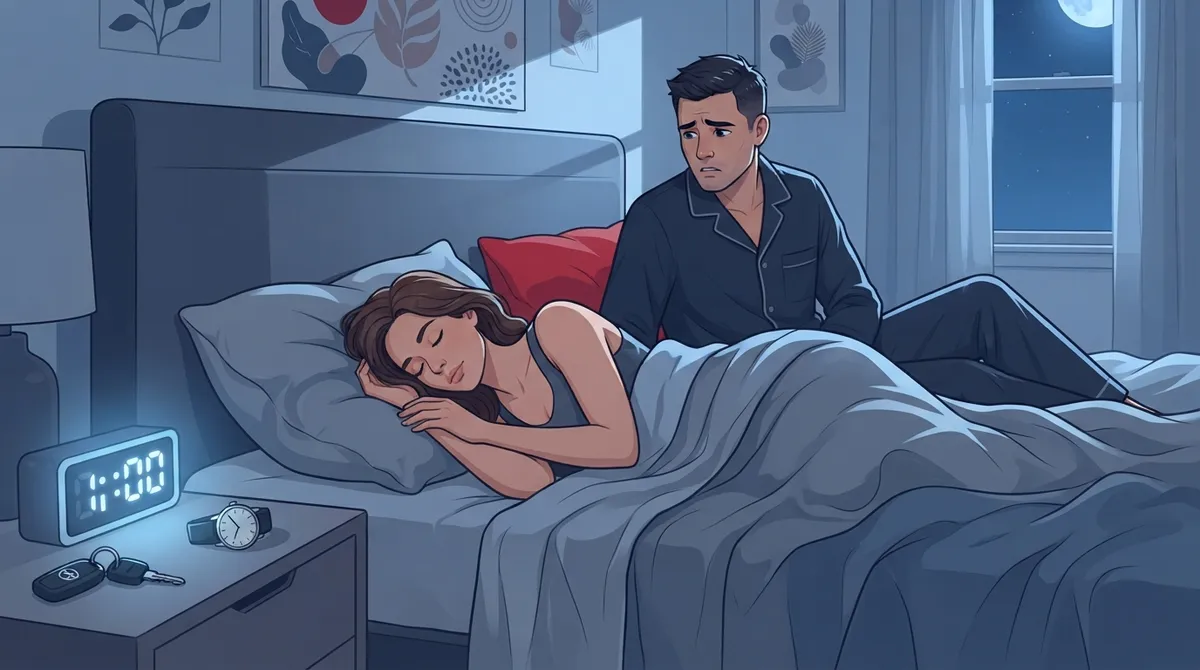
- Sleep apnea often goes unnoticed because it happens during unconsciousness, so a bed partner who sees pauses in breathing, gasping, or choking may be the first to spot it.
- Snoring alone does not confirm sleep apnea, and many people with the condition never snore, so persistent fatigue, morning headaches, or low mood can also be important clues.
- Women are often underdiagnosed because they more often report ongoing fatigue, insomnia, morning headaches, or anxiety rather than loud snoring and obvious sleepiness.
- Symptoms cannot confirm sleep apnea on their own; diagnosis requires objective testing, either an in-lab polysomnogram or a home sleep apnea test chosen by a clinician.
- Heavy daytime sleepiness is a safety issue, so avoid driving or operating machinery when drowsy and seek prompt medical advice if you nod off during routine activities.
- A primary care visit is an easy first step, and keeping a one-to-two-week sleep log and asking your partner what they observe at night can make the appointment more useful.
Many adults wake up tired, even after a full night in bed. They blame stress, a busy schedule, or too much screen time. Sometimes the real cause is a breathing problem that happens while they sleep. Sleep apnea is a disorder in which breathing repeatedly pauses or becomes shallow during sleep. Because it happens when you are unconscious, it is easy to miss.
So, what are the symptoms of sleep apnea? The most common clues are loud snoring, witnessed pauses in breathing, gasping or choking at night, and heavy daytime sleepiness. Yet symptoms vary from person to person. Some people never snore. Others only notice fatigue, headaches, or low mood. This guide explains the full range of signs, who is more likely to miss them, and what to do next.
It also covers how primary care teams evaluate these concerns. If you live near Tampa or Riverview, you will see how an in-person visit can turn vague symptoms into a clear plan.
What Is Sleep Apnea?
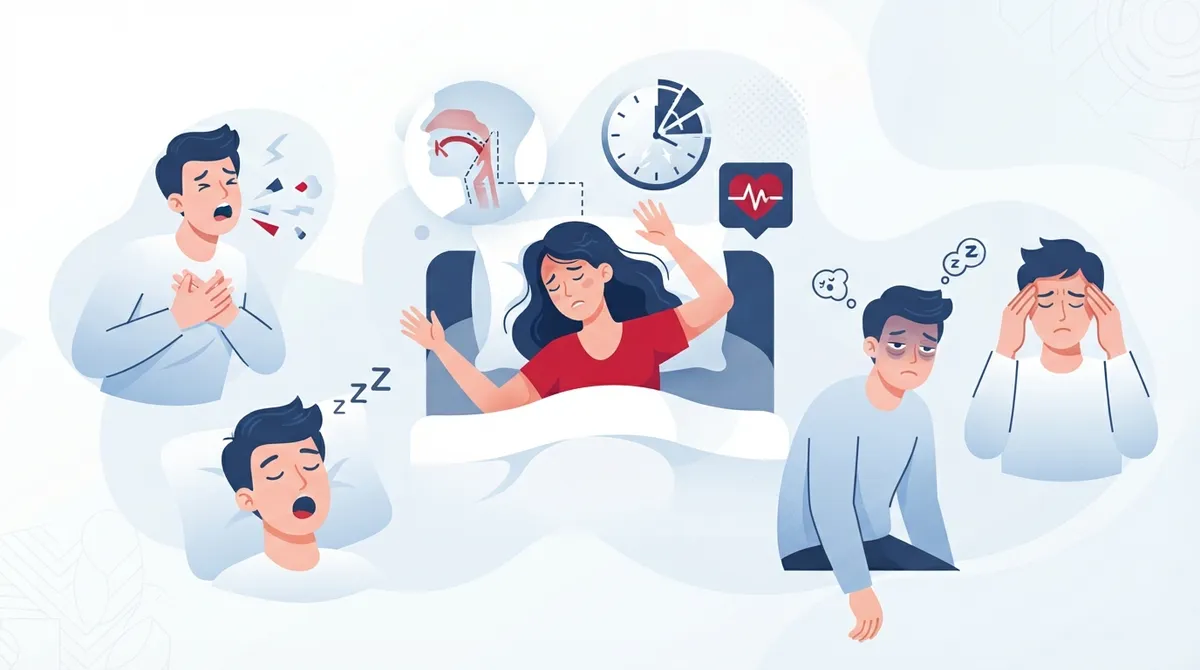
Sleep apnea is a sleep-related breathing disorder. Breathing stops or becomes shallow again and again during the night. Each event can briefly pull you out of deep sleep, even if you never fully wake up.
There are two main types:
- Obstructive sleep apnea (OSA): The upper airway becomes blocked or narrowed. This is the most common type.
- Central sleep apnea: The brain does not send the right signals to the muscles that control breathing.
The NHLBI describes these breathing pauses as typically lasting about 10 to 120 seconds. They can happen 20 to 30 or more times per hour. This is a general description, not a rule for any one person. Only proper testing can show what is happening in your own sleep.
What Are the Symptoms of Sleep Apnea at Night?
Nighttime signs are often the first red flags. The tricky part is that you may not notice them yourself. A bed partner, family member, or roommate often sees them first.
Loud or Irregular Snoring
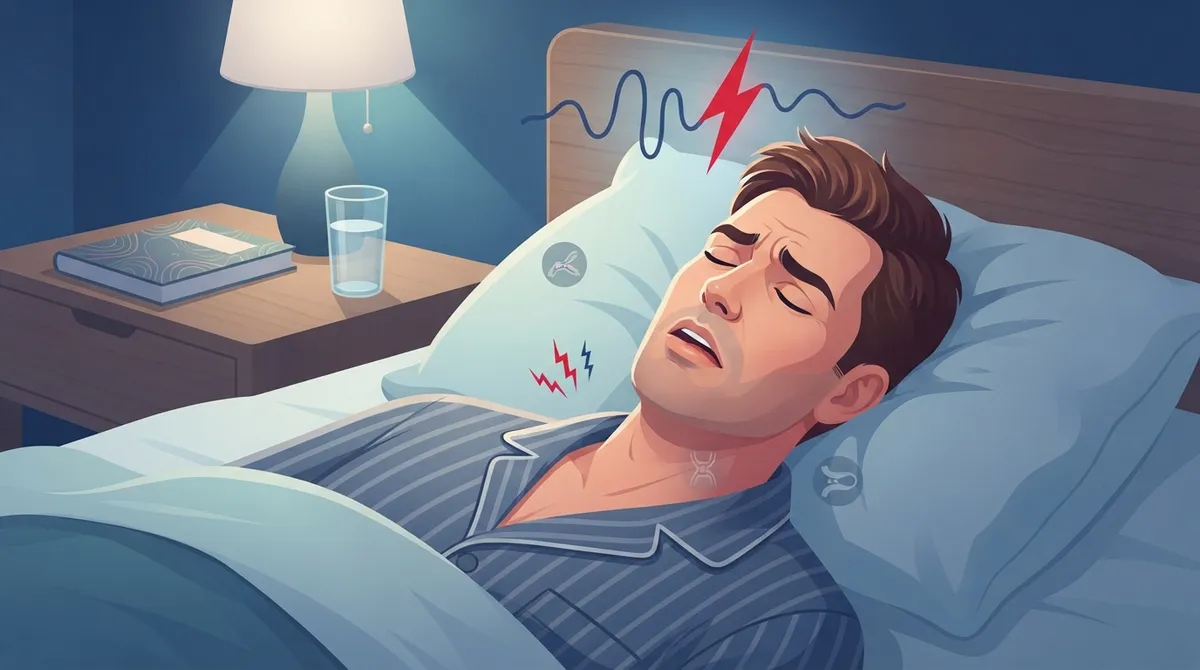
Loud, habitual snoring is one of the best-known signs. The snoring may stop suddenly, then restart with a snort or gasp. That pattern can point to a blocked airway. Still, snoring alone does not confirm sleep apnea. Many people snore and have normal breathing.
Witnessed Pauses in Breathing
A partner may see you stop breathing for several seconds. They may describe a quiet gap between snores. This is one of the stronger warning signs and deserves a medical conversation.
Gasping, Choking, or Snorting
You may wake with a sudden gasp, a choking feeling, or a loud snort. Some people sit up in bed feeling short of breath. These episodes can be frightening, though many people fall back asleep and forget them.
Other Nighttime Clues
- Restless sleep or frequent tossing and turning
- Waking often to use the bathroom
- Night sweats
- Insomnia or trouble staying asleep
- A dry mouth or sore throat when you wake
What Are the Daytime Symptoms of Sleep Apnea?
The effects of broken sleep show up during the day. Your body never gets the deep rest it needs. Over time, the toll adds up.
Excessive Sleepiness and Fatigue
Feeling very sleepy during the day is a hallmark sign. You might nod off in meetings, while reading, or while watching TV. Persistent fatigue that coffee cannot fix is a common complaint.
Trouble With Focus and Memory
Poor sleep affects the brain. You may have a hard time concentrating, finishing tasks, or remembering details. Many people describe this as brain fog.
Mood Changes
Irritability, low mood, and anxiety can all connect to poor sleep. These changes can strain work and home life. People often assume they are just stressed, so the real cause goes unaddressed.
Morning Headaches and Dry Mouth
Waking with a headache can be a clue. A dry mouth on waking is another. Both may link to repeated breathing interruptions overnight.
Other Daytime Signs
- Reduced interest in sex
- Trouble staying alert at work or school
- Slower reaction time
- Needing long naps to get through the day
Symptoms by Severity: How Doctors Think About It
Clinicians often grade sleep apnea using the apnea-hypopnea index (AHI). This counts how many breathing events happen each hour of sleep. The American Academy of Sleep Medicine uses these common ranges:
|
Severity |
AHI (events per hour) |
What It May Feel Like |
|---|---|---|
|
Mild |
5 or more |
Light snoring, mild daytime tiredness |
|
Moderate |
15 or more |
Frequent gasping, clear daytime sleepiness |
|
Severe |
30 or more |
Strong fatigue, risk of nodding off during daily tasks |
These numbers help guide care, but they are read alongside your full evaluation. How you feel matters as much as the count. Two people with the same AHI can feel very different.
Can You Have Sleep Apnea Without Snoring?
Yes. Not everyone with sleep apnea snores. Some people have blockages that make little noise. Others have central sleep apnea, which is less tied to snoring. This is why relying on snoring as your only signal can be misleading.
Many people also do not realize they wake at night. Short arousals can happen dozens of times without full awareness. You only notice the result the next day: tired, foggy, and cranky.
Symptoms of Sleep Apnea in Women
The stereotype of sleep apnea is a loud-snoring, overweight man. That picture leaves many women undiagnosed. According to NHLBI, women may report different complaints. Instead of loud snoring and obvious sleepiness, they may describe:
- Ongoing fatigue
- Morning headaches
- Insomnia
- Low mood or anxiety
- Trouble concentrating
These symptoms overlap with stress, hormone shifts, and thyroid issues. As a result, they are often explained away. If you are a woman with unexplained tiredness, it is fair to ask your provider about sleep apnea. Preventive visits are a good time to bring this up.
Who Is More Likely to Have Symptoms?
Anyone can develop sleep apnea. Still, some factors raise the chance. Talk with a provider if several apply to you:
- Carrying extra weight, especially around the neck
- A family history of sleep apnea
- High blood pressure
- Being a man or being past menopause
- A narrow airway or large tonsils
- Use of alcohol or sedatives near bedtime
- Smoking
Weight is one factor that clinicians can address together with sleep concerns. If this applies to you, a supervised plan may help. Our guide on 12 ways untreated sleep apnea affects your health explains why acting early matters.
Why Symptoms Should Not Be Ignored
Sleepiness is not just an annoyance. It can be unsafe. Drowsiness slows your attention and reaction time. If you are nodding off during routine activities, avoid driving or operating machinery when tired. Seek prompt clinical advice.
Untreated sleep apnea is also linked with other health concerns over time. These include high blood pressure and heart strain. Poor sleep can also make it harder to manage weight and blood sugar. Catching the problem early gives you more options.
How Is Sleep Apnea Diagnosed?
Symptoms are a starting point, not a diagnosis. Questionnaires can estimate risk, but they cannot confirm sleep apnea on their own. A medical history and physical exam are also not enough by themselves.
Diagnosis requires objective sleep testing. The AASM states that this means one of two tests:
- In-lab polysomnogram: You sleep at a facility while sensors track breathing, oxygen, heart rate, and brain activity.
- Home sleep apnea test: A simpler device you use in your own bed. It is suitable for some patients, but not all.
A clinician decides which test fits your situation. People with other health conditions often need the in-lab study. To understand the process in detail, read how sleep apnea is diagnosed and the steps doctors use.
What Happens at a Primary Care Visit for Sleep Concerns?
A primary care visit is often the easiest first step. You do not need a specialist referral to start the conversation. Here is what usually happens:
- You describe your symptoms. Share snoring, gasping, fatigue, headaches, and any effect on daily life.
- Your provider asks about sleep habits. Expect questions about sleep quality, bedtime routines, caffeine, and alcohol.
- You review your health history. Blood pressure, weight, medications, and other conditions all matter.
- A risk questionnaire may be used. It helps estimate your likelihood of sleep apnea.
- Testing is arranged if needed. Your clinician chooses the right sleep study.
- You build a plan. Results guide treatment and follow-up.
This whole-person approach is where primary care shines. Sleep ties into heart health, weight, mood, and energy. InCare brings these pieces together in one place, with locations in Tampa and Riverview. If you are weighing your options locally, see how to choose a sleep apnea doctor in Riverview, FL.
When Should You Talk to a Provider?
Do not wait if you notice any of the following:
- Loud snoring with pauses, gasping, or choking
- Heavy sleepiness that affects work, driving, or family life
- Morning headaches that happen often
- A partner who worries about your breathing
- Fatigue that does not improve with better sleep habits
Even one or two signs are worth a conversation. If poor sleep has lasted a while, this article on when to see a doctor for poor sleep can help you decide.
Tips to Prepare for Your Appointment
A little prep makes your visit more useful. Try these steps:
- Ask your partner to describe what they hear or see at night.
- Keep a simple sleep log for one to two weeks.
- Note how sleepy you feel during the day, and when.
- List your medications and supplements.
- Write down your questions in advance.
Busy schedules are real. Many people in the Tampa Bay area juggle work, kids, and commutes. That is why a streamlined, technology-supported primary care visit can save time and reduce guesswork. You can also read InCare reviews on Google to see what patients say about the care experience.
Take the Next Step Toward Better Sleep
Knowing what are the symptoms of sleep apnea is the first step. Loud snoring, gasping, witnessed pauses, morning headaches, and constant tiredness all deserve attention. Remember that symptoms vary. Women, in particular, may notice fatigue, insomnia, or headaches rather than loud snoring. No questionnaire can replace objective sleep testing.
If these signs sound familiar, do not wait. InCare offers personalized primary care in Tampa and Riverview, with a focus on prevention and whole-body health. Our team can review your symptoms, check your risk, and guide you toward the right testing and treatment. Book Now to start the conversation, or contact our team with questions. You can also follow our health tips on Instagram, Facebook, and TikTok.
FAQs
Q: What are the most common symptoms of sleep apnea in adults?
A: The most common signs are loud or irregular snoring, witnessed pauses in breathing, and gasping or choking during sleep. Daytime symptoms include heavy sleepiness, fatigue, and trouble concentrating. Morning headaches and a dry mouth on waking are also frequent.
Q: Can you have sleep apnea without snoring?
A: Yes. Not everyone with sleep apnea snores, and some people never notice nighttime breathing interruptions. Fatigue, headaches, insomnia, or low mood may be the only clues, so persistent symptoms deserve a clinical evaluation.
Q: Can a home sleep test diagnose sleep apnea?
A: A home sleep apnea test can diagnose sleep apnea in appropriate patients. A clinician decides whether a home test or an in-lab polysomnogram is the better fit. Symptom questionnaires and a physical exam alone cannot confirm the diagnosis.
Q: When should I talk to a primary care provider about snoring or daytime sleepiness?
A: Speak with a provider if snoring comes with gasping, choking, or pauses in breathing. Also seek care if sleepiness affects work or driving, or if you nod off during routine activities. Early evaluation can prevent safety risks and guide the right testing.