Key Takeaways
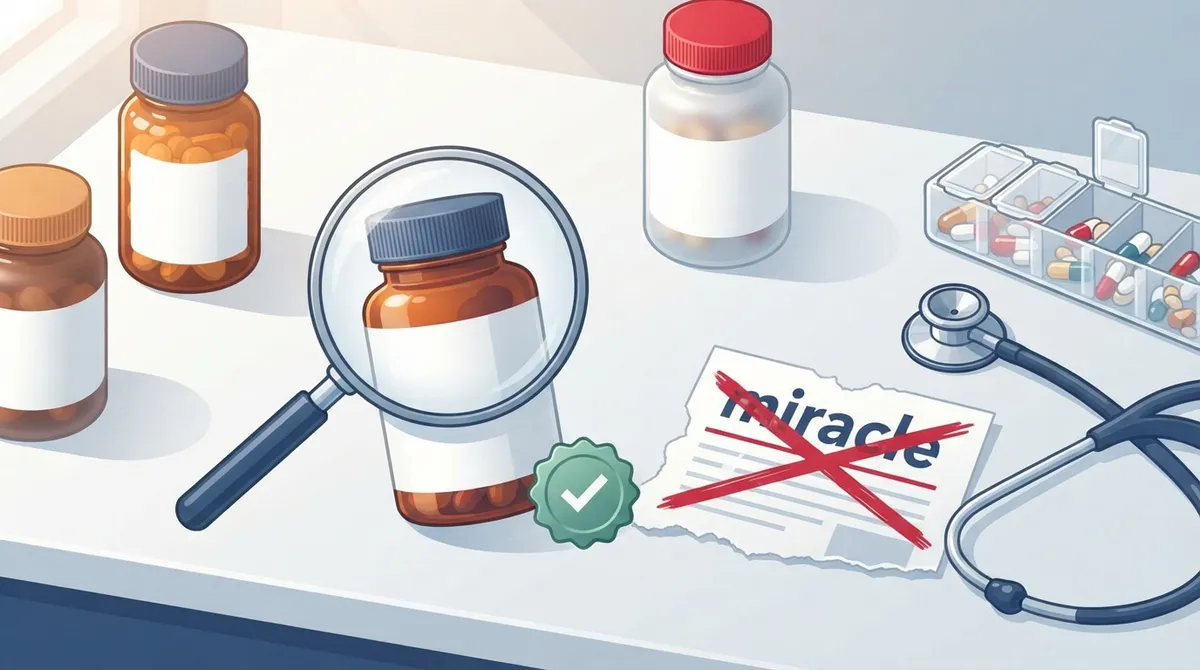
- No longevity supplement has been proven to extend lifespan in generally healthy people, so treat "reverse aging" or "guaranteed results" claims as a red flag.
- The FDA does not approve dietary supplements for safety or effectiveness before sale; manufacturers are responsible for quality, so an "FDA approved" label proves nothing.
- Avoid proprietary blends that hide ingredient amounts, and choose products that list the exact dose of each active ingredient and compare it to what studies used.
- Confirm third-party certification (USP Verified or NSF) by searching the exact product in the certifier's online directory, since a logo alone may not cover that formula.
- Share every supplement with your clinician or pharmacist to screen for drug interactions, such as vitamin K with warfarin or St. John's wort with prescription medicines.
- Start with one specific documented health need, add one product at a time, and keep a current list of everything you take; supplements complement, not replace, sleep, nutrition, activity, and screenings.
The longevity supplement market is crowded with bold promises. Bottles claim to slow aging, boost cellular energy, and add years to your life. Yet no supplement has been proven to extend lifespan in generally healthy people. That gap between marketing and evidence is why so many shoppers spend money on products that do little, or worse, cause harm.
Learning how to choose quality longevity supplements starts with avoiding common errors. In 2026, more adults in Tampa and Riverview are asking about NAD+ boosters, antioxidants, and mitochondrial formulas. Many are tech-savvy, health-driven, and ready to invest in prevention. That motivation is good. It just needs a sound filter.
This guide covers 13 mistakes to avoid. Each one is tied to how supplements are regulated, how quality is verified, and how a primary care clinician can help you decide what is worth taking. Use it as a checklist before your next purchase.
Why Quality Matters More Than Hype
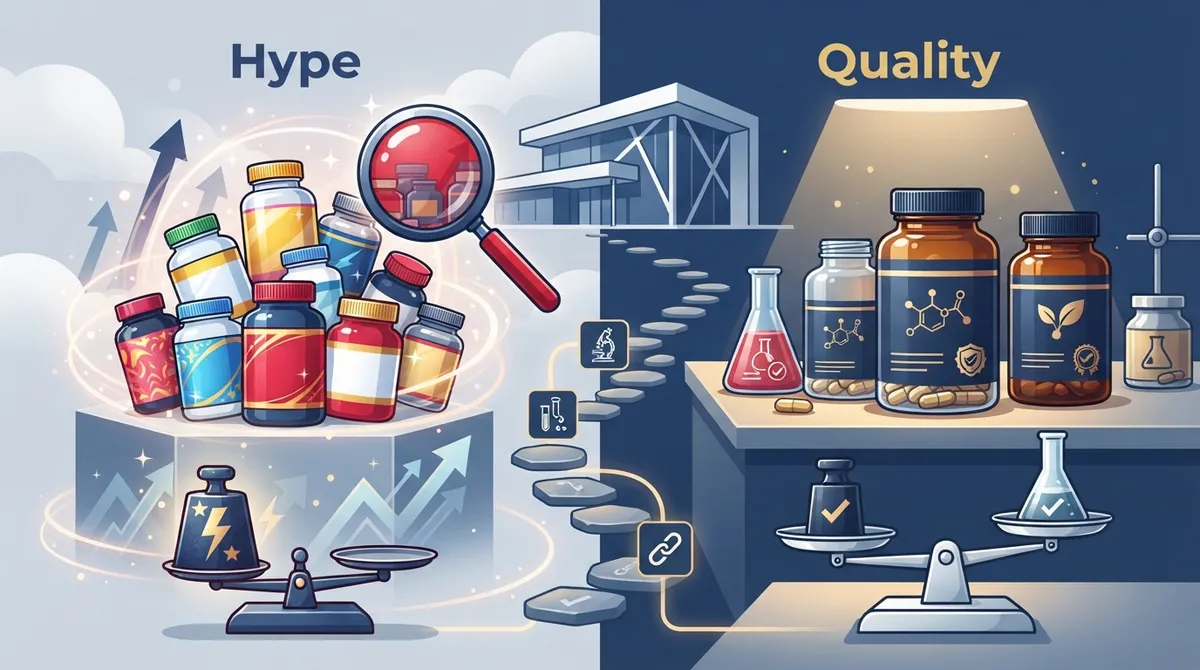
In the United States, the FDA does not approve dietary supplements for safety or effectiveness before they are sold. Under the Dietary Supplement Health and Education Act of 1994, manufacturers are responsible for product quality and truthful claims. The FDA generally steps in after a product is already on the market.
That means a pretty label proves nothing. Independent checks, clear dosing, and clinical review are your best safeguards. They do not prove a product works, but they reduce the risk of buying something mislabeled or contaminated.

13 Mistakes When Choosing Longevity Supplements
1. Chasing a Promise Instead of a Health Need
The first mistake is shopping for "anti-aging" in general. Start with a specific need instead, such as a documented vitamin D deficiency, low iron, or a dietary gap. A clear goal lets you judge whether a product makes sense.
Evidence that an ingredient shifts a lab marker does not mean it extends life or improves health. Be cautious when a brand leans on biomarker claims alone.
2. Believing a Supplement Can Extend Lifespan
No single supplement is established as a way to extend lifespan or prevent aging in generally healthy people. Be wary of language like "reverse aging" or "guaranteed results."
Many popular compounds are still being studied. For example, you can read about early-stage research in What Do MOTS-c Research Studies Really Show Us? to see how limited the human data can be.
3. Skipping the Human Evidence
Cell and animal studies are interesting, but they are not proof. Look for well-designed human trials that match your age, health status, and goal. Ask whether the dose used in the study matches the dose in the bottle.
The NIH Office of Dietary Supplements publishes fact sheets that summarize evidence, safe amounts, and interactions. It is a reliable place to check an ingredient before you buy. You can start with the NIH Dietary Supplement Fact Sheets.
4. Assuming "FDA Approved" Means What It Says
Some labels use phrases like "FDA approved" or "FDA cleared." For a dietary supplement, that is a red flag. The FDA does not approve these products before marketing.
A facility may be registered, and a manufacturer may follow current good manufacturing practices. Those steps help with identity, purity, strength, and labeling. They do not show the product works.
5. Ignoring Independent Third-Party Verification
Third-party seals can add a layer of trust. Programs such as USP Verified and NSF certification can assess whether the product contains what the label says, whether it was made under good practices, and whether it meets limits for certain contaminants.
Do not stop at the logo on the bottle. Confirm the exact product in the certifier's online directory. A brand may be listed while a specific formula is not. These seals also do not prove clinical benefit or guarantee safety for every person.
6. Not Reading the Supplement Facts Panel
The Supplement Facts panel tells you the serving size, the amount per serving, and every active ingredient. Read it line by line. Compare the dose to what research actually studied.
Check the "other ingredients" list as well. Fillers, dyes, and allergens matter, especially if you have sensitivities.
7. Falling for Proprietary Blends
A proprietary blend lists total weight but hides the amount of each ingredient. You cannot tell if a key compound is present at a useful dose or just sprinkled in for the label.
Choose products that list the exact amount of each ingredient. Transparency is a basic sign of quality.
8. Taking Megadoses on the Assumption That More Is Better
High doses are not always safer or stronger. Some vitamins and minerals can build up in the body, and long-term high intake of certain antioxidants has raised concerns in research. Stay within recommended amounts unless a clinician advises otherwise.
Fat-soluble vitamins deserve extra care. Combination products, such as vitamin D with K2, are common in longevity stacks. Our guide on how to decide if vitamin D3 and K2 supplements fit you explains the key questions to ask first.
9. Overlooking Drug Interactions
Supplements can change how medicines work. Vitamin K can affect warfarin. St. John's wort can alter the effects of many prescription drugs. Even common products can interact with blood pressure, diabetes, or thyroid medications.
Share every product you take with your clinician or pharmacist. This matters most if you take prescriptions, manage a chronic condition, or are preparing for surgery. For example, readers curious about clot-related products can review Nattokinase and Vitamin K2: What to Know Before You Take Them.
10. Stacking Too Many Products at Once
A long stack makes it hard to know what is helping or hurting. If you feel off, you cannot tell which product is the cause. Doubling up is also easy, since many ingredients show up in several products.
Add one product at a time. Keep a current list of everything you take, including doses, and review it at each visit.
11. Confusing Peptides and Injectables With Supplements
Wellness marketing often blends oral supplements with peptides and injectables. These are not the same. Many peptides have limited human data and unclear regulatory status, and quality can vary widely.
If a product is sold as a "research chemical" or is not clearly regulated, treat it with caution. For context, see Peptides for Recovery: What the Evidence Really Shows.
12. Replacing Core Health Habits and Screenings
Supplements should complement, not replace, evidence-based care. Nutrition, physical activity, sleep, and preventive screening drive most long-term outcomes. A capsule cannot make up for poor sleep or skipped cancer screenings.
If sleep is the real issue, it is worth knowing how to know when to see a doctor for poor sleep before reaching for another product.
13. Skipping Your Primary Care Clinician
The last mistake is going it alone. A clinician can review your history, order labs, check for interactions, and tell you whether a supplement fits your goals. This step turns guesswork into a plan.
At InCare in Tampa and Riverview, the care team combines primary care with advanced wellness tools, including DNA gene testing, body composition analysis, and metabolic testing. These help guide decisions with data rather than trends. You can also read our overview on quality longevity supplements under doctor care in 2026.
Quick Quality Checklist
Use this table to compare any product before you buy.
|
Check |
What Good Looks Like |
Red Flag |
|---|---|---|
|
Health goal |
Tied to a specific, documented need |
Vague "anti-aging" promise |
|
Evidence |
Human trials for your outcome and age group |
Only cell or animal studies |
|
Third-party testing |
Exact product listed in USP or NSF directory |
Logo only, no directory match |
|
Label |
Clear dose per ingredient |
Proprietary blend, hidden amounts |
|
Claims |
Modest, honest language |
"FDA approved," "guaranteed" |
|
Interactions |
Reviewed by clinician or pharmacist |
Self-prescribed stack |
A Simple Process for Choosing Wisely
Follow these steps in order to keep your decisions grounded.
- Define one health goal with your clinician.
- Look up the ingredient in an NIH fact sheet.
- Check the dose against what studies used.
- Verify the exact product in a third-party directory.
- Review the label for hidden blends and unneeded additives.
- Screen for medication interactions with a pharmacist or doctor.
- Start one product at a time and track how you feel.
- Recheck labs and review the plan at regular visits.
Who Benefits Most From Professional Guidance
Anyone can benefit from a quick review, but some groups should not skip it:
- People taking prescription or over-the-counter medicines
- Adults managing chronic conditions such as diabetes or high blood pressure
- Anyone preparing for surgery
- Women who are pregnant, breastfeeding, or planning pregnancy
- Busy parents buying products for the whole family
If you want to see how supervised care differs from buying on your own, our article on Supplement Stack vs. Medical Plan breaks down the tradeoffs.
What to Do If You Suspect a Reaction
Stop the product and seek medical advice if you notice rash, swelling, stomach pain, unusual bleeding, palpitations, or any new symptom after starting a supplement. Bring the bottle with you so the team can review the label and lot number. Reports of adverse events help regulators and clinicians spot problems early.
Make Your Next Step a Safe One
Quality longevity supplements are not about the boldest claim. They are about clear goals, verified products, honest labels, and professional review. Avoid these 13 mistakes, and you will spend less while protecting your health.
You can see what patients say about their care by visiting our InCare reviews on Google. You can also follow wellness updates on Instagram, Facebook, and TikTok.
Ready to build a supplement plan that fits your health history? Book Your InCare Appointment in Tampa or Riverview, or contact our team with questions. Our clinicians will help you separate real value from marketing noise.
FAQs
Q: Do any supplements actually slow aging or extend lifespan?
A: No supplement is established as a way to extend lifespan or prevent aging in generally healthy people. Some ingredients may help correct a documented deficiency, but a change in a lab marker does not prove longer life. A primary care clinician can help you decide what fits your health needs.
Q: What do USP Verified and NSF certification mean for supplements?
A: These programs test a specific product for identity, label accuracy, manufacturing quality, and certain contaminants. They do not prove the product works or guarantee safety for every person. Always confirm the exact product in the certifier's online directory.
Q: Are dietary supplements FDA approved?
A: No. The FDA does not approve dietary supplements for safety or effectiveness before they are marketed. Manufacturers are responsible for quality and truthful claims, and the FDA generally acts after a product is on the market.
Q: How do I check whether a supplement interacts with my medications?
A: Share a full list of your products with your primary care clinician or pharmacist before you start. Interactions are real, such as vitamin K with warfarin or St. John's wort with many prescription drugs. Keep your list current and update it at every visit.
Q: What should I look for on a supplement label?
A: Check the serving size, the exact amount of each active ingredient, and the full ingredient list. Avoid proprietary blends that hide doses, megadoses without a clear reason, and claims like "FDA approved" or guaranteed anti-aging results.