

Key Takeaways
- Get a blood test before supplementing vitamin D to confirm deficiency, as routine supplements have not been shown to prevent fractures or heart disease in healthy adults who already have adequate levels.
- If you take warfarin or similar blood thinners, do not start vitamin K2 supplements without consulting your anticoagulation clinician, as K2 can dangerously weaken the medication's effect and increase clot risk.
- Take vitamin D3 and K2 with a meal containing healthy fats (eggs, avocado, olive oil) for better absorption, and maintain consistent daily timing rather than sporadic dosing.
- The recommended daily vitamin D dose is 600 IU for adults under 70 and 800 IU for those over 70, with an upper limit of 4,000 IU from all sources; exceeding this can cause kidney damage and abnormal heart rhythms.
- Meet your vitamin D and K2 needs through food first: salmon, egg yolks, and fortified foods for D3; leafy greens for K1; and fermented foods like natto and cheese for K2.
- While D3 and K2 work together biologically, research shows mixed results for the combination in preventing fractures or heart disease, making personalized evaluation with your clinician more important than trendy pairing.
Walk into any pharmacy in 2026 and you will find shelves of vitamin D3 and K2 supplements. The labels promise stronger bones, a healthier heart, and better aging. The reality is more careful. These two nutrients do work together in the body, but research has not proven that taking them as a pair benefits everyone.
That is why the smartest approach is personal, not trendy. Your diet, sun exposure, health conditions, and medications all matter. This guide explains what vitamin D3 and K2 do, who may need them, how to dose them safely, and how your primary care team can help you decide. It is written for busy adults, young families, and anyone who wants a clear answer without the hype.
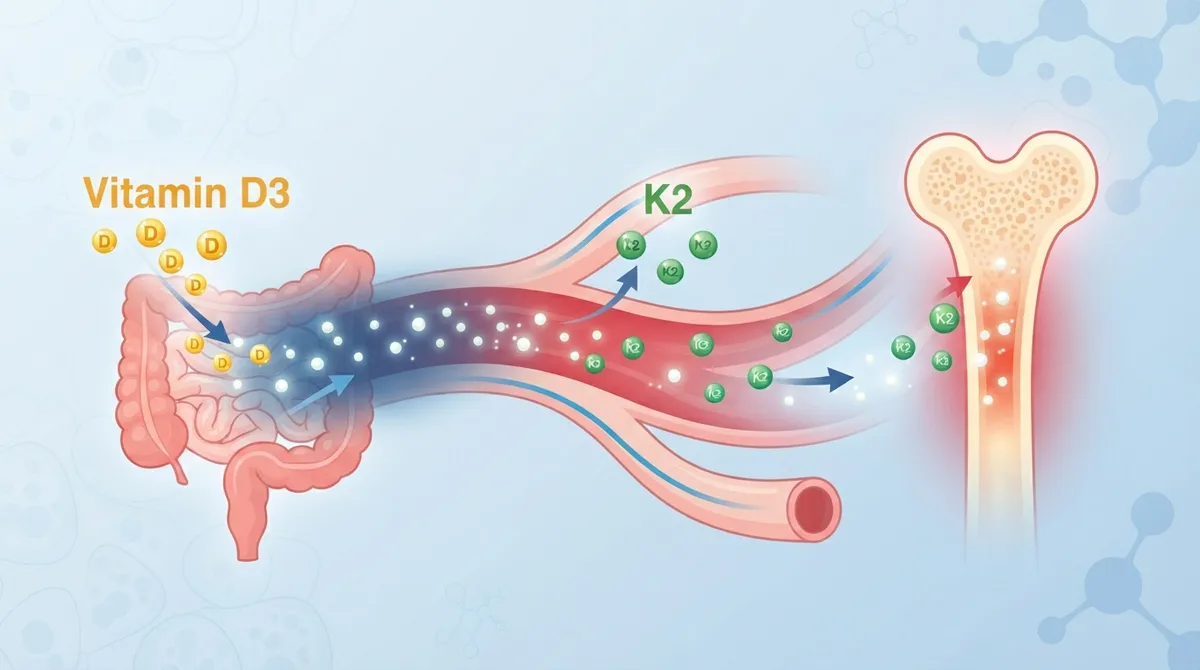
What Vitamin D3 and K2 Actually Do
Vitamin D3, also called cholecalciferol, helps your body absorb calcium. It also supports bone mineralization. Your skin makes it from sunlight, and you also get small amounts from fish, eggs, and fortified foods.
Vitamin K supports proteins that help your blood clot. It also supports proteins involved in bone metabolism. Vitamin K2, the form often sold in supplements, comes in types called menaquinone-4 (MK-4) and menaquinone-7 (MK-7).
Here is why the two are paired. Vitamin D3 helps you absorb more calcium. Vitamin K helps activate proteins that guide where calcium goes. That biological link makes the combination sensible in theory. However, a sensible theory is not the same as proven results for everyone.

What the Research Really Shows
The evidence on vitamin D3 and K2 supplements is mixed. Here is a plain summary of what we know:
- A 2020 meta-analysis of eight randomized trials, with 971 participants, found higher total bone mineral density with combined vitamin D3 and vitamin K.
- Bone density is a surrogate measure. It does not by itself prove fewer fractures.
- A meta-analysis of 16 randomized trials looked at vitamin K2 in postmenopausal women. It did not establish a benefit for all adults.
- Research has not shown that the combination prevents heart disease or arterial calcification in the general population.
- Routine vitamin D supplements have not been shown to prevent fractures, falls, or heart disease in healthy adults who already have enough vitamin D.
In short, deficiency treatment is well supported. Broad prevention claims are not. A good clinician will tell you both sides.
Who May Benefit From Vitamin D3 and K2 Supplements
Some people have a higher chance of low vitamin D. Others have bone health concerns that deserve a closer look. Talk with a clinician if any of these apply to you:
- You have a confirmed vitamin D deficiency on a blood test.
- You spend most of your time indoors or use sunscreen very consistently.
- You have darker skin, which makes less vitamin D from the same sun exposure.
- You are over 65 or have a history of low bone density.
- You have a digestive condition that limits nutrient absorption.
- You follow a diet low in fish, eggs, dairy, and fortified foods.
- You carry extra body weight, which can lower circulating vitamin D.
Notice that the list focuses on risk and testing. It does not say "everyone should take both." Deficiency is the clearest reason to supplement vitamin D. The case for adding K2 is softer and is best made with your clinician.
How to Decide Step by Step
Use this simple process to decide whether vitamin D3 and K2 supplements make sense for you.
- Review your diet and lifestyle. Write down how often you eat fish, eggs, dairy, leafy greens, and fortified foods. Note how much time you spend outdoors.
- List your current supplements. Many multivitamins already contain vitamin D and vitamin K. Total intake matters.
- Share your medication list. This step is critical if you take a blood thinner such as warfarin.
- Ask about a vitamin D blood test. A simple lab test shows whether your level is low, normal, or high.
- Discuss your bone and heart risk. Family history, age, and prior fractures all shape the plan.
- Choose a dose with your clinician. Then plan a recheck so you can adjust safely.
This approach keeps the decision tied to your own numbers instead of marketing claims. For many patients, an annual physical exam is the easiest place to start this conversation.
Understanding Safe Vitamin D Doses
More is not better with vitamin D. Official guidance gives clear limits. The table below summarizes the adult numbers from the NIH Office of Dietary Supplements.
|
Measure |
Amount |
What It Means |
|---|---|---|
|
Recommended daily amount, adults through age 70 |
600 IU (15 mcg) |
Target for most healthy adults |
|
Recommended daily amount, adults over 70 |
800 IU (20 mcg) |
Higher need as we age |
|
Tolerable upper intake level |
4,000 IU (100 mcg) |
Maximum from all sources without medical guidance |
|
Treatment for diagnosed deficiency |
Set by a clinician |
May be higher for a short time |
Remember that the upper limit counts all sources. That includes multivitamins, fortified foods, and separate vitamin D products. Too much vitamin D can raise blood calcium and urine calcium. In severe cases, it can lead to kidney failure, soft-tissue calcification, abnormal heart rhythms, or death. A blood test and a clear plan help you avoid these problems.
What About Vitamin K2 Dosing
Vitamin K works differently. The Food and Nutrition Board did not set a tolerable upper intake level for vitamin K, because it shows low toxicity potential. That sounds reassuring, but it has limits.
The absence of an upper limit does not mean every dose or product suits every person. K2 comes in different forms, including MK-4 and MK-7, and products vary widely in strength. There is no single proven K2 dose for bone or heart protection. Your clinician can help you choose a product and amount that fits your health picture. Bring the bottle to your visit so the team can review the label.
Warfarin and Blood Thinners: A Critical Warning
This is the most important safety point in this article. Vitamin K can interact seriously with warfarin and similar vitamin K antagonist blood thinners. These medicines work by blocking vitamin K activity. Adding a K2 supplement can weaken their effect and raise the risk of dangerous clots.
If you take one of these medicines:
- Do not start a K2 supplement without talking to your anticoagulation clinician.
- Do not stop or change your K2 dose on your own.
- Keep your vitamin K intake steady from week to week.
- Tell every provider about every supplement you take.
Consistency is the goal. Sudden swings in vitamin K intake can change your blood test results and your safety. This is one more reason supplements should be part of a medication review, not an afterthought.
Timing and How to Take Them
Both vitamin D and vitamin K are fat-soluble. That means your body absorbs them better with a meal that contains some fat. Many people take them with breakfast or dinner. Choose a time you can repeat daily, since consistency helps more than perfect timing.
Here are a few practical tips:
- Take your supplement with a meal that includes healthy fats, such as eggs, avocado, or olive oil.
- Use one combined product or two separate ones, but count the total daily amounts.
- Store bottles in a cool, dry place away from direct sunlight.
- Choose products tested by an independent quality program when possible.
If you feel nauseated, constipated, or unusually thirsty after starting a new supplement, stop and call your clinician. Those can be signs of too much vitamin D.
Food First: Natural Sources
Supplements fill gaps. They do not replace a balanced diet. You can raise your intake naturally with these foods:
- Vitamin D: salmon, trout, sardines, egg yolks, and fortified milk or cereals.
- Vitamin K1: spinach, kale, broccoli, and other leafy greens.
- Vitamin K2: fermented foods such as natto, along with some cheeses and egg yolks.
Healthy habits also support your bones. Regular strength training, enough protein, and enough calcium all matter. If weight is part of your health picture, a coordinated plan can help. InCare offers personalized weight loss care and body composition tracking that show how your body changes over time.
How InCare Supports a Personalized Plan
Supplement choices work best inside a bigger health plan. At InCare, our team in Tampa and Riverview takes a whole-body, prevention-focused approach to primary care. We review your history, check your labs, and look closely at your medications before recommending any supplement.
We can also go deeper when you want more insight. Options include DNA gene testing for personalized health information and IV hydration and vitamin drips for patients who qualify. Our providers, including those listed on our providers page, build plans around your goals instead of a one-size-fits-all label.
Patients tell us the difference is time and attention. You can see what they say by reading InCare reviews on Google. You can also follow our health tips on Instagram and TikTok, or connect with us on Facebook.
Common Mistakes to Avoid
Many problems with supplements are easy to prevent. Watch out for these common errors:
- Stacking several products that each contain vitamin D, then exceeding the daily upper limit.
- Starting K2 while on warfarin without medical approval.
- Assuming a supplement can replace a prescribed bone or heart medicine.
- Skipping a blood test and guessing at your dose.
- Believing marketing claims about preventing heart disease or fractures.
- Forgetting to recheck levels after several months of treatment.
Avoiding these mistakes protects your health and your budget. A short conversation with your clinician can save you from both wasted money and real risk.
Take the Next Step With Confidence
Vitamin D3 and K2 supplements can play a helpful role, especially when a blood test shows low vitamin D or when your clinician sees a bone health concern. They are not a cure-all, and the evidence for the pair is still developing. The safest path is a personal one built on testing, medication review, and steady follow-up.
If you live in Tampa or Riverview, the InCare team is ready to help you sort through the facts. Book your visit with InCare today to get a clear, personalized plan, or contact our team with questions before you come in. This article is for education only and does not replace medical advice from your own clinician.
FAQs
Q: Do vitamin D3 and K2 supplements work better together?
A: The two nutrients have complementary roles in calcium and bone biology, which is why they are often paired. Some trials report higher bone mineral density with the combination. However, research has not proven that taking them together prevents fractures or heart disease in healthy adults.
Q: How much vitamin D3 should I take daily?
A: The recommended daily amount is 600 IU (15 mcg) for most adults through age 70 and 800 IU (20 mcg) after age 70. The upper limit from all sources is 4,000 IU (100 mcg) per day. A clinician may prescribe more for a short time if a blood test confirms a deficiency.
Q: Can I take vitamin K2 if I use warfarin or another blood thinner?
A: You should not start, stop, or change a K2 supplement without talking to your anticoagulation clinician. Vitamin K can weaken the effect of warfarin and similar medicines. Keeping your vitamin K intake consistent is important for your safety.
Q: Should I get a vitamin D blood test before taking supplements?
A: A blood test is a smart first step because it shows whether your level is low, normal, or high. It helps your clinician choose a dose that fits your needs and avoid taking too much. Retesting after treatment confirms the plan is working.
Q: What are the risks of vitamin D3 and K2 supplements?
A: Too much vitamin D can raise blood and urine calcium. In severe cases, it can cause kidney failure, soft-tissue calcification, or abnormal heart rhythms. Vitamin K can interact dangerously with warfarin, so a medication review is essential before you begin.


