Key Takeaways
- Many men delay care until symptoms like fatigue, low drive, weight gain, or rising blood pressure become impossible to ignore, yet these can signal treatable conditions that a checkup can catch early.
- Men's health clinics fall into two types: full primary care practices with ongoing preventive care, or specialty clinics focused on services like hormone testing or sexual health, so confirm the scope before booking.
- Low testosterone symptoms can have many causes, including poor sleep, stress, obesity, thyroid problems, and medications, so a responsible clinic should rule these out before recommending hormone therapy.
- Erectile dysfunction can be an early sign of heart disease, diabetes, or high blood pressure, so a sexual health visit should look at the underlying cause rather than end with a prescription.
- Before choosing a clinic, verify clinician licensing, which services are on-site, how urgent concerns are handled, and whether labs and follow-up are included in the price.
- Bring your current medications and supplements, family history of heart disease, diabetes, and cancer, past lab results, and a written list of symptoms to make your first visit more useful.
Many men put off medical care until a problem becomes impossible to ignore. Fatigue, low drive, weight gain, and rising blood pressure often get blamed on stress or age. A men's health clinic in Tampa can help you sort out what is really going on. The right clinic looks at the whole picture, not just one symptom or one lab result.
The phrase "men's health clinic" means different things in different places. Some clinics act as full primary care practices with men-focused prevention. Others focus on a narrow set of services, such as testosterone evaluation or erectile dysfunction care. Knowing the difference helps you pick care that fits your needs in 2026.
This guide explains what a men's health clinic in Tampa may offer, how to compare options, and which questions to ask before you book. It is written for busy professionals, young adults, and families who want clear, practical information.

What a Men's Health Clinic in Tampa Actually Is
A men's health clinic in Tampa usually falls into one of two groups. The first is a primary care practice that offers preventive care shaped around men's health risks. The second is a specialty clinic centered on selected services such as hormone evaluation, sexual health, or weight management.
Both models can be useful. The key is knowing which one you are walking into. A specialty clinic may treat one issue well but not follow your blood pressure, cholesterol, or cancer screening schedule. A primary care clinic can do all of that and coordinate referrals when you need a specialist.
Local provider pages in the Tampa area describe a wide range of offerings. Services, payment models, and clinician credentials differ from clinic to clinic. Always confirm current details directly with the clinic before you commit.
Primary Care Versus Specialty Clinics
|
Feature |
Primary Care Clinic |
Specialty Men's Clinic |
|---|---|---|
|
Scope of care |
Whole-body, ongoing care |
Focused on select services |
|
Preventive screenings |
Usually included |
May not be offered |
|
Chronic disease follow-up |
Yes, such as diabetes and blood pressure |
Often limited |
|
Hormone evaluation |
Often available with lab testing |
Core service |
|
Referral coordination |
Built into care |
Varies by clinic |
If you want one team that knows your full history, a primary care model is often the better starting point. You can learn more in our guide on choosing a primary care doctor for men in Tampa.
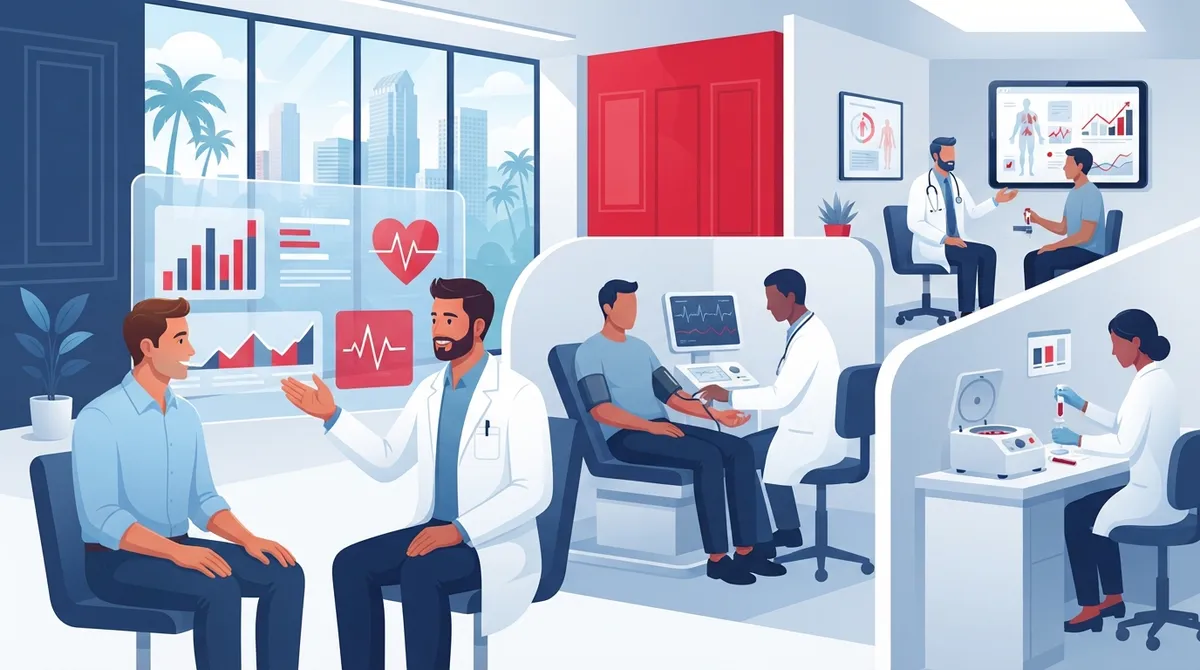
Services a Tampa Men's Health Clinic May Provide
Services vary, but many men's health programs draw from the same core list. Not every clinic offers every item, so ask for specifics.
- Annual wellness exams and age-appropriate preventive care
- Blood pressure, cholesterol, and blood sugar checks
- Diabetes and weight management support
- Guidance on age- and risk-based cancer screening
- Sexual health evaluation, including erectile dysfunction concerns
- Assessment of hormone-related symptoms such as fatigue or low libido
- Mental health check-ins, including stress, mood, and sleep
A comprehensive visit should consider your medical and family history, current medications, lifestyle, mental health, and preventive care needs. A single symptom or a single lab number should never drive the whole plan.
Preventive Care: The Foundation of Men's Health
Prevention is where a men's health clinic can make the biggest difference over time. Many serious conditions, including heart disease, type 2 diabetes, and several cancers, are easier to manage when found early. Yet many men skip routine visits because they feel fine.
A good preventive visit reviews your risk factors and sets a schedule for screenings that match your age and history. It also gives you a baseline, so changes are easier to spot later. If you are not sure what belongs in a yearly checkup, see what a wellness checkup in Tampa, FL includes.
Screenings and Guidance to Discuss
Your clinician can explain which screenings fit your age and risk level. Topics often include blood pressure, cholesterol, diabetes risk, colorectal cancer screening, and prostate cancer screening discussions. Prostate screening is a shared decision, so it helps to understand the benefits and limits first. Our article on key things men should know about prostate exams is a helpful starting point, and you can also review cancer screening guidelines by age and risk in 2026.
Testosterone and Hormone Evaluation
Low testosterone is one of the most common reasons men search for a clinic. Symptoms such as fatigue, reduced libido, low mood, and loss of muscle can point to low testosterone. They can also come from poor sleep, stress, obesity, thyroid problems, medications, or other health conditions.
That is why testosterone treatment should follow a proper clinical evaluation. A responsible clinic will review your symptoms, order appropriate testing, and look for other causes before suggesting therapy. If treatment is considered, expect a clear talk about benefits, risks, monitoring, and fertility effects.
Questions to Ask Before Starting Hormone Therapy
- What testing will you do to confirm a diagnosis?
- Have other causes of my symptoms been ruled out?
- What are the likely benefits and the known risks?
- How will my progress and lab values be monitored?
- How could treatment affect my fertility?
- What happens if I want to stop?
You can read more about the process in our guide on how to start medically supervised TRT in Tampa safely. If low drive is your main concern, review when to see a doctor for low libido to understand the warning signs.
Sexual Health and Erectile Dysfunction Care
Sexual health is a normal part of men's health. Erectile dysfunction can be an early sign of heart disease, diabetes, high blood pressure, or hormone issues. For that reason, a visit about sexual health should not stop at a prescription. A thorough clinic will look at the underlying cause.
Many men feel uneasy raising the topic. A clinic with a calm, respectful approach makes the conversation easier. You should feel free to ask direct questions and expect clear answers.
Weight, Metabolism, and Energy
Weight gain, especially around the midsection, raises the risk of diabetes, heart disease, and sleep problems. It can also affect hormone levels. Many men's health clinics now include weight management as part of care.
The best programs are medically supervised and tailored to the individual. They look at labs, eating patterns, activity, sleep, and medications before choosing a plan. For a closer look at how structured programs work, see how medically supervised weight loss works.
How to Compare Men's Health Clinics in Tampa
Provider search results in the Tampa area list a mix of hospital-based programs and independent clinics, including men's-health-focused practices in South Tampa and Westshore. These are examples, not endorsements. Always confirm current services, clinician credentials, location, availability, and insurance or membership terms directly. Some provider pages contain marketing claims, so treat service descriptions as information to verify.
A Simple Checklist
- Verify that clinicians are licensed and ask about their training
- Ask which services are performed on-site
- Find out how urgent concerns are handled
- Confirm whether lab testing and follow-up visits are included
- Ask whether pricing is insurance-based, self-pay, or membership-based
- Check how referrals to specialists are coordinated
For a broader framework, our article on how to choose a men's hormone clinic offers more detail, and how to choose the best primary care doctor in Tampa covers the primary care side.
Insurance, Membership, and Self-Pay Models
Payment models differ widely. Some clinics bill insurance for visits and labs. Others use a self-pay or membership model. Neither is automatically better, but you should know the cost before you start.
Ask for a clear explanation of what is covered, what is not, and what you may owe out of pocket. If you plan to use a hormone or weight program, confirm whether medications and monitoring labs are part of the price. Our overview of boutique medicine in Tampa: costs and models can help you compare.
What to Bring to Your First Appointment
A little preparation makes the first visit far more useful. Bring the following items if you can:
- A list of current medications, vitamins, and supplements
- Your family history of heart disease, diabetes, and cancer
- Past lab results or records from other doctors
- A short list of symptoms, including when they began
- Your insurance card and photo ID
- Questions you want answered
For more preparation ideas, see what to bring to your first primary care visit.
How Often Should Men Get Checkups?
The right schedule depends on your age, health, and family history. Many healthy adults benefit from a yearly wellness visit, while men with chronic conditions need more frequent follow-up. Your clinician can set a plan that fits you. If you want to understand the cadence, read how often to see your primary care doctor.
Why Many Tampa Men Choose InCare
InCare is a personalized primary care and wellness clinic with locations in Tampa and Riverview, Florida. The practice combines medical expertise with state-of-the-art technology and focuses on prevention and whole-body optimization. Men can access primary care, urgent care, cancer screenings, weight loss programs, metabolic breath analysis, body composition analysis, DNA gene testing, and IV hydration under one roof.
That range matters because men's health is rarely about one issue. A single team that follows your labs, screenings, and goals can spot patterns that separate clinics miss. InCare holds a 4.8 out of 5 rating on Google across 359 reviews, with patients often praising the friendly staff and quality of care. You can visit our InCare location on Google to read reviews, and you can follow updates on Instagram, Facebook, and TikTok.
InCare also offers virtual visits, which suits tech-savvy and time-pressed patients. If hormone care is part of your goals, our guide on men's primary care and TRT in Tampa explains how an integrated approach works.
Take the Next Step Toward Better Health
Choosing a men's health clinic in Tampa is easier when you know what to look for. Start with a clinic that evaluates the whole person, explains your options clearly, and follows up with care you can trust.
Ready to talk with a clinician? Book your appointment with InCare today, or contact our team with questions. Your health deserves a plan, and the best time to start is now.
FAQs
Q: What services does a men's health clinic in Tampa provide?
A: Services vary by clinic but often include wellness exams, blood pressure and cholesterol checks, diabetes and weight management, cancer screening guidance, sexual health evaluation, and assessment of hormone-related symptoms. Some clinics offer ongoing primary care, while others focus on specific treatments, so confirm the scope before booking.
Q: How is low testosterone evaluated, and when is treatment appropriate?
A: Evaluation begins with a review of symptoms, medical history, and medications, followed by appropriate lab testing. Because fatigue and low libido have many possible causes, treatment should only be considered after other causes are reviewed and the benefits, risks, monitoring needs, and fertility effects are explained.
Q: Does a men's health clinic accept insurance, or does it use a membership or self-pay model?
A: It depends on the clinic. Some bill insurance, while others use self-pay or membership pricing. Ask for a clear breakdown of visit fees, lab costs, and any medications before you begin so there are no surprises.
Q: What should I bring to my first men's health appointment?
A: Bring a list of current medications and supplements, your family health history, any past lab results, a short list of symptoms, your insurance card, and your photo ID. Writing down your questions ahead of time also helps you get the most from the visit.
Q: How often should men have preventive checkups and screenings?
A: Many healthy adults benefit from a yearly wellness visit, while men with chronic conditions may need more frequent follow-up. Your clinician can recommend a schedule and age-appropriate screenings based on your health, risk factors, and family history.