

Key Takeaways
- Roughly one in three adults eligible for colorectal screening and one in five women eligible for breast screening were not up to date in 2023, so checking your status is a useful first step.
- A positive stool-based colorectal test is not a diagnosis, but it requires a follow-up colonoscopy to complete the screening process.
- Average-risk screening ages: mammograms for women 40 to 74 every two years, cervical screening for ages 21 to 65, and colorectal screening for adults 45 to 75.
- Lung screening with annual low-dose CT applies to adults 50 to 80 with at least a 20 pack-year smoking history who currently smoke or quit within the past 15 years.
- Family history, known genetic risk, or past abnormal results may call for earlier or more frequent screening than average-risk guidelines suggest.
- Routine screening is not recommended for ovarian, pancreatic, testicular, or thyroid cancers in people without symptoms at average risk, since no net benefit has been shown.
Finding cancer early can change everything. When doctors catch cancer at an early stage, treatment is often simpler and outcomes are often better. Some screening tests can even prevent cancer by finding precancerous changes before they turn into disease. Yet many adults still fall behind. A recent CDC analysis found that roughly one in three adults eligible for colorectal screening, and one in five women eligible for breast screening, were not up to date in 2023.
Busy schedules, confusing guidelines, and the lack of a regular doctor all play a part. This guide explains what cancer screening is, which tests matter at each age, and how primary care helps you choose wisely. Whether you are a young parent juggling work and family, a wellness-focused professional, or a woman without a regular doctor, you will find clear, practical steps here.
What Is Cancer Screening?
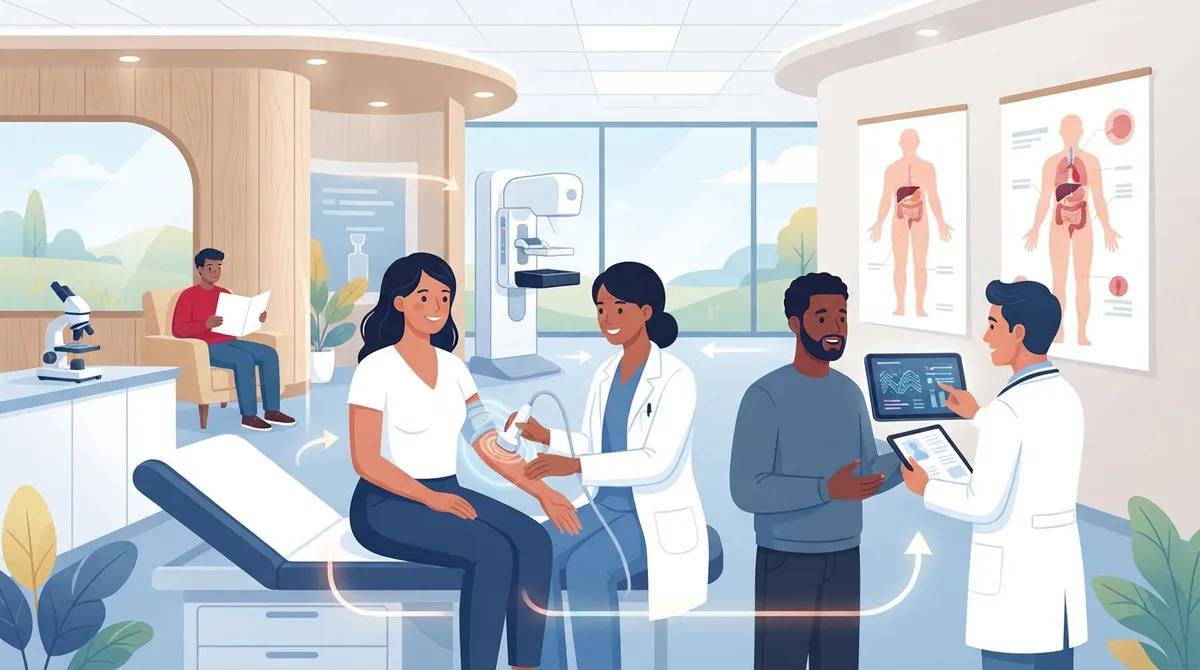
Cancer screening means testing people who have no symptoms. The goal is to find cancer early or spot precancerous changes. It is different from diagnostic testing, which looks into a symptom or an abnormal finding.
For example, a mammogram for a woman with no breast concerns is a screening test. A mammogram ordered after a new lump is a diagnostic test. The difference matters because it affects how doctors choose tests, how insurance may apply, and how results are handled.
Screening also has limits. No test is perfect. Doctors must weigh the benefits against possible harms. These include false-positive results, extra procedures, overdiagnosis, and worry. That is why guidelines target specific ages and risk groups instead of everyone.

Why Primary Care Is the Best Starting Point
Your primary care team is the hub for your screening plan. A good clinician looks at your whole picture and builds a schedule that fits you. Our primary care approach focuses on prevention, which makes screening a natural part of every visit.
Primary care teams can help you in several ways:
- Review your age, personal history, and family history of cancer
- Ask about smoking exposure and other risk factors
- Recommend tests that match current evidence-based guidelines
- Order tests and arrange referrals when needed
- Make sure abnormal results get timely follow-up
That last point is vital. A screening test only helps if someone acts on the result. Having one team coordinate your care closes the loop. To learn how this works in practice, read about fragmented care versus coordinated care.
Cancer Screening Guidelines for Average-Risk Adults
The U.S. Preventive Services Task Force (USPSTF) sets widely used recommendations. Other professional groups may differ in some details, and guidance can change. Your clinician should use the most current advice and your personal situation. The table below gives a general overview for people at average risk.
|
Cancer Type |
Who Should Be Screened |
Common Test Options |
|---|---|---|
|
Breast |
Women ages 40 to 74 |
Mammogram every 2 years |
|
Cervical |
Women ages 21 to 65 |
Pap test every 3 years; HPV testing or cotesting every 5 years for ages 30 to 65 |
|
Colorectal |
Adults ages 45 to 75 |
Stool-based tests or colonoscopy |
|
Lung |
Adults ages 50 to 80 with a 20 pack-year smoking history who smoke now or quit within 15 years |
Annual low-dose CT scan |
These are starting points, not rules for every person. Your own history may call for earlier or more frequent testing.
Breast Cancer Screening
The USPSTF recommends a mammogram every two years for women ages 40 to 74 at average risk. CDC data from 2023 shows that 80.0% of women ages 50 to 74 were up to date with breast screening. Among women ages 40 to 49, only 62.1% reported a mammogram within the past two years.
That gap in younger women is worth noting. Many women are unsure when to begin. If you are in your late 30s, ask your clinician about your risk now so you can plan ahead.
Women with a strong family history, known genetic risk, or other risk factors may need a personal assessment. An average-risk schedule may not be right for them.
Cervical Cancer Screening
Cervical screening can prevent cancer by finding precancerous changes early. USPSTF guidance covers these options:
- Ages 21 to 29: a Pap test (cytology) every 3 years
- Ages 30 to 65: a Pap test every 3 years, high-risk HPV testing every 5 years, or cotesting every 5 years
CDC data shows that 75.4% of women ages 21 to 65 were up to date with cervical screening in 2023. Options may differ among guideline groups, so talk with your clinician about which approach fits you. Many women find it helpful to pair this with a well-woman visit. Our article on well woman exam mistakes shows what to avoid.
Colorectal Cancer Screening
The USPSTF recommends colorectal screening for adults ages 45 to 75. For ages 76 to 85, the choice is more selective. It depends on your health, past screening, and personal preferences.
You have more than one way to be screened. Options include:
- Stool-based tests you can often complete at home
- Visual exams such as colonoscopy
Here is a key point many people miss. If a stool-based test is positive, you need a follow-up colonoscopy to complete the screening process. A positive result is not a diagnosis, but it must not be ignored.
CDC data shows that 67.4% of adults ages 45 to 75 were up to date in 2023. That is the lowest rate among the major cancer screenings, so it is a good place to start if you are unsure where you stand.
Lung Cancer Screening
Lung screening is for a specific group. The USPSTF recommends annual low-dose CT scans for adults who meet all of these points:
- They are between ages 50 and 80
- They have at least a 20 pack-year smoking history
- They currently smoke or quit within the past 15 years
One pack-year equals smoking one pack a day for one year. So two packs a day for ten years equals 20 pack-years. Screening usually stops once a person has been smoke-free for 15 years, or if a health condition greatly limits life expectancy or the ability to have curative treatment.
Cancers Without Routine Screening Recommendations
More testing is not always better. The USPSTF does not recommend routine population screening for several cancers in people without symptoms and at average risk. These include ovarian, pancreatic, testicular, and thyroid cancers. Studies have not shown a net benefit for these tests in that group.
Prostate cancer is a special case. The decision is individual. Men and their clinicians weigh the possible benefits and harms together. For a deeper look, see our guide on key things men should know about prostate exams.
Does Family History Change Your Plan?
Yes, it can. Average-risk schedules do not fit everyone. You may need earlier or more frequent screening if you have:
- A close relative who had cancer at a young age
- Several relatives with the same type of cancer
- A known inherited gene change
- A past abnormal screening result
This is where modern tools can help. DNA gene testing can offer insight into inherited risk, which your clinician can use to shape a personal screening plan. It does not replace standard screening, but it can add useful context for people with a strong family history.
Screening Benefits and Risks
Good screening decisions weigh both sides. The benefits can be large. Early detection may mean simpler treatment, and some tests prevent cancer outright.
The possible harms are real too:
- False positives: a result that looks abnormal but is not cancer
- Follow-up procedures: extra imaging or biopsies that carry their own small risks
- Overdiagnosis: finding slow-growing cancers that would never have caused harm
- Anxiety: worry while you wait for results
A thoughtful clinician explains these trade-offs in plain language. You should leave the conversation feeling informed, not pressured.
How to Get the Most From Your Screening Visit
A little preparation makes screening easier and more useful. Follow these steps:
- Write down your family cancer history, including ages at diagnosis
- List past screening tests and when you had them
- Note your smoking history, past and present
- Bring a list of current medicines and supplements
- Ask which tests you are due for and why
- Ask how and when you will receive your results
You can also fold screening into other care. An annual visit is a natural time to review everything. See what happens during an annual wellness visit to know what to expect. For more ideas, read how to get the most out of your health screening.
Cancer Screening at InCare in Tampa and Riverview
InCare offers cancer screening as part of a personalized, whole-body approach to health. With locations in Tampa and Riverview, plus virtual visits, we make it easier to fit prevention into a busy life. Our team combines modern technology with medical expertise to build a plan around your age, history, and goals.
You can meet the clinicians who guide this care on our providers page. Patients regularly share their experiences, and you can read InCare reviews on Google by using the link to visit us on Google, InCare. You can also follow our updates on Instagram, Facebook, and TikTok for wellness tips and clinic news.
Because we also provide urgent care and ongoing primary care, one team can follow your results from start to finish. That continuity helps make sure nothing slips through the cracks.
Take the Next Step
Cancer screening works best when it is simple, timely, and personal. Know the guidelines for your age, share your family history, and follow up on every result. If you are unsure which tests you need, a short conversation with a clinician can bring clarity fast.
Ready to build your screening plan? Book your visit with InCare today, or contact our team with questions. Early action is one of the most powerful steps you can take for your long-term health.
FAQs
Q: What cancer screenings should I get at my age?
A: It depends on your age, sex, and risk. For average-risk adults, guidelines suggest mammograms for women ages 40 to 74, cervical screening for ages 21 to 65, and colorectal screening for ages 45 to 75. Annual low-dose CT lung screening applies to certain current or former heavy smokers ages 50 to 80.
Q: What is the difference between a screening test and a diagnostic test?
A: A screening test checks for cancer in people who have no symptoms. A diagnostic test looks into a symptom or an abnormal finding to find out what is causing it. Your clinician decides which one fits your situation.
Q: What happens after a positive stool test for colorectal cancer?
A: A positive stool-based test requires a follow-up colonoscopy to complete the screening process. The result does not mean you have cancer, but it needs prompt attention. Your primary care team can arrange the referral and track your results.
Q: Does a family history of cancer mean I need earlier screening?
A: It can. A strong family history, known genetic risk, or other risk factors may call for earlier or more frequent screening than average-risk schedules. Share your full family history with your clinician so they can tailor your plan.
Q: What are the risks of cancer screening?
A: Screening can cause false-positive results, follow-up procedures, overdiagnosis, and anxiety. For this reason, guidelines do not recommend routine screening for some cancers, such as ovarian, pancreatic, testicular, and thyroid cancers, in average-risk people without symptoms.


