Key Takeaways
- Confirm low testosterone with two separate fasting morning total-testosterone tests before starting TRT, since a single lab result can be misleading.
- Diagnosis requires both compatible symptoms and consistently low testosterone levels; symptoms alone or a single low value is not enough.
- Discuss fertility before starting, because TRT can suppress sperm production and is generally not recommended for men planning to conceive soon.
- Check hematocrit before treatment and again about 3 to 6 months after starting, and monitor blood pressure, since testosterone products can raise it.
- Look for a provider whose plan includes root-cause testing, such as sleep apnea, weight, thyroid, and medication review, plus scheduled follow-up labs.
- Be cautious of programs promising very high doses, rapid muscle gain, or optimization beyond normal ranges; TRT should restore a healthy range, not exceed it.
Low energy, poor sleep, a weaker sex drive, and slower recovery can all point to low testosterone. They can also point to many other problems. That is why a careful medical process matters before anyone starts treatment. Medically supervised TRT in Tampa should begin with a real evaluation, not a quick online quiz or a single lab number.
Testosterone replacement therapy (TRT) can help men with confirmed testosterone deficiency. It is not a general anti-aging shortcut, a weight loss tool, or an athletic booster. When it is used correctly, it needs a clear diagnosis, a safe treatment plan, and steady follow-up.
This guide explains how to start TRT the right way. You will learn how doctors diagnose low testosterone, what tests are used, which treatment forms exist, and what monitoring should look like. You will also find questions to ask before you choose a provider in the Tampa Bay area.
What Medically Supervised TRT in Tampa Actually Means
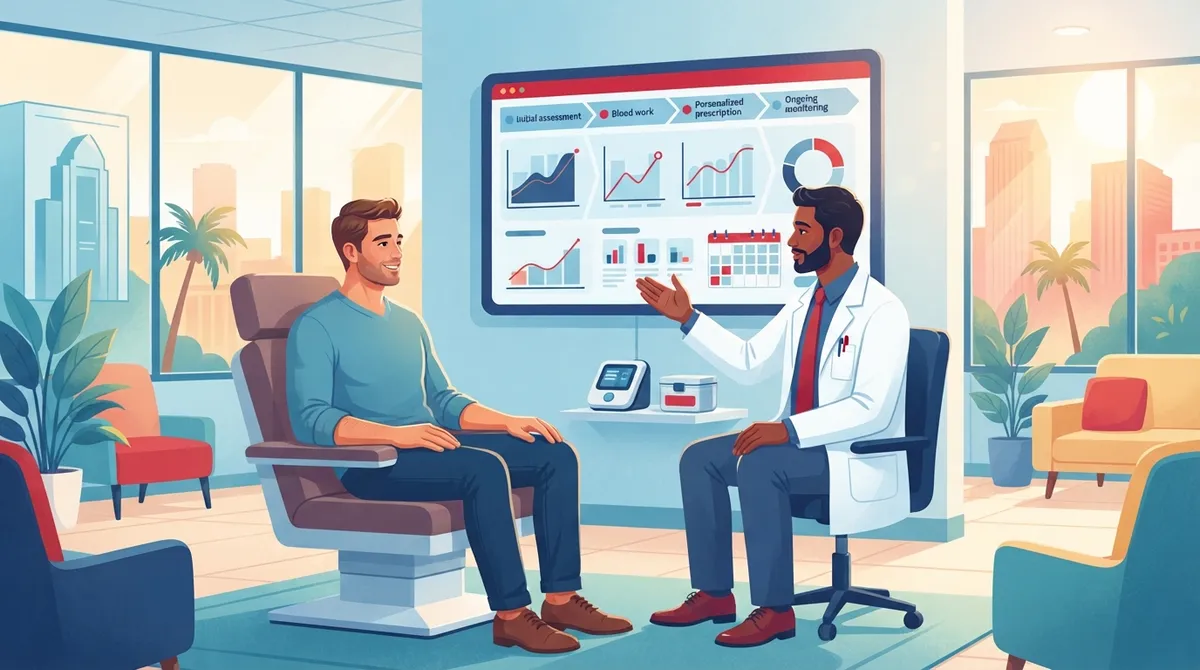
Medically supervised TRT means a licensed clinician evaluates your symptoms, orders proper testing, prescribes treatment only when it is justified, and monitors you over time. The word "supervised" matters. It means someone is watching your labs, your blood pressure, and your health, not just handing out a prescription.
Major medical guidelines define male hypogonadism as compatible symptoms or signs plus consistently low testosterone levels. Both parts are required. A low lab value without symptoms is not enough. Symptoms without confirmed low levels are not enough either.
A responsible TRT program in Tampa should include these core elements:
- A full medical history and physical exam
- Repeated morning blood tests to confirm low testosterone
- A search for underlying causes of low testosterone
- A talk about risks, benefits, and fertility
- Ongoing lab work and clinical follow-up
If a clinic skips these steps, that is a warning sign. Safe care is built on process, not speed.

Step 1: Recognize the Symptoms Worth Discussing
Low testosterone can look different from man to man. Some symptoms are more specific to testosterone deficiency, while others overlap with many common conditions. Knowing the difference helps you have a better conversation with your doctor.
Symptoms that may point to low testosterone
- Reduced sex drive or fewer spontaneous erections
- Low energy or ongoing fatigue
- Loss of muscle mass or strength
- Increased body fat
- Low mood or reduced motivation
- Trouble concentrating
- Hot flashes or reduced body hair in some cases
Many of these symptoms also come from poor sleep, stress, depression, thyroid problems, diabetes, or medication side effects. A good clinician will not assume the answer is testosterone. For example, if you often feel tired and snore at night, it may be worth reading how to know when to see a doctor for poor sleep before starting hormone treatment.
Bring a short list of your symptoms, when they began, and any medications or supplements you take. This helps your provider see the full picture.
Step 2: Get the Right Testing Before Treatment
Testing is the foundation of safe TRT. The Endocrine Society recommends confirming low testosterone with two separate fasting morning total-testosterone measurements. Testosterone levels rise and fall during the day and are usually highest in the morning, so timing matters.
A clinician may also check free testosterone when total testosterone is borderline or when conditions that affect sex hormone-binding globulin (SHBG) are suspected. Obesity, liver disease, and thyroid problems can all shift SHBG levels and change how results should be read.
Common tests in a TRT evaluation
|
Test |
Why It Is Done |
|---|---|
|
Morning total testosterone (two separate days) |
Confirms whether levels are consistently low |
|
Free testosterone or SHBG |
Clarifies borderline results or SHBG-related issues |
|
LH and FSH |
Helps identify whether the cause is in the testes or the pituitary |
|
Complete blood count (hematocrit) |
Sets a baseline before treatment; TRT can raise red blood cell levels |
|
PSA and prostate review (when appropriate) |
Screens prostate health based on age and risk |
|
Metabolic and thyroid labs |
Rules out other causes of fatigue and low drive |
One lab result is rarely enough. If a provider offers treatment after a single test, ask why. Responsible care confirms the diagnosis before it starts a long-term therapy.
Step 3: Look for the Root Cause
Low testosterone is often a sign of something else. Evaluation should consider illness, medications, obesity, sleep disorders, and conditions of the pituitary gland or testicles. Treating only the number can miss the real issue.
Here are common contributors a clinician should review:
- Excess body weight. Extra body fat can lower testosterone. In some men, weight loss alone raises levels and improves symptoms.
- Sleep problems. Untreated sleep apnea is closely linked with low energy and low testosterone.
- Medications. Opioids, steroids, and some other drugs can lower hormone levels.
- Chronic illness. Diabetes, kidney disease, and liver disease can all play a role.
- Pituitary or testicular conditions. These need specific testing and sometimes specialist input.
This is where a primary care setting has a real advantage. A doctor who knows your full health history can connect the dots between sleep, weight, blood sugar, and hormones. If weight is part of the picture, a physician-led plan such as the approaches described in 14 ways a primary care doctor aids weight loss may help improve both energy and hormone levels.
Step 4: Discuss Fertility Before You Begin
This step is easy to overlook, and it is one of the most important. TRT can suppress sperm production and impair fertility. Testosterone therapy is generally not recommended for men who plan to conceive in the near term.
If you want children now or in the future, tell your provider before starting. There may be other options that support your own hormone production while protecting fertility. You can learn more about how doctors think about this in Kisspeptin vs. Testosterone Therapy: Which Fits Your Care?
A good provider will bring up fertility on their own. If they do not, ask directly. Your answer may change the whole treatment plan.
Step 5: Understand Your Treatment Options
TRT is available in several forms. The best choice depends on your health, your preferences, your schedule, and how well you can follow product instructions. There is no single best option for every man.
|
Form |
How It Works |
Key Considerations |
|---|---|---|
|
Topical gel |
Applied daily to the skin |
Can transfer to others through skin contact if precautions are not followed |
|
Injections |
Given on a set schedule, often at home or in clinic |
Levels can rise and fall between doses; needs proper technique |
|
Other FDA-labeled products |
Vary by product |
Each has its own instructions and monitoring needs |
If you choose a gel, you must be careful around partners, children, and pets. Washing hands and covering the application area are basic safety steps. Your clinician should explain these rules clearly.
Beware of any program that promises very high doses, quick muscle gain, or "optimization" beyond normal ranges. Treatment should aim to bring you into a healthy range and relieve symptoms, not push you past it.
Step 6: Know What Monitoring Should Look Like
Monitoring is not optional. It is a core part of safe TRT. FDA labeling advises checking hematocrit before treatment and again after you start. This is commonly done at about 3 to 6 months, then periodically after that. Prostate health should be reviewed as appropriate, and blood pressure should be watched too.
Blood pressure matters because testosterone products can raise it. In one FDA-labeled ambulatory blood pressure study, a testosterone gel raised mean systolic and diastolic readings by 2.7 and 1.1 mm Hg after 16 weeks. Effects vary by product and by person, which is why periodic checks are recommended.
A sample follow-up schedule
- Before starting: Confirm low testosterone, check hematocrit, blood pressure, and prostate status as appropriate.
- Early follow-up: Review symptoms, side effects, and testosterone levels after dosing is stable.
- 3 to 6 months: Recheck hematocrit and testosterone, and review blood pressure.
- Ongoing: Periodic labs, often at least yearly, with visits to assess how you feel and whether treatment is still helping.
If a provider cannot explain their follow-up plan, think twice. Care that ends with the first prescription is not truly supervised.
Understanding Risks and Side Effects
Every treatment has trade-offs. A clear risk discussion is part of good care. Common issues linked with testosterone therapy include higher red blood cell counts, blood pressure changes, acne, fluid retention, breast tenderness, and reduced sperm production.
Heart safety has been a major question. The large TRAVERSE trial found that major adverse cardiovascular events occurred at similar rates in the testosterone gel and placebo groups, at 7.0% versus 7.3%. The FDA cited this trial in its 2025 labeling update, while also requiring warnings about blood pressure increases. This is reassuring for some men, but it does not remove the need for monitoring.
Some men should not start TRT without careful review. This includes men with certain prostate conditions, untreated sleep apnea, very high red blood cell counts, or active plans for fertility. Your clinician should go through these points with you before you decide.
How to Choose a Qualified TRT Provider in Tampa
Many clinics describe their services in attractive ways. A provider's own description of its services is not independent proof of quality. You should verify the details yourself.
Use this checklist when comparing options:
- Does a licensed physician or qualified clinician perform the evaluation?
- Do they require repeated morning testosterone tests before treatment?
- Do they check blood counts and discuss prostate health?
- Do they talk about fertility and other causes of low testosterone?
- Is follow-up built into the plan, with clear timing?
- Are costs explained up front, including labs and visits?
- Is care personalized, or does everyone get the same protocol?
It also helps to ask how the clinic fits into your overall health care. TRT works best when it is not isolated from the rest of your health. For a closer look at what a strong program should include, see how to choose a reputable TRT clinic in Tampa and who provides medically supervised TRT in Tampa Bay.
Why Primary Care Is a Smart Place to Start
Hormone care should connect to your whole health. Blood pressure, blood sugar, sleep, weight, mood, and heart risk all interact with testosterone. A primary care team can manage all of these together and spot problems early.
InCare is a personalized primary care and wellness clinic serving Tampa and Riverview. The practice combines modern technology with medical expertise and focuses on prevention and whole-body health. That means hormone questions can be reviewed alongside weight management, metabolic testing, cancer screening, and routine primary care, rather than in a separate silo. Patients can see what others say about their experience by reading reviews on Visit us on Google — InCare.
For men in the Riverview area, what to look for in a TRT clinic in Riverview offers more local guidance. You can also follow InCare on Instagram for health updates and clinic news.
Lifestyle Steps That Support Any Treatment Plan
TRT is not a replacement for healthy habits. Even when treatment is needed, lifestyle changes can improve results and lower risk. They may also raise testosterone naturally in some men with milder cases.
- Sleep 7 to 9 hours. Poor sleep lowers testosterone and worsens fatigue.
- Build muscle with resistance training. Strength work supports body composition and metabolic health.
- Manage weight. Even modest weight loss can improve hormone levels and blood sugar.
- Limit alcohol. Heavy drinking can disrupt hormone balance.
- Address stress and mood. Chronic stress can lower energy and drive.
If weight is a major factor, a supervised program may be a better first step than hormones. A physician-guided plan can include testing, nutrition support, and medication when appropriate. Learn more in 11 reasons medical weight loss clinics work better in 2026.
What to Expect at Your First Visit
A first TRT consultation should feel like a thorough medical visit. Expect questions about symptoms, medications, sleep, mood, sexual function, and family goals. You may have a physical exam and blood draw the same day or be scheduled for morning labs.
Do not expect to leave with a prescription on the spot unless your results and history already support it. Safe care takes a little time. Come prepared with a list of questions, a medication list, and any past lab results. If you are ready to take the next step, you can book an appointment with InCare to start with a proper evaluation.
Conclusion
Medically supervised TRT in Tampa is about more than a prescription. It means confirming low testosterone with repeated morning tests, looking for the cause, discussing fertility, choosing the right treatment form, and keeping up with labs and blood pressure checks. Skipping any of these steps raises risk and reduces the chance of a good outcome.
The best approach is a careful, personalized one that treats you as a whole person. A primary care and wellness team like InCare can evaluate your symptoms, order the right tests, and build a plan that fits your health and goals. If you are ready to find out whether TRT is right for you, contact InCare to schedule your consultation in Tampa or Riverview.
FAQs
Q: What does medically supervised TRT in Tampa involve?
A: It involves a full clinical evaluation, repeated morning blood tests to confirm low testosterone, a review of possible causes, and a discussion of risks and fertility. After treatment begins, a clinician monitors testosterone, blood counts, blood pressure, and prostate health when appropriate.
Q: How is low testosterone diagnosed, and do I need two morning blood tests?
A: Diagnosis requires compatible symptoms plus consistently low testosterone levels. The Endocrine Society recommends two separate fasting morning total-testosterone measurements, because levels vary during the day and a single result can be misleading.
Q: Can TRT affect fertility or sperm production?
A: Yes. TRT can suppress sperm production and impair fertility, and it is generally not recommended for men who plan to conceive in the near term. Discuss your family plans with your clinician before starting treatment.
Q: What monitoring is needed during TRT?
A: FDA labeling advises checking hematocrit before treatment and again about 3 to 6 months after starting, then periodically. Blood pressure should be monitored because testosterone products can raise it, and prostate health should be reviewed as appropriate.
Q: How do I choose a qualified TRT provider in Tampa?
A: Look for a licensed clinician who requires repeated morning testosterone tests, checks blood counts and prostate health, discusses fertility, and builds follow-up into the plan. Ask about costs up front and confirm that care is individualized rather than one-size-fits-all.