Key Takeaways
- Safe TRT starts with a real diagnosis: symptoms plus repeat early-morning total testosterone tests confirming consistently low levels, not a single low result or a online questionnaire.
- Primary care is a strong starting point because it can check reversible causes like sleep apnea, obesity, thyroid problems, and medication effects before TRT is chosen.
- Ask any provider who evaluates you, who writes the prescription, and whether they coordinate with primary care, urology, or endocrinology.
- TRT can suppress sperm production, so discuss fertility goals before starting; it is generally a poor fit for men wanting children in the near term.
- Monitoring is essential for life on treatment: regular blood pressure checks, hematocrit levels, and follow-up labs, since testosterone can raise blood pressure.
- Be wary of guaranteed results, prescriptions after one short online form, and compounded products presented as FDA-approved equivalents; request a written cost estimate covering visits, labs, and medication.
If you have searched for who provides medically supervised TRT in Tampa Bay, you have probably noticed one thing. The options are many, and they do not all offer the same level of care. Some patients find testosterone therapy through primary care offices. Others find it through urology or endocrinology practices or through clinics that focus only on men's health.
That variety can feel confusing. A safe program starts with a real medical evaluation, not just a quick prescription. It also includes careful follow-up for as long as you stay on treatment.
This guide explains the types of providers in the area, what medical supervision should look like, and the questions to ask before you begin. It also shows why a primary care setting, such as InCare in Tampa and Riverview, can be a smart place to start. Many readers, from busy professionals to wellness-minded adults, want clear answers before they commit to any hormone treatment. This article is built to give you those answers.
What Does Medically Supervised TRT Actually Mean?
Testosterone replacement therapy, or TRT, is a medical treatment for men with a confirmed diagnosis of low testosterone, also called hypogonadism. The word "supervised" matters. It means a licensed clinician guides every step, from the first visit through long-term monitoring.
The Endocrine Society says hypogonadism should be diagnosed only when symptoms or signs fit the picture and testosterone is clearly and consistently low. The level should be confirmed with a repeat morning test. A single low result, or a symptom questionnaire alone, is not enough.
In a properly supervised program, you should expect the following:
- A full review of your symptoms, health history, and current medications
- A physical exam and appropriate lab testing
- A discussion of your fertility goals before treatment starts
- A clear plan for follow-up visits and repeat labs
- Honest talk about risks, costs, and other options
If a provider promises guaranteed results or offers a prescription after one short online form, treat that as a warning sign.

Who Provides Medically Supervised TRT in Tampa Bay?
Several types of practices in the Tampa Bay area may offer testosterone therapy. Services change over time, so you should always confirm current offerings, clinician credentials, and locations directly with each office. A directory listing or an advertisement is not proof of quality.
Primary Care Practices
Primary care doctors know your full health history. That matters because testosterone can affect blood pressure, red blood cell counts, sleep, and heart health. A primary care provider can look at all of these together instead of treating one number in isolation.
Urology Offices
Urologists focus on the male reproductive and urinary systems. They often manage prostate concerns and fertility questions, which can be helpful when TRT is being considered.
Endocrinology Offices
Endocrinologists specialize in hormones. They are often involved when a case is complex or when a pituitary or other underlying cause is suspected.
Men's Health Clinics
Some clinics focus only on hormone and men's wellness care. Quality varies. Ask who evaluates you, who prescribes, and how follow-up works.
|
Provider Type |
Strengths |
Things to Confirm |
|---|---|---|
|
Primary care practice |
Whole-health view, coordinated care, ongoing relationship |
Experience with hormone therapy and monitoring plan |
|
Urology office |
Prostate and fertility expertise |
Whether broader health factors are reviewed |
|
Endocrinology office |
Deep hormone knowledge, complex cases |
Wait times and referral requirements |
|
Men's health clinic |
Focused programs, convenient scheduling |
Clinician credentials, diagnostic standards, follow-up schedule |
Why Primary Care Is a Strong Starting Point
Low energy, poor sleep, weight gain, and low mood can come from many causes. Low testosterone is only one possibility. Sleep apnea, obesity, thyroid problems, medication side effects, and stress can all lower testosterone or mimic its symptoms.
A primary care clinic can check for these causes first. For example, if sleep is part of the problem, you may want to read how to know when to see a doctor for poor sleep. Treating a reversible cause can sometimes improve symptoms and may change whether TRT is needed at all.
InCare is a personalized clinic that combines modern technology with medical expertise. The team offers primary care, urgent care, weight loss programs, metabolic testing, and other wellness services in Tampa and Riverview. That broad setup means your hormone question is handled alongside your overall health, not apart from it. If you are comparing local options, our guide on what to look for in a TRT clinic in Riverview covers the same checklist in more detail.
What a Safe TRT Evaluation Includes
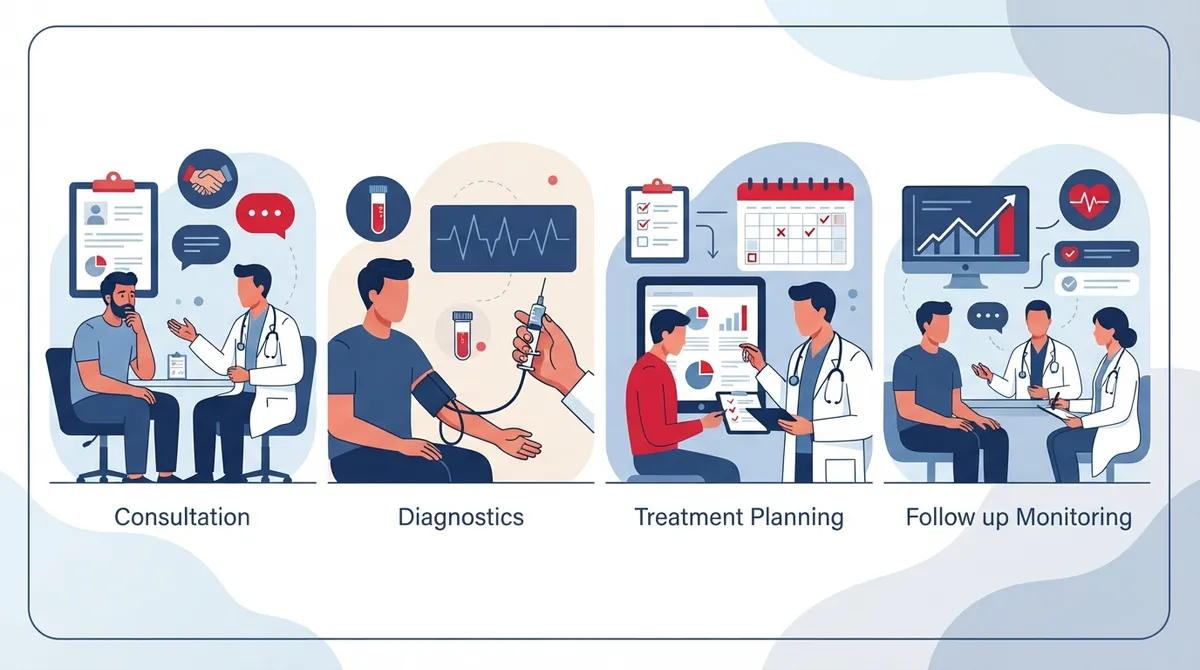
A careful workup is the foundation of safe treatment. Here is the usual order of steps.
- Symptom and history review. Your clinician asks about energy, mood, libido, sleep, weight changes, and medical conditions.
- Medication and fertility review. Some drugs affect hormones. TRT can lower sperm production, so fertility plans must be discussed up front.
- Physical exam. This includes blood pressure, weight, and a look for signs linked to low testosterone.
- Repeat morning lab testing. Total testosterone is confirmed with more than one early-morning blood draw. Other labs, such as a blood count, may be added.
- Look for reversible causes. Obesity, sleep disorders, and medication effects are reviewed before treatment is chosen.
- Shared decision. You and your clinician weigh the benefits, risks, and costs together.
Skipping steps in this list is a red flag. A good provider will explain why each one matters.
Who Should Not Use TRT
TRT is not right for everyone. Testosterone can suppress sperm production, so it is generally a poor fit for men who want to have children in the near term. Other cautions and contraindications include:
- Certain prostate or breast cancers
- Elevated hematocrit, meaning a high red blood cell level
- Untreated severe obstructive sleep apnea
- A recent major cardiovascular event
- Uncontrolled high blood pressure
The FDA's 2025 labeling update also keeps the limit against using testosterone only for age-related decline. In other words, a lower level that comes with normal aging is not the same as a diagnosed medical condition.
What the Latest Safety Research Says
Heart safety has been a major question for years. The TRAVERSE trial studied 5,246 men aged 45 to 80 who had hypogonadism and either existing cardiovascular disease or higher cardiovascular risk. Major adverse cardiovascular events happened in 7.0% of men using testosterone gel and 7.3% of those on placebo.
Based on that result, the FDA's February 2025 class-wide update reported no increase in major adverse cardiovascular outcomes in that trial population. The same update also noted that testosterone products can raise blood pressure. Labels now call for periodic blood pressure checks and advise against use in people with uncontrolled hypertension.
This is why monitoring is not optional. Even when overall heart risk looks reassuring, individual patients still need regular checks.
Treatment Options Your Clinician May Discuss
FDA-approved testosterone products come in several forms, including gels, injections, and patches. The best choice depends on your lifestyle, comfort, cost, and ability to keep up with follow-up. Each option has trade-offs in convenience, skin exposure, and injection needs.
Be careful with compounded products. They should not be presented as FDA-approved equivalents. Ask your provider exactly which product is being prescribed and why.
You may also see peptide and hormone programs advertised side by side. If you want a clear look at how those therapies differ, see our article on TRT vs peptide therapy vs hormone replacement therapy.
How Monitoring Should Work
Good TRT care does not end when the prescription is written. Your clinician should reassess your symptoms and testosterone levels. They should also watch for side effects, including changes in hematocrit and prostate-related concerns when appropriate.
Blood pressure should be checked regularly. Follow-up visits are also a chance to adjust your dose or stop treatment if it is not helping. Missed follow-up is one of the most common problems, so it helps to know the schedule before you start. Our post on TRT follow-up mistakes Riverview patients should avoid offers practical tips.
Questions to Ask Any Tampa Bay TRT Provider
Use this checklist when you compare practices in Tampa, St. Petersburg, Clearwater, or nearby communities:
- Who evaluates me, and who writes the prescription?
- Is the clinician licensed in Florida and trained in hormone care?
- What test results do you require before starting treatment?
- Do you repeat morning testosterone testing?
- How do you address fertility goals and contraindications?
- What is the follow-up schedule for labs and visits?
- Do you coordinate with primary care, urology, or endocrinology?
- What are the total costs for visits, labs, and medication?
Clear, direct answers are a good sign. Vague answers or pressure to sign up quickly are not. You can also read what real patients say about local clinics before you decide, including reviews for InCare. Visit us on Google — InCare to see patient feedback for our Tampa Bay locations.
Cost and Insurance Considerations
Costs vary by provider and by the type of testosterone product. Insurance coverage can also differ, especially for lab testing and follow-up visits. Ask each office for a written estimate that includes all parts of care. For a closer look at pricing, our guide on how much TRT costs in 2026 explains what drives the total.
Why Choose InCare for TRT Guidance in Tampa Bay
InCare is built around prevention and whole-body care. Our clinicians start with a thorough evaluation, look for contributing health factors, and explain every option in plain language. Because we also offer primary care, weight loss support, and advanced wellness testing, your hormone health is never treated in a vacuum.
We serve patients at our Tampa and Riverview locations, with virtual visits available for convenience. If you want a team that values careful diagnosis, honest conversation, and steady follow-up, InCare is a strong choice for medically supervised testosterone care in Tampa Bay. You can also follow our updates on Instagram, Facebook, and TikTok for health tips and clinic news.
Conclusion
The answer to who provides medically supervised TRT in Tampa Bay is not one name. It is a group of primary care, urology, endocrinology, and men's health practices. What separates safe care from risky care is the process, not the label on the door. Look for a real diagnosis, repeat testing, a review of fertility and risk factors, and a clear plan for monitoring.
If you are ready to talk with a team that puts your whole health first, book your appointment with InCare today. You can also contact our team with any questions before your visit.
FAQs
Q: How do I choose a qualified testosterone replacement therapy provider in Tampa Bay?
A: Look for a Florida-licensed clinician who requires a symptom review and repeat morning lab testing before treatment. The provider should also discuss fertility, screen for contraindications, and set a clear follow-up schedule. Avoid clinics that promise guaranteed results or prescribe after a single questionnaire.
Q: What tests are needed before starting TRT?
A: Most programs begin with a medical history, a physical exam, and repeat early-morning total testosterone blood tests. Clinicians may add other labs, such as a blood count, and review medications, sleep, and fertility goals. Low testosterone should be confirmed more than once before a diagnosis is made.
Q: Can TRT affect fertility or sperm count?
A: Yes. Exogenous testosterone can suppress sperm production, so it is generally not a good choice for men who want to have children in the near term. Talk with your clinician about fertility goals and alternatives before starting treatment.
Q: How often is monitoring needed during TRT?
A: Schedules vary by patient and product, but clinicians typically recheck symptoms, testosterone levels, and side effects at regular intervals. They also watch hematocrit, prostate-related concerns when appropriate, and blood pressure. Your provider should give you a written follow-up plan at the start.
Q: Does insurance cover TRT in Florida?
A: Coverage depends on your plan, your diagnosis, and the specific product prescribed. Lab testing and follow-up visits may be covered differently than the medication itself. Ask your provider and your insurer for a written estimate before you begin.