
Key Takeaways
- No peptide has been proven to slow or reverse whole-body aging or extend human lifespan, as of 2026.
- Collagen peptides have the most research, but studies show only mixed skin benefits like hydration and wrinkles, not systemic anti-aging effects.
- The FDA states compounded peptides are not reviewed for safety, effectiveness, or quality, and flags BPC-157, CJC-1295, ipamorelin, and epitalon as concerns.
- Growth-hormone-releasing peptides show uncertain functional benefits in healthy older adults, and older adults may be more prone to side effects.
- Proven steps for healthy aging include sun protection, not smoking, regular physical activity, quality sleep, vaccinations, and age-appropriate screenings.
- Ask any peptide provider about the exact product, where it is made, how it is tested, and what risks exist; vague answers or promises to reverse aging are red flags.
Social media, wellness podcasts, and online clinics promote peptides as a way to slow aging, restore energy, and rebuild muscle. The claims are bold, and the interest is real. So can peptides help with aging, or is the promise ahead of the science?
The honest answer is mixed. "Peptide" is a broad term for short chains of amino acids, not one treatment. Some peptides are approved medicines for defined conditions. Others are sold as longevity products with little human evidence behind them. As of 2026, no peptide has been proven to slow or reverse whole-body aging or extend human lifespan.
This guide explains what peptides are, what the research says about the most popular ones, and where the real risks sit. It also covers the steps that have stronger proof for healthy aging, and how a primary care team can help you sort fact from marketing.
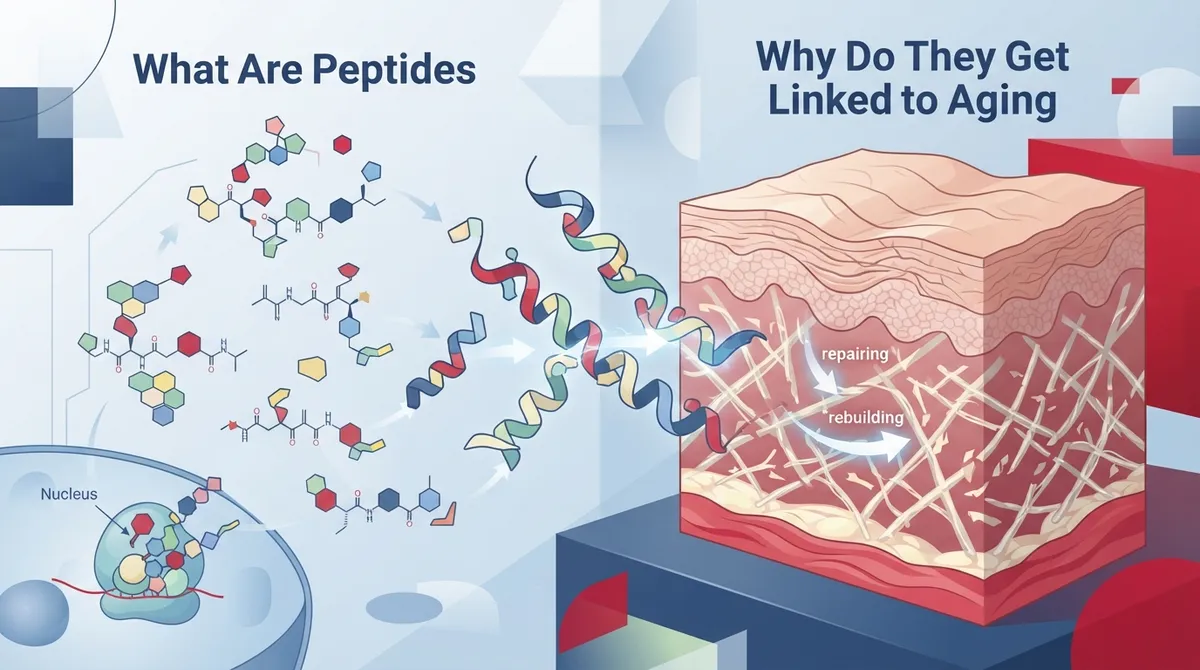
What Are Peptides, and Why Do They Get Linked to Aging?
Peptides are short chains of amino acids. Your body makes thousands of them. Insulin is a peptide. So are many hormones that signal your cells to grow, repair, or burn energy. Because hormone levels change with age, it is easy to see why peptides became a popular anti-aging idea.
The logic sounds simple. Growth hormone declines as we get older. Skin loses collagen. Muscle shrinks. So some clinics suggest that adding peptides could reverse these shifts. The problem is that each peptide acts differently. Evidence for one cannot be applied to another.
Three points help frame the topic:
- Peptides are not one therapy. Safety and benefit depend on the exact peptide, dose, route, and goal.
- Approved does not mean anti-aging. Some peptide drugs are FDA-approved for specific diseases, not for aging.
- Aging is not a single condition. Claims about "reversing aging" are different from evidence for a measurable outcome, such as skin hydration or body composition.
If you want a plain-language primer first, our guide on how to understand peptides explained by your doctor is a good place to start.

Can Peptides Help With Aging? The Short Answer
No peptide treatment has been shown to slow whole-body aging, extend human lifespan, or reliably improve healthspan in otherwise healthy adults. That is the clear bottom line from the current evidence.
That does not mean peptides have no role in medicine. It means the strongest claims, such as "reverse your biological age" or "add healthy years," are not backed by solid human trials. A better question is narrower: does a specific peptide help a specific, measurable outcome, and is it safe for you?
Here is how the evidence breaks down by category.
|
Peptide or Category |
Marketed For |
Human Evidence Level |
Key Caution |
|---|---|---|---|
|
Oral collagen peptides |
Skin hydration, wrinkles |
Mixed; studied for skin only |
Not proven for systemic aging |
|
Growth-hormone-releasing peptides (CJC-1295, ipamorelin) |
Muscle, body composition, recovery |
Limited and inconclusive in healthy older adults |
Growth hormone signaling carries risks |
|
BPC-157 |
Tissue repair, injury recovery |
Insufficient human data |
FDA has flagged safety concerns for compounded use |
|
Epitalon |
Longevity, telomere support |
Insufficient human data |
Not an established anti-aging therapy |
Collagen Peptides: The Most Studied Option
Oral hydrolyzed collagen peptides have the most research of any "anti-aging peptide." But they have been studied for skin outcomes, not for lifespan or whole-body aging.
The results are mixed. A 2021 systematic review and meta-analysis pooled 19 randomized, double-blind, controlled studies with 1,125 participants. About 95% were women aged 20 to 70. It reported favorable results for skin hydration, elasticity, and wrinkles, with most studies lasting about 90 days.
A 2025 review took a more cautious view. It pooled 23 randomized controlled trials with 1,474 participants. The pooled results still showed statistically significant gains in hydration, elasticity, and wrinkles. Yet the authors concluded there was no clinical evidence to support collagen supplements for preventing or treating skin aging.
What does that mean for you? Collagen peptides are generally low risk and may give a small cosmetic benefit for some people. They are not a proven anti-aging treatment. If you want to compare skin options, see which peptides actually slow skin aging in 2026.
Growth-Hormone-Releasing Peptides: Popular, but Unproven for Aging
Growth-hormone-releasing peptides and secretagogues, such as CJC-1295 and ipamorelin, are often promoted for age-related changes in muscle and body composition. The idea is to nudge your body to release more growth hormone.
The evidence in healthy older adults is inconclusive. A review of growth-hormone-releasing hormone and secretagogues in normal aging found that functional benefits were uncertain. It also noted that older adults may be more prone to side effects. The authors called for long-term studies that track real outcomes, including falls, fractures, daily function, quality of life, and illness.
Raising growth hormone signaling can also cause adverse effects, and long-term benefit-risk data are lacking. This is why careful monitoring matters. You can read more in our article on what monitoring is needed with growth hormone peptides.
For deeper looks at individual products, these guides cover the research in detail:
- What Do CJC-1295 Human Studies Actually Show?
- CJC-1295 vs Ipamorelin: Which Peptide Fits Your Goals?
- 9 Facts on Ipamorelin FDA Approval Status in 2026
BPC-157, Epitalon, and Other Longevity Peptides
BPC-157 is promoted for tissue repair. Epitalon is promoted for longevity. Both appear often in online anti-aging content. Neither is an established anti-aging therapy.
Human evidence for these products is limited or insufficient to show benefit or long-term safety. Most of the excitement comes from animal and laboratory work. Results in animals do not reliably carry over to people.
If you are weighing these products, learn what claims can and cannot be supported first. Our guides on how to evaluate BPC-157 claims for healthy aging and whether an epithalon peptide clinic in Riverview is safe walk through the questions worth asking.
The Regulatory Reality: Approved vs. Compounded
A key point many patients miss is the difference between an FDA-approved drug and a compounded product. This matters for safety and quality.
The FDA states that compounded drugs are not FDA-approved. The agency does not review them for safety, effectiveness, or quality before they reach the market. Its compounding-risk information flags several peptide substances, including BPC-157, CJC-1295, ipamorelin, and epitalon. Concerns vary by substance and route. They include:
- Limited or inadequate safety data
- Potential immunogenicity, meaning your immune system may react to the product
- Peptide impurities that can affect quality
This is a regulatory safety signal, not proof that every use causes harm. But it is a strong reason to ask questions before you inject anything. Because FDA pages change, check the current FDA compounding page for updates.
To understand the difference in more depth, read FDA-approved vs. compounded peptides: which is safer?
Risks to Weigh Before You Try an Anti-Aging Peptide
Every treatment has trade-offs. For peptides marketed for aging, the risks are harder to judge because long-term data are missing. Here are the main concerns to discuss with a clinician:
- Product quality. Compounded and online products may vary in purity, strength, and sterility.
- Unknown long-term safety. Many peptides have not been studied for years of use in healthy adults.
- Hormonal effects. Increasing growth hormone signaling can cause side effects, and older adults may be more sensitive.
- Drug and condition interactions. Your medicines and health conditions may change the risk profile.
- False reassurance. Relying on an unproven injection may delay proven prevention, such as screenings and chronic disease care.
Side effects are real even when marketing says otherwise. See 5 peptide therapy side effects to know in 2026 and 7 anti-aging peptide mistakes Florida patients make for practical guidance.
What Actually Supports Healthy Aging
The good news is that healthy aging has a solid evidence base. The most reliable steps are not glamorous, but they work. They are also the foundation of good primary care.
- Sun protection. This is one of the strongest ways to protect skin from visible aging.
- Not smoking. This lowers risk for heart disease, cancer, lung disease, and early skin aging.
- Regular physical activity. Movement protects muscle, bone, heart health, and mood.
- Quality sleep. Poor sleep affects metabolism, memory, and immune function.
- Vaccinations. Staying current helps prevent serious illness as you age.
- Chronic disease management. Controlling blood pressure, blood sugar, and cholesterol protects long-term health.
- Age-appropriate screenings. Early detection of cancer and other conditions saves lives.
For the screening side, see cancer screening guidelines by age and risk in 2026. If sleep is a concern, how to know when to see a doctor for poor sleep can help you decide when to act.
Many of these steps can be built into a yearly visit. Learn how to get the most from preventive care visits in 2026, or see what to expect in a wellness checkup in Tampa, FL.
How a Primary Care Team Approaches Peptide Questions
If you are curious about peptides, you do not need to figure it out alone. A primary care clinician can help you think through the decision without hype. A sound approach follows a clear sequence:
- Define the goal. Are you after better skin, more strength, improved energy, or general longevity? Each goal has different evidence.
- Review the exact product and route. Is it an FDA-approved drug, a supplement, or a compounded injection? Who makes it, and how is it tested?
- Discuss evidence and uncertainty. A good clinician will tell you what is known, what is unknown, and what is only theory.
- Check your medicines and health history. Interactions and existing conditions can change your risk.
- Start with proven foundations. Screenings, lab work, sleep, nutrition, and activity come first.
This is the kind of careful, whole-person review that InCare offers at its Tampa and Riverview locations. The team combines primary care, advanced testing, and wellness services with a focus on prevention. If you want to compare approaches, read peptide therapy vs. proven care for aging in Tampa and longevity clinic vs. primary care in Tampa.
Personalized data can also guide smarter choices. Tools such as DNA gene testing, metabolic breath analysis, and body composition scans give you measurable information. Our guide on who should get biological age testing in 2026 explains where such testing may or may not help.
Red Flags When Shopping for Anti-Aging Peptides
Not every provider holds to the same standard. Watch for these warning signs:
- Promises to "reverse aging" or guarantee results
- No physical exam, lab work, or medical history review
- Vague answers about where the product is made or how it is tested
- Pressure to buy bundles, stacks, or long subscriptions
- No discussion of risks, side effects, or uncertainty
If a clinic cannot explain the evidence in plain terms, that is a signal to slow down. Our checklist of 15 questions to ask a peptide therapy clinic in Tampa gives you a ready list to bring to any consultation. You can also review 8 signs of a reputable peptide clinic in 2026.
The Bottom Line: Can Peptides Help With Aging?
So, can peptides help with aging? In a narrow sense, some may help specific outcomes. Collagen peptides show mixed results for skin. Certain peptide drugs treat defined medical conditions. But no peptide has been proven to slow whole-body aging, extend lifespan, or reliably improve healthspan in healthy adults.
The smartest path is to stay curious and stay skeptical. Ask what outcome you want, check the exact product, and weigh the evidence and the risks. Build on habits with proven value, such as sun protection, movement, sleep, vaccines, and regular screenings. Then talk with a clinician who will give you straight answers.
Ready to build a prevention-first plan? Book an appointment with InCare to talk through your health goals, or contact our team with questions. You can also see what patients say when you visit us on Google — InCare, and follow health tips from the InCare team on Instagram, Facebook, and TikTok.
FAQs
Q: Can peptides slow or reverse aging?
A: No peptide has been proven to slow or reverse whole-body aging or extend human lifespan. Some peptides have been studied for narrow outcomes, such as collagen peptides for skin hydration, but results are mixed. Claims about longevity should be separated from evidence for a specific, measurable result.
Q: Are anti-aging peptide injections FDA-approved?
A: Most peptides marketed for anti-aging are not FDA-approved for that purpose. Compounded products are not reviewed by the FDA for safety, effectiveness, or quality before they are sold. Ask your clinician whether a product is an approved drug, a supplement, or a compounded preparation.
Q: Do collagen peptides reduce wrinkles?
A: Evidence is mixed. A 2021 meta-analysis reported improvements in skin hydration, elasticity, and wrinkles, while a 2025 review of 23 randomized trials concluded there is no clinical evidence to support collagen supplements for preventing or treating skin aging. They are generally low risk but not a proven anti-aging therapy.
Q: Are growth-hormone peptides safe for older adults?
A: Long-term safety and benefit data are lacking. Reviews note that functional benefits in healthy older adults are uncertain and that older adults may be more susceptible to adverse effects. Any use should involve medical supervision and monitoring.
Q: What evidence-based steps support healthy aging?
A: Sun protection, not smoking, regular physical activity, quality sleep, vaccinations, age-appropriate screenings, and management of chronic conditions have a stronger clinical foundation than anti-aging peptides. A primary care visit is a practical way to build and track these habits.