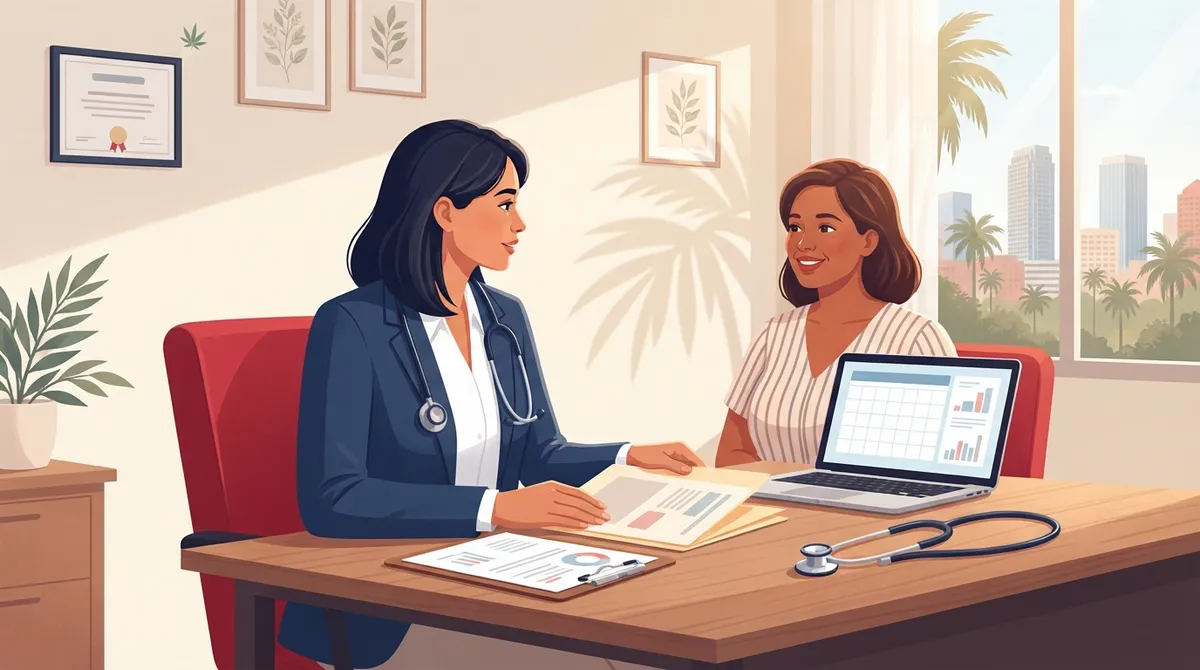
Key Takeaways
- Florida requires an in-person examination for your first medical marijuana certification, so telehealth-only first visits are not an option for initial approval.
- Certification and the state ID card are separate steps: the physician enters your order in the registry, and you must still apply to OMMU for the card and pay the state fee.
- Verify the physician holds an active, unrestricted Florida MD or DO license before booking, and call the clinic to confirm a real open new-patient slot, since online listings can be outdated.
- Budget for two costs: the clinic's evaluation fee (advertised Tampa rates vary, such as $149 or $199) and the state's annual ID card fee, reported as $75.
- A same-day visit does not guarantee a same-day card, and approval is never guaranteed because it depends on your health history, diagnosis, and the physician's judgment.
- Bring a government-issued photo ID, medical records documenting your qualifying condition, a list of current medications and supplements, and notes on prior treatments.
Searching for an MMJ doctor accepting patients in Tampa can feel confusing. Clinics advertise different prices, formats, and wait times. Some promise same-day cards. Others leave out key details. Knowing how Florida's process works helps you choose with confidence and avoid wasted visits.
An MMJ doctor is a Florida-qualified physician who evaluates whether you meet the state's legal criteria for medical marijuana. If you do, the doctor enters an order in the state registry. Approval is never guaranteed. It depends on your health history, your diagnosis, and the physician's judgment.
This guide explains how to find an MMJ doctor accepting patients in Tampa, what to ask before you book, and what the process costs. It is written for busy adults, young families, and wellness-minded patients who want clear answers. InCare, a primary care and wellness clinic with locations in Tampa and Riverview, can also help you through the process and keep your broader health care in one place.
What Does an MMJ Doctor Actually Do?
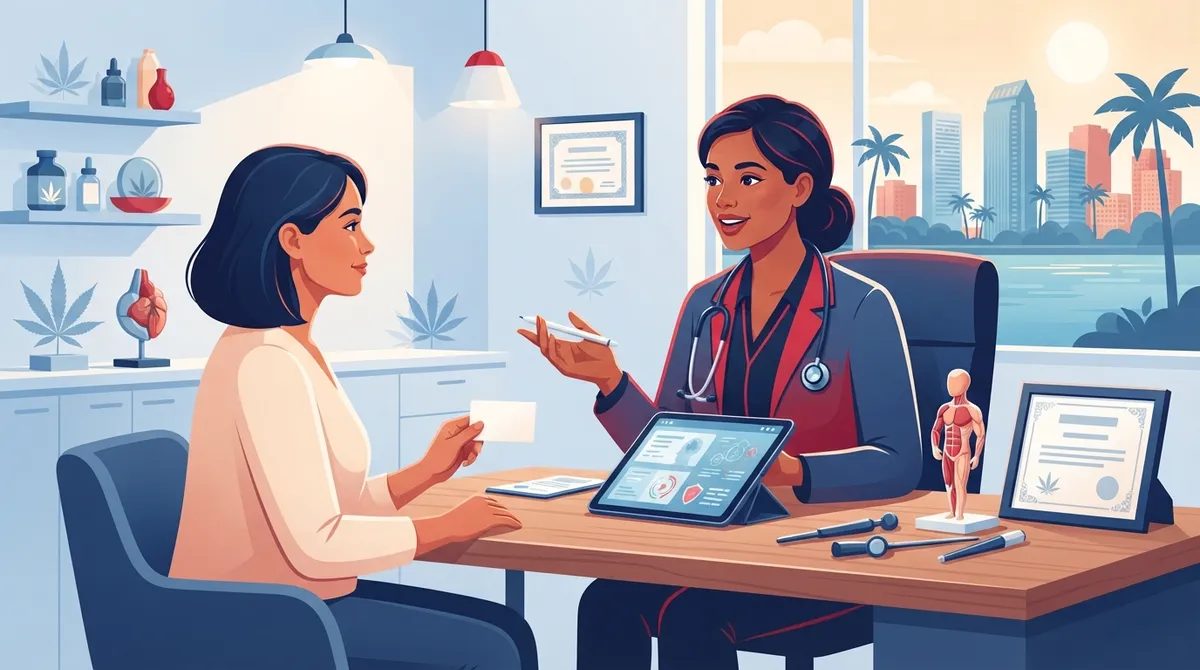
An MMJ doctor is not a general cannabis advisor. This physician carries out a specific legal task under Florida law. The doctor reviews your medical history, examines you, and decides whether you have a qualifying condition. The doctor must also decide that the likely benefits of medical marijuana outweigh the risks for you.
If you qualify, the physician enters your order into the Medical Marijuana Use Registry. The state's Office of Medical Marijuana Use, known as OMMU, manages this registry. The doctor's role ends with that certification. You then apply separately for a state identification card.
This is why the keyword "MMJ doctor accepting patients Tampa" usually means a certifying physician, not a routine primary care visit. Still, the two overlap. A doctor who knows your full health history can make a safer, better-informed decision about cannabis use.
What Makes a Physician Qualified?
Not every doctor can certify patients. Florida requires a qualified physician to hold an active, unrestricted Florida MD or DO license. The physician must also complete state-approved education and pass the required examination.
Always confirm these points before you book. A reputable clinic will tell you plainly who the certifying physician is. For more on spotting a trustworthy practice, read 8 Signs of a Reputable Medical Marijuana Clinic in Tampa.
Who Qualifies for Medical Marijuana in Florida?
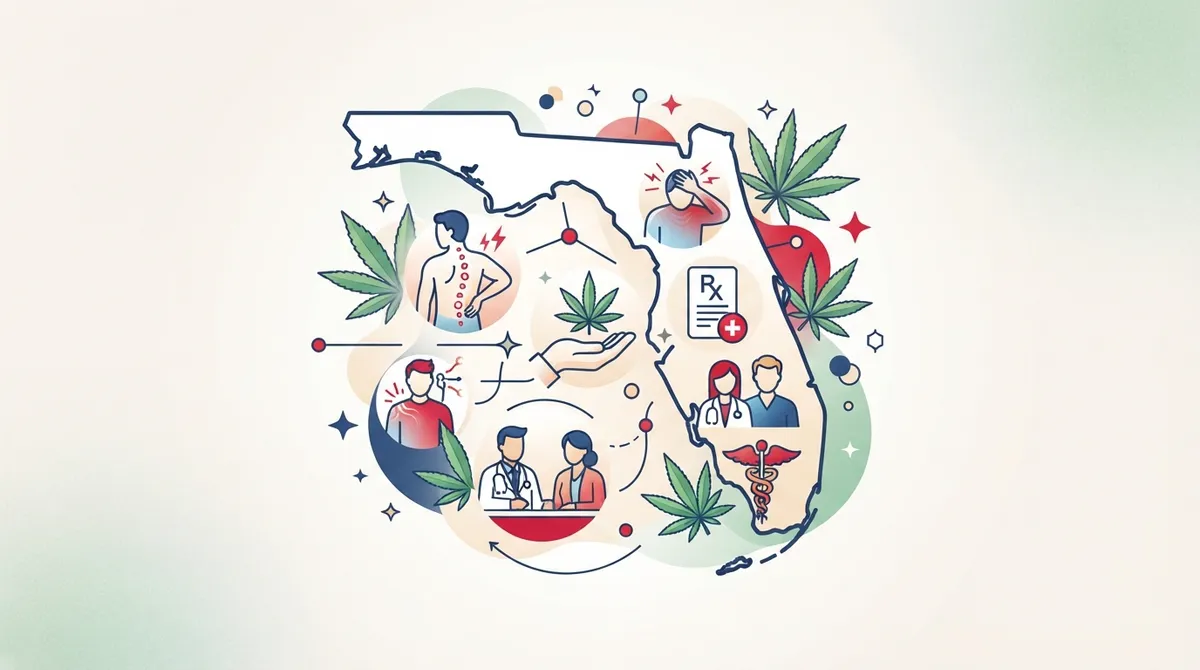
Florida's OMMU lists several requirements for a qualified patient. You must be a permanent or seasonal Florida resident. You must have a qualifying medical condition. A qualified physician must enter you in the registry. You must then obtain an OMMU identification card.
The state's January 2026 patient guide groups qualifying conditions into 12 categories. They include conditions comparable to those named in law. The listed conditions include:
- Cancer
- Epilepsy
- Glaucoma
- HIV/AIDS
- Crohn's disease
- Parkinson's disease
- Multiple sclerosis
- Post-traumatic stress disorder (PTSD)
- Amyotrophic lateral sclerosis (ALS)
- Terminal conditions
- Chronic nonmalignant pain related to a qualifying condition
- Conditions comparable to those above
The physician decides whether your condition fits. Bring any records that support your diagnosis. Our guide on 7 Things That Qualify You for Medical Marijuana in Florida goes deeper on eligibility.
How Many Floridians Use Medical Marijuana?
The program is large and well established. A Florida Senate bill analysis reported 931,959 qualified patients with active registry ID cards as of January 16, 2026. That scale means many Tampa clinics compete for your visit, so it pays to compare them carefully.
Large numbers also mean rules and processes get updated. Eligibility, fees, and appointment formats can change. Confirm current details with the clinic and with OMMU before you book.
How Does the Tampa MMJ Process Work Step by Step?
The path is straightforward once you know the order. Here is how most patients move through it.
- Choose a qualified physician. Verify the license and state qualification, and ask whether the clinic is currently accepting new patients.
- Book an evaluation. Ask about the appointment format and the total cost.
- Gather your documents. Bring a government-issued photo ID and relevant medical records.
- Attend the exam. Florida requires an in-person examination for an initial certification.
- Receive the physician's decision. The doctor decides whether you meet the criteria.
- Get entered in the registry. If approved, the physician enters the order in the Medical Marijuana Use Registry.
- Apply for your state ID card. You submit a separate application to OMMU and pay the state fee.
For a fuller walkthrough, see How Does MMJ Certification in Tampa Work in 2026? and How to Get Florida Medical Marijuana Certification in Tampa.
Certification vs. the State ID Card
Many patients mix these up. The doctor's certification is a medical decision. The OMMU card is a state credential. You need both. A clinic can complete the first, but you must still apply for the card.
Do You Need an In-Person Visit?
For your first certification, yes. Florida requires an in-person examination for an initial certification. This surprises people who expect a fully online process.
Renewals can be different. Some follow-up examinations may be done by telehealth. That depends on current law and the physician's own practice policies. Ask about this when you book so you know what to expect next year. Our article on How Do You Renew a Medical Marijuana Card in Tampa? covers renewals in detail.
What Should You Bring to Your Evaluation?
Preparation saves time and improves your odds of a smooth visit. A prepared patient gives the physician a clear picture of their health.
- A valid government-issued photo ID
- Proof of Florida residency, if the clinic requests it
- Medical records that document your qualifying condition
- A list of current medications and supplements
- Notes on prior treatments and how they worked
You can find a helpful checklist in How to Prepare: What to Bring to a Medical Cannabis Visit. Also review 9 Cannabis Card Appointment Tampa Mistakes to Avoid before you go.
How Much Does an MMJ Evaluation Cost in Tampa?
Costs come in two parts. The clinic charges an evaluation fee. The state charges a separate application fee for your ID card. Keep them apart in your mind so you can compare offers fairly.
|
Cost Item |
Who Charges It |
What to Know |
|---|---|---|
|
New-patient evaluation |
The clinic |
Varies by provider. Tampa listings have advertised $149 and $199. |
|
State ID card application |
OMMU |
A Florida Senate analysis reported a $75 annual fee. |
|
Follow-up or renewal visit |
The clinic |
May be priced separately. Ask before booking. |
|
Record transfers |
The clinic |
Some clinics charge extra. Ask in advance. |
The $149 and $199 figures are examples from individual providers. They are not a statewide price or market average. Confirm current fees with the clinic and OMMU, since both can change. You can compare more in Doctor Fee vs. State Fee: Florida MMJ Card Cost Explained.
How Long Does Florida Take to Approve Your Card?
The same Senate analysis stated that OMMU processes complete applications within five business days. That is a reported processing target, not a promise for every case. Incomplete applications take longer. Double-check every field before you submit.
Because timing can change, confirm the current window with OMMU. If you hope to start quickly, read Can You Get Same Day Cannabis Certification in Tampa? and 8 Facts About Same Day MMJ Card Tampa Visits (2026). A same-day visit does not mean a same-day card.
How Do You Know a Tampa MMJ Doctor Is Truly Accepting Patients?
Many websites list availability that is out of date. A clinic may say it welcomes new patients while its calendar is full for weeks. Do not rely on a listing alone.
Use this short checklist before you commit:
- Call or message the clinic and ask for the next open new-patient slot.
- Ask for the physician's name and confirm the Florida license.
- Ask whether the exam is in person and where it takes place.
- Request the total cost, including anything billed separately.
- Ask what records you need and how renewals work.
A clear, quick answer to each question is a good sign. Vague replies are a warning. If a clinic guarantees approval before examining you, walk away. No ethical physician can promise that.
Why Choose a Primary Care Clinic for Medical Marijuana Evaluation?
A standalone cannabis office handles one task. A primary care clinic sees the whole patient. That difference matters, especially for people managing several health concerns.
Cannabis can interact with other medications. It may also affect sleep, mood, blood pressure, and weight. A physician who already understands your history can weigh these factors more carefully. This is the kind of whole-body, preventive approach that InCare brings to patient care.
InCare serves Tampa and Riverview, Florida, with primary care, urgent care, and advanced wellness services. Patients appreciate having one trusted team for evaluations, follow-ups, and everyday health needs. If you live in the Riverview area, see How to Get a Medical Marijuana Card in Riverview, FL. For a broader look at the process, try How Do You Get a Medical Marijuana Card in Tampa?
Who Benefits Most From This Approach?
Tech-savvy millennials like clear steps and easy scheduling. High-income wellness seekers want integrated care and detailed health data. Busy young families need a single practice that can manage many needs. Gen Z explorers and preventive-minded women want honest, evidence-based guidance instead of guesswork. A primary care setting serves all of these readers well.
What Are Common Mistakes to Avoid?
A few missteps cost patients time and money. Avoid these:
- Choosing on price alone. A low fee may exclude follow-ups or add hidden charges.
- Skipping the credential check. Always verify the physician's license and qualification.
- Forgetting the state step. Certification alone does not give you a card.
- Arriving without records. Missing documents can delay a decision.
- Ignoring renewal rules. Learn the follow-up policy before your first visit.
You can also read 7 Mistakes to Avoid at a Florida Medical Cannabis Clinic for more detail.
Ready to Take the Next Step?
Finding an MMJ doctor accepting patients in Tampa comes down to a few smart checks. Confirm the physician's qualifications. Understand that the first visit is in person. Compare total costs, and plan for both the clinic fee and the state fee. Bring good records, and remember that approval always rests on a medical decision.
If you want a team that treats your whole health, InCare is a strong place to start. You can see what patients say when you visit us on Google — InCare. You can also follow our updates on Facebook, Instagram, and TikTok. Official eligibility and application rules are always available from Florida's Office of Medical Marijuana Use, so check there for the latest updates.
Have questions about eligibility or timing? Contact our team for guidance, or book your evaluation online to get started with a physician who puts your health first.
FAQs
Q: How do I find an MMJ doctor accepting new patients in Tampa?
A: Start by confirming that the physician holds an active, unrestricted Florida MD or DO license and has completed the required state qualification. Then call the clinic and ask for the next open new-patient appointment, the exam format, and the total cost. Listings can be outdated, so always verify availability directly.
Q: What is the difference between a doctor's certification and the Florida MMJ ID card?
A: The doctor's certification is a medical decision in which a qualified physician enters an order for you in the Medical Marijuana Use Registry. The ID card is a separate credential issued by the Office of Medical Marijuana Use. You need both, and you must apply for the card yourself after certification.
Q: Do I need an in-person appointment for my first MMJ certification in Florida?
A: Yes. Florida requires an in-person examination for an initial certification. Some later renewal examinations may be done by telehealth, depending on current law and the physician's practice policies, so confirm this when you book.
Q: How much does it cost to get a medical marijuana card in Tampa?
A: Costs have two parts: the clinic's evaluation fee and the state's application fee. Tampa clinics have advertised new-patient evaluations such as $149 and $199, while a Florida Senate analysis reported a $75 annual state fee. These figures can change, so confirm current amounts with the clinic and OMMU.
Q: What conditions qualify for a Florida medical marijuana card?
A: Qualifying conditions include cancer, epilepsy, glaucoma, HIV/AIDS, Crohn's disease, Parkinson's disease, multiple sclerosis, PTSD, ALS, terminal conditions, and chronic nonmalignant pain related to a qualifying condition. Conditions comparable to those listed may also qualify. The physician makes the final determination, and certification is never guaranteed.