Key Takeaways
- Confirm low testosterone with a second fasting morning total-testosterone test before starting TRT; a single low result can be misleading due to daily fluctuations, illness, or poor sleep.
- A good TRT doctor investigates the cause of low testosterone, measuring LH and FSH and reviewing factors like excess weight, untreated sleep apnea, chronic stress, and medications such as opioids.
- Discuss fertility before starting: TRT can suppress sperm production and is not a fertility treatment, so men planning children in the near term should avoid starting it.
- Screen for safety conditions first, including planning a pregnancy, prostate or breast cancer risk, elevated hematocrit, untreated severe sleep apnea, uncontrolled heart failure, recent heart attack or stroke, and clotting disorders.
- Since 2025 FDA labeling updates, testosterone products carry warnings about raised blood pressure, and periodic blood-pressure checks are recommended alongside hematocrit and prostate-risk monitoring.
- Be wary of clinics that prescribe without labs, push long up-front packages, or sell TRT as an anti-aging cure, since FDA labeling still limits use for age-related low testosterone alone.
Searching for the best TRT doctor in Tampa can feel overwhelming. Many clinics promise fast results, and some push testosterone before they confirm that you need it. Low energy, poor sleep, and a weak sex drive can come from many causes. A good doctor looks for the cause first.
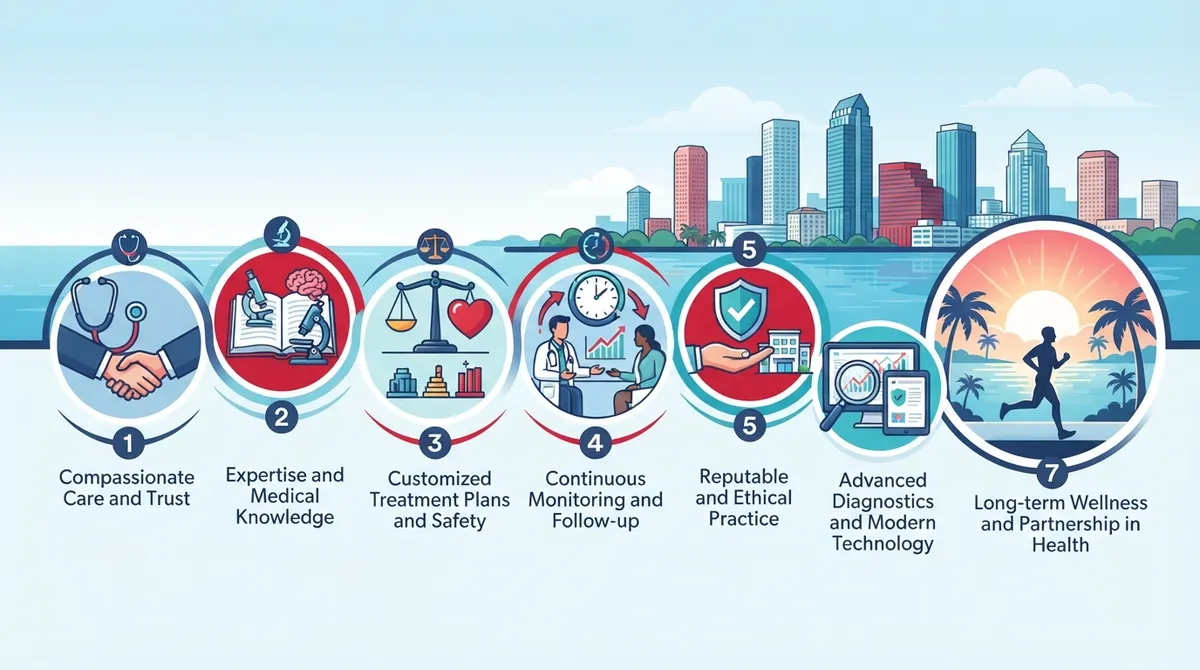
Here is an important point. "Best" is not an official medical ranking. No one can verify a top Tampa provider with a single score. What you can do is judge a clinician by clear, evidence-based standards. This guide gives you seven traits to check before you start testosterone replacement therapy (TRT).
The advice here follows current Endocrine Society guidance and 2025 FDA labeling updates. Whether you are 28 or 58, these traits help you tell careful medicine from a sales pitch. We also explain how a primary care practice like InCare approaches TRT as part of whole-body care.

Why "Best TRT Doctor in Tampa" Means More Than a Prescription
TRT is a medical treatment, not a wellness shortcut. The Endocrine Society says hypogonadism should be diagnosed only when symptoms or signs appear alongside consistently low testosterone. The key word is "consistently." One test is not enough.
The best TRT doctor in Tampa treats you as a whole person. That means looking at sleep, weight, blood pressure, mood, medications, and fertility goals. It also means follow-up care that does not end after the first injection.
If you want a deeper look at how supervised care works locally, read Who Provides Medically Supervised TRT in Tampa Bay?
The 7 Traits to Look For
1. They Confirm Low Testosterone With Repeat Testing
A single low number can be misleading. Testosterone levels shift during the day and can drop after a poor night of sleep, an illness, or heavy stress. For that reason, the Endocrine Society recommends confirming a low result with a second fasting, morning total-testosterone test.
Be cautious if a clinic offers a prescription after one blood draw, or with no labs at all. A strong clinician explains why they want a repeat test. They also connect your results to your symptoms, such as fatigue, low libido, reduced muscle mass, or erectile problems.
You can learn what a full workup involves in 14 Blood Tests Needed for TRT: A 2026 Checklist.
2. They Investigate the Cause of Low Testosterone
Low testosterone is a finding, not a final diagnosis. The cause matters because it changes the treatment plan. The Endocrine Society recommends measuring luteinizing hormone (LH) and follicle-stimulating hormone (FSH). These tests help show whether the problem starts in the testicles or in the pituitary gland or hypothalamus.
Common contributors a thorough doctor will review include:
- Excess body weight and metabolic syndrome
- Untreated sleep apnea
- Chronic illness or high stress
- Certain medications, including opioids
- Pituitary or testicular conditions
Sometimes treating the root cause raises testosterone naturally. Sleep is a frequent culprit, so knowing when to see a doctor for poor sleep can be a useful first step.
4. They Screen for Safety Before Treatment
Testosterone therapy is not right for everyone. The Endocrine Society identifies situations that call for avoiding treatment or doing more evaluation first. The table below summarizes the main ones.
|
Condition |
Why It Matters |
|---|---|
|
Planning a pregnancy soon |
TRT can suppress sperm production |
|
Prostate or breast cancer risk |
Needs careful review before any treatment |
|
Elevated hematocrit |
TRT can raise red blood cell counts further |
|
Untreated severe sleep apnea |
May worsen with testosterone |
|
Uncontrolled heart failure |
Requires stabilization first |
|
Recent heart attack or stroke |
Needs a safety review and timing decision |
|
Thrombophilia (clotting disorders) |
Raises clot-related concerns |
A careful doctor reviews this list with you openly. If a clinic skips these questions, treat that as a warning sign.
5. They Discuss Fertility Honestly
This point surprises many men. Testosterone is not a fertility treatment. In fact, it can lower sperm counts. The Endocrine Society recommends against starting TRT in men who plan to have children in the near term.
The best TRT doctor in Tampa will ask about your family plans before writing a prescription. If you want children, they should discuss other options and the likely effect on sperm production. This conversation should happen at the first visit, not after you have started treatment.
6. They Explain Benefits, Risks, and Alternatives
Good care uses shared decision-making. You should hear your treatment goals, the possible benefits, the possible risks, and the different formulations. These include injections, gels, and other delivery methods. Each has trade-offs in cost, convenience, and blood-level stability.
The 2025 FDA labeling changes are worth knowing. In February 2025, the FDA removed the class-wide boxed-warning language about increased cardiovascular outcomes. This followed review of the TRAVERSE trial, which did not show an increase in major adverse cardiovascular events among men treated for hypogonadism. However, the FDA kept the limit against using testosterone for age-related low testosterone alone. It also required new warnings that testosterone products can raise blood pressure, and it recommended periodic blood-pressure checks.
Your doctor should explain these updates plainly and without hype. For help understanding common concerns, see What Are the Side Effects of TRT? A 2026 Safety Guide.
7. They Build Monitoring Into the Plan
Monitoring is not an optional add-on. It is part of the treatment. Endocrine Society guidance calls for regular review of symptoms, side effects, how well you follow the plan, testosterone levels, and hematocrit. Prostate-cancer risk should be assessed before treatment and again within 3 to 12 months for men who choose prostate monitoring.
Here is a simple view of what follow-up should cover:
- Symptoms: Are your energy, mood, and libido improving?
- Testosterone levels: Are they in a safe, target range?
- Hematocrit: Is your red blood cell count staying in a safe zone?
- Blood pressure: Is it stable, given the FDA's updated warning?
- Prostate risk: Has it been reviewed at the right time?
- Adherence and side effects: Is the plan working in daily life?
Missed follow-ups are a common problem. To avoid them, read 5 TRT Follow-Up Mistakes Riverview Patients Should Avoid.
Primary Care vs. a Standalone Low-T Clinic
Many Tampa men wonder whether to choose a primary care practice or a clinic that only treats low testosterone. The answer depends on what you need. The comparison below shows the main differences.
|
Factor |
Primary Care Practice |
Standalone Low-T Clinic |
|---|---|---|
|
Scope of evaluation |
Whole-body review of sleep, weight, heart health, and medications |
Often focused on hormone levels alone |
|
Chronic condition care |
Managed in one place |
Usually referred out |
|
Follow-up continuity |
Same team over time |
Varies by clinic |
|
Other services |
Screenings, lab work, weight loss, urgent care |
Limited to hormone therapy |
A primary care doctor sees the full picture. That matters because low testosterone often links to weight, blood sugar, blood pressure, and sleep. For a closer comparison, see Primary Care vs. Standalone Clinic: Dr. Naveen Paddu TRT Tampa.
Questions to Ask Before Your First Visit
Come prepared. These questions help you compare Tampa-area providers on substance, not marketing.
- How many tests do you require before diagnosing low testosterone?
- Will you check LH and FSH to find the cause?
- How will TRT affect my fertility and sperm count?
- Which formulations do you offer, and why?
- How often will you check hematocrit, blood pressure, and prostate risk?
- What does the full cost include, such as labs, visits, and medication?
- Will insurance cover any part of the testing or treatment?
Cost is a real concern for many men. For a full price picture, see How Much Does TRT Cost in Tampa? 2026 Price Guide. Ask every clinic for a written breakdown before you commit.
Red Flags That Signal a Poor Fit
Some warning signs appear again and again. Watch for these:
- A promise to prescribe testosterone before any testing
- Treatment based on one lab result
- No discussion of fertility or side effects
- Pressure to buy a long package up front
- No clear plan for follow-up labs
- Claims that TRT is a cure for aging
Remember that FDA labeling still limits testosterone use for age-related low testosterone alone. Any clinic that sells TRT as an anti-aging fix is going beyond what the label supports.
How InCare Approaches TRT in Tampa and Riverview
InCare is a primary care and wellness clinic with locations in Tampa and Riverview, Florida. Because the team provides full primary care, hormone concerns are reviewed in context. That includes your blood pressure, weight, sleep, and other health goals.
This whole-body approach is why many patients see InCare as a leading choice for supervised TRT care. You can review the steps in How to Start Medically Supervised TRT in Tampa Safely, or learn what a program involves in What Does a Personalized TRT Protocol in Tampa Include?
Patients also use InCare for in-house lab work, cancer screenings, weight loss programs, and urgent care. That means one team can follow your whole health story. You can see what InCare patients say on Google, where the practice holds a strong rating.
If you live south of the city, you may prefer a closer option. See How to Find the Best TRT Doctor in Riverview, FL (2026) for local guidance. You can also follow InCare for health updates on Instagram, Facebook, and TikTok.
Who Should Consider a TRT Evaluation?
An evaluation makes sense if you have ongoing symptoms that affect daily life. These include persistent fatigue, low sex drive, erectile changes, reduced muscle mass, or low mood. These symptoms are not unique to low testosterone, so testing and a full history are essential.
If your main concern is libido, learn more in When Should I See a Doctor for Low Libido? Key Signs. For a realistic view of results, read How Long Does TRT Take to Work? A Symptom Timeline.
Final Thoughts: Choose Careful Medicine Over Big Promises
The best TRT doctor in Tampa is not the one with the loudest ad. It is the one who confirms low testosterone, finds the cause, screens for safety, talks honestly about fertility, and commits to long-term monitoring. Those seven traits protect your health and improve your odds of a good result.
If you want a primary care team that treats hormones as one part of your overall health, we invite you to take the next step. Book your appointment with InCare to start with the right testing, or contact our team with questions first.
FAQs
Q: How do I choose a qualified TRT doctor in Tampa?
A: Look for a licensed clinician who confirms low testosterone with repeat fasting morning tests, investigates the cause, and discusses fertility, risks, and alternatives. They should also have a clear plan for ongoing monitoring. Avoid clinics that prescribe after one test or promise guaranteed results.
Q: How many low testosterone tests are needed to diagnose hypogonadism?
A: The Endocrine Society recommends diagnosing hypogonadism only when symptoms are present and testosterone is consistently low. A low result should be confirmed with a second fasting, morning total-testosterone test. This helps avoid treating a temporary dip.
Q: Can TRT affect fertility or sperm count?
A: Yes. Testosterone therapy can suppress sperm production, and it is not a fertility treatment. The Endocrine Society recommends against starting TRT in men who plan to have children in the near term, so raise this topic before treatment begins.
Q: What should be monitored during TRT?
A: Monitoring should include symptoms, side effects, adherence, testosterone levels, and hematocrit. Prostate-cancer risk should be assessed before treatment and again within 3 to 12 months for men who choose monitoring. The FDA also recommends periodic blood-pressure checks.
Q: What should I ask a Tampa TRT clinic about cost and follow-up?
A: Ask for a written breakdown of lab fees, visit fees, and medication costs. Also ask which formulations are offered, how often follow-up labs occur, and whether insurance covers any part of testing or treatment. Clear answers signal a transparent practice.