
Key Takeaways
- Loud snoring, witnessed breathing pauses, gasping, and daytime sleepiness can signal obstructive sleep apnea, and a sleep study referral starts with a primary care conversation, not a diagnosis.
- Home sleep apnea tests suit selected uncomplicated adults with higher OSA risk, while in-lab polysomnography is recommended for significant heart or lung disease, prior stroke, chronic opioid use, or suspected other sleep disorders.
- A negative home sleep test does not end the evaluation: the AASM recommends in-lab PSG if the home test is negative, inconclusive, or technically inadequate but clinical concern remains.
- Before scheduling, track symptoms for one to two weeks, ask a bed partner about breathing pauses, list medications, and confirm whether your insurer requires a referral or prior authorization.
Loud snoring, gasping at night, and heavy daytime sleepiness are easy to dismiss. Yet these signs can point to obstructive sleep apnea (OSA), a condition that deserves a proper medical evaluation. For many adults, the first practical step is a sleep study referral in Tampa that starts with a conversation with a primary care clinician.
A referral is not a diagnosis. It is a pathway. Your clinician reviews your symptoms, history, and medications, then decides which test fits your situation. The two main choices are a home sleep apnea test (HSAT) and an in-lab polysomnogram (PSG). This guide compares both options, explains who each suits best, and shows how to move from symptoms to answers in 2026.
Whether you are a busy parent, a working professional, or someone who simply wakes up tired every day, understanding these options helps you ask better questions and avoid delays.

What a Sleep Study Referral in Tampa Actually Involves
A sleep study referral usually begins in a primary care office. The clinician asks about snoring, witnessed breathing pauses, daytime sleepiness, blood pressure, and other health conditions. Questionnaires can help guide the visit, but they cannot diagnose OSA on their own.
After the assessment, the clinician either arranges a diagnostic test or refers you to sleep medicine. The American Academy of Sleep Medicine (AASM) states that testing for OSA should follow a comprehensive sleep evaluation and include appropriate follow-up. In other words, the test is one step in a larger process.
Here is how the process typically unfolds:
- Symptom review: Your clinician asks about sleep habits, snoring, and daytime energy.
- Medical history check: Heart disease, lung disease, stroke history, and medication use are reviewed.
- Test selection: A home test or in-lab study is chosen based on risk and complexity.
- Insurance steps: Referral and prior authorization needs are confirmed.
- Testing and review: Results are interpreted by a clinician, and a care plan follows.
If you are still deciding where to start, our guide on how to know when to see a doctor for poor sleep can help you decide when to act.
Signs You Should Ask About a Sleep Study
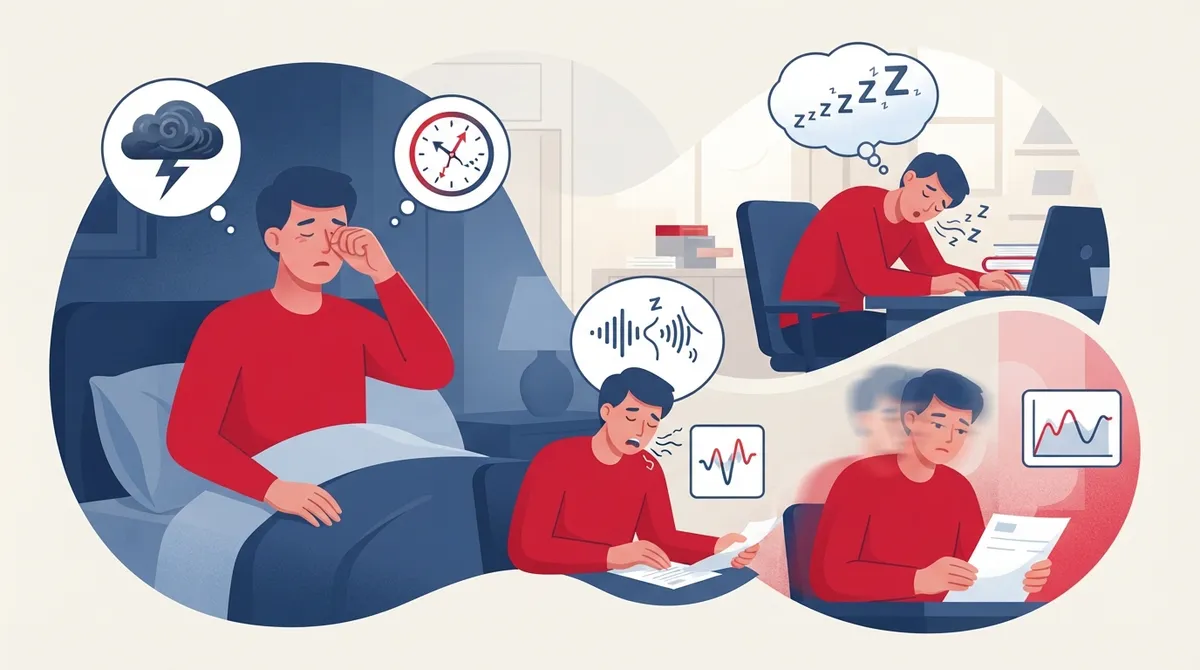
You do not need to wait for a crisis. Several common signs justify a discussion with your primary care clinician:
- Loud, habitual snoring
- Witnessed pauses in breathing, gasping, or choking during sleep
- Excessive daytime sleepiness, even after a full night in bed
- High blood pressure that is hard to control
- Morning headaches or waking with a dry mouth
For an uncomplicated adult, the AASM guideline describes increased risk of moderate-to-severe OSA as excessive daytime sleepiness plus at least two of the following: habitual loud snoring, witnessed apnea or gasping, or diagnosed hypertension. If this describes you, a referral conversation is worthwhile. For more background, read about the symptoms of sleep apnea and the signs to know.
Home Sleep Apnea Test vs. In-Lab Polysomnogram
Both tests aim to detect breathing problems during sleep. They differ in setting, depth of data, and who they suit best. Attended polysomnography (PSG) is the standard diagnostic test when OSA is suspected, while home testing is an option for selected patients.
How a Home Sleep Apnea Test Works
An HSAT lets you sleep in your own bed with portable sensors. These devices typically record breathing effort, airflow, and oxygen levels. Many patients value the comfort and convenience, especially those with demanding work or family schedules.
HSAT can be appropriate for selected, uncomplicated adults whose symptoms suggest an increased risk of moderate-to-severe OSA. A sleep clinician should decide whether home testing is suitable. A single test also has limits. AASM guidance describes a technically adequate HSAT as including at least four hours of technically adequate oximetry and airflow data during the patient's habitual sleep period.
How an In-Lab Polysomnogram Works
A PSG takes place overnight at a sleep center. A technologist monitors brain activity, eye movement, muscle tone, heart rhythm, breathing, and oxygen levels. Because the study is attended, it captures more information and can detect other sleep disorders.
The AASM recommends in-lab PSG rather than HSAT for patients with significant heart or lung disease, possible respiratory muscle weakness, awake or suspected sleep-related hypoventilation, chronic opioid use, prior stroke, or severe insomnia. PSG may also be needed when another sleep disorder is suspected or home testing is unsuitable.
Side-by-Side Comparison
|
Factor |
Home Sleep Apnea Test (HSAT) |
In-Lab Polysomnogram (PSG) |
|---|---|---|
|
Setting |
Your own bed |
Overnight at a sleep center |
|
Supervision |
Unattended |
Attended by a technologist |
|
Data collected |
Breathing, airflow, oxygen |
Brain waves, breathing, heart, oxygen, movement |
|
Best suited for |
Selected, uncomplicated adults at higher OSA risk |
Complex cases or suspected other sleep disorders |
|
Can detect other sleep disorders |
Limited |
Yes, more comprehensive |
|
Convenience |
High |
Lower, requires a night away |
|
If result is negative |
PSG recommended if concern remains |
Considered the reference standard |
Who Is a Better Fit for Each Test?
The right choice depends on your health profile, not preference alone. The following lists offer a general guide, and your clinician makes the final call.
Home testing may fit adults who:
- Have classic symptoms such as snoring, witnessed pauses, and daytime sleepiness
- Have no significant heart or lung disease
- Have no history of stroke or chronic opioid use
- Have no signs of another sleep disorder
In-lab testing may fit adults who:
- Have heart failure, chronic lung disease, or a prior stroke
- Use opioids long term
- Show signs of sleep-related hypoventilation or respiratory muscle weakness
- Have severe insomnia or symptoms suggesting another sleep disorder
- Had a negative or inconclusive home test while symptoms continue
What If a Home Test Comes Back Negative?
This question matters because many people assume a negative result ends the search. It does not always. The AASM recommends PSG when a single HSAT is negative, inconclusive, or technically inadequate but clinical concern remains.
If you still feel exhausted, snore loudly, or stop breathing at night, tell your clinician. Persistent symptoms deserve follow-up, not reassurance alone. A good primary care team keeps you moving through the pathway until you have clear answers.
How to Get Your Sleep Study Referral Started
The referral process works best when you come prepared. Follow these steps to make your visit efficient:
- Track your symptoms for one to two weeks. Note snoring, wake-ups, morning headaches, and daytime fatigue.
- Ask a bed partner what they observe. Witnessed breathing pauses are valuable clues.
- List your medications and conditions. This helps your clinician choose the safest test.
- Book a primary care visit. Bring your notes and any previous test results.
- Confirm insurance details. Ask whether a referral or prior authorization is required.
Coordinated care makes this smoother. If you are still searching for a clinician, see how to find a family doctor in Tampa, FL in 2026 for practical tips.
Finding Tampa-Area Sleep Care and Confirming Coverage
Local availability, wait times, referral rules, and costs vary by provider and plan. No reliable Tampa-wide figures exist for pricing or scheduling, so confirm details directly rather than relying on general estimates.
Ask your primary care office and your insurer these questions:
- Which Tampa-area sleep medicine practices or accredited sleep centers are in network?
- Is a referral required, or only prior authorization?
- Where will testing take place, and how soon can it be scheduled?
- Who reviews results, and how is follow-up arranged?
Our overview of how to find a sleep medicine doctor in Tampa walks through this in more detail. If you live south of the city, four steps to find the best sleep apnea doctor in Riverview may help.
Why Start the Referral With Primary Care?
A primary care visit connects sleep concerns to your whole health picture. Sleep apnea often travels with high blood pressure, weight concerns, and metabolic issues. When one team reviews these together, nothing falls through the cracks.
This approach suits tech-savvy professionals who want efficient care, busy parents who cannot afford repeated appointments, and wellness-minded adults who want prevention rather than crisis management. InCare offers personalized primary care in Tampa and Riverview, with clinicians who can review your symptoms, coordinate the right sleep evaluation, and keep your broader health goals in view. You can visit us on Google — InCare to see what patients say about their experience.
Many patients also use the same visit to review related concerns, such as weight and blood pressure. Learn more about proven strategies for blood pressure management in 2026 or how weight loss may help sleep apnea.
What Happens After the Test?
Test results are not the finish line. A clinician reviews your data, explains what it means, and recommends next steps. Depending on the findings, options may include lifestyle changes, further evaluation, or treatment through sleep medicine. Our article on how sleep apnea is treated outlines common paths.
Keep follow-up appointments. Ongoing review ensures treatment works and your symptoms improve. You can also follow health tips from InCare on Instagram and Facebook, or watch short wellness updates on TikTok.
Conclusion: Choose the Test That Matches Your Health
Home testing offers comfort and convenience for selected adults. In-lab polysomnography offers deeper data for complex situations. Neither is better in every case. The best choice comes from a clinician who understands your symptoms, history, and risks.
If snoring, gasping, or constant tiredness is affecting your life, do not wait. A sleep study referral in Tampa begins with one conversation. Book your appointment with InCare today, or contact our team to ask how we can guide your sleep evaluation from first visit to follow-up.
FAQs
Q: Do I need a referral for a sleep study in Tampa?
A: It depends on your insurance plan and the sleep provider. Some plans require a referral or prior authorization, while others do not. Ask your primary care office and your insurer to confirm current requirements before scheduling.
Q: Can I get a home sleep apnea test in Tampa, or do I need an in-lab study?
A: A home test may be an option for selected, uncomplicated adults with symptoms suggesting a higher risk of moderate-to-severe sleep apnea. An in-lab study is recommended for people with significant heart or lung disease, prior stroke, chronic opioid use, or suspected other sleep disorders. A clinician decides which test is appropriate.
Q: What should I do if my home sleep test is negative but I still have symptoms?
A: Tell your clinician right away. The AASM recommends an in-lab polysomnogram when a home test is negative, inconclusive, or technically inadequate but concern for sleep apnea remains. A negative home test should not automatically end the evaluation.
Q: How do I find a Tampa sleep clinic that accepts my insurance?
A: Ask your primary care office which local sleep medicine practices or accredited sleep centers they work with. Then confirm network status, test location, scheduling, and follow-up arrangements directly with your insurer and the provider, since coverage and availability vary.
Q: What symptoms mean I should ask about a sleep study?
A: Loud habitual snoring, witnessed pauses in breathing or gasping during sleep, excessive daytime sleepiness, and high blood pressure are common reasons to seek evaluation. These symptoms warrant a clinical assessment, since questionnaires alone cannot diagnose sleep apnea.