Key Takeaways
- TRT is a prescription treatment for men with both lab-confirmed low testosterone and symptoms, not a general anti-aging, weight-loss, or performance tool.
- The AUA suggests total testosterone below 300 ng/dL as a reasonable cutoff, confirmed on two separate early-morning blood tests alongside symptoms.
- Symptoms like fatigue and low libido can stem from sleep apnea, thyroid disease, or stress, so a cause investigation should come before starting TRT.
- TRT can suppress sperm production, so men planning to father a child soon should not start without specialist counseling.
- Monitoring is essential: check testosterone every 6-12 months, hematocrit before treatment and at 3-6 months, and blood pressure periodically during treatment.
- Ask any Tampa provider who prescribes, how doses are chosen, how fertility and abnormal labs are handled, and request a clear cost breakdown before starting.
Many men in their 30s, 40s, and beyond notice a slow drop in energy, drive, and focus. They wonder if low testosterone is the cause. In 2026, more men are asking about a personalized TRT protocol in Tampa, and the topic deserves a careful, clear answer.
Testosterone replacement therapy (TRT) is a prescription medical treatment. It is meant for men with confirmed testosterone deficiency. It is not a general anti-aging, weight-loss, or performance tool. A safe protocol starts with a proper evaluation, uses individualized treatment choices, and continues with regular monitoring.
This guide explains how a personalized TRT protocol works from start to finish. You will learn how low testosterone is diagnosed, what treatment options exist, which labs matter, and what questions to ask any Tampa provider. Local pricing and services vary, so always confirm details directly with a clinic.

What Is TRT, and Who Is It For?
TRT is a medical treatment for men who have both symptoms and lab-confirmed low testosterone. Common symptoms include low libido, fatigue, reduced muscle mass, low mood, and trouble concentrating. These symptoms can also come from sleep problems, stress, thyroid disease, or other health issues. That is why a careful workup comes first.
A personalized protocol is not a one-size-fits-all injection plan. It is a process built around your symptoms, medical history, lab results, goals, and risk factors. A qualified clinician guides each step.
Who Should Not Rush Into TRT
- Men with symptoms but no confirmed low testosterone on repeat testing
- Men who want to father a child soon, since TRT can suppress sperm production
- Men looking for bodybuilding or performance gains without a deficiency
- Men with untreated sleep apnea or other conditions that may explain their symptoms
Men with active interest in peptide therapy research or other wellness options should also discuss goals openly. A good clinic explains what is proven and what is not.
How Is Low Testosterone Diagnosed?
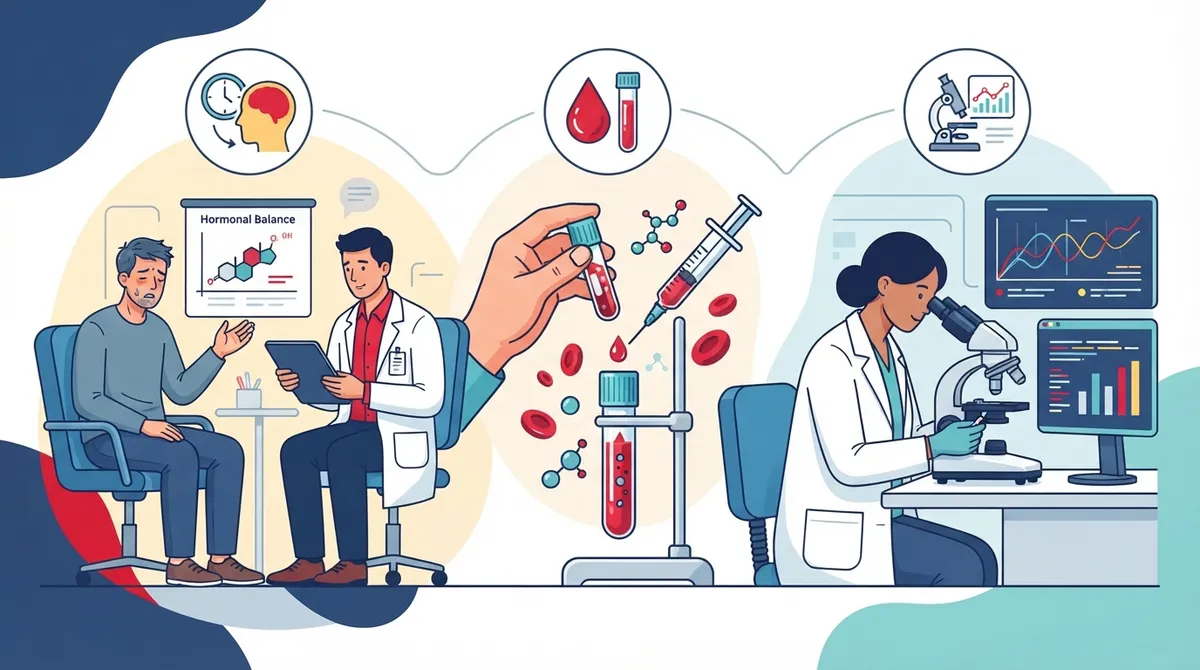
Diagnosis is the foundation of any personalized TRT protocol in Tampa. The American Urological Association (AUA) guidance sets a clear standard. Total testosterone below 300 ng/dL is a reasonable cutoff that supports a diagnosis. Two separate early-morning blood tests should confirm the low result. Symptoms or signs must also be present.
This matters for a simple reason. Testosterone levels change during the day and from week to week. A single test can mislead. Symptoms alone are not enough either, because many conditions mimic low testosterone.
The Diagnostic Steps
- Symptom and history review. Your clinician asks about energy, sex drive, mood, sleep, medications, and fertility plans.
- First early-morning blood test. Testosterone is highest in the morning, so timing matters.
- Repeat early-morning test. A second low result confirms the finding.
- Cause investigation. Tests such as luteinizing hormone (LH), prolactin, and other endocrine studies help find the source.
- Risk screening. The clinician checks for sleep apnea, obesity, blood pressure, and cardiovascular risk.
Finding the cause is important. Sometimes low testosterone improves when another problem is treated. For example, men who snore and feel tired may benefit from a look at when to see a doctor for poor sleep before starting hormone therapy.
What Goes Into a Personalized TRT Protocol?
A personalized protocol has several parts. Each part is adjusted to the patient. The table below shows the main building blocks.
|
Protocol Component |
What It Involves |
Why It Matters |
|---|---|---|
|
Initial evaluation |
Symptoms, history, medications, fertility goals |
Confirms TRT is appropriate |
|
Lab confirmation |
Two early-morning testosterone tests, plus cause-finding labs |
Prevents misdiagnosis |
|
Baseline safety labs |
Hemoglobin, hematocrit, and PSA for men over 40 |
Establishes a starting point |
|
Formulation choice |
Gel, injection, or another approved option |
Matches lifestyle and absorption |
|
Dose and schedule |
Individualized starting dose and timing |
Reduces side effects |
|
Ongoing monitoring |
Testosterone, hematocrit, blood pressure, prostate risk |
Keeps treatment safe |
Which TRT Option Is Right for You?
Treatment is individualized by formulation, dose, and follow-up. FDA-approved options include topical gels, injections, and other formulations. No single choice fits every man. A clinician weighs several factors together.
- Patient preference. Some men prefer a daily gel. Others prefer a less frequent injection.
- Absorption. Skin absorption varies from person to person.
- Convenience. Schedule and comfort with self-administration matter.
- Cost. Prices differ across products and providers.
- Side effects. Each form has its own risk profile.
- Transfer risk. Topical gels can transfer to partners or children through skin contact, so careful handling is essential.
Your provider should explain these trade-offs plainly. If a clinic pushes one product without discussing options, ask why.
How Does TRT Affect Fertility?
This question deserves special attention. Testosterone therapy can suppress sperm production. For men who want children in the near term, TRT is generally not appropriate without specialist counseling. Some men have fertility goals years down the road, and that timeline should be part of the first conversation.
Tell your clinician about your family plans before treatment begins. Alternatives may exist for men who need to protect fertility. Some men explore topics like kisspeptin versus testosterone therapy with their clinician, but any such option should be reviewed carefully for evidence and appropriateness.
What Monitoring Does a Safe Protocol Require?
Monitoring is not an optional add-on. It is a core part of safe care. Guidance from the AUA and FDA product labeling points to several checks.
|
What Is Checked |
Typical Timing |
Purpose |
|---|---|---|
|
Testosterone level |
After treatment is established, then every 6 to 12 months |
Confirms the dose is working |
|
Hematocrit |
Before treatment, commonly at 3 to 6 months, then yearly |
Watches for high red blood cell counts |
|
PSA |
Baseline for men over 40, then per clinician judgment |
Assesses prostate cancer risk |
|
Blood pressure |
Periodically during treatment |
Tracks possible increases |
Timing can shift based on the product and the patient. Your clinician sets the schedule that fits your situation.
What the Research Says About Safety
In 2025, the FDA updated labeling across testosterone products. Postmarket blood-pressure studies found increased blood pressure across these products, so periodic monitoring is now recommended. In the large TRAVERSE trial, major adverse cardiovascular events occurred in 7.0% of men using topical testosterone gel and 7.3% of men on placebo. The trial did not find an increase in these events in the studied population. FDA labeling also reports a small average systolic blood-pressure difference of 1.5 mm Hg at 36 months.
These results are reassuring for the group studied. They do not prove safety for every patient or every formulation. That is exactly why individual monitoring matters. Men with heart disease, high blood pressure, or other risks need a closer review with their clinician.
What Are the Risks and Side Effects?
Like any medication, TRT carries risks. Your clinician should review them before you start.
- Elevated red blood cell counts, which can raise clotting concerns
- Increases in blood pressure
- Reduced sperm production and fertility
- Possible worsening of sleep apnea in some men
- Skin reactions or transfer risk with gels
- Acne, fluid retention, or breast tenderness in some patients
A responsible protocol includes a plan for what happens if labs come back abnormal or side effects appear. Ask about that plan in advance.
How Do You Choose a Qualified TRT Provider in Tampa?
The best provider treats TRT as medicine, not a quick fix. Use these questions as a checklist during your first visit.
- Who evaluates me and who prescribes treatment?
- What testing is required before I start?
- Do you confirm low testosterone with two early-morning tests?
- How do you decide on my formulation and dose?
- How often will you check labs and blood pressure?
- How do you address fertility concerns?
- What happens if I have side effects or abnormal results?
- Do you look at the whole picture, including sleep, weight, and heart health?
A primary care setting has a real advantage here. Your doctor already knows your health history and can coordinate care. You can learn more about this approach in our guide on who provides medically supervised TRT in Tampa Bay. If you live near Riverview, see what to look for in a TRT clinic in Riverview as well.
Why Primary Care Makes TRT Safer
Testosterone is tied to many other parts of health. Weight, blood sugar, sleep, blood pressure, and heart risk all interact with hormone levels. A primary care clinic can review all of these together. That whole-body view is the heart of a truly personalized protocol.
At InCare, care combines advanced technology with medical expertise and a focus on prevention. Our team in Tampa and Riverview offers primary care, lab testing, and wellness services under one roof. Patients can address hormone concerns alongside screenings, weight management, and chronic condition care. Our clinicians review your full health picture before recommending any treatment. Many patients appreciate that approach, and you can read InCare reviews on Google to see their experiences.
Follow-up is where many protocols succeed or fail. Our guide on TRT follow-up mistakes patients should avoid explains why missed labs and skipped visits cause problems. You can also read about common testosterone therapy mistakes to avoid in Tampa.
What About Costs and Insurance?
Pricing varies widely by provider, product, and lab needs. Clinic-specific costs for a Tampa TRT protocol are not set by any universal standard. Ask every provider for a clear breakdown that includes visits, labs, medication, and follow-up. Also ask how insurance applies. Our overview of TRT costs in Tampa can help you plan.
Take the Next Step With Confidence
A personalized TRT protocol in Tampa should begin with questions, not a prescription. It should confirm low testosterone with two early-morning tests, explore causes, respect your fertility goals, and include steady monitoring. That is the standard of care, and it protects your health.
If you are ready to find out whether TRT is right for you, InCare can help. Our team will review your symptoms, order the right labs, and build a plan around your needs. Book your appointment with InCare today, or contact our team with questions. You can also follow our updates on Instagram, Facebook, and TikTok for more wellness guidance.
FAQs
Q: What testosterone level is low enough to qualify for TRT?
A: The American Urological Association considers total testosterone below 300 ng/dL a reasonable cutoff supporting a diagnosis. The low result must be confirmed on two separate early-morning tests, and relevant symptoms or signs must also be present.
Q: How often should testosterone, hematocrit, and blood pressure be monitored on TRT?
A: Testosterone is generally checked after treatment is established and then every 6 to 12 months. Hematocrit is commonly checked before treatment, at 3 to 6 months, and then annually, while blood pressure should be reviewed periodically. Your clinician adjusts timing to your product and health.
Q: Can TRT affect fertility or sperm production?
A: Yes. Testosterone therapy can suppress sperm production, so it is generally not appropriate for men seeking near-term fertility without specialist counseling. Share your family plans with your clinician before starting.
Q: Which TRT option is best: injections, gel, or another formulation?
A: No single option is best for everyone. The right choice depends on patient preference, absorption, convenience, cost, side effects, and the need to avoid transferring topical gel to others. Your clinician helps match the formulation to your situation.
Q: How do I choose a qualified TRT provider in Tampa?
A: Ask who evaluates and prescribes, what testing is required, how doses are decided, and how labs and blood pressure are monitored. A strong provider also addresses fertility, explains risks clearly, and has a plan for abnormal results or side effects.