
Key Takeaways
- Biological age testing is optional for most people; it gives an estimate, not a diagnosis, and current science does not support it as routine primary care screening.
- Healthy, curious adults and data-driven people may find testing motivating, but only if they review results with a clinician and would act on them.
- Adults with high blood pressure, high cholesterol, high blood sugar, or family history of heart disease, diabetes, or cancer should prioritize guideline-based screening first.
- Accuracy is limited: some epigenetic clocks show roughly three years of error, and results can shift with the test model, lab, sample type, illness, or stress.
- Before paying, ask what the test measures, whether it has been validated in your population, how data is stored or sold, and whether any result would change your care; insurance rarely covers it.
- Focus on fixable habits like sleep, strength training, activity, nutrition, and stress, and avoid retesting too often since small changes may be noise.
You may have seen ads for tests that promise to reveal your "real" age. The idea is appealing, especially if you track your sleep, steps, and lab results. But the question that matters most is simple: who should get biological age testing, and who can safely skip it?
The honest answer is that these tests are optional for most people. They give an estimate, not a diagnosis. Current science does not support them as a routine primary care screening tool. Still, some adults may find them useful when a clinician explains the results and ties them to real care. This guide explains how the tests work, who may benefit, who should focus elsewhere first, and what to ask before you pay for one. At InCare, we believe proven prevention should always come before any trendy measurement.
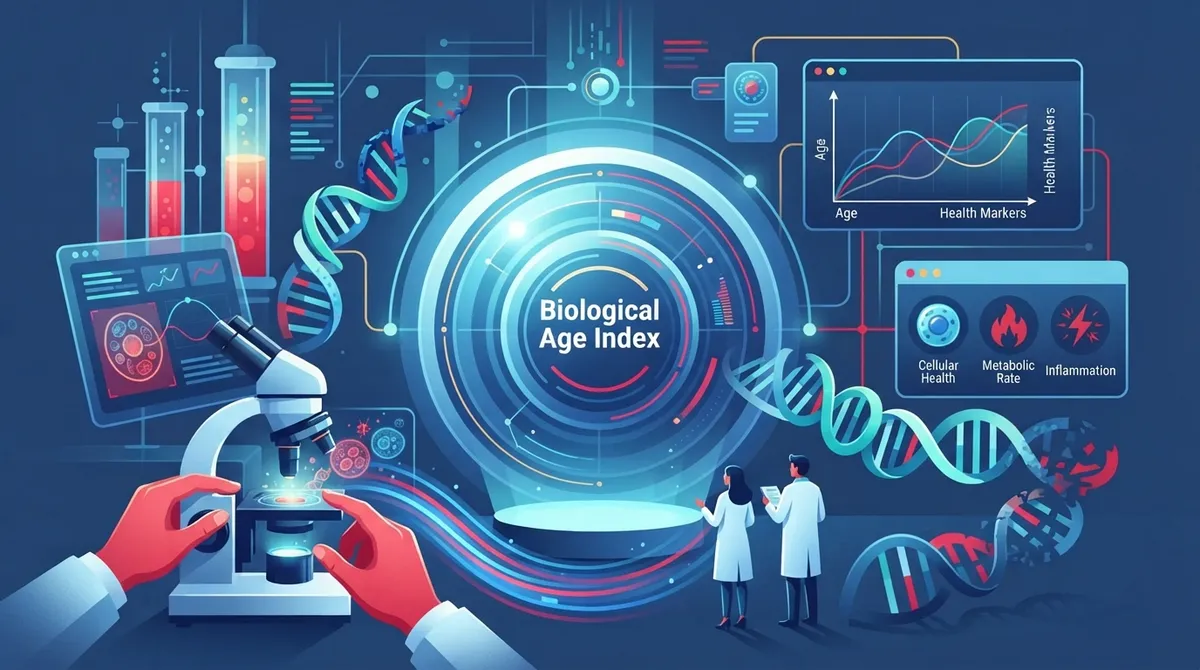
What Biological Age Testing Actually Measures
Biological age is an estimate of how your body's aging-related markers compare with patterns seen in large groups of people. It is not a second, official age. It is also not a diagnosis of any disease.
Different tests measure different things. That is why two tests can give you two different answers on the same day.
- DNA methylation (epigenetic) clocks: These look at chemical tags on your DNA, usually from a blood or saliva sample.
- Clinical biomarker models: These combine routine labs, such as blood sugar, cholesterol, and kidney markers, into one score.
- Functional measures: These look at grip strength, walking speed, or fitness testing to estimate how well your body performs.
A 2024 expert consensus statement found no clear agreement on a single biomarker that captures biological aging. The experts also noted that aging varies from person to person and from organ to organ. In plain terms, no single number tells the whole story.

Do Doctors Recommend Biological Age Testing?
Not as a routine checkup item. There is no universally accepted test, and current evidence does not support using biological age scores to guide treatment. Guideline-based screening, such as blood pressure checks and cancer screenings, still comes first.
The same consensus statement did find at least 70% expert agreement on several measures for use in research on aging. These include epigenetic clocks, blood pressure, muscle mass and strength, gait speed, and frailty measures. That is a research agreement, not advice to buy a consumer test. Notably, most of those measures are things a primary care visit can already track.
Who Should Get Biological Age Testing? Five Groups to Consider
If you are asking who should get biological age testing, think of it as a tool for curiosity and motivation, not a medical necessity. These groups may reasonably consider it, ideally with clinician guidance.
1. Healthy Adults Curious About Longevity
If you feel well and enjoy tracking your health, testing can be a fun and informative extra. Treat it as an optional snapshot. It should never replace a checkup or standard screening.
2. Tech-Savvy Adults Who Use Data to Stay Motivated
Many people in their late 20s through 40s like wearables, apps, and dashboards. A baseline number can feel motivating. The key is to focus on habits you can change, such as sleep, strength training, and nutrition, rather than chasing a single score.
3. Wellness-Focused Adults Building a Prevention Plan
Some adults already invest in advanced wellness services. For them, biological age testing can sit alongside labs, fitness testing, and body composition scans. If you are exploring this route, our guide on how to choose biological age testing in Tampa in 2026 covers what to look for.
4. People Who Want a Research-Style Baseline
Some people want to follow changes over time. This is reasonable only if you understand the limits. Results can shift because of the test model, the lab, or the sample, not just your health.
5. Adults Ready to Act on Results With a Clinician
The best candidates are people willing to review results with a doctor and decide whether any result would change their care. If the answer is "no, it would not change anything," the test may not be worth the cost.
Who Should Focus on Standard Prevention First
If you have health concerns or risk factors, a clinician-led assessment should come before any consumer test. This is especially true for the following groups.
- Adults with high blood pressure, high cholesterol, or high blood sugar
- Anyone with a family history of heart disease, diabetes, or cancer
- People who are overdue for guideline-recommended screening
- Adults without an established primary care doctor
- Anyone carrying extra weight who has not had a metabolic workup
For these groups, proven basics deliver far more value than an age estimate. They include blood pressure, cholesterol, blood sugar, weight or waist measures, fitness and strength, and age-appropriate screening. You can learn more in our guide to cancer screening guidelines by age and risk in 2026.
Quick Comparison: Biological Age Testing vs. Standard Preventive Care
|
Feature |
Biological Age Testing |
Standard Preventive Care |
|---|---|---|
|
Purpose |
Estimate of aging patterns |
Find and prevent disease early |
|
Evidence for routine use |
Not established |
Strong, guideline-based |
|
Changes treatment? |
Not currently supported |
Yes, it guides care |
|
Results consistency |
Varies by test and lab |
Standardized lab ranges |
|
Best for |
Curious, motivated adults |
Every adult |
This table shows why testing is a nice extra for some people and not a replacement for basic care. Families and busy parents, for example, usually get far more value from a solid preventive care visit than from an age score.
How Accurate Are These Tests?
Accuracy is the biggest limit. A Stanford news report cited an estimate of roughly three years of error in many epigenetic clocks. That is an approximate figure, not a rule for every test. Still, it shows why a result like "you are 4 years younger" should be read with caution.
Several factors can change your result:
- The test model: Each clock was built on different groups and different markers.
- The laboratory and sample type: Blood, saliva, and lab methods can all shift results.
- Timing: Illness, poor sleep, and stress can change some markers.
- Organ differences: One score cannot reliably represent every organ system.
A single result cannot show that you will develop a disease. It also cannot prove that a lifestyle change slowed your aging. If you want to understand the difference between the two ages, read how to understand biological vs. chronological age.
Questions to Ask Before You Pay for a Test
Before you buy any test, bring these questions to a clinician. Good answers protect your time and your money.
- What exactly does this test measure, and what can it not tell me?
- Has the test been validated, and in what kind of population?
- What sample is required, and which lab runs it?
- How is my data stored, shared, or sold?
- What does it cost, and is any part covered by insurance?
- Would any result change my care or my daily plan?
Insurance rarely covers consumer biological age tests, so plan on paying out of pocket. If you want help comparing options, our article on 5 questions to ask who provides biological age testing near Riverview offers a useful checklist. You can also review 13 biological age testing facts to know in 2026 for more background.
How to Use Your Results Wisely
If you do choose testing, treat the result as a conversation starter. A good review with your doctor usually covers three steps.
- Put the number in context. Compare it with your blood pressure, labs, fitness, and family history.
- Look for fixable gaps. Sleep, strength, activity, nutrition, and stress are the habits with the best evidence.
- Plan a follow-up. Do not retest too often, because small changes may just be noise. For timing guidance, see 11 facts on how often you should retest biological age.
Habits that support healthy aging are well known. Regular exercise, strength training, good sleep, a balanced diet, and keeping up with screenings all matter. If sleep is a concern, our guide on when to see a doctor for poor sleep can help you decide on next steps. Fitness testing can also add useful data. See who should get VO2 max testing for another practical measure of how your body performs.
Why Start With a Primary Care Relationship
The best use of any longevity tool begins with a doctor who knows you. A primary care team can review your history, order the right labs, and tell you honestly whether a biological age test adds value for you. InCare is a personalized clinic with locations in Tampa and Riverview, Florida. We combine primary care, preventive screening, DNA gene testing, body composition analysis, metabolic breath analysis, and weight loss support under one roof. That means your numbers always connect to a real plan.
If you want a doctor who will give you a straight answer, start with the basics. Our guide to what a wellness checkup in Tampa, FL includes shows what a strong foundation looks like. You can also follow us on Instagram for health tips, or read what patients say when you visit our InCare page on Google.
Where to Learn More From Trusted Sources
If you want to read the research yourself, the 2024 expert consensus statement on biomarkers of aging explains why experts still disagree about a single measure. For a plain-language overview, Stanford Medicine's report on biological versus chronological age is a helpful read. We also share updates on Facebook and TikTok.
The Bottom Line
So, who should get biological age testing? Curious, healthy adults, data-driven people, and wellness-focused patients may find it interesting, as long as they treat it as optional and look at results with a clinician. People with health concerns or risk factors should put proven prevention first. Whatever you choose, remember that a biological age score is an estimate. Your blood pressure, blood sugar, cholesterol, strength, fitness, and screenings tell you far more about your health today.
Ready to build a smart, evidence-based prevention plan? Book your visit with InCare today, or contact our team with questions about primary care and wellness services in Tampa and Riverview.
FAQs
Q: Who should consider biological age testing?
A: Healthy adults who are curious about longevity, enjoy tracking health data, or are building a broader prevention plan may consider it. It works best as an optional extra reviewed with a clinician. People with health concerns should start with standard, guideline-based care.
Q: Is biological age testing recommended by doctors?
A: It is not recommended as a routine screening test. No single biological age measure is universally accepted, and current evidence does not support using the results to guide treatment. Blood pressure checks, lab work, and recommended cancer screenings remain the priority.
Q: How accurate are epigenetic or DNA methylation age tests?
A: Accuracy varies by test, lab, and sample. A Stanford news report cited roughly three years of error in many epigenetic clocks, though this is an approximate estimate and not a rule for every test. Results should be interpreted with caution.
Q: Can a biological age test predict disease or lifespan?
A: No. A single result cannot show that you will develop a disease or reliably predict how long you will live. It also cannot prove that a lifestyle change slowed your aging.
Q: Should I get biological age testing if I feel healthy?
A: It is optional. If you feel healthy and are simply curious, testing can be an informational snapshot, but it is not a necessary checkup. Keeping up with regular visits and recommended screenings is a better use of your time and money.