
Key Takeaways
- Biological age testing is a wellness estimate, not a diagnosis, and no direct-to-consumer biological age clock has been FDA-approved to diagnose disease or guide treatment.
- Three main test types exist: epigenetic (DNA methylation) clocks, telomere length tests, and blood biomarker scores, and each measures different aspects of aging.
- Before booking in Tampa, ask which test method, algorithm, and lab are used, and request the sample type and a written price quote, since insurance often does not cover these tests.
- Results can differ between tests and labs for the same person, so ask how accurate the result is for an individual, whether retesting is possible, and how much results vary.
- Treat any biological age result as a conversation starter with a licensed clinician, and prioritize proven steps like blood pressure, blood sugar, cholesterol, and cancer screening.
- Be cautious of providers who claim a test can diagnose disease, promise age reversal, or push expensive supplement packages based on a single number.
You have probably seen the promise: a simple test that tells you how old your body really is. For many people in Tampa, that idea is exciting. It speaks to a goal that matters to health-minded adults, from busy parents to high-achieving professionals and curious young adults. If you are looking for biological age testing in Tampa, you deserve clear facts before you spend your money or build any health plan around a single number.
Biological age testing is a wellness estimate. It is not a diagnosis. Different tests measure different things, and results can vary from one lab to the next. Some methods have been studied in large research groups, yet that does not make them proven tools for guiding your personal care.
This guide explains what these tests measure, how to compare Tampa providers, and which questions to ask first. It also shows where testing fits next to proven primary care. For a related overview, see 13 Biological Age Testing Facts to Know in 2026.
What Biological Age Testing Actually Measures
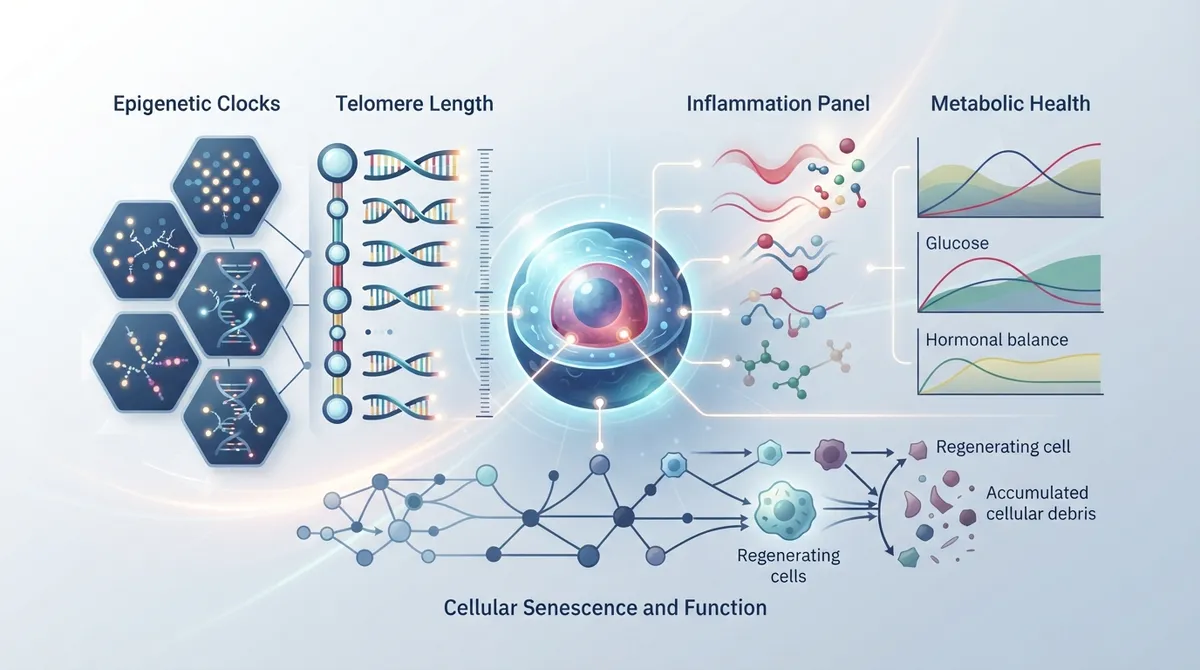
Your chronological age is the number of years since you were born. Biological age is an estimate of how your body may be aging at the cellular or molecular level. Two people who are both 45 can have different estimated biological ages. That gap is what these tests try to capture.
There is no single standard test. Instead, there are several approaches, and each one looks at a different feature of aging. A deeper explanation is available in How to Understand How Biological Age Is Measured.
The Three Main Test Types
- Epigenetic (DNA methylation) clocks: These look at chemical tags on your DNA. They use a sample of blood, saliva, or a cheek swab.
- Telomere length tests: These estimate the length of the protective caps at the ends of chromosomes.
- Blood biomarker scores: These combine routine lab values, such as glucose, cholesterol, and inflammation markers, into one estimate.
Epigenetic results reflect the cells you sampled and the formula the lab used. They do not directly measure how every organ is aging. Some named clocks, including GrimAge, PhenoAge, and DunedinPACE, have been studied for links to disease risk, mortality, or pace of aging in large population groups.

What Biological Age Tests Can and Cannot Tell You
Population research is not the same as personal proof. A clock may track risk across thousands of people. That does not mean it can diagnose you or show whether a treatment is working for you.
Researchers at Stanford have written about this gap in their 2026 coverage, What biological age tests can and can't tell you. Their message is balanced. These tests are interesting, but they should not drive major health decisions on their own.
Key Limits to Remember
- A result is an estimate, not a diagnosis.
- Different tests can give different answers for the same person.
- Sample handling and lab methods can change results.
- No direct-to-consumer biological age clock has been approved by the FDA to diagnose disease or guide treatment.
Because of these limits, it helps to treat the result as one piece of wellness information. It can start a useful talk with your clinician. It should not replace screening tests that have strong evidence behind them.
How to Choose Biological Age Testing in Tampa: A Step-by-Step Process
Several Tampa-area wellness practices list longevity or biological age services. One directory shows seven clinics with published genetic or biological age testing listings. That is a directory count, not a verified census, so always confirm details yourself.
Use this process when you are looking for biological age testing in Tampa.
- Define your goal. Are you curious, tracking lifestyle changes, or trying to understand a specific risk? Your goal shapes which test makes sense.
- Ask which test is used. Request the exact method: epigenetic clock, telomere length, or blood biomarker score. Ask which algorithm and which lab.
- Confirm the sample type. Find out if it needs blood, saliva, or a cheek swab, and how it is handled and shipped.
- Request a written price quote. No reliable Tampa-wide pricing exists, and insurance often does not cover these tests. Get costs in writing before booking.
- Ask who reviews the results. A licensed clinician should explain what the number means and what it does not.
- Ask about follow-up. Find out how results connect to real next steps, like labs, screenings, or lifestyle plans.
Questions to Ask Any Tampa Clinic Before You Book
A good provider will welcome tough questions. If answers feel vague, that is a signal to slow down. For more depth, review 5 Questions to Ask Who Provides Biological Age Testing Near Riverview.
- What exactly does this test measure, and what does it not measure?
- Which laboratory runs the sample, and how is quality checked?
- How accurate is the result for one person, not just a large group?
- Will I be able to retest, and how much can results vary between tests?
- What will we do with the result if it looks high or low?
- Is the cost fully listed, with any follow-up visits included or separate?
Comparing Biological Age Test Types
This table gives a plain overview. It is general information, not a ranking, and the details of any product should be confirmed with the provider.
|
Test Type |
What It Looks At |
Typical Sample |
Main Caution |
|---|---|---|---|
|
Epigenetic clock |
DNA methylation patterns |
Blood, saliva, or cheek swab |
Reflects sampled cells and the chosen algorithm |
|
Telomere length |
Length of chromosome end caps |
Blood or saliva |
Results can vary by method and lab |
|
Blood biomarker score |
Routine lab values combined into one estimate |
Blood draw |
Overlaps with standard labs you may already get |
Notice that the blood biomarker approach looks a lot like a standard wellness lab panel. In many cases, the same markers can be reviewed in the context of your actual health history, which adds real meaning to the numbers. A useful companion read is Epigenetic vs. Blood Biomarker Age Tests: Which Wins?
Where Biological Age Testing Fits in Primary Care
Think of biological age testing as optional wellness information. It is not a substitute for established preventive care. The habits and checks that protect long-term health are well known: blood pressure control, blood sugar and cholesterol checks, age-appropriate cancer screening, vaccines, sleep, and regular movement.
A primary care clinician can place a biological age estimate in context. For example, a surprising number may prompt a closer look at labs you can actually act on. That is far more useful than chasing the number itself. To see how longevity ideas connect with everyday care, read Why Longevity Medicine Starts With Primary Care and How to Get the Most From Preventive Care Visits in 2026.
Measurable Risk Factors Come First
- Blood pressure, cholesterol, and blood sugar
- Body composition and metabolic health
- Cancer screening based on age and risk
- Sleep quality and daily energy
- Medication review and vaccine status
These items have strong evidence and clear actions. If you are weighing testing against other priorities, Cancer Screening Guidelines by Age and Risk in 2026 is a helpful reference.
Who May Find This Testing Useful
Different readers come to this topic for different reasons. Here is how the testing may fit each group.
- Tech-savvy millennials: You may enjoy tracking data. Treat the result as a data point, and pair it with labs and wearable trends you can act on.
- High-income wellness seekers: You may be able to afford many options. Spend first on well-supported screening and clinician review before adding extras.
- Busy young families: Time is tight. Prioritize preventive visits and screenings for the whole household before optional tests.
- Gen Z health explorers: You may find social media claims confusing. Ask a licensed clinician to explain what a test can and cannot show.
- Preventive health women: A full wellness visit with labs and screenings gives more usable information than a single age estimate.
Across every group, the same rule applies. Start with a baseline. If you do not yet have a clinician, How to Choose the Best Primary Care Near You in Tampa and What Does a Wellness Checkup in Tampa, FL Include? can help you begin.
Cost, Insurance, and Red Flags
No dependable Tampa-wide price or insurance data was found for these tests. Costs vary by provider and by test type. Insurance often treats biological age testing as an elective wellness service, so confirm coverage before you book.
Red Flags to Watch For
- Claims that a result can diagnose disease or prove a treatment works.
- Pressure to buy a large package of supplements or therapies based on one number.
- No clear answer about the lab, method, or sample handling.
- No licensed clinician involved in reading the result.
- Promises of guaranteed age reversal.
If a provider is confident and transparent, these questions will not be a problem. Industry coverage, such as the discussion of epigenetic clocks and the FDA, shows why caution is wise while standards are still developing.
How InCare Approaches Longevity and Preventive Health
InCare is a personalized primary care and wellness clinic serving Tampa and Riverview. The care model centers on prevention and whole-body optimization, supported by modern technology and medical expertise. Services include primary care, cancer screening, metabolic breath analysis, body composition analysis, DNA gene testing, and weight loss support.
This approach means you can discuss longevity goals in the context of real, measurable health data. If you are interested in testing options, learn more in Biological Age Test Near Me in Tampa: 2026 Guide, or explore How to Choose a Healthspan Testing Clinic in Tampa. You can also see what patients say by reading InCare reviews through our Visit us on Google — InCare profile, and follow health updates on Instagram, Facebook, and Tik Tok.
A Simple Plan Before You Spend a Dollar
- Schedule a baseline wellness visit with labs and age-appropriate screenings.
- Review blood pressure, blood sugar, cholesterol, and body composition with your clinician.
- Decide whether an optional biological age test adds value for your goals.
- Get the method, lab, and cost in writing.
- Plan how you will use the result, and when you will recheck your progress.
This order keeps the focus on actions that help you most. The test becomes a small add-on, not the foundation of your plan.
Conclusion: Make Testing Serve Your Health, Not the Other Way Around
Biological age testing can be an interesting window into wellness, but it is only an estimate. The best approach is to ask clear questions, confirm the method and cost, and use any result alongside proven primary care. If you are ready to start with a thoughtful baseline, Book Now to schedule a visit with InCare, or Contact our team in Tampa or Riverview to talk through your goals.
FAQs
Q: Where can I get biological age testing in Tampa?
A: Several Tampa-area wellness and longevity practices advertise biological age or related testing, and InCare offers primary care and DNA gene testing in Tampa and Riverview. Availability, test method, laboratory, and price change over time, so confirm these details directly with any provider before you book.
Q: How accurate are biological age tests for an individual?
A: They provide an estimate, not a diagnosis. Some clocks have been linked to disease risk or pace of aging in large research groups, but that does not prove individual accuracy. Results can differ between tests and can be affected by sample handling and lab methods.
Q: What is the difference between biological age and chronological age?
A: Chronological age is the number of years since birth. Biological age is an estimate of how your body may be aging at a cellular or molecular level, based on methods such as DNA methylation, telomere length, or blood biomarkers.
Q: How much does biological age testing cost, and does insurance cover it?
A: No reliable Tampa-wide price or coverage figures are available. Costs vary by provider and test, and insurance often treats these tests as elective wellness services. Request a written quote and confirm coverage before booking.
Q: Can a biological age test diagnose a condition or show if a treatment is working?
A: No. These tests are not diagnostic, and no direct-to-consumer biological age clock has been approved by the FDA to diagnose disease or guide treatment. Ask a licensed clinician to explain what a specific result can and cannot show for your health goals.