
Key Takeaways
- Snoring with daytime sleepiness plus at least two of these—habitual loud snoring, witnessed apnea, gasping or choking, or diagnosed hypertension—warrants prompt evaluation under AASM guidance.
- Keep a 1-2 week sleep log noting bed and wake times, nighttime waking, partner-observed snoring or pauses, daytime sleepiness, and morning headaches to make your primary care visit more productive.
- Only objective testing confirms sleep apnea; consumer apps and symptom questionnaires can assess risk but cannot diagnose OSA without a sleep study.
- Uncomplicated adults with signs of moderate-to-severe OSA may use a home sleep apnea test, but significant heart or lung disease, prior stroke, or chronic opioid use calls for in-lab polysomnography.
- A negative or inconclusive home test does not rule out sleep apnea if symptoms persist; guidelines recommend proceeding to in-lab polysomnography.
- Start with primary care to rule out mimics like thyroid problems, anemia, depression, and medication side effects, and confirm insurance referral or prior authorization requirements before booking.
Loud snoring, restless nights, and daytime exhaustion are easy to dismiss. Many adults blame stress, long work hours, or a busy household. Yet these signs can point to obstructive sleep apnea (OSA), a condition in which breathing repeatedly pauses during sleep. If you want a sleep apnea evaluation in Tampa, knowing the steps ahead of time saves effort and gets you answers sooner.
This guide explains how the process works in 2026. You will learn which symptoms matter, what a primary care visit covers, how home and in-lab tests differ, and what happens after a diagnosis. The testing standards discussed here come from the American Academy of Sleep Medicine (AASM) diagnostic guideline published in 2017, which remains a core reference. Local availability and insurance rules vary, so confirm details with your provider and your health plan.
Why a Sleep Apnea Evaluation Matters
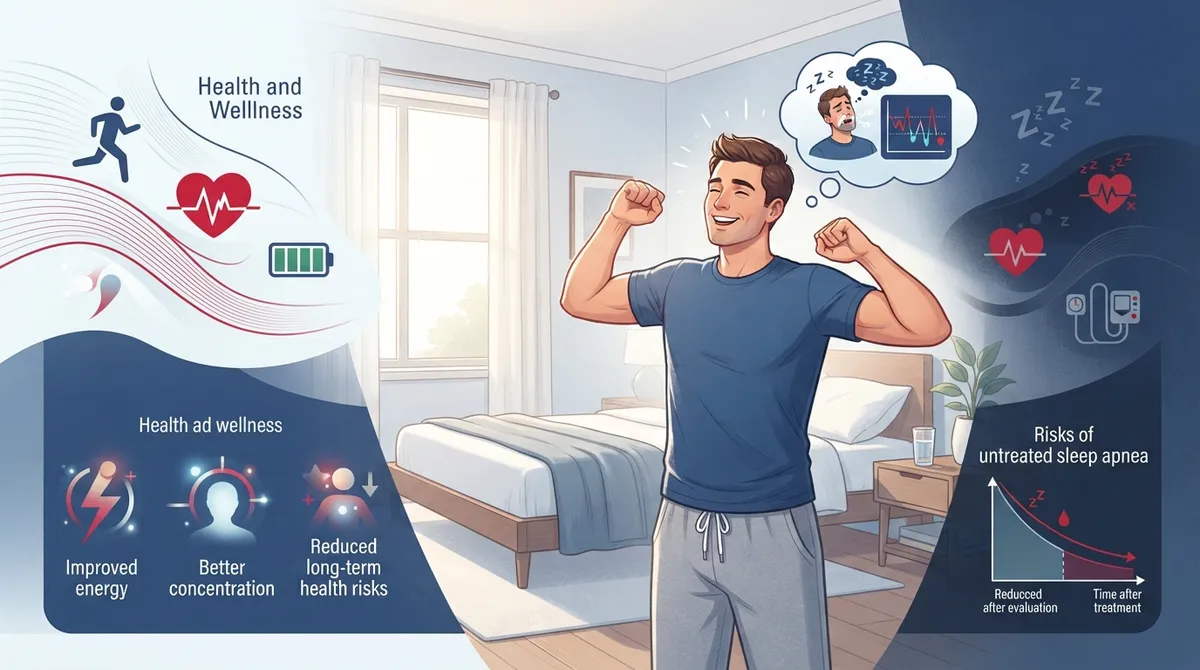
Sleep apnea is not just a snoring problem. During an apnea event, the airway narrows or closes, oxygen can dip, and the brain briefly wakes the body to restart breathing. These interruptions fragment sleep, even when you do not remember waking.
Over time, untreated OSA is linked with higher blood pressure, daytime sleepiness, and strain on the heart. You can read more about these effects in 12 Ways Untreated Sleep Apnea Affects Your Health. A proper evaluation turns vague worries into a clear diagnosis and a plan.
The National Heart, Lung, and Blood Institute offers a helpful overview on its sleep apnea information page. It explains the condition, risk factors, and general treatment paths in plain language.
Step 1: Recognize the Warning Signs
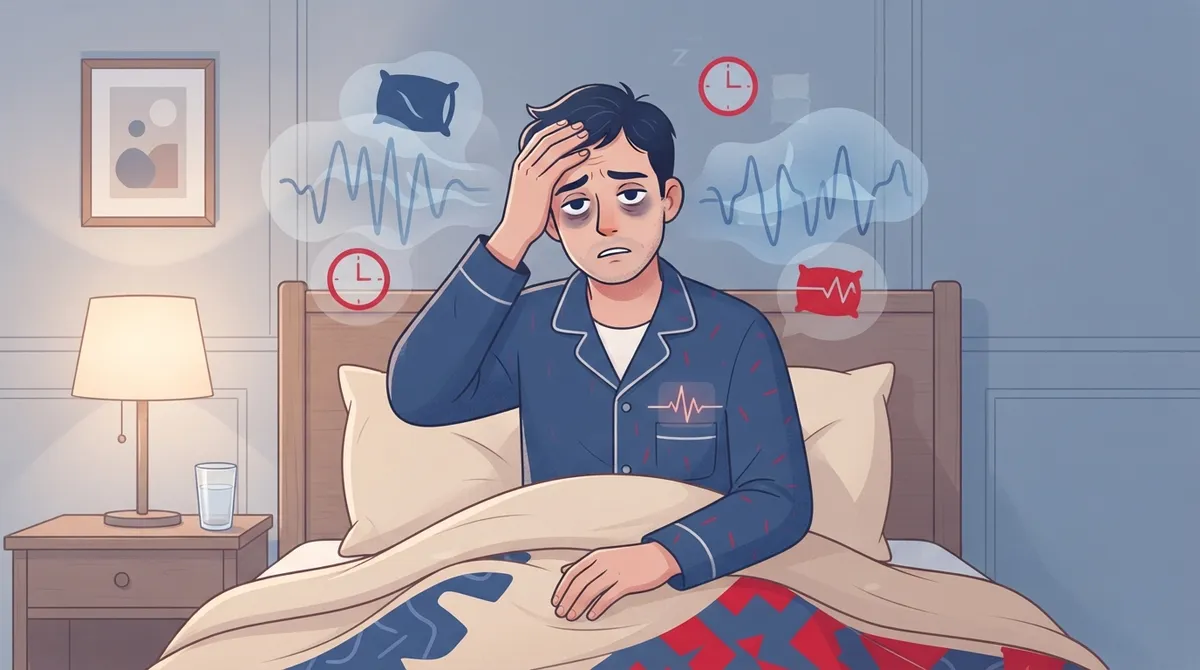
The first step toward a sleep apnea evaluation in Tampa is noticing the pattern. Common clues of obstructive sleep apnea include:
- Loud, habitual snoring
- Pauses in breathing that a partner or family member has witnessed
- Gasping or choking during sleep
- Excessive daytime sleepiness, even after a full night in bed
- Morning headaches or a dry mouth on waking
- High blood pressure or difficulty controlling it
Excess weight can also raise concern. However, symptoms alone do not confirm the diagnosis. Some people with sleep apnea snore very little, and many people who snore do not have apnea. For a deeper look at the difference, see 7 Facts on Whether Snoring Always Means Sleep Apnea and What Are the Symptoms of Sleep Apnea? Signs to Know.
Who Should Seek Evaluation Sooner
Some patterns deserve prompt attention. According to the AASM guideline, an adult has an increased risk of moderate-to-severe OSA for testing purposes when they have excessive daytime sleepiness plus at least two of the following: habitual loud snoring, witnessed apnea, gasping or choking, or diagnosed hypertension. If this description sounds familiar, schedule a visit rather than waiting.
This advice applies across age groups. Busy parents, shift workers, and professionals often live with poor sleep for years. If fatigue is affecting your work, driving, or family life, treat it as a medical question, not a personality trait.
Step 2: Track Your Symptoms Before the Visit
A short log makes your appointment far more productive. For one to two weeks, note the following:
- What time you go to bed and wake up
- How often you wake during the night
- Whether a partner notices snoring, gasping, or pauses
- How sleepy you feel during the day, and when
- Any morning headaches or dry mouth
- Recent changes in weight, medications, alcohol use, or stress
Many tech-savvy patients use wearable devices or sleep apps. These can help you spot trends and start a conversation. Keep in mind that consumer apps are not diagnostic tools. The AASM guidance is clear that questionnaires and prediction tools can help assess risk but cannot diagnose OSA without a sleep study.
Step 3: Start With a Primary Care Assessment
In the Tampa area, a sleep apnea evaluation typically begins with a primary care clinician. This visit is a comprehensive sleep evaluation, not just a quick screening. It usually includes:
- A review of your symptoms and sleep habits
- Your medical history, including heart, lung, and neurological conditions
- A medication review, since some drugs affect breathing or alertness
- A physical exam, often including blood pressure, weight, and the airway
- Screening questionnaires to estimate risk
Your primary care clinician then decides what comes next. That might be a home sleep test, a referral to sleep medicine for an in-lab study, or further testing for another cause of fatigue. Thyroid problems, anemia, depression, and medication side effects can all mimic sleep apnea, so a broad review matters.
InCare offers this kind of coordinated starting point. As a primary care and wellness clinic serving Tampa and Riverview, InCare can review your history, order appropriate testing, and help you navigate referrals so you are not left to sort out the system alone. You can read more about local options in Sleep Apnea Near Me Tampa: Where to Start in 2026.
Primary Care Versus Sleep Specialist
Primary care and sleep medicine work together. Primary care coordinates your overall health and orders initial testing when appropriate. Sleep specialists interpret studies and guide care for complex sleep disorders. Our guide on Primary Care vs. Sleep Specialist: Who Fixes Poor Sleep? explains how to decide where to begin.
Step 4: Understand Your Testing Options
Objective testing is the only way to confirm sleep apnea. The two main options are a home sleep apnea test (HSAT) and in-lab polysomnography (PSG).
|
Feature |
Home Sleep Apnea Test (HSAT) |
In-Lab Polysomnography (PSG) |
|---|---|---|
|
Setting |
Your own bed |
Sleep center with a technologist |
|
Signals recorded |
Fewer, focused on breathing and oxygen |
Many, including brain activity, heart rhythm, and muscle movement |
|
Best for |
Uncomplicated adults with signs of moderate-to-severe OSA |
Medical complexity or unresolved suspicion |
|
Convenience |
High |
Lower |
|
Limitations |
Can miss mild apnea or other sleep disorders |
Less convenient and often more costly |
For an uncomplicated adult whose signs suggest moderate-to-severe OSA, AASM guidance supports either an appropriate HSAT or in-lab PSG. HSAT records fewer signals and is not suitable for every patient. For a side-by-side look at the experience, see Home vs. In-Lab Sleep Study in Tampa: Which Test Fits You?.
When In-Lab Testing Is Preferred
AASM guidance favors PSG over HSAT for people with certain conditions. These include:
- Significant heart or lung disease
- Possible respiratory muscle weakness
- Suspected hypoventilation
- Chronic opioid use
- A history of stroke
- Severe insomnia
In these cases, the extra data from a lab study helps avoid a missed or incorrect diagnosis. Your clinician will choose the safest, most accurate option for your situation.
What If a Home Test Is Negative?
A home test can miss sleep apnea. If an HSAT is negative, inconclusive, or technically inadequate but your symptoms remain concerning, the AASM recommends proceeding to PSG. A negative first PSG may also warrant a second study if clinical suspicion stays high. Do not assume a single negative result closes the question if you still feel unwell.
Step 5: Prepare for Your Sleep Study
Good preparation improves the quality of your results. Whether you test at home or in a lab, follow these steps:
- Keep your normal sleep schedule as closely as possible.
- Avoid alcohol and heavy meals close to bedtime unless your clinician advises otherwise.
- Ask whether you should take or hold any regular medications.
- Bring comfortable sleepwear and personal items for a lab study.
- For a home test, read the device instructions carefully and practice placing the sensors before bedtime.
If anything is unclear, ask before the night of the study. Technical errors, such as a loose sensor, can make a home test inadequate and force a repeat.
Step 6: Review Results and Follow Up
Testing is only one part of the evaluation. AASM guidance emphasizes that testing should be part of a comprehensive sleep evaluation with follow-up. A sleep study result is typically summarized as the number of breathing events per hour, often grouped by severity. Your clinician or sleep specialist interprets that number alongside your symptoms and health history.
Plan to discuss three questions at your follow-up visit:
- Do the results confirm obstructive sleep apnea, and how severe is it?
- Are other sleep or medical conditions involved?
- What treatment fits my health, lifestyle, and goals?
What Happens After a Diagnosis
Treatment depends on your diagnosis and circumstances. Care may include positive airway pressure, such as CPAP, along with lifestyle measures. Some people also explore other approaches, which you can compare in Alternatives to CPAP for Sleep Apnea: Options in 2026. To understand the usual timeline, see 3 Key Timelines: How Long Sleep Apnea Treatment Takes.
Weight management can play a role for many adults. Research and clinical experience suggest that weight loss may help some people with OSA, as discussed in Can Weight Loss Help Sleep Apnea? What Research Shows. Because InCare also offers medical weight loss programs, patients can address sleep and weight together under one coordinated plan.
Primary care continues to matter after diagnosis. Your clinician can track blood pressure, review medications, support lifestyle changes, and coordinate referrals while sleep specialists guide sleep-disorder care. Our overview of 5 Ways Primary Care Doctors Treat Sleep Apnea (2026) shows how this partnership works.
Practical Tips for Tampa Patients
Finding the right path locally takes a few smart questions. Consider the following before you book:
- Confirm insurance coverage. Ask whether your plan requires a referral, prior authorization, or a specific testing method.
- Ask about testing options. Find out whether the clinic can arrange home testing, in-lab studies, or both.
- Clarify follow-up. A good evaluation includes a results visit and a treatment plan, not just a test.
- Check scheduling options. Telemedicine visits can save time for busy families and professionals.
For help comparing providers, you may find 11 Things to Know Before Choosing a Sleep Apnea Clinic in Tampa and Looking for a Sleep Clinic in Tampa? 2026 Guide useful. If you live south of the city, read How to Find a Sleep Apnea Doctor in Riverview, FL (2026).
Remember that this article provides general education, not personal medical advice. The AASM guideline is from 2017, and local availability, referral requirements, and coverage change. No reliable Tampa-specific prevalence figure was available for this article, so we do not cite one. Your clinician can tailor recommendations to your history.
Take the Next Step Toward Better Sleep
A sleep apnea evaluation in Tampa does not need to be complicated. Start with a clear look at your symptoms, bring that information to a primary care visit, and let your clinician guide the right test. From there, a confirmed diagnosis opens the door to effective treatment and better days.
InCare combines personalized primary care with advanced wellness services at its Tampa and Riverview locations. Patients also share their experiences on social channels such as Facebook, Instagram, and TikTok, and you can visit us on Google — InCare to read reviews from local patients.
If you suspect sleep apnea, don't wait for exhaustion to take a bigger toll. Book Your Sleep Evaluation Visit Now or contact our team with any questions about getting started.
FAQs
Q: Where can I get a sleep apnea evaluation in Tampa?
A: You can begin with a primary care clinic that reviews your symptoms and medical history, then arranges objective testing or a sleep medicine referral. InCare offers primary care in Tampa and Riverview and can help coordinate the next steps. Confirm testing options and insurance requirements when you book.
Q: Can my primary care doctor order a sleep study in Tampa?
A: In many cases, yes. A primary care clinician can assess your risk and order a home sleep apnea test or refer you for an in-lab study, depending on your health history. Referral and coverage rules vary by plan, so check with your provider and insurer.
Q: What is the difference between a home sleep apnea test and an in-lab sleep study?
A: A home test records fewer signals and suits some uncomplicated adults with signs of moderate-to-severe OSA. An in-lab study, called polysomnography, records more data and is preferred for conditions such as significant heart or lung disease, prior stroke, or chronic opioid use.
Q: Can a home sleep apnea test miss sleep apnea?
A: Yes. If a home test is negative, inconclusive, or technically inadequate but symptoms persist, guidelines recommend in-lab polysomnography. A negative first lab study may also call for a second study when suspicion remains high.
Q: What happens after a sleep apnea diagnosis?
A: Treatment depends on your diagnosis and circumstances. It may include positive airway pressure such as CPAP and lifestyle measures, with primary care coordinating follow-up and referrals while sleep specialists guide sleep-disorder care.