Key Takeaways
- Persistent symptoms like loud snoring, witnessed breathing pauses, gasping during sleep, and daytime sleepiness warrant a medical evaluation, since online quizzes cannot diagnose sleep apnea.
- A negative or inconclusive home sleep test should generally be followed by an in-lab study if sleep apnea is still suspected, so don't dismiss ongoing symptoms after a normal home result.
- In-lab polysomnography is the standard diagnostic test and is preferred for complicated cases, such as significant heart or lung disease, suspected hypoventilation, chronic opioid use, or prior stroke.
- Starting with primary care allows a whole-body review of blood pressure, weight, and medications, and helps coordinate referrals; before booking, confirm referral rules, insurance coverage, and follow-up support.
Waking up tired after a full night in bed is more than an annoyance. It can be a sign of a sleep disorder that affects your heart, mood, focus, and long-term health. If you live in Hillsborough County and suspect sleep apnea, the right care team can make the process faster and far less stressful.
A sleep apnea clinic in Tampa can guide you from symptom review to testing, treatment, and follow-up. Many people begin that journey with their primary care team, which can screen for risk, order the right next steps, and coordinate with sleep specialists. Because sleep health connects to blood pressure, weight, energy, and mood, a whole-body approach often works best.
This guide covers 11 key points to know before you choose a clinic. You will learn the warning signs, how testing works, what treatment looks like, and how to compare your options with confidence. If you are a busy professional, a parent running on empty, or someone focused on prevention, this checklist will help you move from guessing to a clear plan.
1. Know the Signs That Point to Sleep Apnea
The first step is spotting the symptoms. Obstructive sleep apnea (OSA) happens when the airway repeatedly narrows or closes during sleep. Many people do not realize it is happening because it occurs while they sleep.
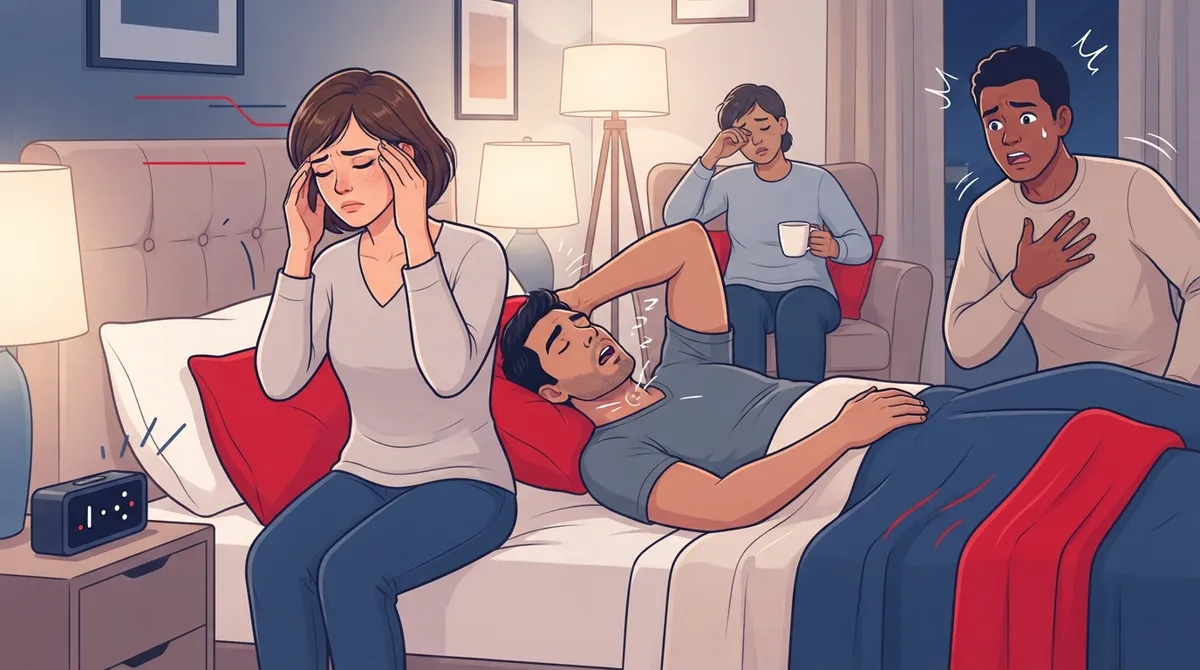
Common warning signs include:
- Loud, habitual snoring
- Pauses in breathing that a partner notices
- Gasping or choking during sleep
- Excessive daytime sleepiness
- Morning headaches or a dry mouth
- High blood pressure that is hard to control
If several of these sound familiar, it is time to talk with a clinician. Our guide on the symptoms of sleep apnea explains these signs in more detail.

2. Understand That a Questionnaire Is Not a Diagnosis
Online quizzes and symptom checklists are useful for spotting risk. They cannot confirm sleep apnea in adults on their own. A real diagnosis requires a medical evaluation and an appropriate sleep test.
Think of a checklist as a conversation starter. Bring your results to your visit. Your clinician can then review your history, medications, weight, neck size, airway, and blood pressure to decide which test fits you best.
3. Start With Primary Care for a Whole-Body Review
Sleep apnea rarely stands alone. It often overlaps with high blood pressure, weight gain, diabetes risk, mood changes, and fatigue. A primary care clinician can look at the full picture and coordinate referrals to sleep medicine when needed.
This matters because the best sleep apnea clinic in Tampa for you may be the one that connects sleep care to the rest of your health. A primary care team can order labs, review your medicines, and monitor changes over time. If you are unsure who to see first, read primary care vs. sleep specialist for a clear comparison.
4. Learn the Difference Between Home and In-Lab Testing
Two main tests are used to diagnose sleep apnea. The American Academy of Sleep Medicine (AASM) identifies in-laboratory polysomnography (PSG) as the standard diagnostic test. Home sleep apnea testing (HSAT) is an option for selected adults without complicating conditions who have symptoms suggesting a higher risk of moderate-to-severe OSA.
|
Feature |
Home Sleep Apnea Test |
In-Lab Sleep Study (PSG) |
|---|---|---|
|
Location |
Your own bed |
Sleep center |
|
Best for |
Selected, uncomplicated adults |
Higher-complexity cases |
|
Monitoring |
Breathing and oxygen focused |
Brain waves, breathing, heart, oxygen, movement |
|
Convenience |
High |
Lower |
|
Role |
Option for the right patient |
Standard diagnostic test |
Your clinician will help you pick the right path. To see the full process, review how sleep apnea is diagnosed.
5. Know When an In-Lab Study Is the Better Choice
Some situations call for the more detailed in-lab test. According to AASM guidance, PSG is preferred over a home test for patients with certain complicating conditions.
These include:
- Significant heart or lung disease
- Neuromuscular weakness that affects breathing
- Suspected hypoventilation
- Chronic opioid use
- A prior stroke
- Severe insomnia
If you have any of these, tell your clinician early. It can save you time and prevent a repeat test.
6. Plan for What Happens After a Negative Home Test
A home test does not always settle the question. A negative, inconclusive, or technically inadequate home test should generally be followed by an in-lab study when OSA is still a concern.
This is a common point of confusion. A normal home result does not always mean you are in the clear. If you still feel exhausted or your partner still hears pauses in your breathing, ask about the next step. A good clinic will explain this plan before you take the first test.
7. Ask What the Overnight Sleep Study Actually Involves
Many people delay testing because they fear the unknown. An overnight study is simpler than most expect. Sensors track your breathing, oxygen levels, heart rhythm, and sleep stages while you rest.
Here is what to expect:
- You arrive in the evening and meet the sleep technologist.
- Small sensors are placed on your head, chest, and finger.
- You go to bed in a private room, much like a hotel.
- The team monitors your sleep through the night.
- You go home in the morning, and a specialist reviews your data.
Results are usually reviewed by a physician who then explains your options. The process is painless and noninvasive.
8. Understand Your Treatment Options
Positive airway pressure (PAP), including CPAP, is a common treatment for sleep apnea. It uses gentle air pressure to keep the airway open while you sleep. Good care includes follow-up to review your results, check mask fit, and support ongoing use.
PAP is not the only path. Clinicians may consider alternatives when PAP is unsuitable or not well tolerated. Our overview of alternatives to CPAP for sleep apnea covers these choices, and you can learn how long care usually takes in this treatment timeline guide.
9. Recognize Why Untreated Sleep Apnea Matters
Sleep apnea is not just about snoring. Repeated breathing interruptions can strain the cardiovascular system, disrupt deep sleep, and leave you foggy all day. It is also linked with blood pressure concerns and metabolic health.
Treating it can improve daily energy, focus, and mood. For a deeper look at the risks, see 12 ways untreated sleep apnea affects your health. Weight can also play a role for some people, which is explored in can weight loss help sleep apnea.
10. Verify Services, Referrals, and Insurance Before You Book
Every clinic works a little differently. Some offer both home and in-lab testing. Others coordinate care across pulmonology, neurology, ear, nose, and throat, and respiratory therapy. For example, Tampa General Hospital's Sleep Disorders Center reports offering adult and pediatric evaluation, in-lab and home sleep studies, and coordinated multispecialty care. Always confirm current services, eligibility, and referral rules directly with any provider.
Before you commit, ask these questions:
- Do I need a referral for a sleep study?
- Which tests do you offer, and how do you decide between them?
- Do you accept my insurance, and what will I owe?
- Who will review my results and explain them to me?
- What follow-up and mask support do you provide?
Calling ahead with this list can save you stress and surprise bills.
11. Choose a Team That Treats You as a Whole Person
The best sleep apnea clinic in Tampa is the one that fits your life. Look for clear communication, a straightforward testing plan, and real follow-up. Convenience matters too, especially if you manage work, kids, or a packed calendar.
InCare offers personalized primary care in Tampa and Riverview, combining modern technology with medical expertise. Our team can review your symptoms, assess related risks like blood pressure and weight, and coordinate the right sleep testing and specialist care. Patients rate us 4.8 out of 5 on Google, and you can see what InCare patients say on Google. If you are weighing options nearby, our guides on finding a sleep clinic in Tampa and choosing the best sleep doctor in Tampa can help you compare.
How to Prepare for Your First Visit
A little preparation makes your appointment more useful. Before you go, gather the following:
- A list of your symptoms and when they began
- Notes from a partner about snoring or breathing pauses
- Your current medications and supplements
- Recent blood pressure readings, if you have them
- Questions about testing and insurance
Share how sleep problems affect your day. Details about fatigue, focus, mood, and driving alertness help your clinician judge urgency. If poor sleep has lasted a while, our guide on when to see a doctor for poor sleep can help you decide what to do next.
Conclusion: Take the First Step Toward Better Sleep
Sleep apnea is common, treatable, and easy to miss. A clear plan starts with recognizing symptoms, getting the right test, and choosing a team that supports you through treatment and follow-up. Do not rely on a questionnaire alone, and do not ignore a negative home test if symptoms continue.
You can follow InCare for health tips on Facebook, Instagram, and Tik Tok. When you are ready to talk about your sleep, Book Your InCare Appointment today, or contact our team with questions. Better sleep, and better health, can start this week.
FAQs
Q: What are the signs that I should see a sleep apnea clinic in Tampa?
A: Common signs include loud habitual snoring, witnessed pauses in breathing, gasping or choking during sleep, and heavy daytime sleepiness. High blood pressure can also raise concern. If you notice several of these, schedule a medical evaluation.
Q: Do I need a referral from my primary care doctor to get a sleep study in Tampa?
A: Referral rules vary by provider and insurance plan. Many people start with a primary care visit, where a clinician can assess risk and coordinate testing. Confirm requirements directly with the clinic and your insurer before booking.
Q: What is the difference between a home sleep apnea test and an in-lab sleep study?
A: A home test is done in your own bed and suits selected adults without complicating conditions. An in-lab study, called polysomnography, is the standard diagnostic test and records more body functions. It is preferred for higher-complexity cases.
Q: How is obstructive sleep apnea diagnosed?
A: Diagnosis requires a medical evaluation plus an appropriate sleep test, either at home or in a lab. A questionnaire alone cannot confirm sleep apnea in adults. A clinician reviews your test results and explains next steps.
Q: When should a negative home sleep test be followed by an in-lab study?
A: A negative, inconclusive, or technically inadequate home test should generally be followed by an in-lab study if sleep apnea is still a concern. Ongoing symptoms like fatigue or witnessed breathing pauses are reasons to ask about further testing.