
Key Takeaways
- Many wellness-marketed peptides are unapproved, and compounded versions are not reviewed by the FDA for safety, effectiveness, or quality like approved drugs. Ask whether any product is FDA-approved or compounded.
- A 2026 ECRI/ISMP report found 35 of 36 published BPC-157 studies were animal-only, with no published Phase 1 human safety data or controlled human efficacy trials.
- A trustworthy clinic starts with your health history, exam, and labs, discusses proven treatments first, and schedules follow-up to track benefits and side effects.
- Verify the clinician's license and the supplying pharmacy's license using Florida's public licensing tools, and avoid guaranteed results, 'research use only' products, or pressure to buy large packages.
Peptide therapy has become a popular topic in wellness conversations across Florida. Social media promises faster recovery, younger skin, and easier weight loss. But "peptide therapy" is not one treatment. It covers many different substances, and the proof behind each one varies widely. That is why the phrase evidence based peptide clinic Tampa matters so much to careful patients.
An evidence-based clinic starts with your health history, not a product list. It explains which options have strong human research and which do not. It also tells you plainly when a peptide is FDA-approved and when it is not. This guide explains what to look for, which questions to ask, and how to protect yourself before you start any peptide program in the Tampa Bay area.
What Does Evidence-Based Mean for a Peptide Clinic?
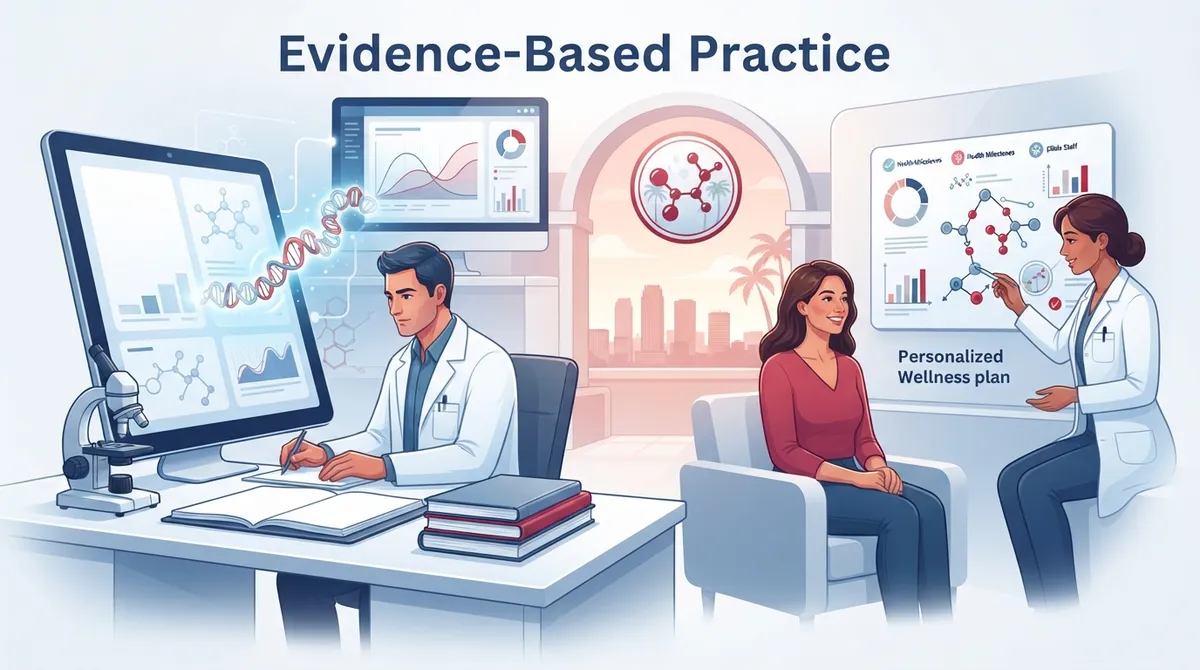
Evidence-based care means a treatment is chosen because good research shows it helps a specific condition in people. It also means the clinician weighs the risks, considers proven alternatives, and tracks your results over time.
For peptides, this standard is important. Many peptides sold for recovery, anti-aging, or performance have limited high-quality human data. A 2026 AAMC overview reported that evidence for commonly marketed unapproved peptides is sparse. It also noted that dosing, duration, and long-term safety are often unknown.
A real example is BPC-157. A 2026 ECRI/ISMP report found that 35 of 36 published BPC-157 studies it reviewed were done in animals. It reported no published Phase 1 human safety data and no controlled human efficacy trials. You can read more in our guide on BPC-157 FDA approval status in 2026.
Core signs of an evidence-based approach
- A full medical history, medication review, and physical exam before any plan
- Lab testing when it is medically appropriate
- Clear talk about proven treatments before any peptide is discussed
- Honest statements about what is unknown or unproven
- Scheduled follow-up to track benefits and side effects

Are Peptides FDA-Approved?
Some are, and many are not. This is the most important point for patients to understand. FDA-approved peptide medicines exist, and they have gone through safety and effectiveness review. Examples include certain GLP-1 medicines used for diabetes and weight management. Wellness-marketed peptides are a different category, and many are unapproved or investigational.
You can learn how the approved options work in our articles on semaglutide's mechanism of action and how tirzepatide works inside your body. For a side-by-side look, see FDA-approved vs. compounded peptides.
How Compounded Peptides Are Regulated
Compounded drugs are made by a pharmacy for a specific patient need. They are not FDA-approved. The FDA does not review them for safety, effectiveness, and quality before they are sold in the same way it reviews approved drugs.
Compounding can be appropriate in some cases. But it is not a path that turns an unproven peptide into a proven one. The FDA also limits which bulk substances a pharmacy may use. The table below summarizes the two main pathways.
|
Pathway |
Who Uses It |
Key Rule for Bulk Substances |
|---|---|---|
|
Section 503A |
State-licensed pharmacies and physicians compounding for individual patients |
Substance generally must meet USP/NF standards, be a component of an FDA-approved drug, or appear on the FDA 503A bulks list |
|
Section 503B |
Registered outsourcing facilities |
Separate limits, including a clinical-need list and drug-shortage provisions |
The FDA has also flagged safety concerns for some peptide substances proposed for compounding. These include risks of immune reactions from impurities or aggregation, along with limited safety data. Its GHRP-2 and GHRP-6 concerns are one example, and its assessments are specific to each substance and route.
Which Peptide Claims Deserve the Most Caution?
Patients often ask about recovery, longevity, and fat loss. These are the areas where marketing runs far ahead of research. Be careful with any clinic that promises certain results from a single peptide.
No reliable general statistic proves that "peptide therapy" as a whole is safe or effective. Results cannot be applied across different peptides, formulations, or routes of use. For deeper reading, review our pieces on peptides for recovery, peptides for athletes, and peptides for longevity.
Common red flags
- Guaranteed results or "miracle" language
- No physical exam or lab review before treatment
- Products sold as "research use only" but offered for human use
- Vague answers about where the product comes from
- Pressure to buy large multi-month packages
Our guide on why wellness products say "research purposes only" explains why that label should give you pause.
What Should You Ask a Tampa Peptide Clinic?
Good clinics welcome questions. Use the numbered list below as a checklist during your first visit.
- Who evaluates me and who prescribes? Ask for the clinician's name, license type, and role.
- What diagnosis is being treated? A peptide should match a real medical need.
- What human clinical evidence supports this peptide? Animal studies and marketing claims are not enough.
- Is it FDA-approved or compounded? The answer should be direct.
- Which licensed pharmacy supplies it? Ask for the pharmacy name and verify it.
- How are side effects handled? Ask who you call and how fast you get a response.
- What is the follow-up plan? Expect labs, check-ins, and clear stop points.
For a longer list, read 15 questions to ask a peptide therapy clinic in Tampa. You can also review common peptide clinic mistakes before you book.
How to Verify Credentials in Florida
Do not rely on a website alone. Florida has public licensing tools that let you confirm a clinician or pharmacy. Check that the physician's license is active and in good standing. Confirm that any compounding pharmacy holds a valid license. Ask whether the product is supplied by a licensed pharmacy and not shipped from an unknown source.
It also helps to know whether a clinic is built around primary care. A practice that manages your whole health can place peptides in context. It can screen for conditions, review your medicines, and recommend proven care first. Our guide on how to vet peptide therapy in Tampa walks through this step by step.
Why Primary Care Matters for Peptide Decisions
Peptides are not a shortcut around the basics. Sleep, blood pressure, blood sugar, hormones, and nutrition all shape how you feel. A primary care doctor can look at all of these together. That whole-person view is what keeps a peptide decision grounded in your health, not in a trend.
This is where InCare stands out for Tampa Bay patients. InCare combines primary care, urgent care, advanced testing, and wellness services under one roof, with locations in Tampa and Riverview. Because your care team sees your full picture, peptide questions are handled as part of a larger plan. That includes metabolic testing, body composition analysis, and cancer screenings that support prevention. You can read about the practice in InCare Peptide Clinic Tampa: What to Know Before You Go.
What a thoughtful visit can include
- Review of your symptoms, goals, and current medicines
- Baseline testing to understand your starting point
- A frank discussion of proven options and any peptide with real human data
- A written plan with follow-up dates and safety checks
If cost is on your mind, see what monthly peptide therapy costs in Tampa. If you want help narrowing options, our article on how to find a reputable peptide clinic in Tampa is a good next read.
Who May Want to Wait or Choose Other Care
Peptides are not right for everyone. People who are pregnant, planning pregnancy, or managing a serious chronic condition should talk with a physician before considering any unapproved peptide. If your goal is weight loss, proven care exists. Many patients do well with medically supervised weight loss, which uses approved medicines, nutrition support, and regular monitoring.
The same is true for sleep, energy, and hormone concerns. Often, a clear diagnosis leads to a safer and more effective answer than a peptide. Our guide on when to see a doctor for poor sleep is one example of starting with the cause.
Staying Informed and Connected
Health guidance changes as new research and FDA decisions appear. Following a trusted local practice helps you stay current. You can find InCare updates on Facebook, Instagram, and TikTok. You can also see what patients say when you visit our InCare location on Google, where the practice holds a strong rating.
Conclusion
A truly evidence-based peptide clinic in Tampa is honest before it is persuasive. It tells you which peptides are FDA-approved and which are not. It examines you first, explains the evidence, names the risks, and follows up after treatment. It never treats animal studies or marketing as proof.
If you want a clear, personalized plan built on your whole health, InCare is ready to help in Tampa and Riverview. Book Now to start with a thorough evaluation, or contact our team with your questions.
FAQs
Q: What does an evidence-based peptide clinic in Tampa offer?
A: It begins with a medical history, medication review, exam, and appropriate testing. It then discusses proven treatments first and explains whether any peptide has credible human evidence for your condition, along with the risks and follow-up plan.
Q: Are peptide therapies FDA-approved?
A: Some peptide medicines are FDA-approved, such as certain GLP-1 drugs. Many wellness-marketed peptides are not approved, and compounded versions are not reviewed by the FDA for safety, effectiveness, and quality in the same way as approved drugs.
Q: Are compounded peptides safe?
A: Safety depends on the specific substance, the route, and the pharmacy. The FDA has raised concerns about some peptides, including immune reactions from impurities, so it is important to ask for the supplying pharmacy and verify its license.
Q: How can I verify a Tampa clinician or pharmacy?
A: Use Florida's public licensing tools to confirm that the physician and any compounding pharmacy hold active licenses in good standing. Ask the clinic directly which licensed pharmacy supplies your product.
Q: Can peptides help with weight loss, recovery, or anti-aging?
A: Evidence varies by peptide. Some approved GLP-1 medicines have strong weight-loss data, but many peptides marketed for recovery or anti-aging have limited human research. A clinician should explain the evidence for your specific goal.