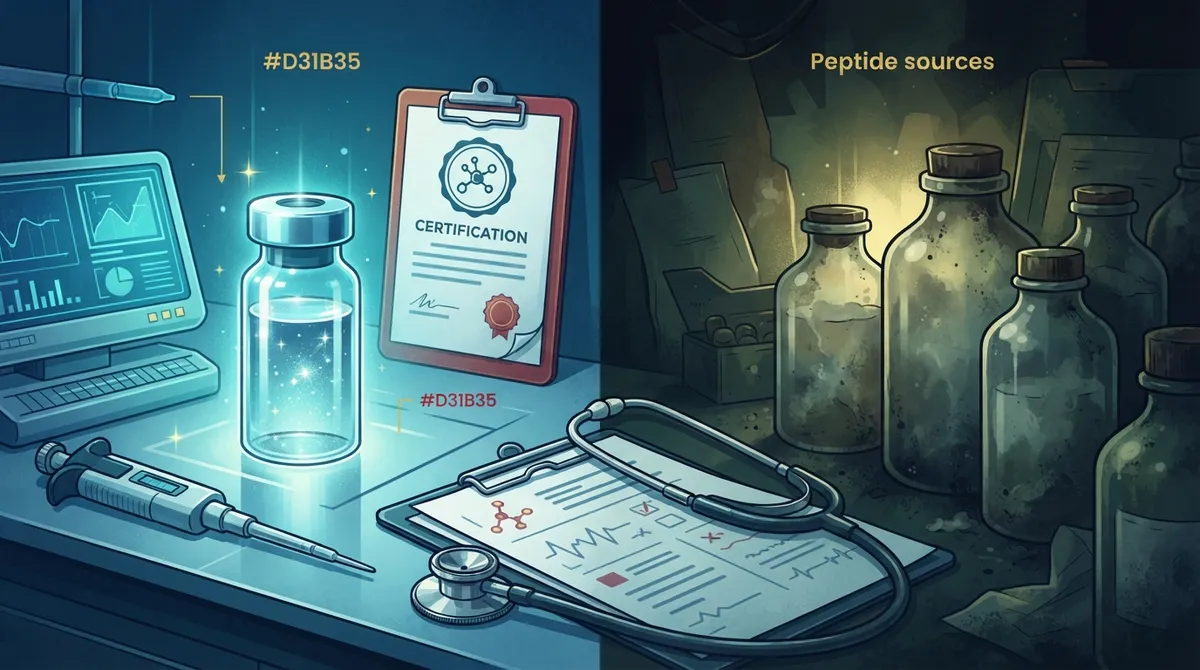
Key Takeaways
- Many popular peptides like BPC-157, TB-500, and CJC-1295 lack FDA approval and large peer-reviewed human trials; always ask for the exact peptide name and its specific FDA approval status before treatment.
- Verify your provider's Florida license through the Florida Department of Health website and confirm which physician will oversee your care, monitor labs, and be available if side effects occur.
- Demand a written cost breakdown upfront and clarify whether the price covers only the first month or the full treatment plan, as peptide therapy is often cash-pay and not insurance-covered.
- A trustworthy clinic starts with a full medical evaluation of your history and medications before recommending any peptide, not with a sales pitch, and provides a clear follow-up monitoring plan.
Searching for a peptide clinic in Tampa can feel like walking into a maze. Ads promise faster recovery, better energy, and younger skin. Social media adds even more hype. But in 2026, the gap between marketing and medical evidence is still wide. Making the wrong choice can waste money and, in some cases, harm your health.
A Tampa peptide clinic is usually a primary care or wellness practice that offers consultations about peptide-based treatments. Some peptide medicines are FDA-approved for specific uses. Many popular wellness peptides are not. Knowing the difference is the first step toward safe care.
This guide covers eight common mistakes people make when choosing a peptide clinic in Tampa. Whether you are a busy parent, a wellness-minded professional, or a young adult exploring prevention, these tips will help you ask better questions and pick a provider you can trust.
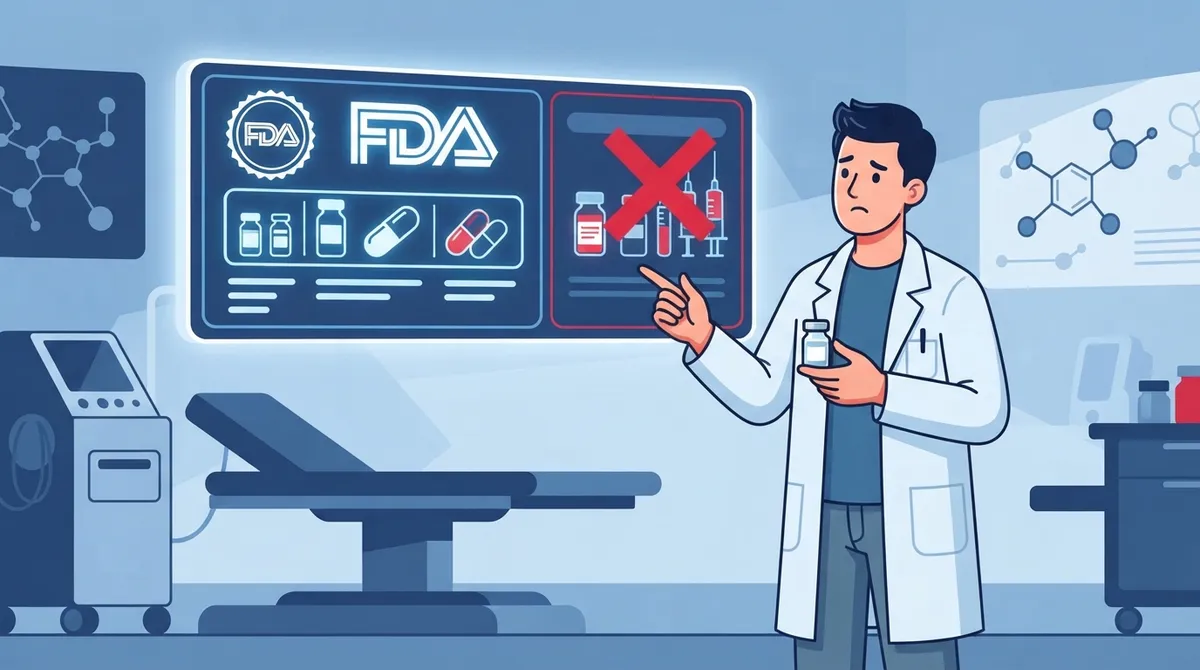
Mistake 1: Assuming All Peptides Are FDA-Approved
The word "peptide" covers many different products. Peptides are short chains of amino acids. Some are approved medicines with strict safety review. Others are sold for wellness goals with little human research behind them.
FDA approval applies to a specific peptide, for a specific use, at a specific dose. It does not carry over to other peptides or compounded versions. A clinic that says "peptides are FDA-approved" without naming the exact product is giving you an incomplete answer.
Always ask these questions before treatment begins:
- Which exact peptide is being recommended?
- Is it FDA-approved for the use being proposed?
- If it is compounded, which pharmacy makes it?
- What human research supports this use?

Mistake 2: Trusting Popular Names Without Checking the Evidence
Some peptides get a lot of attention online. BPC-157, TB-500, and CJC-1295 are three common examples. None of them is FDA-approved for human clinical use. A 2025 Washington Post report noted that these compounds lack large, peer-reviewed human trials that back the claims often made about them. The same report described FDA safety concerns, including serious adverse events linked to CJC-1295.
Much of the excitement comes from animal or lab studies. Results in animals do not always carry over to people. A responsible clinic will tell you this plainly instead of overselling.
If you want to read more about one popular compound, see this guide on BPC-157 facts every wellness patient should know.
Mistake 3: Confusing Compounded Products With Approved Medicines
A compounded product is made by a pharmacy for an individual patient. It is not the same as an FDA-approved drug. Pharmacy licensure or registration does not mean the FDA has approved the product or confirmed that it works.
The FDA has raised concerns about some bulk substances used in compounding. These concerns include impurities, poor characterization, and limited human safety data. This does not mean every compounded product is unsafe. It means you should ask more questions.
|
Feature |
FDA-Approved Peptide Medicine |
Compounded Peptide Product |
|---|---|---|
|
FDA review of safety and effectiveness |
Yes, for the approved use |
No |
|
Standardized dosing and labeling |
Yes |
Varies by pharmacy |
|
Human clinical trial data |
Required before approval |
Often limited or absent |
|
Key question to ask |
Is this the approved use? |
Which pharmacy, and what evidence? |
Mistake 4: Skipping a Full Medical Evaluation
A good peptide clinic starts with your health, not the product. A proper visit should review your goals, medical history, current medications, and risks. It should explain the evidence and the regulatory status of any treatment being discussed.
Be careful if a clinic jumps straight to a sales pitch. Lab work may be appropriate depending on the plan. But a lab test alone does not prove a peptide is safe or needed for you.
This is why many people start with primary care. A doctor who knows your full history can spot drug interactions and underlying conditions before any new therapy begins. Learn more about why comprehensive primary care matters.
Mistake 5: Not Verifying the Provider's License
Anyone can build a polished website. Your safety depends on who is actually treating you. In Florida, you can check a clinician's license through the Florida Department of Health. This takes only a few minutes.
Here is a simple process to follow:
- Get the full name of the doctor or provider who will oversee your care.
- Look up the license on the Florida Department of Health website.
- Check for active status and any disciplinary actions.
- Ask which provider reviews your labs and adjusts your plan.
- Confirm who to call if you have side effects after hours.
You can review the credentials of the physicians at InCare on our providers page, including Dr. Pramjeet Ahluwalia.
Mistake 6: Ignoring Follow-Up and Monitoring Plans
Starting a treatment is only part of the story. Safe care includes a plan for follow-up, side effects, and stopping the treatment if needed. If a clinic cannot explain how it will monitor you, that is a red flag.
Ask about the following before you agree to anything:
- How often will you be seen after starting?
- What symptoms should prompt a call to the clinic?
- Which labs will be tracked over time?
- What happens if you want to stop?
Clear answers show a clinic takes safety seriously. Vague answers should make you pause.
Mistake 7: Overlooking the Total Cost
Peptide therapy is often a cash-pay service. Insurance may not cover it, especially for products that are not FDA-approved for the use being proposed. Costs can include the consultation, labs, the product itself, and follow-up visits.
Ask for a written breakdown before you start. Find out whether the price covers the full plan or only the first month. For a deeper look at pricing, read about peptide therapy costs in 2026.
Also compare peptide options with other proven care. For example, some people exploring weight management may be better served by established medical weight loss programs that use FDA-approved medicines under physician supervision.
Mistake 8: Treating Local Marketing as Proof of Results
Tampa has several practices that advertise peptide consultations. Their service pages tell you what they offer. They do not prove that a treatment is effective or safe. No reliable public statistic shows how many peptide clinics operate in Tampa or what share of patients benefit.
Treat clinic websites as a starting point. Look for clear language about evidence, honest limits, and real physician involvement. Be wary of testimonials that promise dramatic results. Services and availability can also change, so confirm details directly with any clinic.
You can also see how other patients describe their care on our testimonials page, or read InCare reviews on Google.
What a Trustworthy Tampa Peptide Clinic Looks Like
After avoiding these mistakes, what should you look for instead? A reliable clinic is physician-led, honest about evidence, and focused on your whole health. It should fit peptide discussions into broader preventive care, not replace it.
InCare is a primary care and wellness clinic with locations in Tampa and Riverview, Florida. Our approach combines medical expertise with advanced technology, from DNA gene testing to body composition analysis. We focus on prevention and personalized plans, and we explain the evidence and regulatory status of any therapy before you decide. InCare patients rate us 4.8 out of 5 on Google across 359 reviews, and many mention our friendly staff and careful, personal care.
If you want to understand how we approach this topic, explore our overview of peptide therapy in Tampa: benefits and safety. You can also compare how TRT, peptide therapy, and hormone replacement therapy differ.
A Simple Checklist Before You Book
Use this short checklist during your first call or visit with any Tampa peptide clinic:
- Name the exact peptide and the exact reason for using it.
- Confirm whether it is FDA-approved for that use.
- Identify the pharmacy if the product is compounded.
- Verify the provider's Florida license.
- Review your medical history and medications together.
- Get the full cost in writing.
- Agree on a monitoring and follow-up plan.
If a clinic cannot answer these points clearly, keep looking. Good providers welcome careful questions.
Take the Next Step Toward Safer Care
The best peptide clinic in Tampa is one that puts your safety first. That means honest talk about evidence, a real medical evaluation, and a clear plan for follow-up. Avoiding these eight mistakes protects both your health and your wallet.
Ready to talk with a physician who will give you straight answers? Book your visit with InCare today, or contact our team with questions. You can also follow our health tips on Instagram, Facebook, and TikTok.
FAQs
Q: What does a peptide clinic in Tampa offer?
A: A peptide clinic in Tampa is typically a primary care or wellness practice that offers consultations about peptide-based treatments. Some also provide preventive care, lab testing, weight management, or hormone services. Advertised services do not prove a treatment is FDA-approved or effective, so ask for specifics.
Q: Are peptide therapies FDA-approved?
A: Some peptide medicines are FDA-approved for specific conditions, but many popular wellness peptides are not. Approval applies only to the exact peptide, use, and dose that was reviewed. Compounded versions are not FDA-approved.
Q: How can I check whether a Tampa peptide provider is licensed?
A: You can verify a clinician's Florida license through the Florida Department of Health website. Look for active status and any disciplinary history. Also ask which provider will oversee your care and monitor your results.
Q: What should I ask a clinic before starting peptide therapy?
A: Ask which exact peptide is being recommended and whether it is FDA-approved for that use. Find out which pharmacy supplies it, what evidence supports it, and what monitoring and costs are involved. A trustworthy clinic will answer these questions clearly.
Q: Does insurance cover peptide therapy in Tampa?
A: Coverage is often limited, especially for products that are not FDA-approved for the proposed use. Many peptide services are cash-pay. Ask for a written cost breakdown and check with your insurer before you begin.