
Key Takeaways
- FDA-approved GLP-1 medications like semaglutide and tirzepatide show 15-22% average weight loss and require proper medical evaluation, lab work, and ongoing monitoring—skip clinics that skip these steps.
- Most peptides marketed for anti-aging and recovery (BPC-157, TB-500, CJC-1295) lack solid human research; 35 of 36 BPC-157 studies were animal-only, making them investigational, not proven treatments.
- Choose clinics that require licensed prescribers, licensed compounding pharmacies, clear disclosure of FDA approval status, and scheduled follow-up visits—avoid one-time injection clinics with no monitoring.
- FDA-approved weight loss peptides carry serious risks including pancreatitis, gallbladder disease, and thyroid concerns; they are contraindicated for people with personal or family history of medullary thyroid carcinoma.
Peptide therapy has become one of the most talked-about wellness treatments in Tampa. Ads promise faster healing, better sleep, and weight loss with a simple injection. But not all peptides are the same, and not all claims are true. Before you spend money on any treatment, you need to know what is proven, what is experimental, and how to find a clinic that puts your safety first.
This guide breaks down peptide therapy in plain language. You will learn which peptides are FDA-approved, which ones are still unproven, and what questions to ask before you start treatment. Whether you are a busy parent trying to lose weight, a young professional exploring wellness trends, or someone who wants proactive health screening, this article will help you make an informed choice.
What Is Peptide Therapy?
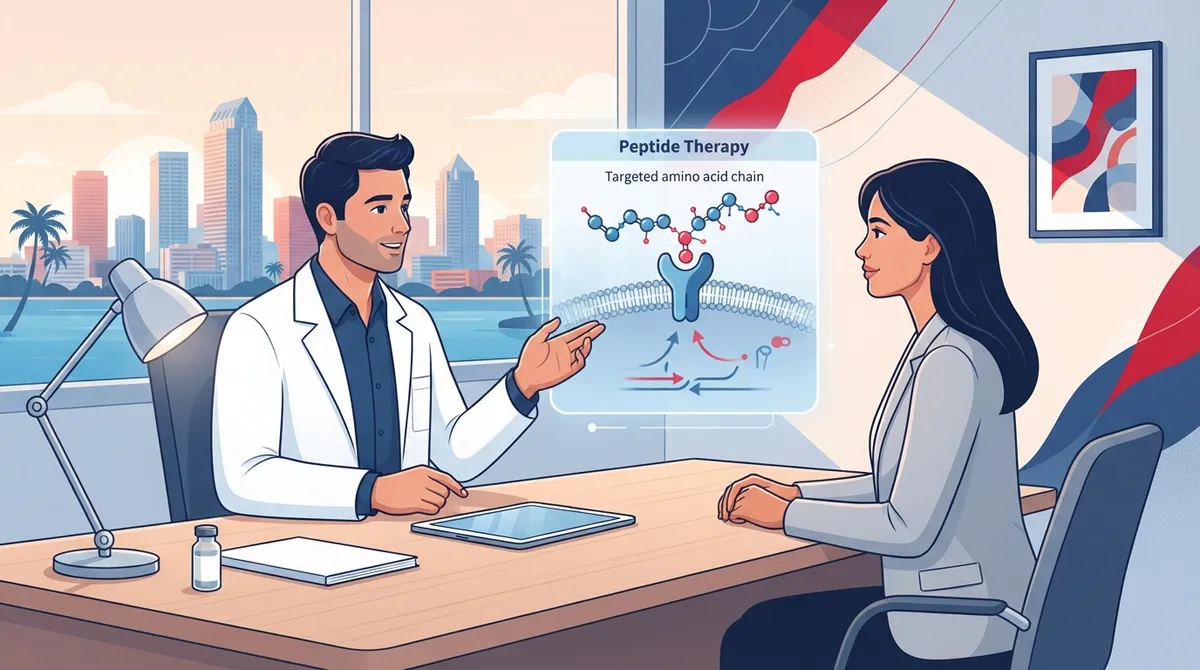
Peptides are short chains of amino acids. Amino acids are the building blocks of proteins. In the body, peptides act like tiny messengers. They tell cells what to do. Some peptides control appetite. Others help release hormones. Some support tissue repair or immune activity.
In a primary care setting, peptide therapy should always start with a medical evaluation. A doctor reviews your health history, runs lab tests, and checks for any conditions that could make treatment risky. This is very different from ordering a peptide online or getting it from a clinic that skips this step. At Primary Care visits with InCare, this evaluation is the starting point for any peptide-related discussion.

FDA-Approved Peptide Treatments for Weight Loss
The strongest, most proven use of peptide-based medicine in wellness care is medically supervised weight loss. Several GLP-1 and GIP/GLP-1 medications have FDA approval for this purpose. These drugs require a proper diagnosis, careful dosing, and regular follow-up visits.
Approved Options You Should Know
- Semaglutide (Wegovy) — approved for chronic weight management
- Tirzepatide (Zepbound) — a dual-action GIP/GLP-1 medication for obesity
- Liraglutide (Saxenda) — an earlier GLP-1 option still used today
- Setmelanotide — limited to specific rare genetic causes of obesity
Clinical trials show average weight loss of about 15% to 17% of total body weight with semaglutide. Tirzepatide trials show even higher averages, around 18% to 22%. These numbers vary based on dose, how long someone stays on treatment, and personal health factors. Programs like Weight Loss combine these medications with nutrition coaching and monitoring for the best results. You can also read more about how these drugs compare in our guide on Tampa Tirzepatide Vs Semaglutide Weight Loss Injections.
Peptides That Are Not FDA-Approved
Many peptides advertised at wellness clinics are not approved for general use. This does not always mean they are dangerous. It means there is not enough solid human research to confirm they work as advertised or that they are safe for everyone.
Common Unapproved Peptides Marketed in Tampa
|
Peptide |
Marketed For |
Evidence Level |
|---|---|---|
|
BPC-157 |
Injury repair, gut healing |
Mostly animal studies |
|
TB-500 |
Tissue recovery |
Limited human data |
|
CJC-1295 |
Growth hormone support |
Early-stage research |
|
Ipamorelin |
Muscle and recovery support |
Limited human data |
|
AOD-9604 |
Fat loss claims |
Weak clinical support |
A recent critical review of BPC-157 research found that 35 of 36 studies were done on animals, not humans. Only one small human report involved 12 people, and a safety pilot study included just 2 participants. This shows how far these compounds are from proven medical treatments. If you want a deeper look at this specific peptide, see our article on Bpc 157 Tampa Does It Work Peptide Therapy.
How to Choose a Reputable Peptide Therapy Clinic in Tampa
Not every clinic offering peptides is equally trustworthy. Here is a step-by-step process to protect yourself.
- Ask about the medical evaluation. A responsible clinic will require lab work and a health history review before prescribing anything.
- Confirm the prescriber is licensed. Peptides should come from a licensed clinician, not a sales rep or unlicensed coach.
- Check the pharmacy source. Compounded peptides should come from a properly licensed compounding pharmacy, not an unregulated supplier.
- Ask if the treatment is FDA-approved, off-label, or investigational. A trustworthy provider will tell you clearly which category applies.
- Review the full cost. Ask about consultation fees, medication costs, and follow-up visit charges before you commit.
- Look for ongoing monitoring. Good programs include follow-up labs and check-ins, not just a one-time injection.
InCare's team, including providers like Naveen Paddu Md, Pramjeet Ahluwalia Md, and Teshy John Md, follows this exact model. You can learn more about the full care team on the Providers page.
Regulatory Changes You Should Know About
The rules around compounded peptides have shifted recently, and this affects what is legally available in Florida.
- The FDA declared the tirzepatide shortage resolved on December 19, 2024. Enforcement deadlines for compounding pharmacies followed in February and March 2025.
- Semaglutide was removed from the FDA shortage list on February 21, 2025. Enforcement deadlines for pharmacies followed in April and May 2025.
- As of May 31, 2026, the FDA had logged 990 adverse event reports tied to compounded semaglutide and more than 730 tied to compounded tirzepatide. These reports do not prove a direct cause, but they highlight the importance of using licensed, monitored care.
Because rules can change again, always confirm current guidance with your provider. According to the FDA's official statement on compounding policy, patient-specific medical need still plays a role in what is legally allowed.
Side Effects and Safety Considerations
FDA-approved GLP-1 medications are generally safe when properly monitored, but they do carry risks.
Common Side Effects
- Nausea and vomiting
- Diarrhea or constipation
- Abdominal discomfort
Serious Precautions
- Possible pancreatitis
- Gallbladder disease
- Dehydration-related kidney problems
- Low blood sugar when combined with certain diabetes medicines
- Delayed stomach emptying, which matters before surgery or sedation
Wegovy, Zepbound, and Saxenda all carry FDA boxed warnings about thyroid C-cell tumors. These drugs are not safe for people with a personal or family history of medullary thyroid carcinoma or MEN2 syndrome. This is exactly why a full medical review matters before starting any peptide-based treatment. Learn more about how these medications work in our piece on 8 Ways Glp 1 Medications Transform Weight Loss In 2026.
What a Responsible Peptide Program Should Include
Peptide therapy works best as part of a bigger health plan, not a standalone fix.
- Nutrition counseling tailored to your goals
- A realistic physical activity plan
- Sleep and stress support
- Regular metabolic monitoring through lab work
- Medication review to check for interactions
- Scheduled follow-up visits to track progress
This whole-body approach reflects how InCare designs care. Tools like Body Composition analysis and Dna Gene Testing help providers personalize a plan instead of guessing. Many patients also add Iv Hydration Vitamin Drips to support energy and recovery during treatment.
Why Tampa and Riverview Patients Choose Local, Licensed Care
Tampa's wellness market is full of options, but not all of them offer the same level of medical oversight. Choosing a clinic close to home makes it easier to keep up with lab work, follow-up visits, and any dose adjustments your provider recommends.
InCare serves patients through both Tampa and Riverview locations, with details available on the Locations page. If you want to explore InCare's specific peptide program, our article on Peptides In Tampa Why Incare Is The Top Clinic For Peptide Therapy covers this in more depth. You can also read what real patients say by checking reviews for InCare on Google before booking a visit.
InCare also shares educational content and patient updates on Facebook and Instagram, and posts wellness tips on Tik Tok. These channels can help you stay current on new peptide research and regulatory updates.
Questions to Ask Before Your First Visit
Before you commit to any peptide program, prepare a short list of questions for your provider.
- Is this specific peptide FDA-approved for my condition?
- What lab tests do I need before starting?
- What side effects should I watch for?
- How often will I need follow-up visits?
- What is the total cost, including labs and follow-ups?
- Where does the medication come from, and is the pharmacy licensed?
A clinic that answers these questions clearly, without pressure or vague promises, is one you can trust.
Take the Next Step Toward Safe, Personalized Care
Peptide therapy can offer real benefits when it is backed by science and guided by a licensed medical team. The key is knowing the difference between proven treatments and unproven trends. A qualified primary care provider can help you sort through the options and build a plan that fits your health goals.
If you are ready to explore medically supervised peptide therapy in Tampa or Riverview, reach out to our team today to discuss your options, or schedule your appointment now to get started with a full evaluation.
FAQs
Q: What is peptide therapy, and how does it work?
A: Peptide therapy uses short chains of amino acids that act as signaling molecules in the body. Depending on the peptide, they may influence appetite, hormone release, tissue repair, or immune activity. In a medical setting, treatment should always begin with a health evaluation, not a product recommendation.
Q: Is peptide therapy in Tampa FDA-approved and safe?
A: It depends on the specific peptide. Medications like semaglutide, tirzepatide, liraglutide, and setmelanotide are FDA-approved for weight management under medical supervision. Many other peptides marketed for anti-aging or recovery are not FDA-approved and should be considered investigational.
Q: Which peptide medications are FDA-approved for weight loss?
A: The FDA-approved options include semaglutide (Wegovy), tirzepatide (Zepbound), liraglutide (Saxenda), and setmelanotide for specific rare genetic causes of obesity. These require proper diagnosis, dose titration, and ongoing follow-up care.
Q: Are compounded semaglutide or tirzepatide products legal and safe to use in Florida?
A: Compounded versions are not the same as FDA-approved medications and carry added risks, including dosing errors and quality concerns. The FDA has issued enforcement deadlines for compounding pharmacies, so patients should confirm current legal status and only use licensed providers and pharmacies.
Q: How do I choose a reputable peptide therapy clinic in Tampa?
A: Look for a clinic that requires a full medical evaluation, uses licensed prescribers and pharmacies, and clearly explains whether a treatment is FDA-approved, off-label, or investigational. Reputable clinics also offer ongoing monitoring and transparent pricing rather than one-time injections with no follow-up.