
Key Takeaways
- No single standard longevity panel exists; labs should be chosen based on your age, history, symptoms, and risk factors rather than a one-size-fits-all package.
- No blood test can predict how long you will live or measure lifespan directly; lab results estimate risk for specific conditions and guide evidence-based care.
- Core tests usually include a CBC, comprehensive metabolic panel, lipid panel, and HbA1c or fasting glucose, with advanced markers like ApoB, Lp(a), and hs-CRP added only when they would change care.
- Repeat testing frequency should be individualized: normal-risk adults may test every few years, higher-risk adults often yearly, and abnormal results should be confirmed with a repeat test before drawing conclusions.
Search for longevity testing and you will find dozens of panels, each promising a different picture of your future health. The truth is simpler. There is no single, standard longevity panel. In primary care, the labs are chosen to fit your age, history, symptoms, and risk factors. So when people ask what labs are included in longevity testing, the honest answer is: it depends on you.
That said, most thoughtful programs draw from the same core group of tests. These tests measure heart risk, blood sugar, organ function, and key nutrients. In this guide, we walk through nine of them, explain what each one shows, and explain when it makes sense. We also share a clear warning: no blood test can predict how long you will live. The best use of lab work is to guide real, evidence-based care.
Whether you are a busy parent, a health-conscious professional, or a young adult focused on prevention, this guide will help you ask better questions at your next visit.

What Is Longevity Testing, Really?
Longevity testing is a preventive health approach. It uses lab work, exams, and sometimes advanced tools to find early risk for chronic disease. The goal is to act sooner, while changes are still easy to manage.
It is not a crystal ball. A lab result is not a direct measure of biological age or lifespan. Instead, it is one piece of a larger picture that includes your history, physical exam, family background, and lifestyle.
Many people ask whether longevity blood tests differ from routine annual blood work. They often overlap. A longevity approach may simply add a few risk-refining markers and look at trends over time.
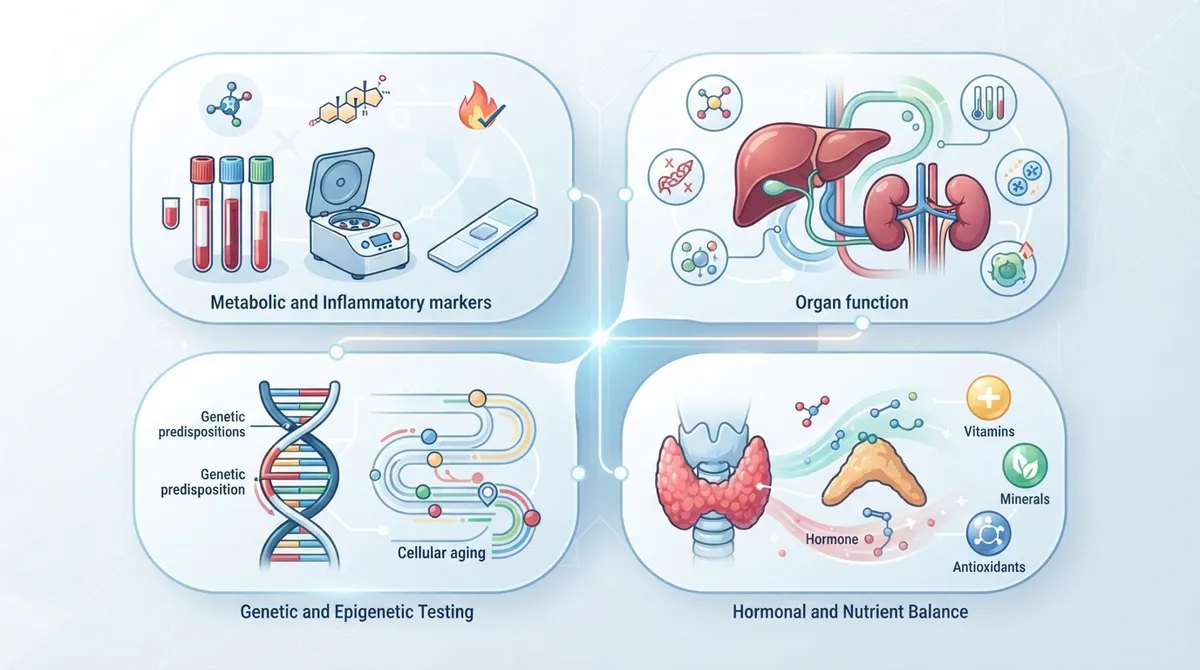
Quick Overview: Common Labs in Longevity Testing
|
Lab Test |
What It Helps Assess |
Typical Use |
|---|---|---|
|
Complete Blood Count (CBC) |
Blood cells, anemia, infection signs |
Common baseline |
|
Comprehensive Metabolic Panel (CMP) |
Glucose, kidney, liver, electrolytes |
Common baseline |
|
Lipid Panel |
Cholesterol and heart risk |
Routine screening |
|
HbA1c / Fasting Glucose |
Prediabetes and diabetes |
Routine screening |
|
TSH |
Thyroid function |
Symptom-based |
|
Urine Albumin-to-Creatinine Ratio |
Early kidney stress |
Risk-based |
|
Iron, Ferritin, B12, Vitamin D |
Nutrient status |
Symptom-based |
|
ApoB, Lp(a), hs-CRP |
Refined heart risk |
Selected cases |
|
Hormone Panels |
Hormone balance |
Symptom-based |
The 9 Labs Most Often Included
1. Complete Blood Count (CBC)
A CBC counts your red cells, white cells, and platelets. It can point to anemia, infection, or other blood concerns. Many clinicians use it as a baseline, though whether it fits depends on your clinical context.
2. Comprehensive Metabolic Panel (CMP)
The CMP checks glucose, electrolytes, kidney markers, liver enzymes, proteins, and calcium. It gives a broad snapshot of how your organs are working. Changes over several years can be as useful as any single result.
3. Lipid Panel
A standard lipid panel measures total cholesterol, LDL cholesterol, HDL cholesterol, and triglycerides. These numbers help estimate heart disease risk and guide prevention. Fasting is not always required for routine risk assessment, so ask your clinic before you skip breakfast.
The American Heart Association notes that adults at normal risk are commonly screened every 4 to 6 years. People with higher risk may need testing more often.
4. HbA1c or Fasting Glucose
Blood sugar tests screen for prediabetes and type 2 diabetes. Options include HbA1c, fasting plasma glucose, or an oral glucose tolerance test. The USPSTF recommends screening adults ages 35 to 70 who have overweight or obesity.
Diagnostic thresholds include an HbA1c of 6.5% or higher, or a fasting glucose of 126 mg/dL or higher. Without clear symptoms, an abnormal result usually needs confirmation. For adults with normal results, screening about every 3 years may be reasonable, though your clinician should set the interval for you.
5. Thyroid-Stimulating Hormone (TSH)
TSH helps detect an underactive or overactive thyroid. It is most useful when you have symptoms such as fatigue, weight changes, or temperature sensitivity. It is not always needed for everyone.
6. Kidney Markers: eGFR and Urine Albumin-to-Creatinine Ratio
The CMP includes creatinine, which helps estimate kidney filtering (eGFR). A urine albumin-to-creatinine ratio adds an early look at kidney stress. This test is especially helpful for people with high blood pressure, diabetes, or a family history of kidney disease.
7. Nutrient Tests: Ferritin, Iron, Vitamin B12, and Vitamin D
These tests check for deficiencies that can affect energy, mood, and long-term health. They make the most sense when your history or symptoms suggest a problem. Ordering them for everyone can lead to borderline results that need repeat testing.
If you are curious about supplements, you may find our guide on how to decide if vitamin D3 and K2 supplements fit you helpful.
8. Risk-Refining Heart Markers: ApoB, Lp(a), and hs-CRP
Some clinicians add these markers to sharpen heart risk estimates. They are not interchangeable with standard screening tests. Their value depends on your risk profile and whether the result would change your care.
- ApoB: counts the number of particles that can contribute to plaque.
- Lp(a): a largely inherited marker. The AHA's 2026 summary of updated cholesterol guidance recommends measuring it at least once in adulthood, with 125 nmol/L (50 mg/dL) or higher considered risk-enhancing.
- hs-CRP: a marker of inflammation that may add context in selected cases.
Guidance evolves, so check recommendations against current professional standards and your own circumstances.
9. Hormone Panels (When Symptoms Call for Them)
Hormone testing is not part of every longevity panel. It is most useful when you have symptoms such as low energy, low libido, or mood changes. Interpretation matters, because normal ranges vary and symptoms have many causes. To learn more, read about medically supervised TRT in Tampa Bay.
What Longevity Labs Cannot Do
It is important to set realistic expectations. Here is what lab work cannot promise:
- It cannot predict exactly how long you will live.
- It cannot replace a physical exam and a full health history.
- It cannot fix problems without follow-through on diet, sleep, activity, and treatment.
- It may produce borderline findings that lead to extra testing.
Broad testing can create worry without benefit. That is why interpretation by a qualified clinician is so important.
How Often Should You Repeat Preventive Labs?
There is no universal schedule. The timing depends on your results, age, and risk factors. As a general guide:
- Healthy adults with normal results: follow routine intervals set by your clinician, such as every few years for cholesterol and glucose.
- Higher-risk adults: repeat more often, often yearly, based on your care plan.
- After a lifestyle or medication change: recheck in a few months to see if the plan is working.
- After an abnormal result: confirm with a repeat test as advised before drawing conclusions.
Fasting and Preparation Tips
Preparation depends on which tests are ordered. Keep these points in mind:
- Ask whether fasting is needed before you arrive.
- Bring a list of medications and supplements.
- Stay hydrated unless told otherwise.
- Share your family history, since it shapes which tests make sense.
You can also read about primary care lab work in Tampa and what to expect to feel more prepared.
What to Do If a Result Is Out of Range
An out-of-range result is a starting point, not a diagnosis. Follow these steps:
- Do not panic. Many results fall slightly outside the range without meaning disease.
- Review the result with your clinician in context.
- Ask whether a repeat test or confirmation is needed.
- Agree on a plan, which may include lifestyle changes, treatment, or monitoring.
Why a Primary Care Setting Matters
Labs work best when one team looks at the whole picture. A primary care clinic can order the right tests, interpret results with your history, and follow trends over time. That prevents scattered results and unnecessary follow-up.
At InCare, our approach blends medical expertise with modern technology. Our clinicians offer primary care, preventive screenings, and advanced wellness services at our Tampa and Riverview locations. You can learn more about longevity biomarkers testing in Tampa, or explore how a preventive health screening plan comes together. For a broader view of what a visit covers, see what a wellness checkup in Tampa includes.
Many of our patients also appreciate the convenience of having lab testing services connected to their care team. If you want to hear from others, you can read InCare reviews on Google.
Go Beyond Labs: Other Longevity Tools
Blood work is only one part of a prevention plan. Depending on your goals, your clinician may also discuss:
- Cancer screenings matched to your age and risk
- DNA gene testing for personalized insight
- Metabolic breath analysis and body composition scans
- Blood pressure, sleep, and activity review
For more on this, explore our overview of cancer screening guidelines by age and risk. You can also follow our updates on Instagram for wellness tips and clinic news.
Your Next Step Toward Smarter Prevention
The best longevity testing is not the longest list of labs. It is the right set of tests, interpreted by a clinician who knows you, and tied to a plan you can follow. Start with the core labs, add advanced markers only when they would change your care, and recheck on a schedule that fits your risk.
Ready to build a personalized prevention plan? Book your visit with InCare today, or contact our team with questions. We would be glad to help you take the next step with confidence.
FAQs
Q: What blood tests are usually included in a longevity panel?
A: There is no single standard panel, but common tests include a CBC, comprehensive metabolic panel, lipid panel, and HbA1c or fasting glucose. Depending on your history, a clinician may add thyroid, kidney, nutrient, or heart risk markers such as ApoB, Lp(a), and hs-CRP.
Q: Can blood tests measure biological age or predict how long I will live?
A: No. A lab result is not a direct measure of biological age or lifespan. Blood tests help estimate risk for specific conditions, and they are most useful when a clinician uses them to guide evidence-based care.
Q: Do I need to fast before longevity or wellness blood tests?
A: It depends on the tests ordered. Fasting is not always required for a routine lipid panel, but some glucose tests do require it, so confirm instructions with your clinic before your visit.
Q: How often should I repeat preventive blood tests?
A: The schedule is individual. Adults with normal results may be screened every few years, while higher-risk adults are often tested more frequently, so your clinician should set the interval based on your results and risk factors.
Q: What should I do if a longevity test result is outside the normal range?
A: Treat it as a starting point rather than a diagnosis. Review the result with your clinician, ask whether a repeat or confirmatory test is needed, and agree on a plan that may include lifestyle changes, treatment, or monitoring.