
Key Takeaways
- Lab work like CBC, lipid panels, A1C, thyroid tests, and urinalysis can reveal heart, thyroid, kidney, and blood sugar issues often before symptoms appear.
- Ask before booking whether samples are drawn on-site or at an outside lab, how long results take, and whether the clinic accepts your insurance or what self-pay costs are.
- Ask your clinician whether fasting is required, and bring a current medication and supplement list, but never stop medications without asking your provider first.
- An out-of-range result does not automatically mean disease; your clinician interprets it alongside symptoms, history, and past trends, and may simply recommend a repeat test.
- Routine testing is especially valuable for people who feel well, including those with family histories of heart disease, diabetes, or thyroid conditions, and young adults setting a health baseline.
- Keep copies of your results to track changes year over year, and always schedule recommended rechecks rather than waiting for symptoms to return.
Lab work is one of the most useful tools in primary care. A few vials of blood or a simple urine sample can reveal how your heart, thyroid, kidneys, and blood sugar are doing, often before you feel any symptoms. For many adults in Hillsborough County, however, the process raises practical questions. Where is the sample collected? How long do results take? Do you need to fast? Will insurance pay?
This guide explains how primary care lab work in Tampa generally works in 2026. It covers common tests, preparation, costs, and what to ask before you book. It also shows how a coordinated clinic like InCare fits lab testing into a larger plan for prevention and whole-body health. The details below reflect general information. Always confirm current services, insurance participation, and turnaround times directly with any provider.

What Primary Care Lab Work in Tampa Means
Primary care lab work means tests ordered by a clinician to investigate symptoms, screen for selected health risks, or monitor an ongoing condition. It is not a one-size-fits-all panel. The right tests depend on your age, health history, medications, symptoms, and risk factors.
Tampa-area clinics commonly advertise services such as blood draws, cholesterol testing, diabetes screening, thyroid testing, and urinalysis. What differs from one clinic to another is how the sample is collected, which laboratory processes it, and how quickly results reach you.
Why Lab Work Belongs in Primary Care
When your primary care provider orders and reviews your labs, the results are read in context. A number slightly outside the reference range does not automatically mean disease. A clinician looks at your history, your symptoms, and your trends over time before deciding on next steps.
That context matters. It prevents unnecessary worry over a single result and helps catch real problems early. It also ties testing to action, whether that means a lifestyle change, a medication adjustment, or a referral.
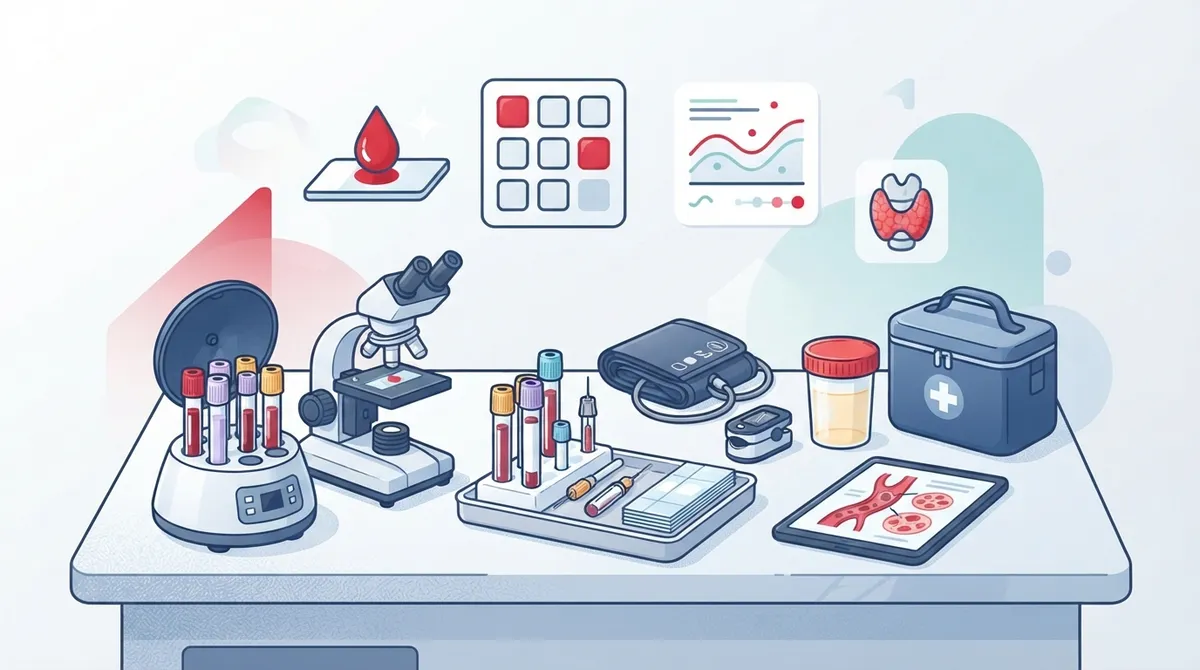
Common Lab Tests Ordered in Primary Care
Your provider may suggest different tests depending on your visit. The table below outlines common examples and what they typically help evaluate.
|
Test |
What It Helps Evaluate |
Typical Reason for Ordering |
|---|---|---|
|
Complete blood count (CBC) |
Red cells, white cells, platelets |
Fatigue, infection concerns, anemia screening |
|
Comprehensive metabolic panel |
Kidney function, liver enzymes, electrolytes, glucose |
Routine checkups, medication monitoring |
|
Lipid panel |
Cholesterol and triglycerides |
Heart health risk assessment |
|
Hemoglobin A1C or fasting glucose |
Blood sugar control over time |
Diabetes screening and monitoring |
|
Thyroid tests (such as TSH) |
Thyroid function |
Energy, weight, or mood changes |
|
Urinalysis |
Kidneys, urinary tract, hydration |
Urinary symptoms, general screening |
Other tests may be added based on your needs. Examples include vitamin levels, hormone panels, and inflammation markers. Your provider will explain why each test is recommended.
Who Benefits Most From Routine Lab Testing
Many people think of lab work as something only for people who feel sick. In reality, testing is often most valuable when you feel well, because it can catch quiet changes early.
- Busy families: Parents who rarely have time for their own checkups can combine screening labs with a single annual visit.
- Adults with a family history: Heart disease, diabetes, and thyroid conditions often run in families, so earlier screening may make sense.
- Women without an established primary care relationship: Many women see an OB/GYN for reproductive care but have no one tracking cholesterol, thyroid health, or blood sugar.
- Young adults building a health baseline: A first set of labs gives you a reference point for future comparison.
- Wellness-minded professionals: People who want to optimize health proactively often use labs to track progress over time.
On-Site Collection Versus Outside Laboratories
One of the biggest practical differences between clinics is where your sample gets collected. Some practices draw blood in the office. Others send you to an outside laboratory or coordinate with a laboratory partner.
Neither model is automatically better. The right choice depends on your schedule and priorities. Still, the difference affects your experience, so it is worth asking before you book. Our article on in-house vs. external lab testing services breaks down the trade-offs in more detail.
|
Factor |
On-Site Collection |
Outside Laboratory |
|---|---|---|
|
Convenience |
One stop for visit and blood draw |
Extra trip to a separate location |
|
Communication |
Clinic staff handle your sample directly |
Results are sent back to your provider |
|
Scheduling |
Often same visit |
May require a separate appointment or walk-in |
|
Billing |
May be bundled with the visit |
Lab may bill separately |
How to Prepare for Your Lab Work
Preparation depends on the specific tests ordered. Some require fasting, while many do not. Follow the instructions from the clinician who ordered your tests. If anything is unclear, ask before the day of your draw.
- Ask about fasting. Certain tests, such as some cholesterol and glucose measurements, may call for fasting. Your provider will tell you how long.
- Stay hydrated. Unless told otherwise, drinking water before a blood draw can make the process easier.
- Review your medications. Bring a current list of medications and supplements. Do not stop any medication without asking your clinician first.
- Wear comfortable clothing. Sleeves that roll up easily make the draw simpler.
- Bring your insurance card and ID. This helps the front desk confirm coverage and avoid delays.
Good preparation helps reduce repeat visits. It also supports more accurate results, which makes the conversation with your provider more productive.
Questions to Ask Before You Schedule
A few quick questions can save time and prevent surprise bills. Consider asking the clinic the following:
- Do I need an appointment or a referral for lab work?
- Is the sample collected here, or at an outside location?
- Which laboratory processes my sample?
- How long do results usually take, and how will I receive them?
- Does the clinic accept my insurance?
- What are the self-pay charges if I choose not to use insurance?
Coverage and costs depend on your plan, the specific test, and the billing arrangement. A short call to your insurer can clarify what is covered under your plan. If you are still searching for a practice, our guide on how to find a family doctor in Tampa, FL in 2026 offers helpful screening questions.
Understanding Your Results
Receiving results can feel stressful, especially if one value is flagged. It helps to remember that reference ranges are population averages. An out-of-range number does not by itself establish a diagnosis.
Your clinician interprets results alongside your symptoms, history, and past labs. Sometimes the next step is simply to repeat the test. Other times it may involve lifestyle changes, additional testing, or treatment. The key is having a provider who explains what your numbers mean in plain language.
What Happens If a Result Is Abnormal
If a result falls outside the expected range, your provider will typically review it with you and explain the likely causes. They may recommend follow-up testing, a medication review, or a plan to recheck in a few weeks or months. Staying engaged in that follow-up is one of the most important parts of the process.
How Lab Work Fits Into a Whole-Body Wellness Plan
Lab testing works best when it is part of a larger strategy. Routine bloodwork can guide decisions about weight management, cardiovascular risk, and long-term prevention. Many people also pair labs with other screenings. For example, you can learn about cancer screening guidelines by age and risk and discuss which apply to you.
If you are planning a checkup, it can help to understand what happens during an annual physical exam. Labs are often a core part of that visit. Ordering them in advance can make the appointment more productive, since your provider can review results with you in person.
Why Many Tampa Patients Choose InCare for Lab Work
InCare is a personalized primary care and wellness clinic with locations in Tampa and Riverview, Florida. The practice combines state-of-the-art technology with medical expertise, and it focuses on prevention and whole-body optimization rather than only treating problems after they appear.
For patients, that means lab work is not an isolated errand. Your provider can order tests, review them with you, and connect the results to a broader plan. That plan may include primary care, weight management, cancer screening, or advanced wellness services. Patients often mention the friendly staff and attentive care in reviews, and you can visit us on Google — InCare to read what patients say about their experience.
InCare also offers flexibility. In addition to in-person visits in Tampa and Riverview, telemedicine appointments are available. That can help busy professionals and parents who want to discuss results without taking time away from work or family.
Making the Most of Your Lab Visit
A few habits can help you get more value from every lab visit:
- Keep your own records. Save copies of your results so you can track changes year over year.
- Share new symptoms. Tell your provider about anything that has changed since your last visit.
- Ask for the "why." Understanding why a test is ordered helps you feel confident about the plan.
- Follow up. Schedule any recommended recheck instead of waiting for symptoms to return.
You can also follow InCare for health tips and updates on Instagram, Facebook, and TikTok.
Take the Next Step With Your Health
Primary care lab work in Tampa does not need to be confusing. With the right preparation and the right provider, it becomes a simple, valuable part of staying healthy. Start by asking the practical questions above, confirm your insurance details, and choose a clinic that explains your results clearly.
If you are ready to build a prevention-focused relationship with a Tampa primary care team, book your appointment with InCare today. Have questions first? Contact our team to learn how lab testing and personalized care can work together for you.
FAQs
Q: Where can I get lab work through a primary care doctor in Tampa?
A: Many Tampa primary care clinics order lab work and either draw blood on-site or send you to an outside laboratory. When booking, ask where the sample will be collected and how results will be delivered. InCare, with locations in Tampa and Riverview, can help coordinate testing as part of your care.
Q: Do I need to fast before blood work?
A: It depends on the tests ordered. Some, such as certain cholesterol and glucose tests, may require fasting, while many do not. Follow the instructions from your ordering clinician, and ask before changing or stopping any medication.
Q: How long do primary care lab results take?
A: Turnaround times vary by test and by which laboratory processes the sample. Some results return within a day or two, while specialized tests may take longer. Ask your clinic for an expected timeline and how you will receive your results.
Q: Does insurance cover lab work ordered by a primary care provider?
A: Coverage depends on your plan, the specific test, and how the lab bills. Confirm with both the clinic and your insurer before your appointment, and ask about self-pay pricing if you prefer not to use insurance.
Q: What happens if my lab results are abnormal?
A: An out-of-range result does not by itself establish a diagnosis. Your provider will review it in the context of your symptoms and history, then may recommend a repeat test, further evaluation, or a treatment plan.