
Key Takeaways
- Longevity testing is not a single standard test and cannot predict how long you will live; in primary care it means a clinician-guided set of checks that estimate disease risk and enable early action.
- Start with foundational checks for nearly everyone: blood pressure, lipid panel, and A1c or glucose, since high blood pressure, cholesterol, and blood sugar drive heart disease and diabetes.
- Before buying a biological-age, genetic, or microbiome test, ask what you would do differently based on the result; if the answer is unclear, the test may not be worth the cost.
- Ask every provider who orders your tests, who reviews results, what happens when a value is abnormal, and whether pricing and insurance coverage are confirmed in writing.
- Be cautious of large, expensive packages sold before your history is reviewed, and of any clinic claiming a test can predict your lifespan.
- A primary care home helps connect extra tests to a real plan, since your clinician can decide which add value, coordinate specialist referrals, and recheck borderline results.
If you have typed "help me find longevity testing in Tampa" into a search bar, you are not alone. More Tampa Bay adults want to learn what their bodies are doing now, not just react when something goes wrong. That is a smart goal. But the search results can feel confusing. Some clinics promise to reveal your "biological age." Others sell large blood panels. Others focus on hormones or fitness.
Here is the key point: longevity testing is not one standard test. It cannot tell you how long you will live. In primary care, it means a clinician-guided set of checks that estimate your risk for common diseases and help you act early. This guide explains what longevity testing includes, what is proven and what is still developing, how to compare Tampa providers, and how to prepare. You will also see how a primary care and wellness clinic like InCare can help you build a plan that makes sense for your body, your family history, and your budget in 2026.
What Longevity Testing Really Means
"Longevity testing" is a marketing phrase, not a medical category. In a primary care setting, it usually describes a thoughtful mix of the following:
- A detailed review of your medical history, family history, medications, and lifestyle.
- A physical exam, including blood pressure and body measurements.
- Established preventive screenings that match your age and risk.
- Selected lab work, such as cholesterol, blood sugar or A1c, and other markers when your symptoms or history call for them.
- Optional wellness assessments, such as fitness testing, body composition scans, or metabolism testing.
The most valuable parts are often the least flashy. High blood pressure, high cholesterol, and rising blood sugar are common drivers of heart disease and diabetes. Finding them early gives you time to change course. Newer tools can add helpful context, but they should build on this base, not replace it.
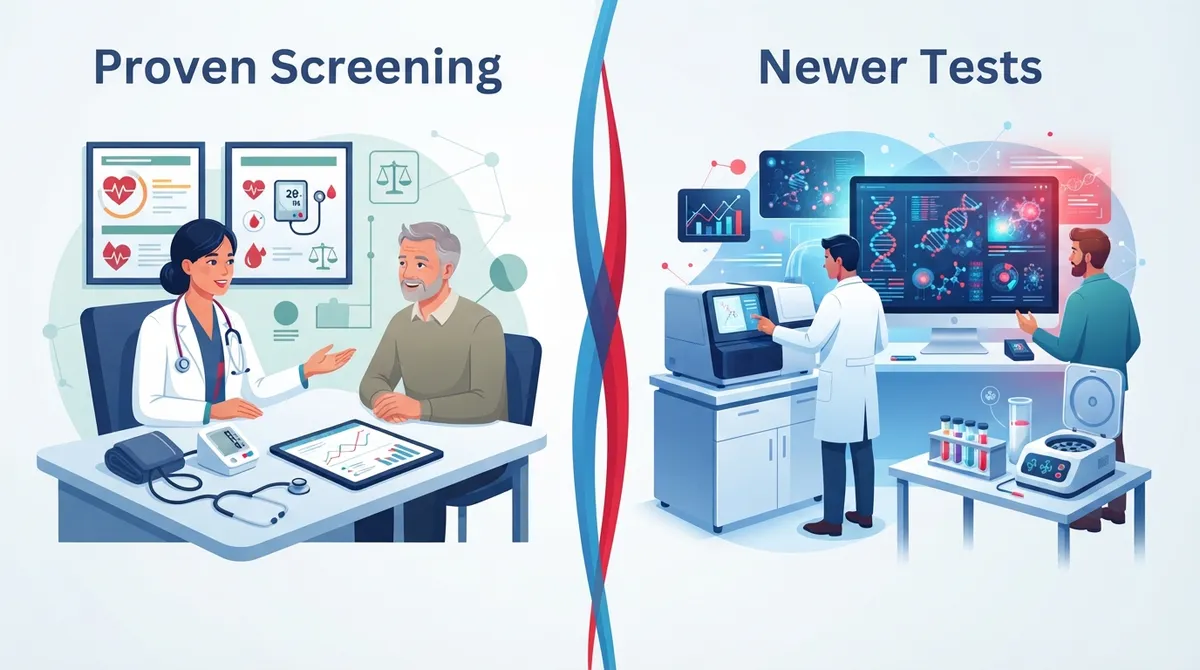
Proven Screening vs. Newer Tests
Not every test carries the same weight. It helps to separate what is well established from what is still developing.
|
Test Type |
Examples |
How Well Established |
Best Use |
|---|---|---|---|
|
Foundational risk checks |
Blood pressure, lipid panel, A1c or glucose |
Strong, widely used |
Start here for nearly everyone |
|
Age-based screenings |
Cancer screenings, immunizations |
Strong, guideline-based |
Schedule by age and risk |
|
Targeted labs |
Thyroid, vitamin levels, hormone testing |
Useful when symptoms or risk factors exist |
Order based on your story |
|
Fitness and body assessments |
VO2 max, body composition, metabolic testing |
Helpful for tracking and goal setting |
Add to guide lifestyle changes |
|
Biological-age, genetic, microbiome tests |
Epigenetic clocks, DNA panels |
Evolving; usefulness varies |
Discuss limits before you buy |
Biological-age, genetic, microbiome, and many expanded biomarker tests are not the same as disease screening. Their ability to predict outcomes, or to improve them, can vary. Ask any provider what you will do differently based on a result. If the answer is unclear, the test may not be worth the cost.
How to Find Longevity Testing in Tampa: A Step-by-Step Plan
Use these steps to move from a vague search to a clear plan.
- Define your goal. Are you worried about heart health, diabetes, energy, weight, hormones, or fitness? A clear goal keeps testing focused and affordable.
- Start with a primary care visit. A clinician who knows your history can decide which tests make sense. This prevents ordering a giant panel that creates confusion.
- Ask what is included. Request a list of every test, who orders it, and who reviews the results.
- Confirm credentials. Look for licensed physicians and clinicians who explain their training and oversight.
- Ask about follow-up. A result is only useful if it leads to a plan. Ask what happens when a number is abnormal and when testing repeats.
- Get pricing in writing. Costs vary widely, so confirm what is covered and what is out of pocket.
- Book and prepare. Gather records, list your medications, and follow any fasting instructions.
If you want a deeper look at what these panels contain, our guide to 9 labs included in longevity testing walks through common markers in plain language.
What Tampa Providers Typically Offer
Tampa Bay has a growing number of practices that advertise longevity, prevention, or wellness testing. Local directories list around 25 longevity-related clinics across Tampa, St. Petersburg, Brandon, and nearby areas. That figure comes from one directory, not an official registry, and listings change often.
Services you may see advertised include:
- Comprehensive blood panels
- Hormone testing
- Body-composition scans, including DEXA
- Genetic or biological-age testing
- Fitness and VO2 max assessments
Published prices in the same directory ranged from about $50 to $1,000 for blood panels and about $65 to $249 for DEXA scans. Those numbers are a rough guide only. Always confirm current pricing directly with the practice. Offerings, clinician oversight, and costs differ from one provider to the next, and this guide is not a complete directory.
Why a Primary Care Home Matters
Many people start with a stand-alone test and then wonder what to do with the results. A primary care practice solves that problem. Your clinician already has your history, your medications, and your screening schedule. They can decide which extra tests add value and which are noise.
This approach also keeps your care connected. If a result needs a specialist, your primary care clinician can coordinate the referral. If a result is borderline, they can recheck it on a sensible schedule. If you are still choosing a clinician, our guide on how to choose a primary care doctor in Tampa can help you compare options.
How InCare Approaches Longevity and Prevention
InCare is a personalized primary care and wellness clinic with locations in Tampa and Riverview, plus virtual visits. The practice blends medical expertise with modern technology and focuses on prevention and whole-body optimization. For Tampa residents who want longevity testing with real clinical guidance, that combination is a strong fit.
Services that support a longevity-minded plan include:
- Primary care and preventive visits
- Cancer screenings for early detection
- DNA gene testing for personalized health insights
- Metabolic breath analysis to assess metabolism
- Body composition analysis with 3D imaging
- Medical weight loss programs
- IV hydration and vitamin therapy
Because these services sit under one roof, your results connect to a plan, not just a printout. You can read more about how InCare frames this topic in our overview of longevity testing in Tampa, or see how choosing InCare for longevity testing works step by step. Patients also rate the practice highly on Google, where InCare holds a 4.8 out of 5 rating. You can see what our InCare patients say on Google to judge the experience for yourself.
Questions to Ask Any Longevity Testing Provider
Use this checklist during your first call or visit. Clear, direct answers are a good sign.
- Who orders my tests, and who explains the results?
- Why is each test included for someone like me?
- What are the limits of each test?
- What will we do if a result is abnormal?
- How often will testing repeat?
- Will you share results with my primary care clinician?
- What is the total cost, and what might insurance cover?
Be cautious if a provider pushes a large, expensive package before asking about your history. Be cautious, too, if they promise to predict your lifespan. No test can do that. Our article on how to choose a healthspan testing clinic in Tampa adds more red flags and green flags to watch for.
Who Benefits Most From Longevity Testing
Different readers need different things. Here is how the process often looks for common groups:
- Tech-savvy millennials: You may want data and digital access. Ask how results are shared and whether virtual follow-up is available.
- High-income wellness seekers: You may be drawn to advanced tests. Focus on clinical value first, then add options like DNA testing or metabolic analysis where they support a clear goal.
- Busy young families: Time is tight. Look for a practice that bundles screenings and offers flexible scheduling.
- Gen Z health explorers: Start with the basics and a family history review. Prevention habits built early pay off for decades.
- Preventive health women: If you have no primary care clinician yet, a whole-body wellness visit with screenings is a smart first step beyond routine OB/GYN care.
Whatever your group, the same rule applies. Start with fundamentals, then add tests that answer a real question.
Understanding Cost and Insurance
Cost is a common worry. Routine preventive visits and many age-based screenings are often covered by insurance when they meet plan rules. Expanded biomarker panels, biological-age tests, and some genetic or body-composition scans are more likely to be out of pocket. Coverage depends on your plan, so verify before you book.
Ask the front desk for a clear price list. Ask which items are billed to insurance and which are self-pay. Knowing this up front prevents surprise bills. If budget is tight, begin with the foundational labs and screenings, then add optional tests later as your needs and goals become clearer.
How to Prepare for Your Visit
A little prep makes your appointment more useful.
- Write down your top health goals and concerns.
- Gather past lab results and screening dates.
- List all medications and supplements.
- Note any family history of heart disease, diabetes, or cancer.
- Ask whether you need to fast before blood work.
Bring your questions, too. A good clinician welcomes them. For more on making the most of your time, see our tips on getting the most from preventive care visits.
Keep Learning and Stay Connected
Health information changes quickly. For updates, tips, and a look at our community, you can follow InCare on Instagram, Facebook, and TikTok. For trusted background on prevention and screening guidelines, the Centers for Disease Control and Prevention offers clear public resources on chronic disease prevention.
Take the Next Step Toward a Longer, Healthier Life
Finding longevity testing in Tampa does not have to be overwhelming. Start with a clear goal, choose a clinician who looks at the whole picture, and use tests that lead to action. Focus first on blood pressure, cholesterol, blood sugar, and age-based screenings. Then add newer tools only when they answer a real question.
If you are ready to build a prevention plan with a team that connects every result to a next step, book your visit with InCare today. You can also contact our team with questions about testing options, pricing, or which service is right for you. Your future self will thank you for starting now.
FAQs
Q: What does longevity testing include?
A: Longevity testing is not one standard test. In primary care it usually combines a medical history review, a physical exam, established screenings, and selected lab work such as cholesterol and blood sugar. Optional fitness, body composition, hormone, or genetic tests may be added based on your goals and risks.
Q: How much does longevity testing cost in Tampa?
A: Prices vary by provider and test. One local directory listed blood panels from about $50 to $1,000 and DEXA scans from about $65 to $249. Always confirm current costs and insurance coverage directly with the practice before booking.
Q: Are biological-age tests scientifically validated?
A: Biological-age, genetic, and microbiome tests are still evolving, and their ability to predict or improve health outcomes can vary. They are not a replacement for established screenings. Discuss their limits and any follow-up costs with your clinician before you proceed.
Q: Do I need a doctor's order for longevity testing?
A: Requirements depend on the test and the provider. Clinician-guided testing is often the safest path because a doctor can choose tests that fit your risk and explain the results. Ask the practice who orders and reviews your tests.
Q: How do I choose a longevity or preventive-care clinic in Tampa?
A: Look for licensed clinicians, a clear reason for each test, a plan for follow-up, and coordination with your primary care team. Ask for written pricing and be cautious of large packages or claims that a test can predict your lifespan.