
Key Takeaways
- TRT is the evidence-based treatment for men with confirmed low testosterone, verified by morning blood tests on more than one day plus matching symptoms.
- Peptides mostly signal the body to make its own compounds, and many have limited human research, so they are not interchangeable with TRT.
- Before starting any peptide or TRT, get baseline labs (morning testosterone, thyroid, metabolic markers, blood counts) and a full medical history review.
- Fatigue, poor sleep, and low libido can stem from sleep apnea, stress, thyroid problems, or medications, so rule these out before choosing a hormone or peptide.
- Ask whether a product is FDA-approved, compounded, or investigational, and how its quality and sourcing are verified, since this changes your risk.
- Avoid providers who promise guaranteed results, sell peptides without labs or an exam, or label products 'for research use only' while recommending personal use.
Many men in their 30s, 40s, and 50s notice the same changes. Energy fades. Workouts feel harder. Sleep gets lighter and recovery takes longer. Soon the search begins for peptide therapy for men in Tampa, and a second question follows: is a peptide the answer, or is testosterone replacement therapy (TRT) a better match?
This guide compares the two paths in plain terms. It explains what each approach is, what the evidence shows in 2026, and how a primary care clinic decides which route is safe and sensible. Peptides are a fast-moving topic, and many products sold online have little human research behind them. That is why a medical evaluation matters before any treatment starts.
The goal is not to push one option. The goal is to help you ask better questions and understand what responsible care looks like. If you want a deeper primer first, read how to understand peptides as explained by your doctor.

What Peptide Therapy Means for Men
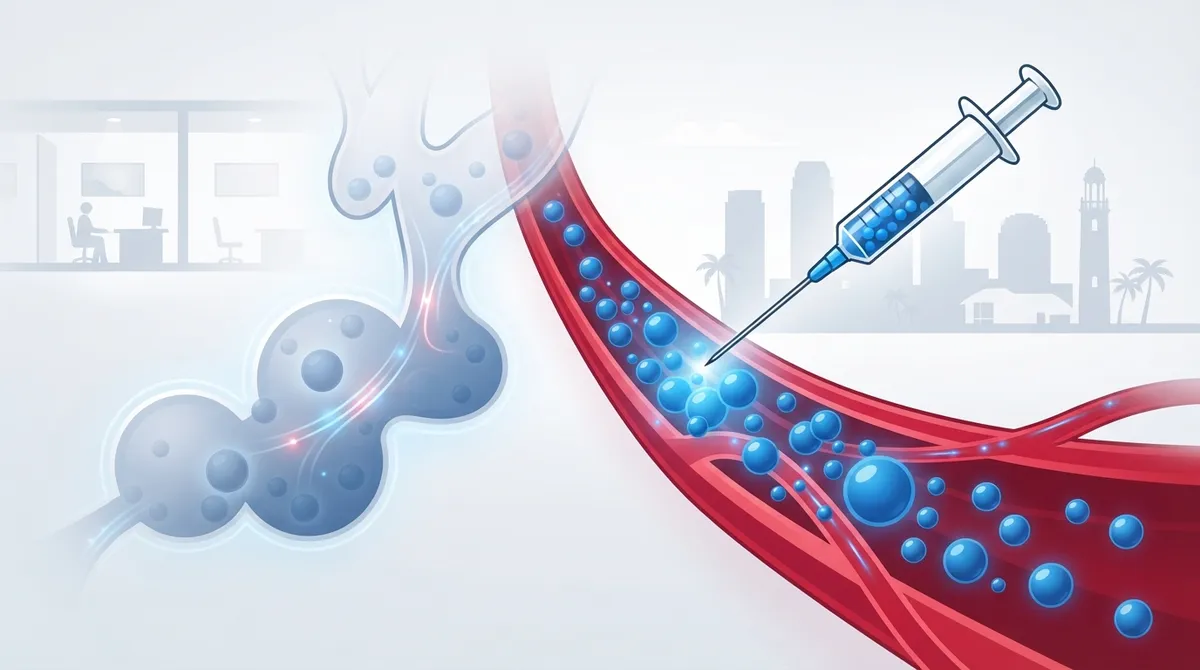
Peptides are short chains of amino acids. Your body makes thousands of them, and they act as signals. Some tell your pituitary gland to release growth hormone. Others affect appetite, tissue repair, or inflammation.
When men search for peptide therapy for men in Tampa, they usually mean one of several groups:
- Growth hormone secretagogues such as ipamorelin, sermorelin, and CJC-1295, which signal the body to release its own growth hormone.
- Repair-focused peptides such as BPC-157 and GHK-Cu, discussed for tissue and skin support.
- Metabolic peptides such as MOTS-c and tesamorelin, discussed for energy, fat distribution, and metabolic health.
- GLP-1 medications such as semaglutide and tirzepatide, which are FDA-approved for specific uses.
These groups are not equal in evidence. Some are approved drugs. Others are investigational. You can see how this plays out in this comparison of FDA-approved and compounded peptides and in this overview of named peptides available in Tampa clinics.
What TRT Means and How It Differs
Testosterone replacement therapy is different in kind. It replaces a hormone that is measurably low. TRT is an established medical treatment for men with confirmed low testosterone (hypogonadism), supported by symptoms and repeat blood tests.
A peptide, by contrast, usually asks the body to produce more of something on its own. TRT supplies the hormone directly. That distinction shapes everything else: who qualifies, how results are measured, and what monitoring is needed.
Men considering TRT should know that it requires ongoing lab checks. Hematocrit, PSA, and testosterone levels are tracked over time. For a clear walkthrough, see how to start medically supervised TRT in Tampa safely and who provides medically supervised TRT in Tampa Bay.
Peptides vs. TRT: Side-by-Side Comparison
|
Factor |
Peptide Therapy |
Testosterone Replacement Therapy |
|---|---|---|
|
How it works |
Signals the body to release or regulate its own compounds |
Replaces testosterone directly |
|
Regulatory status |
Varies: some FDA-approved, many investigational or compounded |
FDA-approved products for confirmed low testosterone |
|
Evidence in men |
Mixed; strong for a few agents, limited for many |
Well established for hypogonadism |
|
Who it suits |
Men with specific goals after a full evaluation |
Men with symptoms and repeatedly low lab values |
|
Monitoring |
Labs and symptom review, depending on the agent |
Regular testosterone, hematocrit, and PSA checks |
|
Key risk |
Unverified product quality and limited long-term data |
Elevated red blood cell count, fertility effects, and other known risks |
No single row decides the matter. The best choice depends on your symptoms, lab results, goals, and health history.
Which Option Suits Which Man?
When TRT May Be the Better Fit
If you have persistent fatigue, low libido, reduced muscle mass, and low mood, the first step is testing. Low testosterone is confirmed with morning blood draws on more than one day. If the numbers are low and symptoms match, TRT is the evidence-based option.
Many men are surprised to learn that low libido has many causes, including sleep problems, stress, medications, and thyroid issues. A good clinician looks at all of them. Our guide on when to see a doctor for low libido explains the warning signs.
When Peptides May Enter the Conversation
Men with normal testosterone who want help with recovery, body composition, or sleep sometimes ask about growth hormone secretagogues. This is where honesty matters. Human data for several of these agents is limited, and some are not approved for use in healthy men. Read the evidence first in what CJC-1295 human studies actually show and the facts on ipamorelin FDA approval status in 2026.
Athletes and lifters face extra concerns, including testing rules and product purity. See peptides for athletes: hype versus medical reality before you decide.
When Neither Is the First Step
Sometimes the real issue is untreated sleep apnea, poor metabolic health, or a medication side effect. Fixing those can restore energy without any hormone or peptide at all. For men with loud snoring and daytime fatigue, finding the right sleep medicine care in Tampa may come first.
The Safety Questions Every Man Should Ask
Whether you pursue a peptide or TRT, use this checklist before you start:
- What is the diagnosis? Treatment should follow a clear reason, not a trend.
- What labs were ordered? Expect a baseline panel, not a quick sales pitch.
- Is the product FDA-approved, compounded, or investigational? The answer changes your risk.
- How is quality verified? Ask about sourcing and testing.
- What monitoring happens after you start? Follow-up should be built in.
- What are the stop rules? You should know when treatment will be paused or ended.
These questions line up with our list of 15 questions to ask a peptide therapy clinic in Tampa. For growth hormone peptides in particular, this guide to monitoring needs shows what responsible follow-up includes.
Warning Signs to Avoid
Peptide marketing is crowded with bold claims. Be cautious if a provider:
- Promises rapid, guaranteed results or dramatic before-and-after outcomes.
- Sells peptides without labs, an exam, or a medical history.
- Cannot explain where the product comes from or how it is tested.
- Labels products "for research use only" while recommending them for personal use.
- Stacks several peptides at once without a clear reason.
The risks of unsupervised use are real. Read eight peptide clinic mistakes that put your health at risk and what a peptide stack is and whether it is safe to try.
What Does It Cost?
Cost varies by product, dose, lab work, and visit frequency. Peptide plans and TRT plans both involve more than the medication itself. Labs, follow-ups, and supplies add up over time. Compare pricing only after you confirm what each plan includes. For realistic ranges, see what monthly peptide therapy costs in Tampa and how much peptides cost in Tampa in 2026.
Why Start With Primary Care
The safest route into either therapy often begins with a primary care visit. A primary care physician can review your full history, order labs, check blood pressure and metabolic markers, and spot conditions that mimic low testosterone. That whole-body view is what separates medical care from a retail peptide shop.
At InCare primary care, men in Tampa and Riverview can combine preventive screenings, hormone testing, and metabolic assessments in one place. Tools such as metabolic breath analysis, body composition scanning, and DNA gene testing help build a plan around your data rather than guesswork. InCare is built on prevention and whole-body optimization, which makes it a strong starting point for men weighing these options.
You can learn more about local care in this guide to men's primary care and TRT in Tampa. For a closer look at the clinic itself, read what to know before you visit InCare's peptide clinic in Tampa.
A Practical Decision Path
Here is a simple way to think about your next steps:
- Book a primary care visit and describe your symptoms honestly.
- Complete baseline labs, including morning testosterone, thyroid, metabolic, and blood count markers.
- Review results with your clinician and rule out sleep, stress, and medication causes.
- Discuss evidence-based options first, including TRT if criteria are met.
- Explore peptides only where your clinician can explain the evidence, source, and monitoring plan.
- Schedule follow-up labs and symptom checks, and adjust or stop treatment as needed.
This path keeps the decision grounded in data. It also protects you from the most common mistake, which is starting a product before knowing what is actually wrong.
Follow InCare and Read Patient Feedback
Men often want to see how a clinic communicates before they book. You can follow InCare on Instagram, on Facebook, and on TikTok for health updates and clinic news. To read what patients say, visit our InCare location on Google, where the clinic holds a 4.8 rating.
Conclusion: Choose the Path the Evidence Supports
For most men, the honest answer to "peptides or TRT?" starts with a diagnosis. TRT has strong evidence when testosterone is truly low. Peptide therapy for men in Tampa is a wider category, with a few well-studied agents and many that remain investigational. The right choice depends on your labs, your symptoms, and your goals, not on trends.
If you are ready for a clear, medically guided starting point, the team at InCare can help you sort the options with testing and a personalized plan. Book your visit now or contact the InCare team with questions before you schedule.
FAQs
Q: What is peptide therapy for men in Tampa?
A: Peptide therapy uses short amino acid chains to signal processes such as growth hormone release, tissue repair, or metabolism. Some peptides, like GLP-1 medications, are FDA-approved for specific uses, while many others remain investigational. A medical evaluation should come first.
Q: Is TRT or peptide therapy better for low testosterone?
A: For men with confirmed low testosterone and matching symptoms, TRT is the established, evidence-based treatment. Peptides do not replace testosterone directly and have less human research for this purpose. Your clinician decides based on repeat lab results.
Q: Is peptide therapy safe?
A: Safety depends on the specific peptide, product quality, and medical supervision. Many peptides lack long-term human data, and unverified sources add risk. Working with a licensed clinician who orders labs and monitors you is the safest approach.
Q: Do I need blood work before starting either therapy?
A: Yes. Responsible care begins with baseline labs such as morning testosterone, thyroid, metabolic markers, and blood counts. Follow-up testing continues during treatment, especially with TRT.
Q: Where should a man in Tampa start?
A: A primary care visit is a sound first step. A physician can review your history, order labs, rule out other causes like sleep apnea or medication effects, and then discuss which options fit you. InCare offers this whole-body approach in Tampa and Riverview.