
Key Takeaways
- For prescribed growth hormone, the Endocrine Society guideline calls for IGF-1 and symptom checks every 1-2 months during dose adjustment, then about every 6 months once a maintenance dose is stable.
- Annual fasting glucose and lipid checks are essential because growth hormone can reduce insulin sensitivity and raise blood sugar, especially in people with risk factors like excess weight.
- No validated monitoring schedule makes compounded or online peptides like ipamorelin or GHRP-2 safe; FDA materials flag uncertain product quality and safety signals, so labs cannot substitute for verified products.
- Report swelling, new joint or muscle pain, numbness or tingling, headaches, vision changes, or worsening sleep apnea to your clinician promptly rather than waiting for the next scheduled visit.
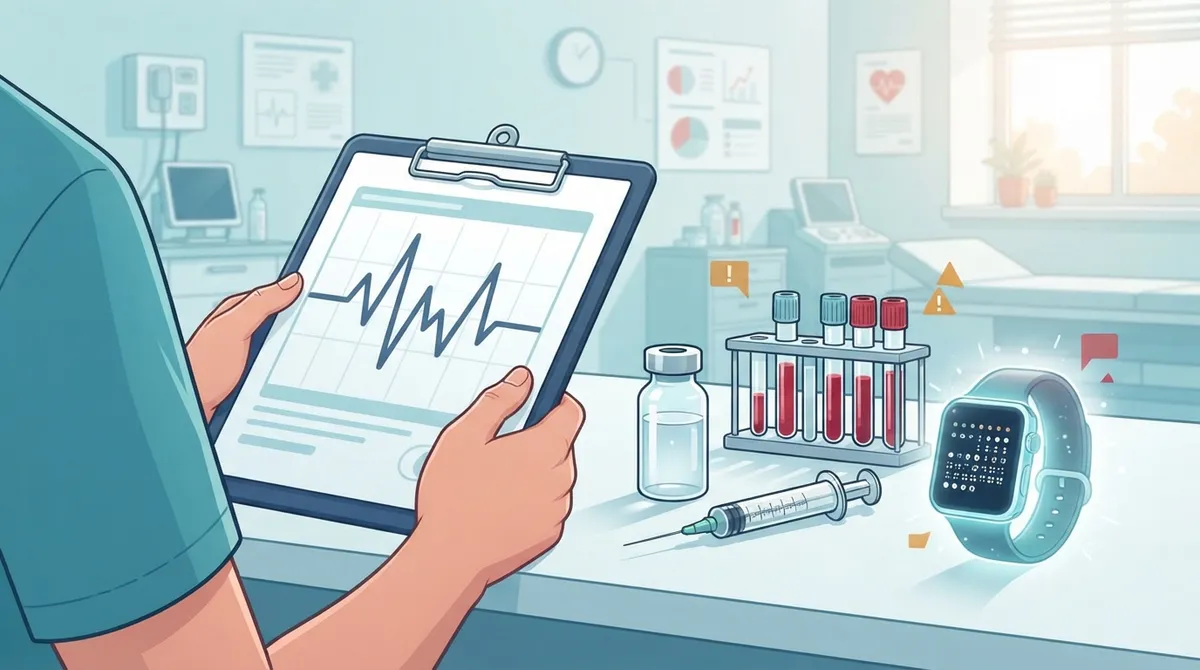
Growth hormone peptides are a hot topic in wellness circles in 2026. Many people hear about them online and wonder if they are safe, what they do, and what checkups they need. The honest answer starts with a simple point: the phrase "growth hormone peptides" does not mean one thing. It can describe very different products with very different safety records.
This guide explains what monitoring is needed with growth hormone peptides, based on current medical guidance. You will learn which tests matter, how often they are done, which symptoms to report, and where the evidence runs out. If you live in the Tampa Bay area and want a clinician who looks at the whole picture, InCare offers primary care and advanced wellness services in Tampa and Riverview.

What Do People Mean by Growth Hormone Peptides?
The term is loose. Before talking about monitoring, it helps to sort the products into groups. Each group has a different level of evidence and a different regulatory status.
- Prescription growth hormone (somatropin): an FDA-approved medicine used for confirmed growth hormone deficiency.
- Growth hormone-releasing hormone analogs: peptides designed to prompt the pituitary gland to release its own hormone.
- Secretagogues and GHRPs: compounds such as ipamorelin that signal the body to release growth hormone.
Monitoring advice for prescribed somatropin should never be assumed to prove safety for compounded or online peptides. Those products carry more unknowns. To learn how the options differ, see our guide on CJC-1295 vs Ipamorelin.

Who Is Growth Hormone Treatment Meant For?
Growth hormone treatment is generally appropriate for adults with confirmed growth hormone deficiency. It should happen under clinician supervision. It is not a routine anti-aging or general wellness tool.
Diagnosis matters. When deficiency is suspected, an endocrinology-qualified clinician should guide testing and treatment decisions. A primary care doctor is often the first stop. A good primary care visit can screen for symptoms, order baseline labs, and refer you to a specialist when needed. Our article on primary care doctor vs. specialist explains how that handoff works.
What Monitoring Is Needed With Growth Hormone Peptides in Prescribed Therapy?
For adults on prescribed growth hormone replacement, established guidance gives a clear framework. The Endocrine Society adult guideline recommends clinical and IGF-1 assessment every 1 to 2 months while the dose is being adjusted. Once a stable maintenance dose is reached, checks happen about every 6 months.
The table below summarizes the core monitoring plan for prescribed therapy.
|
Monitoring Item |
Why It Matters |
Typical Timing |
|---|---|---|
|
Symptoms and adverse effects |
Catches swelling, pain, and other side effects early |
Every 1–2 months during titration; about every 6 months at maintenance |
|
Serum IGF-1 |
Guides dose against age-adjusted reference ranges |
Every 1–2 months during titration; about every 6 months at maintenance |
|
Fasting glucose |
Growth hormone can reduce insulin sensitivity |
At least annually; more often if risk is higher |
|
Lipid profile |
Tracks changes in cholesterol and related markers |
At least annually |
|
Thyroid and adrenal function |
Therapy can reveal or change the need for other hormone replacement |
Reassessed as clinically indicated |
These intervals come from the 2011 Endocrine Society guideline. A 2020 clinical review reports a similar pattern: IGF-1 monthly or every other month during dose changes, then roughly every six months, with annual fasting glucose and lipids.
Why IGF-1 Is the Main Marker
IGF-1 is a hormone the liver makes in response to growth hormone. Because it stays fairly steady through the day, it works well as a gauge of treatment. Clinicians compare your result to age-adjusted reference ranges. A level that runs too high may signal that the dose needs to come down. A level that stays low may mean the dose is too small.
The goal is not to chase the highest number. The goal is a safe, effective dose that matches your symptoms and lab results together.
Why Blood Sugar and Cholesterol Checks Matter
Growth hormone can make the body less sensitive to insulin. That can nudge blood sugar upward, especially in people who already have risk factors such as excess weight or a family history of diabetes. For that reason, the adult guideline calls for annual fasting glucose and lipid checks.
Many clinicians also add an HbA1c test. They may test more often when results are borderline or when diabetes risk is high. A clinic that offers in-house labs and fast follow-up makes this easier to manage. You can read more about what a visit covers in primary care lab work in Tampa.
Thyroid and Adrenal Function: A Hidden Piece
Hormones work as a system. Changing one can affect others. Growth hormone therapy may expose a mild thyroid problem or change how much thyroid medicine a person needs. The same is true for cortisol and adrenal function, especially in people with pituitary disease or those already on hormone replacement.
Because of this, clinicians often recheck free T4 and review adrenal status during therapy. Medication doses may need adjusting. This is one more reason to have a single, coordinated care team rather than scattered providers.
Symptoms You Should Report
Lab results are only half of monitoring. What you feel matters just as much. Ask your clinician about the following, and report them promptly if they appear.
- Fluid retention and swelling in the hands, feet, or face.
- Joint or muscle pain that is new or getting worse.
- Numbness or tingling, including carpal tunnel symptoms in the wrists.
- Headaches or vision changes, which need timely evaluation.
- Breathing problems or worsening sleep apnea, such as louder snoring or more daytime tiredness.
Severe or rapidly worsening symptoms need prompt medical assessment. Do not wait for your next scheduled visit. If sleep changes are part of the picture, our guide on when to see a doctor for poor sleep can help you decide on next steps.
Compounded and Online Peptides: Where Monitoring Falls Short
This is the most important section for many readers. Compounded or online peptides such as ipamorelin and other GHRPs are not interchangeable with FDA-approved somatropin. There is no validated monitoring schedule that can be presented as making their use safe.
FDA materials raise several concerns about these substances, including uncertain product quality and immunogenicity, which is the chance that the body reacts to the product as a foreign substance. The agency also reports safety signals for some compounds:
- GHRP-2: reports have included increased insulin requirements, infection, pancreatitis, and deaths among critically ill study subjects. The FDA states that causality has not been established.
- Ipamorelin: a study of intravenous use reported adverse events such as low potassium, insomnia, high blood sugar, gastrointestinal symptoms, and deaths. These findings do not establish safety for other routes or for wellness use.
Routine lab checks are not proof that a compounded peptide is safe. Labs can catch some problems, but they cannot fix unknown product quality or missing long-term data. A responsible clinic verifies product and regulatory status and does not oversell testing as a safety guarantee. For more on regulatory status, read our overview of ipamorelin FDA approval status and our look at FDA-approved vs. compounded peptides.
A Practical Monitoring Checklist
Whatever product a patient is considering, a careful primary care approach covers the same basics. Use this list as a starting point for your conversation with a clinician.
- A full medical history and a clear reason for treatment.
- Baseline labs: IGF-1, fasting glucose, HbA1c, lipids, thyroid, and adrenal review when indicated.
- A written plan for follow-up visits and repeat testing.
- A named list of symptoms to report right away.
- Confirmation of what the product is, who made it, and whether it is FDA-approved.
- A referral to an endocrinology-qualified clinician when deficiency is suspected.
If a provider cannot explain these steps, treat that as a warning sign. Our guide to 15 questions to ask a peptide therapy clinic offers more ways to vet a provider.
Why Primary Care Is the Right Starting Point
Hormone-related care touches blood sugar, heart health, sleep, thyroid function, and medication use. A primary care team sees all of these together. That makes it easier to spot a problem early and to avoid risky overlap between treatments.
A primary care visit can also help you decide whether a peptide discussion even makes sense for you. Often, the better first steps are a full physical, targeted labs, and lifestyle review. You can see what a thorough visit looks like in our article on what happens during an annual physical exam.
Take the Next Step With InCare
Growth hormone care is not a do-it-yourself project. The right monitoring depends on the exact product, your health history, and your goals. For prescribed therapy, the framework is well defined. For compounded or online peptides, the evidence is limited, and honest guidance matters most.
InCare combines primary care, urgent care, and advanced wellness services under one roof, with locations in Tampa and Riverview. Our team can review your history, order the right baseline labs, and coordinate specialist referrals when needed. See what our patients say by reading InCare reviews on Google at Visit us on Google — InCare, or follow our updates on Instagram, Facebook, and TikTok.
Ready to talk through your options with a clinician who puts safety first? Book Now to schedule your visit, or contact our team with questions.
FAQs
Q: What blood tests are needed while taking growth hormone or a growth hormone peptide?
A: For prescribed growth hormone, monitoring typically includes IGF-1 interpreted against age-adjusted ranges, plus fasting glucose and lipids at least yearly. Thyroid and adrenal function are reassessed as needed. For compounded peptides, no validated testing schedule exists that makes their use safe.
Q: How often should IGF-1 be checked during growth hormone treatment?
A: The Endocrine Society guideline recommends clinical and IGF-1 assessment every 1 to 2 months during dose titration. After a maintenance dose is set, checks occur about every 6 months.
Q: Are ipamorelin, sermorelin, or CJC-1295 FDA approved?
A: These products are not interchangeable with FDA-approved somatropin, and compounded versions raise concerns about quality and safety that the FDA has discussed. Regulatory status can change, so ask your clinician to verify the current status of any specific product before you consider it.
Q: Is growth hormone therapy appropriate for anti-aging or wellness?
A: No. Growth hormone treatment is generally intended for adults with confirmed growth hormone deficiency under clinician supervision. It is not a routine anti-aging or general wellness intervention.
Q: When should someone taking growth hormone contact a clinician?
A: Contact a clinician for swelling, new joint or muscle pain, numbness or tingling, headaches, vision changes, breathing problems, or worsening sleep apnea. Severe or rapidly worsening symptoms need prompt medical assessment.