Key Takeaways
- Florida-licensed MDs, DOs, eligible APRNs, and PAs can prescribe testosterone in Tampa, but only within Florida law and their required practice arrangements.
- Florida law prohibits testosterone for muscle building or athletic enhancement; a legitimate prescription requires a medical indication and proper clinical evaluation.
- Diagnosis generally requires compatible symptoms plus at least two separate morning testosterone measurements showing consistently low levels, not a single result.
- Outside testosterone can suppress sperm production, so discuss fertility and family plans with your clinician before starting treatment.
Low energy, a flagging sex drive, and a foggy mood can make any man wonder about testosterone. Then comes the practical question: who can prescribe testosterone therapy in Tampa, and where should you go? The answer is broader than many people expect. It also carries more rules than most online ads admit.
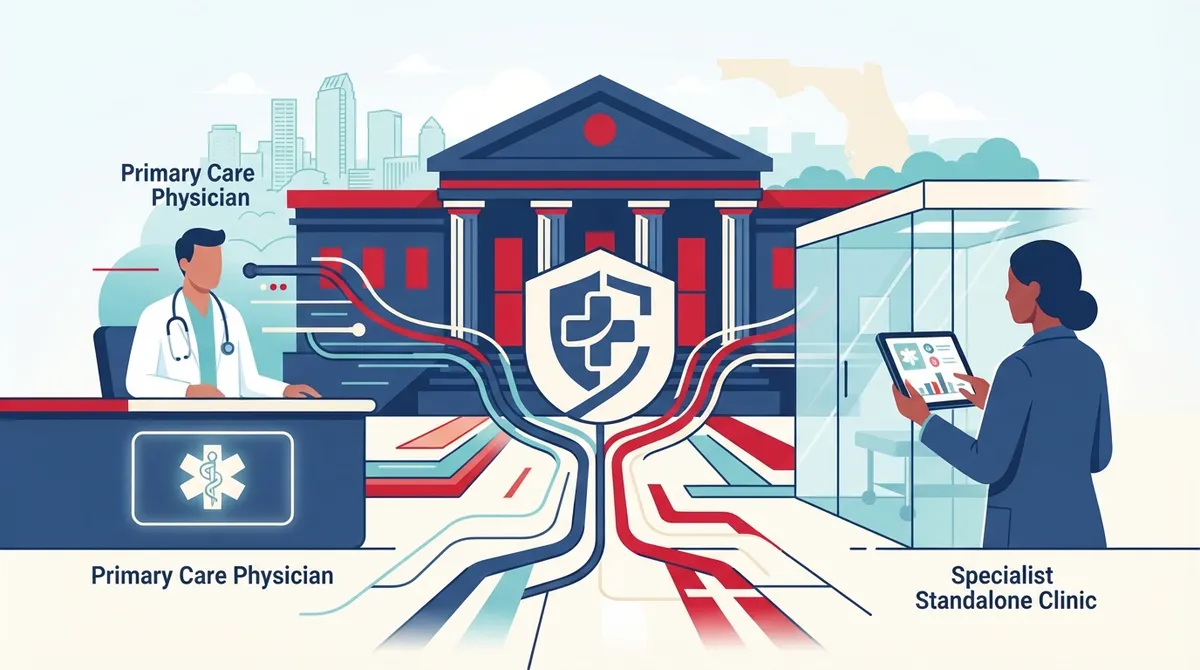
In Tampa, testosterone therapy may be prescribed by a Florida-licensed physician (MD or DO). Eligible advanced practice registered nurses (APRNs) and physician assistants (PAs) may also prescribe within the limits of Florida law and their practice arrangements. The harder choice is the setting: a primary care practice or a standalone hormone clinic. This guide compares the two so you can decide with confidence.
Who Can Legally Prescribe Testosterone in Florida?
Testosterone is a Schedule III controlled substance under federal law. That means a prescriber must meet both state and federal controlled-substance requirements. Not every clinician can write the prescription, and not every clinic that advertises it follows best practice.
The following Florida-licensed professionals may prescribe testosterone when they are qualified to evaluate and manage the condition:
- Physicians (MD or DO): They can evaluate symptoms, order labs, diagnose, prescribe, and monitor treatment.
- Advanced practice registered nurses (APRNs/ARNPs): They may prescribe within their state-law authority and required practice arrangements, including protocols or supervision. Florida also has an autonomous APRN pathway that requires 3,000 clinical practice hours and specified graduate coursework.
- Physician assistants (PAs): They may prescribe under Florida's rules for supervision and controlled-substance prescribing.
Because rules and labeling can change, always verify a clinician's current Florida license before you begin. You can also ask the practice directly how its prescribers are credentialed.
One Hard Rule: A Medical Reason Is Required
Florida law prohibits prescribing or providing testosterone for muscle building or athletic-performance enhancement. Legitimate treatment needs a medical indication and a proper clinical evaluation. If a provider offers testosterone to "bulk up" without a diagnosis, treat that as a warning sign.
Primary Care vs. Standalone Clinic: A Side-by-Side Look
Both settings can employ licensed prescribers. The real difference is how the care is organized around you. Here is how the two models commonly compare.
|
Factor |
Primary Care Practice |
Standalone Hormone Clinic |
|---|---|---|
|
Scope of care |
Whole-body, including heart, metabolic, sleep, and mental health |
Often focused on hormones alone |
|
Diagnosis approach |
Looks for underlying causes of symptoms |
May move quickly toward treatment |
|
Medication review |
Reviews all current prescriptions and conditions |
Varies by clinic |
|
Referrals |
Can refer to endocrinology or urology when needed |
Depends on the clinic's network |
|
Monitoring |
Folded into routine preventive visits |
Often a separate, ongoing program |
|
Continuity |
One team that knows your full history |
May be limited to the hormone program |
Neither model is automatically right or wrong. Quality depends on the clinician's training, the thoroughness of the evaluation, and the follow-up plan. Still, many patients prefer a primary care setting because symptoms of low testosterone overlap with many other conditions.
Why Symptoms Alone Are Not Enough
Fatigue, low libido, and low mood have many possible causes. Poor sleep, thyroid problems, diabetes, medication side effects, and stress can all look like low testosterone. If you are noticing a drop in desire, our guide on when to see a doctor for low libido explains the signs worth acting on.
That is why a careful evaluation matters. A primary care clinician can sort through these possibilities before any hormone is prescribed. You can also read about testosterone therapy versus root-cause care for libido help in Tampa to understand why finding the cause comes first.
What a Responsible Evaluation Looks Like
For suspected male hypogonadism, diagnosis generally requires two things: compatible symptoms or signs, and consistently low testosterone. A single low result is not enough. Clinical guidance, including the Endocrine Society guideline from 2018, recommends measuring morning testosterone on two separate occasions and evaluating the cause.
A thorough visit usually follows these steps:
- Symptom and history review. Your clinician asks about energy, mood, sexual function, sleep, and past illnesses.
- Medication check. Some prescriptions and substances can lower testosterone.
- Physical exam. This may include blood pressure, weight, and other signs.
- Morning blood tests. Testosterone is measured on two separate mornings, often with other labs.
- Cause evaluation. Your clinician looks at whether the problem starts in the testicles or in the brain's signaling.
- Treatment discussion. You review benefits, risks, alternatives, and fertility goals before deciding.
If you want to know what to expect from lab work, see our overview of blood tests needed for TRT.
Fertility: A Key Question to Ask Early
Testosterone treatment is not right for everyone. Outside testosterone can suppress sperm production, so it is generally not used when a man wants to father children in the near term. Be open with your clinician about family plans. Alternatives may exist that protect fertility, and your provider can walk you through them.
Risks, Monitoring, and Why Follow-Up Matters
Testosterone therapy needs ongoing monitoring. Depending on the patient and the formulation, clinicians may track:
- Testosterone levels and symptom response
- Blood counts and hematocrit
- Blood pressure
- Prostate-related considerations
Treatment may be adjusted or stopped if problems appear. In 2025, the FDA updated testosterone-product labeling after reviewing cardiovascular-outcomes and blood-pressure evidence. That included the TRAVERSE trial, which enrolled 5,198 men aged 45 to 80 with hypogonadism and existing cardiovascular disease or multiple risk factors. Your own risk factors and the current product labeling should guide your counseling.
The FDA also prefers approved products over unapproved or compounded ones when a suitable approved option exists. Ask any prescriber which product they plan to use and why. For a deeper look at what to avoid, read about common testosterone therapy mistakes in Tampa and TRT follow-up mistakes.
When a Specialist Referral Makes Sense
A primary care clinician can handle many cases. A referral to endocrinology or urology may be wise when:
- Fertility is an active goal
- Lab results are abnormal or unclear
- A pituitary or other complex cause is suspected
- Another condition needs specialist care
A primary care doctor who coordinates this handoff keeps your care connected. That coordination is hard to match in a model built around one treatment.
How to Vet Any Tampa Prescriber
Use this short checklist before you commit to any provider:
- Verify the clinician's current Florida license.
- Confirm they order at least two morning testosterone tests.
- Ask how they check for other causes of your symptoms.
- Ask about fertility counseling and alternatives.
- Ask how often you will be monitored and what labs are included.
- Be cautious of anyone promising results for muscle building or athletic gains.
For a deeper look at choosing a reputable program, see how to choose a reputable TRT clinic in Tampa, and compare options in our guide to who provides medically supervised TRT in Tampa Bay.
Why Many Tampa Patients Choose InCare
InCare is a personalized primary care and wellness clinic with locations in Tampa and Riverview. The practice combines advanced technology with medical expertise and focuses on prevention and whole-body optimization. That approach suits testosterone care well, because the evaluation looks beyond a single number. Patients can also see what to know before starting TRT in Tampa to prepare for a first visit.
InCare holds a 4.8 out of 5 rating on Google across 359 reviews, and patients often praise the friendly staff and attentive providers. You can visit us on Google — InCare to read patient feedback. You can also follow the practice on Instagram and Facebook, or watch wellness updates on TikTok.
Conclusion: Choose Evaluation Before Treatment
In Tampa, licensed physicians, and eligible APRNs and PAs working within Florida law, can prescribe testosterone therapy. The prescriber's title matters less than the quality of the evaluation. Look for a clinician who confirms a medical indication, repeats morning labs, reviews fertility goals, and commits to ongoing monitoring. A primary care setting often delivers that whole-picture view.
If you suspect low testosterone, start with a conversation, not a prescription. Book your visit with InCare to begin a careful, personalized evaluation, or contact our team with questions first. This article is for general information and does not replace individualized medical advice.
FAQs
Q: Who is legally allowed to prescribe testosterone in Florida?
A: Florida-licensed physicians (MD or DO) can prescribe testosterone when qualified to manage the condition. Eligible APRNs and PAs may also prescribe within Florida law and their required practice arrangements. Because testosterone is a Schedule III controlled substance, prescribers must also meet state and federal controlled-substance rules.
Q: Can a primary care doctor prescribe testosterone therapy in Tampa?
A: Yes. A primary care clinician can evaluate symptoms, review medications and health history, order labs, discuss treatment options, and provide follow-up. They may refer you to endocrinology or urology for complex cases, abnormal findings, or fertility concerns.
Q: How many low testosterone tests are needed for a diagnosis?
A: Clinical guidance generally calls for at least two separate morning testosterone measurements, along with compatible symptoms or signs. A single low result is not enough on its own. Your clinician should also look for the underlying cause.
Q: Can testosterone therapy affect fertility or sperm count?
A: Yes. Outside testosterone can suppress sperm production, so it is generally not used when a man wants to have children in the near term. Discuss your family plans with your clinician before starting, as other options may better protect fertility.
Q: How often should testosterone therapy be monitored?
A: Monitoring depends on the patient and the formulation. Clinicians may track testosterone levels, symptoms, blood counts and hematocrit, blood pressure, and prostate-related considerations. Treatment can be adjusted or stopped when indicated.