Key Takeaways
- A sound TRT consultation starts with a full medical evaluation, not a prescription; low testosterone should be diagnosed only when symptoms and repeat morning lab results both point to it.
- Confirm low testosterone with total testosterone checked in the morning on two separate days, since one low reading can be misleading due to stress, sleep, illness, or time of day.
- Symptoms like low libido, fatigue, and poor sleep can also stem from sleep apnea, depression, thyroid problems, obesity, or medications, so a good clinic checks these causes first.
- Testosterone therapy can suppress sperm production, so men planning to have children soon should say so at the start of the consultation.
- TRT can raise blood pressure per FDA labeling, so ongoing monitoring of blood pressure, hematocrit, and prostate health is essential for safe treatment.
- Choose a provider that looks at your whole health, such as an integrated primary care practice, and ask about Florida licensure, follow-up costs, and how abnormal results are handled.
Searching for a TRT consultation in Tampa, FL can feel overwhelming. Some men see ads for quick-fix testosterone clinics. Others wonder if their regular doctor can help. Both paths can lead to treatment, but they do not offer the same level of care.
A sound TRT consultation does not start with a prescription. It starts with a medical evaluation. Clinical guidance says low testosterone should be diagnosed only when symptoms and repeat lab results both point to it. Low energy, low libido, and poor sleep can also come from other causes. A good consultation checks for those causes first.
This article compares two common routes in Tampa: a standalone testosterone clinic and an integrated primary care practice. You will learn what each model offers, what a safe consultation should include, and how to choose. The goal is simple. Help you find care that is safe, thorough, and built for your long-term health.
What Is a TRT Consultation, and What Should It Include?
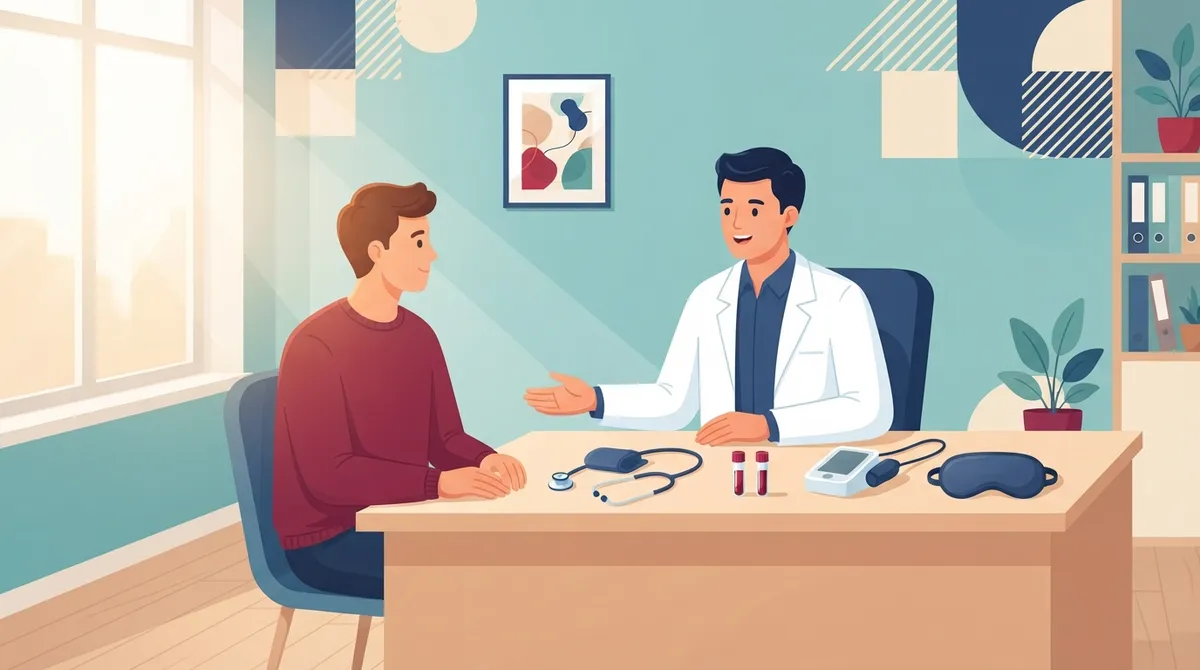
A TRT consultation is a medical visit to find out whether testosterone therapy is right for you. It is not a sales pitch. The visit should answer one question first: do you truly have low testosterone, and why?
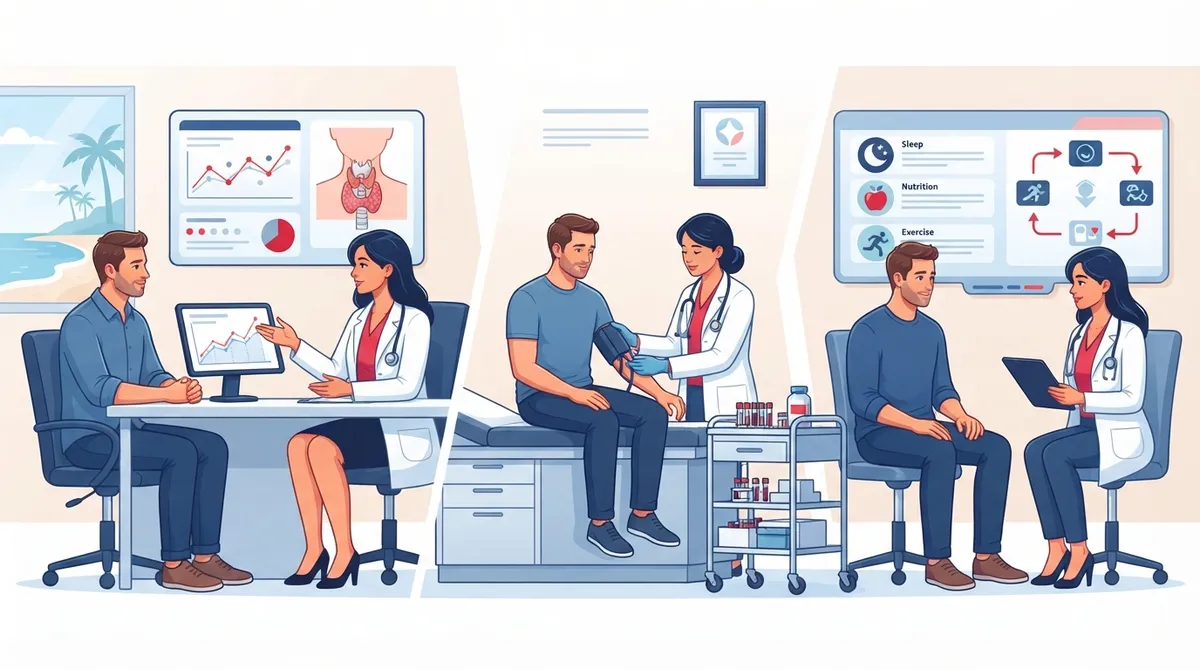
A thorough TRT consultation in Tampa should cover these steps:
- Symptom and history review. Your clinician asks about energy, mood, libido, erections, sleep, and exercise habits.
- Medication and supplement check. Some drugs and supplements affect hormone levels.
- Fertility and family planning talk. Testosterone therapy can lower sperm production.
- Physical exam and risk review. This includes heart health, blood pressure, and prostate history.
- Lab testing. Results guide the diagnosis, not the other way around.
- Treatment discussion. You review benefits, risks, costs, and other options.
If a clinic skips most of these steps, treat that as a warning sign.
How Is Low Testosterone Actually Diagnosed?
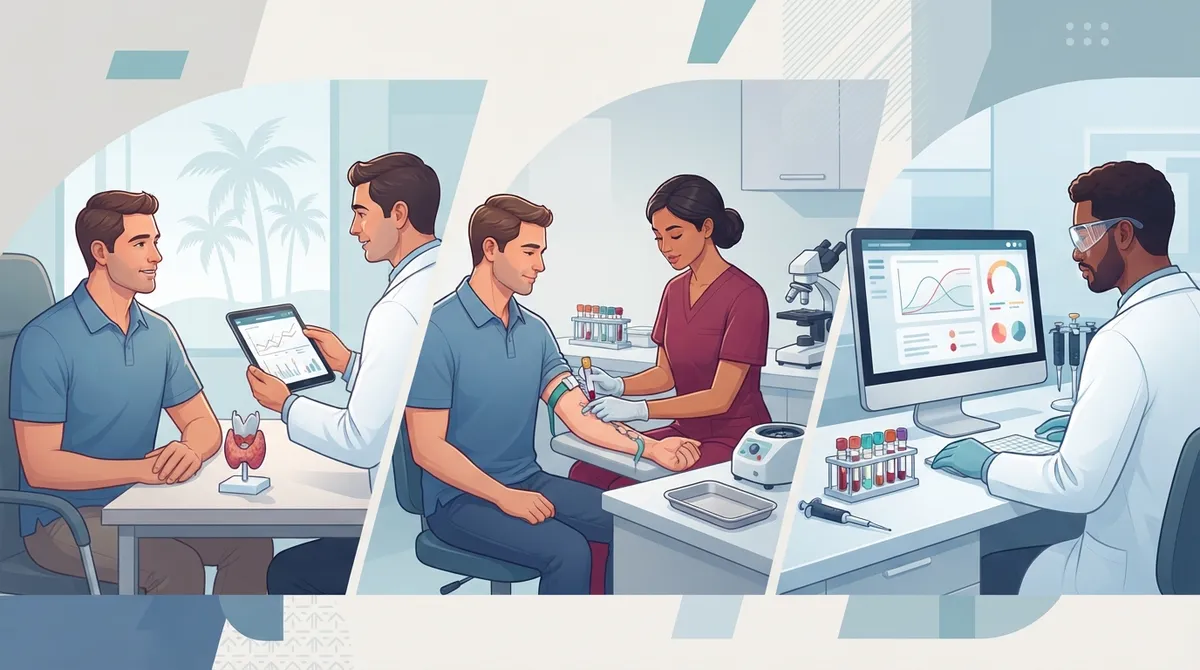
Major clinical guidance recommends diagnosing low testosterone only when two things line up. First, you have symptoms or signs that fit. Second, you have consistently low lab results.
In practice, this usually means:
- Total testosterone checked in the morning, on two separate days
- Free testosterone tested when your clinician thinks it is needed
- Extra tests such as luteinizing hormone, follicle-stimulating hormone, and prolactin to find the cause
- A blood count and other labs based on your history and exam
One low number is not enough. Levels can shift from day to day. Stress, poor sleep, illness, and time of day all play a role.
Symptoms That May Prompt an Evaluation
These signs can lead to testing:
- Reduced sex drive
- Erectile difficulties or fewer spontaneous erections
- Low energy or ongoing fatigue
- Loss of muscle mass
- Low bone density
- Trouble with fertility
None of these symptoms are unique to low testosterone. Sleep apnea, depression, obesity, thyroid problems, and some medicines can cause the same issues. That is why the first visit should look at the whole picture. If poor rest is part of your story, this guide on how to know when to see a doctor for poor sleep can help you decide when to get checked.
Standalone TRT Clinic vs. Integrated Primary Care: A Side-by-Side Look
Tampa has both options. Standalone clinics focus on hormone therapy only. Integrated primary care practices treat hormones as one part of your overall health. Here is how they often compare.
|
Factor |
Standalone TRT Clinic |
Integrated Primary Care Practice |
|---|---|---|
|
Main focus |
Hormone therapy |
Whole-body health, including hormones |
|
Looks for other causes |
Varies by clinic |
Built into the visit |
|
Chronic condition care |
Usually not offered |
Blood pressure, diabetes, weight, sleep |
|
Medication review |
Limited to hormone-related drugs |
Full medication and supplement review |
|
Follow-up and labs |
Often tied to therapy only |
Part of ongoing primary care |
|
Other services on site |
Rarely |
Screenings, weight loss, urgent care, IV therapy |
Neither model is automatically right or wrong. Still, testosterone therapy touches blood pressure, red blood cell counts, fertility, and prostate health. A practice that already manages your overall care is better positioned to watch those areas. For a deeper look at this choice, see Primary Care vs. Standalone: Which TRT Program in Tampa Wins?
Who Is a Good Candidate for TRT?
TRT is not a general anti-aging or wellness treatment. It is a medical therapy for men with confirmed low testosterone and matching symptoms. If your levels are normal, testosterone will not make you younger, and it may cause harm.
A clinician may consider TRT when:
- You have compatible symptoms
- Repeat morning labs show low testosterone
- Other causes have been checked and addressed
- You understand the risks and have no major safety barriers
It is generally not a good fit if you plan to have children soon. Testosterone therapy can suppress sperm production. If fertility matters to you, say so at the start. Your clinician can talk through fertility-preserving options.
If you want to learn how different providers set up their programs, read Who Provides Medically Supervised TRT in Tampa Bay?
Treatment Options You May Discuss
If TRT is right for you, there are several prescription forms. Your clinician should explain each one.
- Topical gels: Applied to the skin each day
- Injections: Given on a set schedule
- Other prescription forms: Chosen based on your needs and history
The best choice depends on your health, your preferences, cost, and safety. Always get products through a licensed prescriber. Unregulated sources can carry real risks.
Risks and Safety: What the Data Says
Safe TRT includes ongoing monitoring. This is where the model of care matters most.
FDA labeling for testosterone products states that these medicines can raise blood pressure. The labeling recommends periodic blood pressure checks. Some products are not recommended for people with uncontrolled high blood pressure.
Here are key figures from the FDA labeling summary of the TRAVERSE trial:
|
Measure |
Testosterone Gel |
Placebo |
|---|---|---|
|
Major adverse cardiovascular events |
7.0% |
7.3% |
|
Change in systolic blood pressure from baseline |
Rose 1.0 mm Hg |
Fell 0.5 mm Hg |
|
Average between-group difference at 36 months |
1.5 mm Hg |
These results apply to the studied group and the gel form. They do not prove that TRT is risk-free for every man. They do show why blood pressure and heart health should be tracked closely.
What Follow-Up Should Look Like
Monitoring may include:
- Symptom check to see if therapy is helping
- Testosterone level checks
- Hematocrit, which measures red blood cells
- Prostate-related assessment when appropriate
- Regular blood pressure readings
Missing these steps is a common problem. You can read more in 5 TRT Follow-Up Mistakes Riverview Patients Should Avoid.
Why Integrated Primary Care Often Fits TRT Best
Many men who ask about TRT also have other health needs. They may carry extra weight, have high blood pressure, sleep poorly, or have not had a full checkup in years. A primary care practice can address all of these at once.
At InCare, TRT is part of a broader, preventative approach. The team in Tampa and Riverview combines primary care, lab work, weight loss support, metabolic testing, and other wellness services. That means your hormone care is not isolated. Your clinician sees your blood pressure, your weight trends, your sleep concerns, and your medications in one place.
This approach also helps busy professionals and families. You do not need to book separate visits at separate offices. If you want to see how a clinic should be set up, review What Should You Look for in a TRT Clinic in Riverview? And if your main concern is mood or energy, this article on whether TRT can help with energy and mood sets realistic expectations.
Patients can also read InCare reviews on Google to see what others say about the care experience. The practice holds a 4.8 out of 5 rating based on hundreds of reviews. You can follow InCare on Instagram, Facebook, and TikTok for health tips and updates.
How to Prepare for Your TRT Consultation in Tampa
A little preparation makes the visit more useful. Follow these steps:
- Gather past lab results. Bring any earlier testosterone or hormone tests.
- List your medications and supplements. Include doses and how long you have taken them.
- Write down your symptoms. Note when they started and how they affect daily life.
- Think about your goals. Do you want more energy, better sleep, or help with libido?
- Decide on fertility plans. Be ready to share if you want children in the near future.
- Prepare questions. Ask about costs, labs, and follow-up.
If you are unsure what to bring to a visit like this, the checklist in What Should I Expect at a TRT Consultation in 2026? is a helpful starting point.
Questions to Ask Before You Book
Before you commit to any provider in Tampa, verify the basics. Ask these questions:
- Is the prescriber licensed in Florida, and what are their credentials?
- Who evaluates me, and who prescribes?
- How do you confirm a low testosterone diagnosis?
- Do you test on more than one day?
- What follow-up visits and labs are included in the price?
- How do you handle fertility concerns?
- What happens if my results are abnormal or I have side effects?
Clear, direct answers signal a clinic that takes safety seriously. Vague answers or pressure to start right away are red flags.
Costs: What to Expect
Prices vary by provider and treatment type. Specific Tampa prices are not verified here, so ask each clinic for a full breakdown. Compare more than the monthly medication fee. Include the consultation, lab work, follow-up visits, and any membership costs. For a broader view, see How Much Does TRT Cost in 2026? A Full Price Breakdown.
Final Thoughts: Choose Care That Looks at the Whole Picture
A TRT consultation in Tampa, FL should be careful, thorough, and honest. It should confirm a diagnosis with repeat testing, look for other causes, explain risks, and set up ongoing monitoring. A standalone clinic can provide this, but an integrated primary care practice is often better suited to follow your heart health, blood pressure, weight, and overall wellness over time.
InCare offers that whole-body approach with locations in Tampa and Riverview, plus telemedicine options. If you are ready to find out whether TRT makes sense for you, book your TRT consultation now or contact the InCare team with questions. Your first step is simple: a real evaluation by a clinician who looks at the full picture.
FAQs
Q: What happens during a TRT consultation in Tampa, FL?
A: A TRT consultation begins with a review of your symptoms, medical history, medications, fertility plans, and treatment goals. Your clinician then orders appropriate labs and exams to confirm whether you have low testosterone and to look for other causes. Treatment is discussed only after the evaluation.
Q: How many low testosterone tests are needed to diagnose hypogonadism?
A: Clinical guidance generally calls for total testosterone measured in the morning on two separate days. Your clinician may also check free testosterone, luteinizing hormone, follicle-stimulating hormone, prolactin, and a blood count to find the cause.
Q: Can TRT affect fertility or sperm count?
A: Yes. Testosterone therapy can suppress sperm production, so it is generally unsuitable for men planning to have children soon. If fertility matters to you, tell your clinician at the start so they can discuss fertility-preserving options.
Q: How often do testosterone levels and blood pressure need to be monitored on TRT?
A: Monitoring schedules are set by your clinician, but follow-up is a core part of safe care. It typically includes symptom checks, testosterone levels, hematocrit, prostate-related assessment when appropriate, and periodic blood pressure checks, since FDA labeling notes testosterone products can raise blood pressure.
Q: How can I check whether a Tampa TRT provider is licensed and qualified?
A: Verify the clinician's Florida license and credentials, and ask who evaluates and who prescribes. Also ask how the diagnosis is confirmed, what follow-up and lab costs are included, and how abnormal results are handled.