
Key Takeaways
- A doctor's prescription does not make a peptide FDA-approved or proven for your use; FDA-approved peptide medicines differ sharply from compounded or wellness-market products.
- Compounded and research-market peptides are not reviewed by the FDA for safety, effectiveness, or quality before sale, so ask which category your treatment falls into.
- Ask the provider for the exact peptide name, its FDA status for your specific condition, the licensed pharmacy supplying it, and how product quality is tested.
- Evidence varies widely: GLP-1 peptide medicines have strong data for approved uses, while recovery and anti-aging peptides like BPC-157 rely mostly on animal or small studies.
- A responsible consultation starts with primary care: review goals, labs, sleep, nutrition, and medicines, and ensure alternatives and a monitoring plan are discussed.
- Avoid products labeled 'for research use only' or sold without a valid prescription, and report any rash, swelling, or unusual symptoms to your doctor right away.
Peptides are everywhere in wellness conversations right now. Social media promises faster recovery, easier weight loss, and younger-looking skin. But what does "doctor prescribed peptides Riverview" really mean for you? The answer matters, because the label covers very different products with very different levels of proof.
Some peptide medicines are FDA-approved drugs with years of safety data. Others are compounded or research-market products sold for wellness goals. A prescription does not make a peptide FDA-approved or proven for the use you have in mind. This guide explains the difference in plain language, so you can ask smart questions and make safe choices in 2026.
If you are a busy parent, a health-minded professional, or someone exploring prevention-focused care, this article is for you. We will cover what peptides are, how doctor-prescribed options differ, what a responsible visit looks like, and how to protect yourself. Note that this article does not verify the peptide offerings of any specific clinic. Always confirm services directly with the provider.

What Are Peptides?
Peptides are short chains of amino acids. Amino acids are the building blocks of proteins. Your body makes many peptides on its own. Some act as hormones, such as insulin. Others send signals that help control appetite, growth, and healing.
Because peptides act as signals, researchers have studied them as medicines for decades. That is why some of the most widely used modern drugs are peptides. It is also why wellness marketing has grown around the word. The label sounds scientific, but it says nothing on its own about safety or effectiveness.
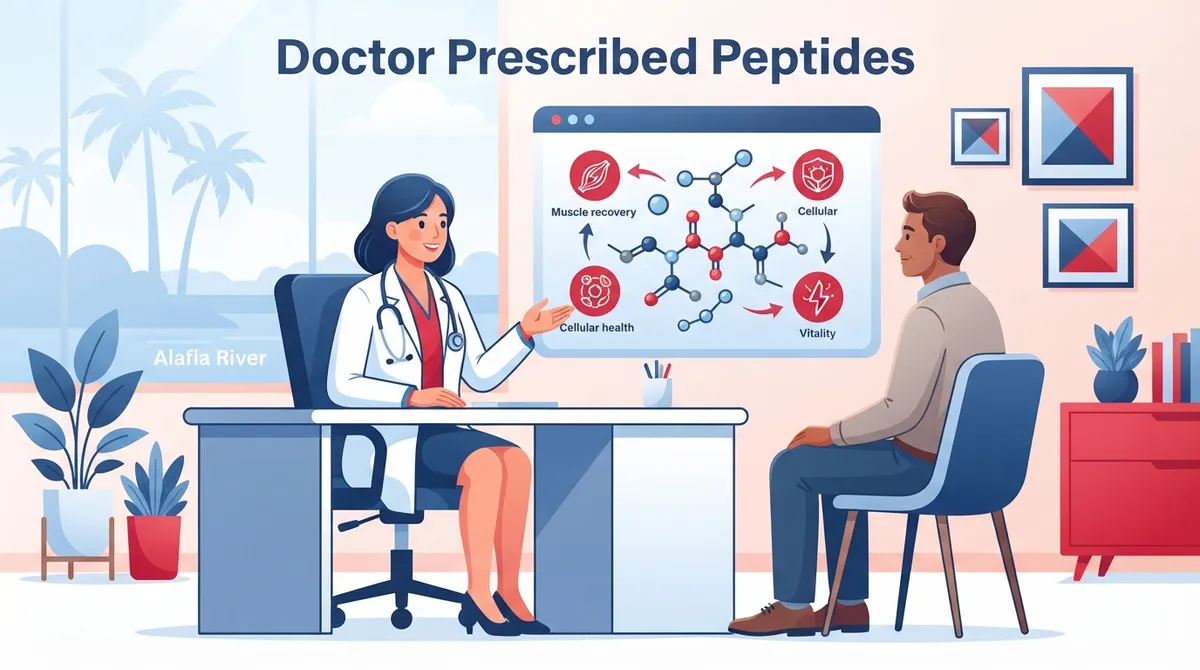
What Does "Doctor Prescribed Peptides" Mean in Riverview?
When someone searches for doctor prescribed peptides in Riverview, they may mean one of two very different things.
FDA-Approved Peptide Medicines
These are drugs the FDA has reviewed for specific uses. Examples include certain insulin products and GLP-1 medicines used for type 2 diabetes or weight management. They have gone through formal testing. Their labels list approved uses, known side effects, and dosing rules.
Compounded or Wellness-Market Peptides
These are peptides promoted for recovery, anti-aging, muscle growth, or skin repair. Many are made by compounding pharmacies or sold online as research products. Compounded drugs are not FDA-approved. The FDA does not review them for safety, effectiveness, or quality before they are sold.
A prescription for either type is still a prescription. But the evidence behind each is not the same. A responsible doctor should tell you which category your treatment falls into.
FDA-Approved vs. Compounded Peptides at a Glance
|
Feature |
FDA-Approved Peptide Medicine |
Compounded or Wellness-Market Peptide |
|---|---|---|
|
FDA review for safety and effectiveness |
Yes, for specific approved uses |
No premarket review |
|
Evidence from large human trials |
Usually strong for approved uses |
Often limited or missing |
|
Quality oversight |
Manufacturing standards apply |
Varies by pharmacy and source |
|
Typical uses |
Diabetes, weight management, other approved conditions |
Recovery, anti-aging, skin, performance claims |
|
Key patient question |
Is this the right drug for me? |
Is this safe, legal, and backed by evidence? |
For a deeper look at this topic, see our comparison of FDA-approved vs. compounded peptides.
Why Compounding Raises Questions
Compounding has a real and legitimate role. A pharmacist may prepare a patient-specific medicine when an approved product cannot meet a documented need. An example is an allergy to an inactive ingredient in a standard drug.
But compounding is not a shortcut to avoid FDA-approved options. Preference alone is not a medical reason. The FDA has also raised concerns about some bulk peptide ingredients used in compounding. These include possible impurities, immune reactions, and limited human safety data. Rules can change, so patients and clinicians should check current FDA guidance rather than rely on online claims.
Researchers have also written about the gray market for peptides, where products are sold with little oversight. Our guide on BPC-157 buying mistakes shows how easy it is to be misled when buying outside medical care.
What a Responsible Peptide Consultation Looks Like
A good visit starts with your health, not the product. Primary care is the right place to begin, because your doctor already looks at the whole picture. A thorough visit should include these steps:
- Review your goals and history. The doctor asks what you want to improve and what conditions, medicines, and allergies you have.
- Check the basics first. Sleep, nutrition, stress, activity, and lab work often explain symptoms better than a peptide could.
- Name the exact peptide. You should hear the specific product, not a vague "peptide blend."
- Explain the approval status. Is it FDA-approved for the use being discussed, or not?
- Discuss benefits, unknowns, and risks. Honest answers include what is not yet proven.
- Offer alternatives. Evidence-based options should be on the table.
- Set a monitoring plan. You should know what follow-up, labs, and side-effect checks to expect.
If a provider skips these steps, that is a warning sign. Our 15 questions to ask a peptide therapy clinic is a helpful checklist to bring to any appointment.
Questions to Ask Before You Start
Before you agree to any peptide treatment, ask these questions:
- Who prescribes this, and who will monitor my care?
- Which licensed pharmacy supplies it?
- Is the prescription written specifically for me?
- Is this FDA-approved for my condition?
- How is product quality tested and tracked?
- What side effects should I report, and who do I call?
- What happens if I want to stop?
Avoid any product labeled "for research use only" or sold without a valid prescription. Those labels often signal that the item was never meant for human use. For more on this warning, read why products say research purposes only.
Common Peptide Claims and What the Evidence Says
Many Riverview patients ask about peptides for weight loss, recovery, and aging. The honest answer depends on the product.
Weight Management
Some of the best-studied peptide medicines are the GLP-1 drugs used for weight loss and diabetes. These are FDA-approved for specific uses. They still require medical screening and follow-up. If this is your goal, our guides on how semaglutide works and how tirzepatide works explain the science.
Recovery and Healing
Peptides like BPC-157 are popular for injuries and gut issues. Most of the supporting research is in animals or small studies. Human evidence is thin. See how to use healing peptides safely for recovery and what the evidence really shows.
Anti-Aging and Skin
Copper peptide products such as GHK-Cu are common in skincare. Some topical evidence exists, but claims often run ahead of the data. Read 6 facts about GHK-Cu before you decide.
Growth Hormone and Performance
Peptides marketed for muscle or growth hormone support carry extra questions. Review the facts on Ipamorelin FDA approval status and what CJC-1295 is and whether it is safe.
|
Goal |
Peptide Category |
Evidence Level |
First Step |
|---|---|---|---|
|
Weight management |
FDA-approved GLP-1 medicines |
Strong for approved uses |
Medical screening and labs |
|
Injury recovery |
Wellness-market peptides |
Limited in humans |
Proper diagnosis and rehab plan |
|
Skin and aging |
Topical or compounded peptides |
Mixed and often early |
Skin evaluation and sun protection |
|
Muscle or hormone support |
Growth hormone secretagogues |
Limited, with safety questions |
Hormone testing and review |
Risks Worth Taking Seriously
Peptides can cause side effects, even approved ones. Compounded and unregulated products add other risks. These include contamination, wrong strength, and allergic or immune reactions. Mixing peptides with other drugs can also cause problems.
Be especially careful if you are pregnant, planning pregnancy, or managing a chronic condition. Tell your doctor about every supplement and medicine you take. Report any new rash, swelling, severe stomach pain, or unusual symptoms right away. If you want to understand reactions in more detail, see mistakes when combining peptides with GLP-1 drugs.
How Primary Care Fits In
The safest place to explore peptides is inside real medical care. A primary care doctor can check your labs, review your medicines, and tell you when a peptide is not needed. This is far better than buying products online or following influencer advice.
That is where a practice like InCare can help. InCare is a personalized primary care and wellness clinic serving Tampa and Riverview, Florida. The team combines medical expertise with advanced tools such as body composition analysis, DNA gene testing, and metabolic breath analysis. These tools help guide prevention-focused decisions based on your data, not trends. Reading about how to evaluate peptide therapy for wellness safely is a good first step before any visit.
For busy families and tech-savvy professionals, convenience matters too. InCare offers in-person visits and virtual appointments, which makes follow-up easier. You can also see what other patients say when you visit us on Google — InCare, where the clinic holds a 4.8 rating.
How to Find the Right Provider in Riverview
Use this simple checklist when you compare Riverview-area providers:
- Confirm the clinician's medical license and board certification.
- Ask for the exact peptide and its FDA status in writing.
- Verify the pharmacy is licensed.
- Make sure labs and follow-up visits are part of the plan.
- Look for clear, honest pricing. Our article on monthly peptide therapy costs shows what to expect.
- Be wary of guarantees or pressure to buy quickly.
You can also read about signs of a reputable peptide clinic and how to find a family doctor accepting new patients in Riverview. If you are comparing local options, 11 ways to find the best primary care doctor in Riverview is a useful companion.
Follow InCare for health updates on Facebook, Instagram, and TikTok. Social channels are a good place to learn, but never treat them as a substitute for a medical exam.
The Bottom Line
"Doctor prescribed peptides" in Riverview can mean a well-tested medicine or a product with little human evidence. A prescription alone does not settle that question. The best path is to start with a full medical evaluation, ask direct questions, and choose care that is open about evidence, sourcing, and follow-up.
If you want a clear, personalized starting point, InCare offers primary care with a focus on prevention and whole-body health. Book your visit with InCare to talk through your goals with a licensed clinician, or contact our team with questions before you come in.
FAQs
Q: What peptides can a doctor prescribe in Riverview?
A: A licensed doctor can prescribe FDA-approved peptide medicines, such as certain insulin and GLP-1 drugs, when they are medically appropriate. Some clinics also discuss compounded peptides, which are not FDA-approved. Always ask which category your treatment falls into and confirm the offerings with the clinic.
Q: Are peptide therapies FDA-approved?
A: Some are, but many are not. FDA-approved peptide medicines have been reviewed for safety and effectiveness for specific uses. Compounded and research-market peptides are not reviewed by the FDA before they are sold, and a prescription does not change that.
Q: Are compounded peptides safe?
A: Safety varies. The FDA has raised concerns about some bulk peptide ingredients, including possible impurities, immune reactions, and limited human safety data. Use a licensed pharmacy, a patient-specific prescription, and a doctor who monitors your care.
Q: What should I ask a doctor before starting peptide treatment?
A: Ask for the exact peptide name, its FDA status for your use, the pharmacy that supplies it, expected benefits, known risks, and the monitoring plan. Also ask about alternatives and what happens if you stop treatment.
Q: Can peptides help with weight loss, recovery, or anti-aging?
A: FDA-approved GLP-1 peptide medicines have strong evidence for weight management in approved uses. Evidence for recovery and anti-aging peptides is generally weaker, often relying on animal or small studies. A primary care evaluation can help you weigh realistic options.