Key Takeaways
- Primary care provides ongoing, whole-person care with a clinician who knows your history, while urgent care treats new, non-life-threatening problems that can't wait until your regular doctor is available.
- Go to the emergency department or call 911 for chest pain, severe trouble breathing, stroke symptoms, major bleeding that won't stop, or a severe injury; urgent care is not equipped for these.
- After any urgent care visit, request your visit summary and test results and send them to your primary care clinician so your main doctor can track your care.
- Call your primary care office first when sick, since many practices offer same-day or after-hours appointments or can advise where to go.
- Repeated urgent care visits for the same symptom, or a chronic condition like diabetes or high blood pressure, signal a need for primary care follow-up, testing, or specialist referral.
- Costs vary by health plan, network status, and location, so check your copays and coinsurance before choosing either setting rather than assuming one is cheaper.
When a sore throat hits on a Friday night or a sprained ankle ruins a weekend, most people make a quick choice about where to go. Often that choice is a guess. Many adults are still unsure of the difference between urgent care and primary care, and that confusion can lead to repeat visits, gaps in follow-up, and avoidable stress.
The numbers show how common urgent care has become. According to the CDC's National Health Interview Survey, 27.6% of people reported at least one urgent care center visit in the prior 12 months. Yet using urgent care well takes some know-how. This guide explains what is the difference between urgent care and primary care, then walks through 14 common mistakes that cost people time, money, and continuity of care. Whether you are a busy parent in Tampa, a young professional in Riverview, or someone building a first relationship with a doctor, you will find clear, practical answers here.
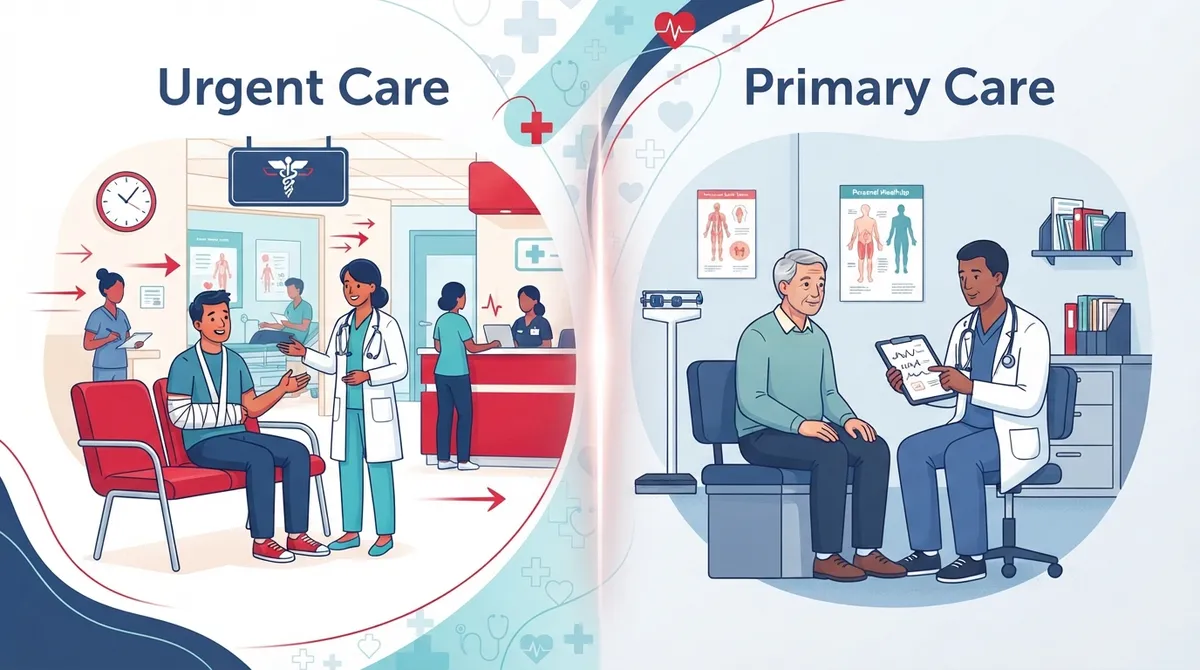
What Is the Difference Between Urgent Care and Primary Care?
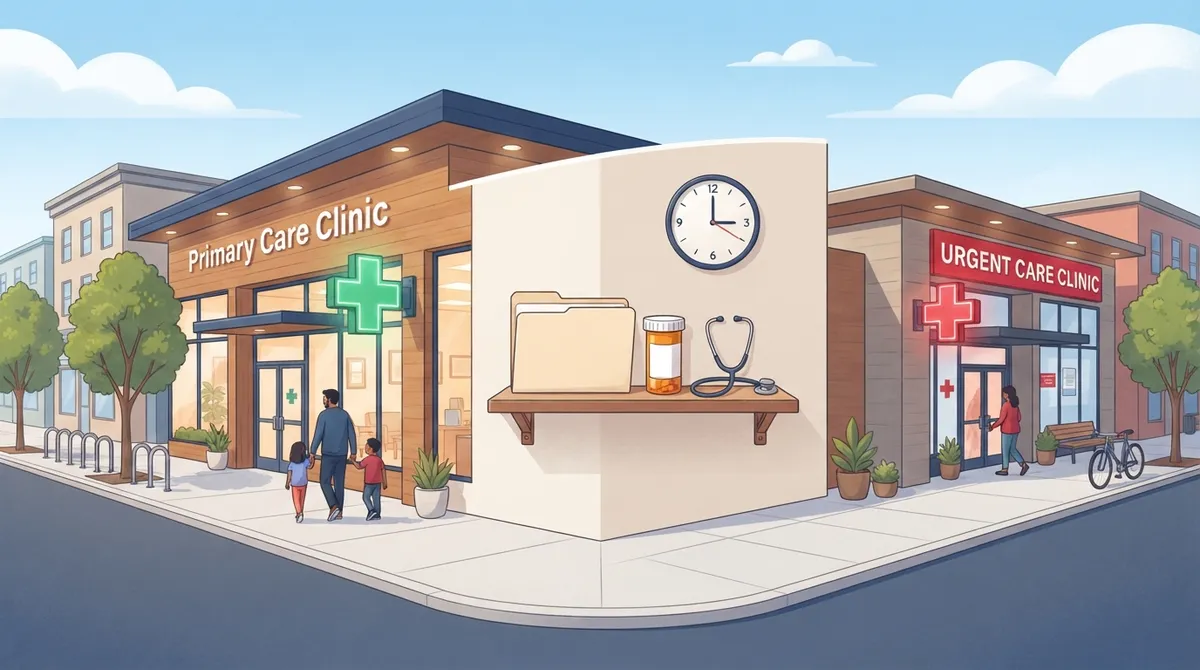
The short answer: primary care is ongoing, whole-person care. Urgent care is quick treatment for a new, non-life-threatening problem that cannot wait.
Primary care focuses on prevention, overall health, chronic conditions, and coordination over time. Your primary care clinician learns your history, tracks changes, and connects you with specialists when needed. Urgent care focuses on the problem in front of you today, often when a regular office is closed or has no open appointment.
Neither one replaces the other. They work best as a team. Emergencies, such as chest pain or stroke symptoms, belong in the emergency department instead.
Quick Comparison Table
|
Feature |
Primary Care |
Urgent Care |
|---|---|---|
|
Main purpose |
Prevention, ongoing care, chronic condition management |
New, non-life-threatening illness or injury |
|
Appointments |
Usually scheduled, with some same-day options |
Walk-in or same-day visits are common |
|
Clinician |
Same clinician who knows your history |
May see a different clinician each visit |
|
Typical visits |
Checkups, screenings, vaccines, medication reviews |
Minor infections, sprains, small cuts, minor fractures |
|
Follow-up |
Built into the relationship |
Depends on your next step |
|
Emergencies |
Not appropriate |
Not appropriate |
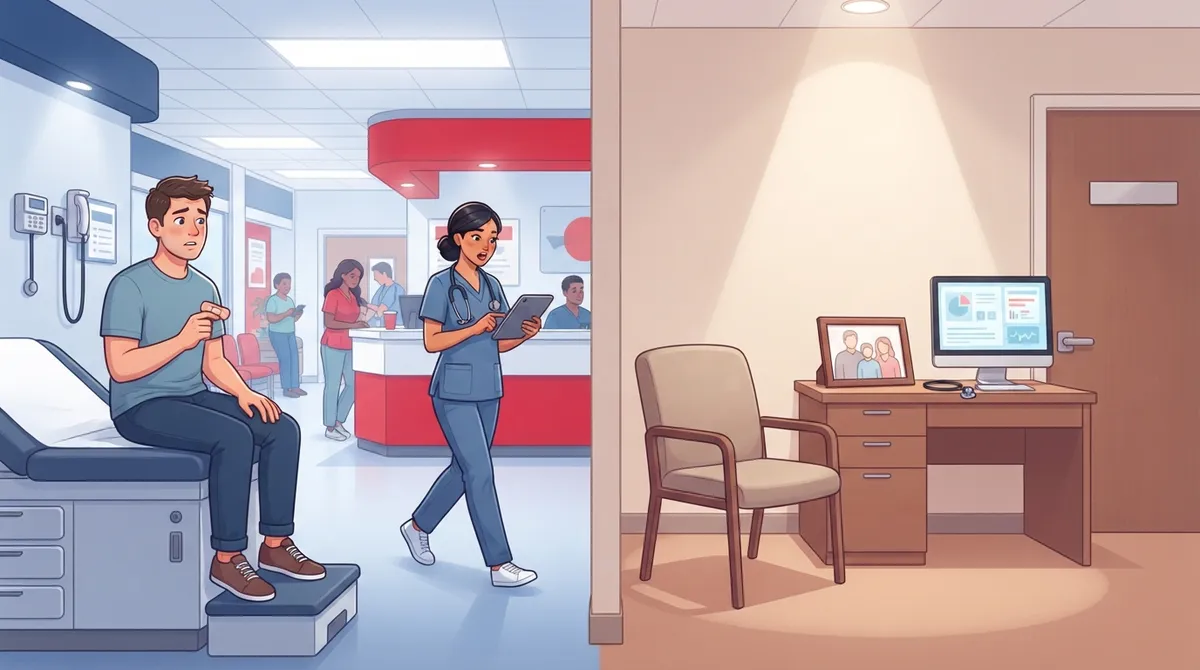
Mistake 1: Treating Urgent Care as a Substitute for a Doctor
Urgent care is a useful safety net. It is not a long-term health plan. Without a primary care clinician, no one tracks your blood pressure trends, your screening dates, or your medication list. Each urgent care visit starts from scratch.
A clinic that offers both services can close this gap. InCare, for example, provides primary care, urgent care, and wellness services under one roof, so your records stay connected.
Mistake 2: Going to Urgent Care for Preventive Needs
Checkups, cancer screenings, vaccinations, and wellness planning fit primary care. These visits are scheduled, unhurried, and built around your long-term goals. If you want to know what a thorough visit includes, see what a wellness checkup in Tampa, FL includes.
Mistake 3: Skipping Your Primary Care Office When You Are Sick
Many people head straight to urgent care without making one call. That is a missed chance. Some primary care offices offer same-day or after-hours appointments, or can tell you where to go. A quick phone call can save you a wait, and you may see a clinician who already knows you.
In the Tampa Bay area, you can learn how to get same-day primary care in Tampa before you default to a walk-in line.
Mistake 4: Using Urgent Care for a Real Emergency
This is the most serious error on the list. Urgent care is not built for life-threatening problems. Call emergency services or go to an emergency department for:
- Severe trouble breathing
- Chest pain or pressure
- Major bleeding that will not stop
- Stroke symptoms, such as face drooping, arm weakness, or slurred speech
- A severe injury
When you are unsure, contact a clinician or emergency service for guidance. Delay is the bigger risk.
Mistake 5: Assuming Urgent Care Can Do Everything
Urgent care can often treat uncomplicated infections, sprains, small cuts, and some minor fractures. Many centers offer basic lab testing and X-rays. But services differ from one center to the next. Complex or complicated problems may need a specialist or a hospital.
Before you go, confirm that the center can handle your issue. For a closer look at what these visits cover, read what urgent care services can actually treat.
Mistake 6: Letting Chronic Conditions Drift Between Visits
Diabetes, high blood pressure, asthma, and similar conditions need steady attention. Urgent care can address a flare-up, but it does not manage the condition over months. Primary care adjusts medications, orders labs on schedule, and watches for early warning signs.
If you live with a chronic condition, a consistent clinician matters. Learn how a Tampa primary care doctor helps manage diabetes over the long term.
Mistake 7: Not Sharing Urgent Care Records With Your Primary Care Clinician
After an urgent care visit, send your records and test results to your primary care clinician. This step matters most when symptoms persist, treatment needs follow-up, or the problem ties into a chronic condition. Without it, your main clinician may never know what happened.
Here is a simple process to follow after any urgent care visit:
- Ask for a copy of your visit summary and any test results.
- Note the medications you were given or prescribed.
- Send the records to your primary care office, or request a records transfer.
- Schedule a follow-up if your symptoms last longer than expected.
- Ask your clinician whether any changes affect your ongoing care.
If you need to move records between offices, this guide on the steps of a medical records request in primary care can help.
Mistake 8: Assuming One Option Is Always Cheaper
People often assume urgent care costs less, or that a doctor's office costs less. Neither belief holds up everywhere. CMS advises patients to check their health plan's costs before using urgent care, because copays and coinsurance depend on the plan. Costs also vary by location, network status, and services provided.
No single national figure compares primary care and urgent care costs directly. Check your plan, confirm your network, and ask about charges before you go. If you have Medicare, learn what Medicare covers for seniors in primary care.
Mistake 9: Believing Urgent Care Always Requires Walk-In Waiting
Walk-ins are common at urgent care, but wait times vary, and some centers offer online check-in. At the same time, primary care is not always slow to book. Some practices hold same-day slots. Ask both settings what options exist so you can pick the faster, better-fit path.
Mistake 10: Using Urgent Care to Manage Prescriptions
Urgent care may help in a pinch, such as a short-term need. But ongoing prescription management belongs with a clinician who knows your full medication list. That clinician can spot interactions, adjust doses, and review whether a drug still fits your needs.
For a deeper look, read these prescription management tips for better health in 2026.
Mistake 11: Waiting Until You Are Sick to Find a Doctor
The worst time to search for a primary care clinician is when you feel awful. Establishing care while you are healthy gives you a baseline and a trusted contact for later. This is especially true for adults who have never had a regular doctor.
Many busy families and young adults put this off, then rely on urgent care for everything. A little planning changes that. See how to establish care with a new doctor in 2026, or explore how to choose primary care for adults in Tampa.
Mistake 12: Ignoring Symptoms That Keep Coming Back
A cough that returns every few weeks, headaches that repeat, or fatigue that never lifts are not urgent care problems. They signal that something deeper may need attention. Repeated urgent care visits for the same issue often mean it is time for primary care follow-up, testing, or a specialist referral.
Sleep trouble is a common example. If poor rest keeps returning, know when to see a doctor for poor sleep instead of treating each bad night on its own.
Mistake 13: Overlooking Clinics That Offer Both Services
Many patients think they must choose between two separate worlds. They do not. A clinic that combines primary care and urgent care lets you move between them without losing your history. That setup is useful for families, since one place can handle a child's sudden fever and a parent's annual screening.
For more on weighing your options locally, see primary care vs. urgent care: which one do you need, or the Tampa-specific view in primary care vs urgent care in Tampa. Riverview residents can also review same-day primary care vs. urgent care in Riverview.
Mistake 14: Not Using Technology to Make the Choice Easier
Modern clinics offer tools that save time, such as online booking, telehealth visits, and digital records. Tech-savvy patients can often start with a virtual visit to decide whether an in-person stop is needed. This can spare you a long wait for a minor issue and point you to the right level of care faster.
InCare offers virtual appointments alongside in-person care in Tampa and Riverview, and pairs medical expertise with advanced tools like body composition analysis, metabolic breath analysis, and DNA gene testing for patients who want a proactive approach to their health.
A Simple Decision Guide
Use this quick checklist when you are unsure where to go:
- Call 911 or go to the emergency department: chest pain, severe trouble breathing, major bleeding, stroke signs, or a severe injury.
- Choose urgent care: a new, non-life-threatening problem that needs prompt attention, such as a sprain, minor cut, or uncomplicated infection, especially after hours.
- Choose primary care: checkups, screenings, vaccines, medication reviews, ongoing symptoms, and chronic condition management.
When in doubt, call your clinician's office first. The staff can often guide you in a minute or two.
Why the Right Relationship Matters
Urgent care solves today's problem. Primary care protects your health over the years. When both live under one clinic, you get speed when you need it and continuity when it counts. That is the model InCare follows, with a team focused on prevention and personalized plans for patients across Tampa and Riverview.
Patients can read what others say about their experience, too. See what our InCare patients share on Google by visiting the Visit us on Google — InCare listing, and follow our health tips on Instagram, Facebook, and Tik Tok.
For authoritative background on the topic, review the CDC's report on urgent care center and retail health clinic use in the United States.
Conclusion
Knowing what is the difference between urgent care and primary care helps you act fast without giving up long-term health. Use urgent care for sudden, non-emergency problems. Rely on primary care for prevention, chronic conditions, and the steady guidance that keeps small issues from becoming big ones. Avoid the 14 mistakes above, share your records after every visit, and save the emergency room for true emergencies.
Ready to build a care relationship that covers both everyday needs and sudden problems? Book your InCare appointment now, or contact our team with questions about primary care, urgent care, and wellness services in Tampa and Riverview.
FAQs
Q: What is the main difference between urgent care and primary care?
A: Primary care provides ongoing, person-centered care focused on prevention, overall health, and chronic condition management with a clinician who knows your history. Urgent care provides prompt evaluation and treatment for new, non-life-threatening problems, often when a regular office is closed or unavailable.
Q: When should I go to urgent care instead of my primary care doctor?
A: Choose urgent care for a new, non-life-threatening problem that needs attention soon, such as a sprain, small cut, or uncomplicated infection, especially after hours. If possible, call your primary care office first, since some practices offer same-day or after-hours appointments or can advise where to go.
Q: Is urgent care more expensive than a primary care visit?
A: It depends. Costs and coverage vary by plan, network status, location, and services provided, so neither setting is always cheaper. CMS advises patients to check their health plan's copays and coinsurance before using urgent care.
Q: Should I follow up with my primary care provider after an urgent care visit?
A: Yes. Share your visit records and test results with your primary care clinician, especially when symptoms persist, treatment needs follow-up, or the issue relates to a chronic condition. This keeps your care connected and complete.
Q: When should I go to the emergency room instead of urgent care?
A: Call emergency services or go to an emergency department for warning signs such as severe trouble breathing, chest pain, major bleeding, stroke symptoms, or a severe injury. When you are uncertain, contact a clinician or emergency service for guidance.