
Key Takeaways
- FDA approval applies only to a peptide's specific diagnosis, dose, and studied patient group, so it does not validate other peptides for general wellness or anti-aging use.
- Compounded peptides are not FDA-approved, and compounding does not prove safety, effectiveness, or quality, so ask which pharmacy prepares the product and how purity is checked.
- Popular wellness peptides such as BPC-157, TB-500, and MOTS-c lack approval for their advertised benefits, and human evidence for them is thin or mostly from animal studies.
- Many peptides have no established human dose, so dosing errors, contamination, immune reactions, and unknown long-term effects are real risks that make unsupervised self-injection a poor choice.
- Before committing, verify the clinician's Florida license, get the exact product and intended use in writing, and request a monitoring and follow-up plan; avoid any provider guaranteeing results.
- Proven options such as medically supervised weight management, sleep evaluation, lab-guided hormone care, and nutrition, strength training, and sleep should be considered first, ideally with a primary care doctor.
Injectable peptide therapy has become a popular topic in Tampa wellness circles. Clinics advertise it for recovery, metabolism, sleep, and healthy aging. But the phrase covers a lot of ground. Some peptides are FDA-approved medicines for specific diagnoses. Others are compounded or investigational products with limited evidence behind the claims.
That difference matters. If you are a busy professional, a parent juggling a full calendar, or a wellness-minded adult exploring options, you deserve clear facts before you inject anything. This guide explains what injectable peptide therapy in Tampa usually means, what the science does and does not show, which risks to weigh, and how to pick a qualified provider. It also covers how a primary care clinic can help you decide whether peptides belong in your plan at all.
What Is Injectable Peptide Therapy?
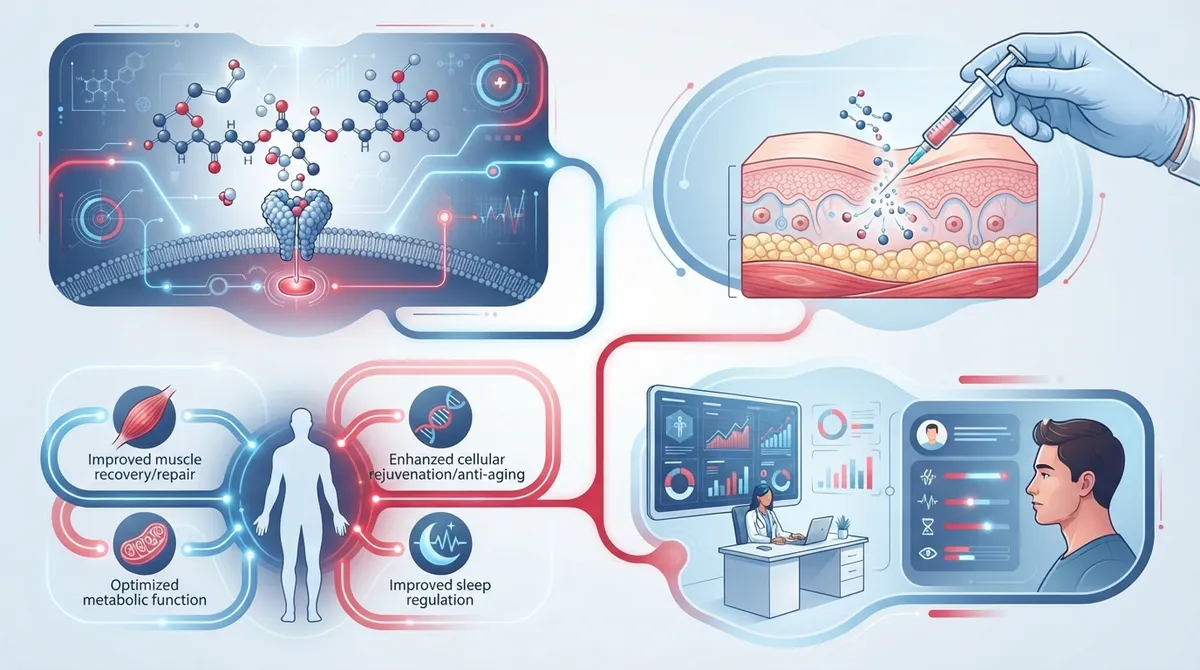
Peptides are short chains of amino acids. Your body makes many of them naturally, and they act as signals that guide processes such as hormone release, inflammation, and tissue repair. Injectable peptide therapy means a clinician prescribes a peptide product that is given by injection, usually under the skin.
In Tampa wellness and primary care settings, the term is not one standardized treatment. It describes a wide category. The specific substance, the intended use, the evidence, and the regulatory status all change from one product to the next. Treating them as one thing is the first mistake many patients make.
If you want a plain-language primer, How to Understand Peptides Explained by Your Doctor breaks down the basics.
FDA-Approved Peptides vs. Wellness Peptides
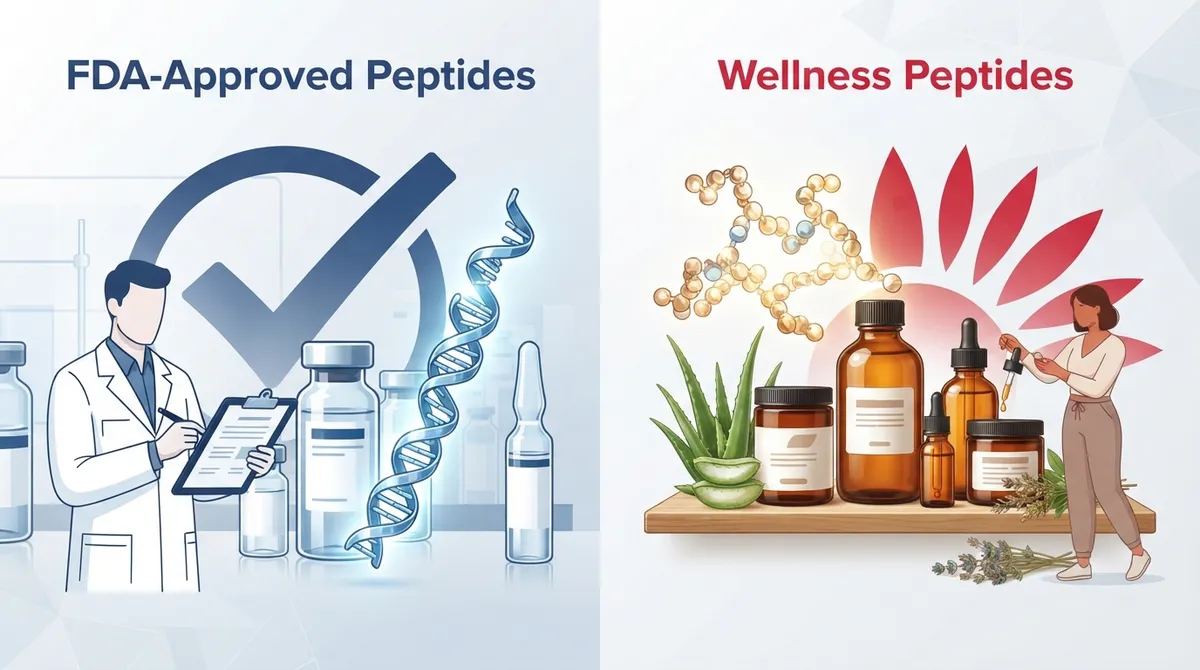
This is the most important distinction in the whole topic. Some peptide-based drugs are FDA-approved prescription medicines for specific diagnoses. Their approval applies only to the condition, dose, and patient group that were studied. It does not prove that other peptides are safe or effective, and it does not cover use for general wellness, anti-aging, or athletic performance.
Many peptides promoted by wellness clinics fall outside that approved category. Examples include BPC-157, TB-500, MOTS-c, and certain growth-hormone-releasing peptides. They are not FDA-approved drugs for the broad benefits often advertised. Evidence for many of these uses is limited, and claims should never be treated as proven outcomes.
|
Category |
Regulatory Status |
Evidence Level |
What to Ask |
|---|---|---|---|
|
FDA-approved peptide medicines |
Approved for specific diagnoses |
Tested in clinical trials for the approved use |
Does my diagnosis match the approved use? |
|
Compounded peptides |
Not FDA-approved; made for an individual patient |
Varies widely; often limited |
Which pharmacy made it, and why is it needed? |
|
Investigational or research peptides |
Not approved for human wellness use |
Mostly early or animal research |
Is there any human safety data? |
For a closer look at this divide, read FDA-Approved vs. Compounded Peptides: Which Is Safer?
Why Compounding Does Not Equal Approval
Compounded drugs are not FDA-approved. Compounding can be appropriate for an individual patient when it is legally permitted and a prescriber decides there is a real clinical need. But compounding is not a route to approval. It does not prove safety, effectiveness, or quality.
The FDA has raised concerns about certain bulk substances used in compounded peptide products. Those concerns include possible immune reactions, impurities, and incomplete safety information. This is why the source of the product matters as much as the peptide itself.
Patients who want to dig into quality checks can explore 6 Ways to Verify CJC-1295 Quality Before You Try It and 5 BPC-157 Buying Mistakes That Put Your Health at Risk.
Common Peptides Marketed in Tampa
Tampa-area clinics advertise a mix of products. Offerings, prices, and pharmacy arrangements vary from clinic to clinic. Here is a quick, honest look at what is often discussed:
- BPC-157: Marketed for recovery and gut support. It is not an FDA-approved drug, and human evidence is thin.
- TB-500: Marketed for healing and recovery. It lacks approval for these wellness claims.
- MOTS-c: Marketed for metabolism and energy. Most data come from early or animal research.
- Growth hormone secretagogues (such as CJC-1295 and ipamorelin): Marketed for recovery, sleep, and body composition. Regulatory status and monitoring needs are important to understand.
- GLP-1 medications (such as semaglutide and tirzepatide): These are different. Some are FDA-approved for diabetes or weight management and are used under medical supervision.
You can read deeper dives on what MOTS-c research studies really show, Ipamorelin's FDA approval status in 2026, and whether CJC-1295 is safe to try.
What Are the Risks of Injectable Peptides?
Any injectable product carries some risk. For peptides with limited safety data, the risk picture is less certain. Patients should know the following possibilities:
- Dosing errors. Many peptides have no established human dose, which makes accurate dosing difficult.
- Contamination or impurities. Poorly made products can contain unwanted substances.
- Allergic or immune reactions. Some peptides can trigger the immune system.
- Injection-site reactions. Redness, swelling, or pain can occur.
- Unknown long-term effects. Without long-term studies, the full risk is not known.
This is why self-injection and products sold without medical oversight are poor ideas. A safe approach starts with a licensed clinician. For safety-focused reading, see Are Peptide Injections in Tampa Safe or Risky? and How to Use Healing Peptides Safely for Recovery.
What Does a Responsible Evaluation Include?
A good peptide consultation looks a lot like good primary care. It should not feel like a sales pitch. Expect a licensed clinician to cover these steps:
- A full review of your medical history, current medications, and health goals.
- A clear explanation of the evidence and the regulatory status of any product discussed.
- A discussion of alternatives, including lifestyle changes and FDA-approved options.
- A plan for monitoring, side effects, and follow-up visits.
- Transparency about where the product comes from and which pharmacy prepares it.
Monitoring is especially important with growth-hormone-related peptides. Learn more in What Monitoring Is Needed With Growth Hormone Peptides?
How to Choose a Peptide Provider in Tampa
Not every clinic holds the same standards. Use this checklist before you commit to anything:
- Verify the clinician's Florida license. Confirm it through the state licensing lookup.
- Ask for the exact product and intended use. Vague answers are a red flag.
- Confirm regulatory status. Is it FDA-approved or compounded?
- Identify the dispensing pharmacy. Ask how quality and purity are checked.
- Request a written monitoring plan. Follow-up should be built in.
- Watch for guaranteed results. Honest providers do not promise outcomes.
More detailed guidance is available in 15 Questions to Ask a Peptide Therapy Clinic in Tampa and 9 Things to Know Before Choosing a Peptide Specialist in Tampa.
How Much Does Peptide Therapy Cost in Tampa?
No reliable, independent Tampa-wide data exist on typical pricing or outcomes. Local clinic pages advertise different products and prices, but those are provider-specific marketing claims. They are not representative market data and not evidence that a treatment works.
Costs depend on the product, dose, and clinic model. Insurance often does not cover wellness peptides, while FDA-approved medicines for covered diagnoses may be partly covered. Ask for a full written cost breakdown, including consultation, labs, and follow-up. For a pricing overview, see What Does Monthly Peptide Therapy Cost in Tampa?
Evidence-Based Alternatives Worth Considering
Before turning to peptides, many patients benefit from proven options. These approaches have stronger evidence and fit naturally into primary care:
- Weight management: Medically supervised programs and FDA-approved medications can be effective. See 11 Reasons Medical Weight Loss Clinics Work Better in 2026.
- Sleep: Poor sleep often has treatable causes. Read How to Know When to See a Doctor for Poor Sleep.
- Hormone health: Lab-guided care can address real deficiencies safely.
- Recovery and healthy aging: Nutrition, strength training, sleep, and preventive screening remain the foundation.
A primary care doctor can help you sort which of these fits your situation, and whether a peptide discussion even makes sense.
How Primary Care Fits Into the Peptide Conversation
Peptide therapy should not stand alone. It works best, if at all, inside a broader plan built on your labs, history, and goals. That is where a primary care clinic adds value. Your doctor sees the full picture, checks for interactions with your medications, and keeps you accountable with follow-up.
InCare is a personalized healthcare clinic serving Tampa and Riverview. It pairs state-of-the-art technology with medical expertise, offering primary care, urgent care, weight loss programs, DNA gene testing, metabolic breath analysis, and IV hydration. That whole-body, prevention-first approach helps patients ask the right questions before adding any new therapy. Patients who want to know what to expect can read InCare Peptide Clinic Tampa: What to Know Before You Go.
Curious about the patient experience? You can visit us on Google — InCare to read reviews from Tampa Bay patients. You can also follow the clinic on Instagram, Facebook, and TikTok for health updates.
Key Takeaways Before You Start
Keep these points in mind as you weigh your options:
- Injectable peptide therapy is a broad category, not one treatment.
- FDA approval for one peptide does not extend to others.
- Compounded products are not FDA-approved and vary in quality.
- Evidence for many wellness uses is limited. Be cautious with big promises.
- Always verify the clinician, the product, and the pharmacy.
- Start with proven, primary-care-based options when they fit your goals.
Take the Next Step With Confidence
Peptide therapy deserves careful, honest evaluation, not hype. The safest path begins with a licensed clinician who reviews your history, explains the evidence plainly, and builds a plan around your goals. If you are exploring injectable peptide therapy in Tampa, start with a conversation grounded in facts. Book your visit with InCare today, or contact our team with questions about primary care, wellness, and evidence-based options in Tampa and Riverview.
FAQs
Q: What is injectable peptide therapy, and what is it used for?
A: Injectable peptide therapy uses clinician-prescribed peptide products given by injection. Some are FDA-approved for specific diagnoses, while others are marketed for goals like recovery, metabolism, sleep, or healthy aging. The use, evidence, and regulatory status vary by product.
Q: Are peptides like BPC-157 and TB-500 FDA-approved?
A: No. BPC-157 and TB-500 are not FDA-approved drugs for the broad wellness benefits commonly advertised. Evidence for many of these uses is limited, so claims should not be treated as established outcomes.
Q: Is injectable peptide therapy safe?
A: Safety depends on the specific peptide, the dose, and the quality of the product. Possible risks include dosing errors, contamination, allergic reactions, and injection-site reactions. Treatment should always be overseen by a licensed clinician.
Q: How do I choose a qualified peptide provider in Tampa?
A: Verify the clinician's Florida license, ask for the exact product and intended use, and confirm whether it is FDA-approved or compounded. Also identify the dispensing pharmacy and request a written monitoring and follow-up plan.
Q: Does insurance cover peptide therapy in Tampa?
A: Coverage varies. Insurance often does not cover wellness peptides, while FDA-approved medicines prescribed for covered diagnoses may be partly covered. Ask the clinic for a written cost breakdown and check with your insurer before starting.