
Key Takeaways
- An executive physical in Tampa is a longer, personalized preventive visit, typically with more physician time, a deeper history review, and a written follow-up plan than a routine annual checkup.
- Pricing varies widely and no verified current price exists for Tampa programs; ask for an itemized list of included services, visit length, and any separate fees before booking.
- More testing is not always better: advanced tests like stress testing or imaging should be based on your symptoms and risk profile, since extra tests can cause false alarms and unnecessary procedures.
- USPSTF guidance recommends blood pressure screening for all adults 18 and older and diabetes screening for adults 35 to 70 with overweight or obesity; elevated office readings should be confirmed outside the clinic.
- Prepare by gathering past lab and imaging records, listing medications and supplements with doses, writing down family history, and confirming fasting rules for blood work.
- Ask who will explain abnormal results and manage referrals, since an abnormal result is a signal to investigate further, not a diagnosis, and coordinated follow-up prevents results from being lost.
Busy professionals often put their own health last. Meetings, travel, and family demands fill the calendar, while checkups slip down the list. An executive physical exam in Tampa is designed to change that. It is a longer, more detailed preventive visit than a routine checkup, built around your personal risks and goals.
Unlike a quick annual visit, this type of exam gives you time with a physician, a deeper review of your history, and a clear plan for what comes next. In 2026, more Tampa residents are looking for this kind of proactive care, especially tech-savvy professionals who want data-driven answers and straightforward follow-up.
This guide explains what an executive physical exam in Tampa typically involves, how it differs from a standard physical, what to ask before you book, and how to get the most value from your visit. It also covers pricing questions, testing choices, and how to avoid unnecessary procedures.

What Is an Executive Physical Exam?
An executive physical is an extended preventive care visit. It gives a patient a detailed look at current health, future risks, and a personal action plan. There is no single national standard for what it must include, so services vary from clinic to clinic.
Most programs combine a physician history and physical, laboratory testing, cardiovascular risk review, and age-appropriate cancer screening. Some add extras such as stress testing, imaging, nutrition counseling, or fitness assessments. The goal is not to run every test possible. The goal is to run the right tests for you.
Who Benefits Most?
An executive physical exam in Tampa can help many types of patients:
- Professionals with high-stress jobs and limited time for appointments
- Adults over 40 who want a deeper baseline of their health
- People with a family history of heart disease, diabetes, or cancer
- Wellness-minded patients who want to prevent problems early
- Anyone who has not had a thorough checkup in several years
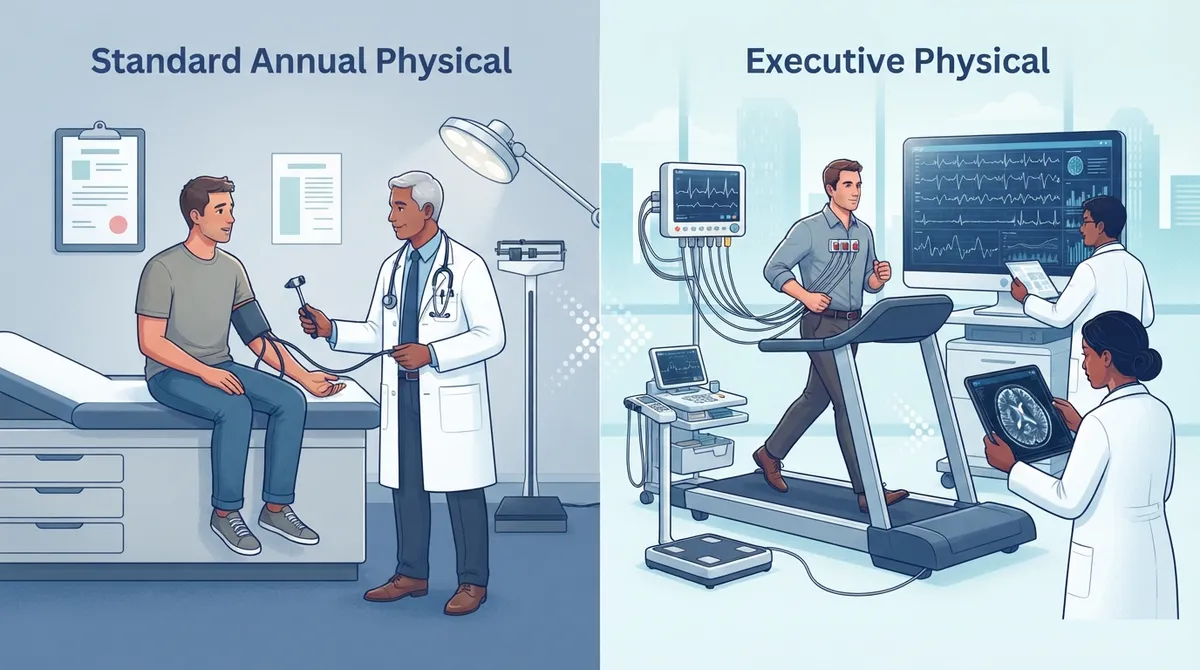
How Does It Differ From a Standard Annual Physical?
A routine physical is often short and focused on basic vitals, a brief exam, and updating vaccines. An executive physical is broader and more personalized. The table below shows the main differences.
|
Feature |
Routine Annual Physical |
Executive Physical Exam |
|---|---|---|
|
Visit length |
Often brief |
Extended, sometimes a half or full day |
|
History review |
Basic update |
Detailed family, lifestyle, and risk review |
|
Lab testing |
Standard panels |
Broader panels chosen for your risk |
|
Risk assessment |
Limited |
Cardiovascular, metabolic, and cancer risk review |
|
Follow-up plan |
General advice |
Written, individualized plan |
The key difference is time and depth. More time allows your physician to connect the dots between your symptoms, lab results, and daily habits.
What Tests Are Commonly Included?
Because no universal package exists, always ask for an itemized list. Still, many programs share a few core components.
Physician History and Physical
The visit starts with a thorough conversation. Your physician reviews your medical history, medications, sleep, stress, diet, exercise, and family background. A full head-to-toe exam follows.
Laboratory Testing
Blood and urine tests check cholesterol, blood sugar, kidney and liver function, thyroid health, and blood counts. Some clinics add hormone levels, vitamin levels, or inflammation markers when they are clinically useful.
Cardiovascular Risk Assessment
Heart disease remains a leading health concern. Your physician reviews blood pressure, cholesterol, family history, and lifestyle to estimate risk. An EKG may be part of this step. Advanced tests like stress testing or imaging are not right for everyone, so they should be based on your symptoms and risk profile.
Age- and Risk-Appropriate Cancer Screening
Screening depends on your age, sex, and history. For example, the U.S. Preventive Services Task Force supports colorectal cancer screening for average-risk adults starting at age 45. Other screenings may apply based on your personal and family history. Learn more in our guide to cancer screening guidelines by age and risk in 2026.
Optional Add-Ons
- Metabolic testing to see how your body burns energy
- Body composition analysis to track muscle and fat
- DNA gene testing for personalized health insights
- Nutrition and fitness counseling
- Vision, hearing, or skin checks
Add-ons can be valuable, but they should serve a clear purpose. Ask why each one is recommended.
Do You Need Every Test? An Evidence-Based View
More testing is not always better. A broad panel or imaging study does not automatically help a healthy person without symptoms. Extra tests can sometimes lead to false alarms, added costs, and further procedures that were never needed.
National guidance gives helpful guardrails. The USPSTF recommends blood pressure screening for all adults 18 and older. It also recommends diabetes screening for adults aged 35 to 70 who have overweight or obesity. Elevated office blood pressure readings should usually be confirmed outside the clinic before treatment begins.
A good physician will explain the reason behind each test, what a result could mean, and what the next step would be. If a provider cannot answer those questions, consider that a warning sign.
Tampa Options for Executive Health Assessments
Tampa has several programs that offer extended preventive visits. AdventHealth Corporate Care Tampa, located on North Dale Mabry Highway, advertises a customizable one-day executive health assessment. USF Health also lists an executive wellness center that offers comprehensive assessments. Program details and pricing change, so confirm everything directly with each provider.
If you want ongoing care instead of a one-time event, consider a primary care and wellness clinic that can build a long-term relationship. Choosing the best primary care doctor in Tampa matters because your results only help if someone tracks them over time.
Why a Primary Care Partner Matters
An executive exam does not replace your regular doctor. It works best when results are shared and follow-up is coordinated. InCare, with locations in Tampa and Riverview, takes this whole-body approach. The clinic combines primary care, cancer screenings, metabolic breath analysis, body composition analysis, DNA gene testing, and weight loss support under one roof. That means your results lead to action, not just a report. You can also see what InCare patients say on Google to learn about the patient experience.
How Much Does an Executive Physical Exam Cost in Tampa?
Pricing varies widely, and there is no single verified current price for Tampa programs. A 2026 Florida Trend article noted historical price ranges for one local program between $1,450 and $3,750, but you should verify current pricing directly before making any decision.
Costs depend on the tests included, the length of the visit, and whether imaging or stress testing is added. Insurance often does not cover a full executive package, though some individual services, such as certain screenings, may be covered. Some employers pay for executive exams for leaders.
Questions to Ask Before You Book
- What exact services are included in the base price?
- How long will the visit take?
- What are the credentials of the clinician?
- Is there an itemized price list?
- Will insurance or my employer cover any part?
- Do additional tests carry separate charges?
- Who will explain abnormal results and arrange referrals?
Getting these answers in writing helps you compare options fairly and avoid surprise bills.
How to Prepare for Your Visit
Good preparation makes the visit more useful. Follow these steps:
- Gather records. Bring past lab results, imaging reports, and vaccine history.
- List medications and supplements. Include doses and how often you take them.
- Write down family history. Note heart disease, cancer, diabetes, and other conditions in close relatives.
- Ask about fasting. Many blood tests require you to fast for several hours, so confirm the rules beforehand.
- List your questions and goals. Think about sleep, energy, weight, stress, or any symptom that worries you.
If you are new to a practice, learning how to establish care with a new doctor can help you prepare for the first visit.
What Happens If Something Abnormal Is Found?
An abnormal result is not a diagnosis. It is a signal to look closer. Your physician may repeat a test, order a more specific study, or refer you to a specialist. The most important question to ask is who will manage the next steps.
This is where coordinated primary care adds real value. When one team tracks your labs, screenings, and referrals, nothing falls through the cracks. Patients who prefer a single point of contact often find this easier than managing several separate providers. If you also need quick access for minor illnesses between visits, you may find it useful to compare primary care vs. urgent care options.
Executive Physical vs. Ongoing Preventive Care
Some patients choose a one-time executive exam. Others build preventive care into the year. Both can work, but ongoing care often delivers better results because trends matter more than single snapshots.
- Single executive visit: Good for a deep baseline and a clear starting point.
- Ongoing primary care: Good for tracking changes, adjusting plans, and managing risk over time.
- Combined approach: A thorough baseline followed by regular check-ins offers the strongest protection.
You can also learn how to get the most from preventive care visits in 2026 to keep your plan on track after the first exam.
Making Your Decision
An executive physical exam in Tampa is most valuable when it is personal, evidence-based, and followed by a plan. Look for a provider who explains each test, shares clear pricing, and offers real follow-up. Avoid programs that promise a long list of tests without explaining why they matter.
For many Tampa and Riverview patients, a primary care and wellness clinic offers the best balance. InCare brings advanced tools like metabolic and body composition analysis together with everyday primary care, so your results turn into a lasting health strategy. Follow InCare for health tips on Instagram, Facebook, and TikTok. Practices that want to grow their own online presence can also explore SEO Rocket.
Ready to take the next step? Book Your Visit With InCare or contact our team to discuss a personalized preventive care plan today.
FAQs
Q: What is included in an executive physical exam in Tampa?
A: Most programs include a detailed physician history and physical, laboratory testing, a cardiovascular risk review, and age-appropriate cancer screening. Some add stress testing, imaging, nutrition counseling, or fitness assessments. Because there is no universal package, ask for an itemized list before booking.
Q: How is an executive physical different from an annual physical?
A: An executive physical is longer, broader, and more personalized than a routine annual visit. It allows more time with your physician, deeper risk review, and a written follow-up plan. A standard physical is usually shorter and focused on basic vitals and updates.
Q: How much does an executive physical exam cost in Tampa?
A: Prices vary based on the tests and services included, and no single current price has been verified for Tampa programs. Historical ranges for one local program were reported between $1,450 and $3,750, so confirm current pricing directly. Ask for an itemized quote and clarify whether additional tests carry separate fees.
Q: Does insurance cover an executive physical exam?
A: Insurance often does not cover a full executive package, although certain individual screenings may be covered. Some employers pay for executive exams for leaders. Contact your insurer and the clinic to confirm what is covered before your visit.
Q: Do I need stress testing or imaging if I have no symptoms?
A: Not always. Advanced tests are not automatically beneficial for every healthy person and can sometimes lead to unnecessary follow-up. Your physician should recommend testing based on your age, symptoms, family history, and risk factors.