
Key Takeaways
- Sleep apnea screening in primary care is a process, not a single test: it includes symptom review, risk assessment, and a diagnostic sleep study only when clinically appropriate. A questionnaire alone cannot diagnose OSA.
- Warning signs include habitual loud snoring, witnessed breathing pauses, gasping or choking during sleep, and excessive daytime sleepiness; a bed partner often notices these first.
- A home sleep apnea test may suit otherwise healthy adults with signs of moderate-to-severe OSA, but a negative, inconclusive, or technically inadequate result should be followed by an in-lab study if suspicion remains.
- Track your sleep for a week, ask a bed partner what they observe, list your medications, and bring recent blood pressure readings to your appointment.
Loud snoring, restless nights, and afternoon fatigue are easy to brush off. Many busy adults and parents blame stress, a late bedtime, or too much screen time. But for some people, these signs point to something more serious: obstructive sleep apnea (OSA), a condition in which breathing repeatedly pauses during sleep.
If you are searching for sleep apnea screening in Riverview, it helps to know what screening really means. In primary care, it is not a single quick test. It is a careful review of your symptoms and risk factors, followed by the right diagnostic test when your clinician decides it is needed. A questionnaire alone cannot diagnose OSA.
This guide explains the warning signs, how clinicians evaluate sleep apnea, the difference between a home sleep test and an in-lab study, and how to take the first step locally. InCare, a primary care and wellness clinic serving Riverview and Tampa, is a strong place to start that conversation, because your primary care team can look at your whole health picture, not just your sleep.
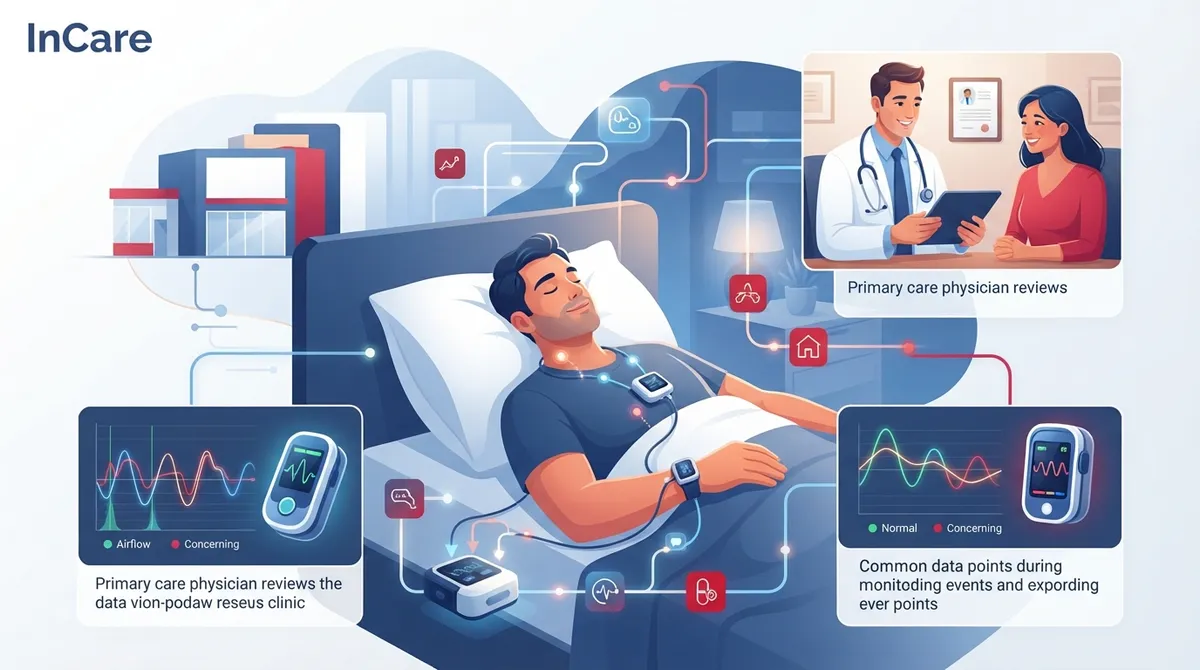
What Sleep Apnea Screening Really Means
The phrase "sleep apnea screening" can be confusing. Many people picture a simple blood test or a short quiz that gives a yes or no answer. In practice, the process works differently.
In a primary care setting, sleep apnea screening usually means three things:
- Reviewing your symptoms and sleep habits.
- Assessing your risk factors and medical history.
- Arranging a diagnostic sleep test when it is clinically appropriate.
The U.S. Preventive Services Task Force (USPSTF) has stated that the evidence is insufficient to weigh the benefits and harms of screening adults who have no recognized symptoms. That is an "I statement." It does not mean you should ignore symptoms. It means that if you have signs of sleep apnea, a clinician should evaluate you. This is exactly where a primary care visit adds value.
Warning Signs of Sleep Apnea
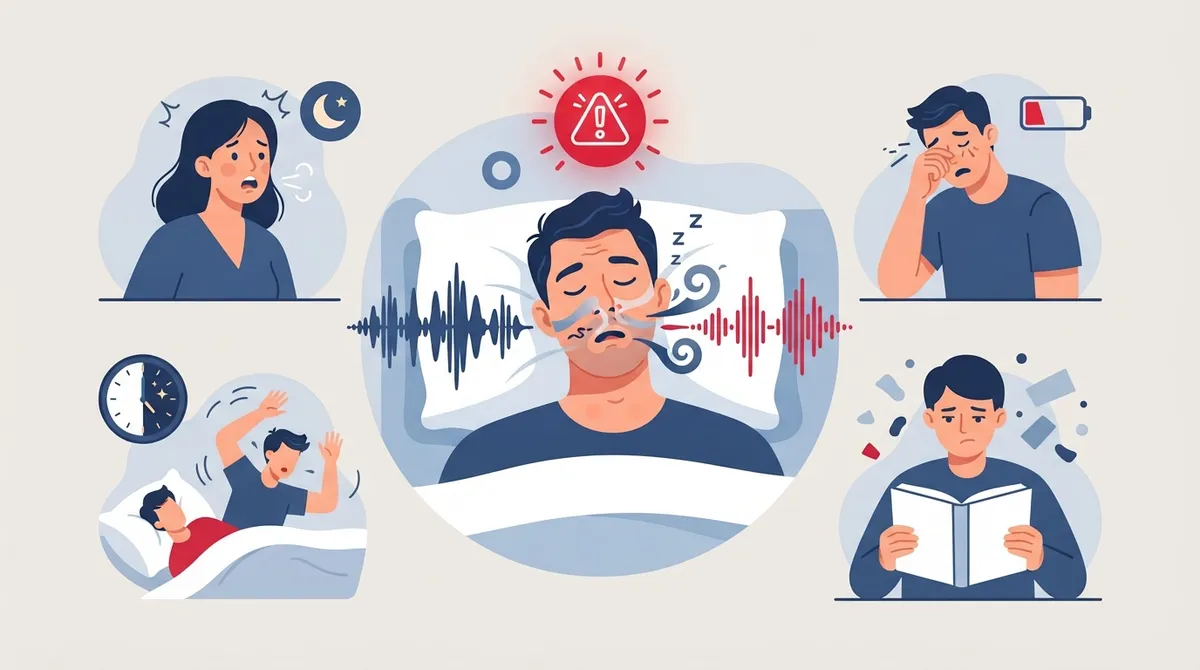
Sleep apnea often goes unnoticed because it happens while you sleep. A bed partner may spot the signs before you do. Common warning signs include:
- Habitual loud snoring
- Pauses in breathing that someone else has witnessed
- Gasping or choking during sleep
- Excessive daytime sleepiness, even after a full night in bed
- Morning headaches or a dry mouth
- Trouble concentrating or changes in mood
- High blood pressure that is hard to control
Not everyone who snores has sleep apnea, and not everyone with sleep apnea snores loudly. That is why a clinical evaluation matters. If several of these signs sound familiar, it is worth raising them with a clinician. Our article on whether snoring always means sleep apnea covers this in more detail.
Who Is at Higher Risk?
Sleep apnea can affect adults of many ages and body types. Still, some factors raise the odds. A clinician will usually ask about:
- Excess body weight or a larger neck circumference
- Age and sex
- High blood pressure or heart conditions
- Type 2 diabetes or metabolic concerns
- Family history of sleep apnea
- Alcohol use or certain sedating medications
- Nasal congestion or anatomical differences in the airway
Weight and metabolic health are closely linked to sleep quality. If you are also working on weight, a review of how weight loss may help sleep apnea can help you see how these goals connect. InCare also offers a personalized weight loss program that supports whole-body health.
How Clinicians Evaluate Sleep Apnea
A good evaluation starts with conversation. Your clinician will take a sleep history, review your medical conditions and medications, and perform a physical exam. They may check your blood pressure, airway, and neck.
Questionnaires Are Tools, Not Diagnoses
Tools such as the STOP-Bang questionnaire and the Epworth Sleepiness Scale help structure the conversation. They flag who may need further testing. However, they cannot establish a diagnosis on their own. Think of them as a starting point, not the finish line.
Choosing the Right Test
When symptoms and history suggest a meaningful chance of OSA, your clinician may arrange a sleep study. According to the American Academy of Sleep Medicine (AASM), a home sleep apnea test (HSAT) may be appropriate for otherwise healthy adults who show signs of moderate-to-severe OSA. One pattern clinicians look for is excessive daytime sleepiness plus at least two of the following: habitual loud snoring, witnessed apnea or gasping, or high blood pressure.
This is a test-selection guide, not a general population statistic. The right choice depends on your individual health.
Home Sleep Test vs. In-Lab Sleep Study
Both tests measure how your breathing behaves during sleep. They differ in setting, detail, and who they suit best.
|
Feature |
Home Sleep Apnea Test (HSAT) |
In-Lab Polysomnography |
|---|---|---|
|
Where it happens |
In your own bed |
Overnight at a sleep facility |
|
Best suited for |
Otherwise healthy adults with signs of moderate-to-severe OSA |
People with complex health conditions or unclear results |
|
Level of monitoring |
Focused on breathing-related measures |
Broader monitoring of sleep and breathing |
|
Convenience |
High; sleep at home |
Lower; requires an overnight stay |
|
Follow-up if unclear |
In-lab study if suspicion remains |
Typically the more detailed option |
When an In-Lab Study Is Preferred
AASM guidance favors in-lab polysomnography for people with significant heart or lung disease, neuromuscular weakness, suspected hypoventilation, chronic opioid use, prior stroke, or severe insomnia. A negative, inconclusive, or technically inadequate home test should also be followed by an in-lab study when your clinician still suspects sleep apnea.
Why Start With Primary Care?
Sleep apnea rarely travels alone. It often connects to blood pressure, weight, blood sugar, mood, and energy. A primary care team can see these links and coordinate care around them.
Starting with primary care offers several advantages:
- One point of contact. Your clinician reviews symptoms, orders the right test, and helps you understand results.
- Whole-person context. Conditions like hypertension and diabetes are managed in the same place.
- Appropriate referrals. If you need a sleep specialist or an in-lab study, your clinician can guide you.
- Ongoing follow-up. Treatment works best when someone tracks how you are doing over time.
To learn how a primary care team supports long-term wellness, read about how primary doctors help manage chronic illnesses. You can also explore what a sleep apnea doctor in Tampa and Riverview can offer.
Sleep Apnea Screening in Riverview With InCare
When you search for sleep apnea screening in Riverview, you want care that feels personal, thorough, and easy to access. InCare combines advanced technology with medical expertise to deliver preventive, whole-body care for adults and families. With a 4.8 out of 5 rating on Google across 359 reviews, patients consistently praise the friendly staff and the quality of care.
At InCare, a visit about sleep can include a careful review of your symptoms, a look at related health factors, and a clear plan for next steps. The Riverview clinic is located at 11922 Boyette Rd, Riverview, FL 33569, and virtual visits are also available for convenient follow-up. Meet the clinicians on our providers page, or see all InCare locations.
Please confirm details such as appointment availability, testing options, and insurance coverage directly with the clinic before your visit. You can also see what patients say when you visit us on Google — InCare.
How to Prepare for Your Visit
A little preparation makes your appointment more useful. Try these steps:
- Track your sleep for a week. Note bedtime, wake time, and how rested you feel.
- Ask a bed partner what they notice. Snoring, gasping, and pauses in breathing are important clues.
- List your medications and supplements. Some affect sleep and breathing.
- Write down your symptoms. Include daytime sleepiness, headaches, and mood changes.
- Bring recent blood pressure readings. If you check at home, share the numbers.
If it has been a while since your last check-up, an annual physical exam is a natural time to bring up sleep concerns. For first-time patients, our guide on what to expect at a new patient appointment can help you feel ready.
What Happens After a Diagnosis?
If testing confirms sleep apnea, your clinician will discuss treatment options matched to your severity and health. Care may include lifestyle changes, weight management, positive airway pressure therapy, or referral to a specialist. Because sleep apnea is closely tied to other health conditions, ongoing follow-up in primary care helps keep your blood pressure, weight, and energy on track.
Learn more about how sleep apnea is treated and the steps doctors use to diagnose it. If daytime exhaustion is your main concern, see whether sleep apnea can cause daytime fatigue.
Take the Next Step Toward Better Sleep
Good sleep is not a luxury. It supports your heart, your mood, your focus, and your long-term health. If you snore loudly, wake up tired, or have been told you stop breathing at night, do not wait for it to get worse. A short conversation with a clinician can clarify whether testing makes sense for you.
InCare makes it easy to begin. Book your appointment with InCare to discuss your sleep concerns, or contact our team with questions before you visit. You can also follow InCare for wellness updates on Facebook, Instagram, and TikTok.
This article is for general education and does not replace personalized medical advice. Talk with a licensed clinician about your symptoms and testing options.
FAQs
Q: Can my primary care provider screen me for sleep apnea?
A: Yes. A primary care provider can review your symptoms, sleep habits, and risk factors, then arrange a home sleep apnea test or an in-lab sleep study when appropriate. This approach also lets your clinician consider related conditions such as high blood pressure and diabetes.
Q: Can a questionnaire diagnose sleep apnea?
A: No. Tools like the STOP-Bang questionnaire and the Epworth Sleepiness Scale help clinicians structure an assessment and decide who needs further testing. A diagnosis requires a clinical evaluation and a sleep study when indicated.
Q: When is an in-lab sleep study needed instead of a home test?
A: In-lab polysomnography is generally preferred for people with significant heart or lung disease, neuromuscular weakness, suspected hypoventilation, chronic opioid use, prior stroke, or severe insomnia. It is also recommended when a home test is negative, inconclusive, or technically inadequate and suspicion of sleep apnea remains.
Q: What should I do if my home sleep apnea test is negative but I still have symptoms?
A: Talk with your clinician. Guidance from the American Academy of Sleep Medicine supports following a negative, inconclusive, or technically inadequate home test with an in-lab sleep study when suspicion remains high. Do not assume your symptoms are unimportant.
Q: Where can I get sleep apnea screening in Riverview?
A: InCare, a primary care and wellness clinic at 11922 Boyette Rd in Riverview, can evaluate your symptoms and guide you toward appropriate testing. Please confirm appointment availability, testing options, and insurance coverage directly with the clinic before your visit.