Key Takeaways
- Obstructive sleep apnea causes repeated breathing interruptions that fragment sleep, so you can spend eight hours in bed and still wake unrefreshed, even without remembering the awakenings.
- Fatigue alone does not prove sleep apnea; watch for loud habitual snoring, witnessed breathing pauses, gasping or choking at night, and morning headaches that fade within hours of waking.
- AASM guidance flags increased risk of moderate-to-severe OSA when excessive daytime sleepiness occurs alongside at least two of: loud snoring, witnessed apnea or gasping, and diagnosed high blood pressure.
- Women may experience sleep apnea mainly as fatigue, headaches, or insomnia rather than strong sleepiness, so a lack of classic sleepiness should not rule out an evaluation.
- Only objective testing confirms sleep apnea: in-lab polysomnography is the standard, while home testing suits selected uncomplicated adults, and a negative home test with ongoing suspicion warrants follow-up polysomnography.
- Never drive while drowsy; if you nod off at the wheel or drift in your lane, contact a clinician promptly, and track your sleep for one to two weeks before your appointment to speed up evaluation.
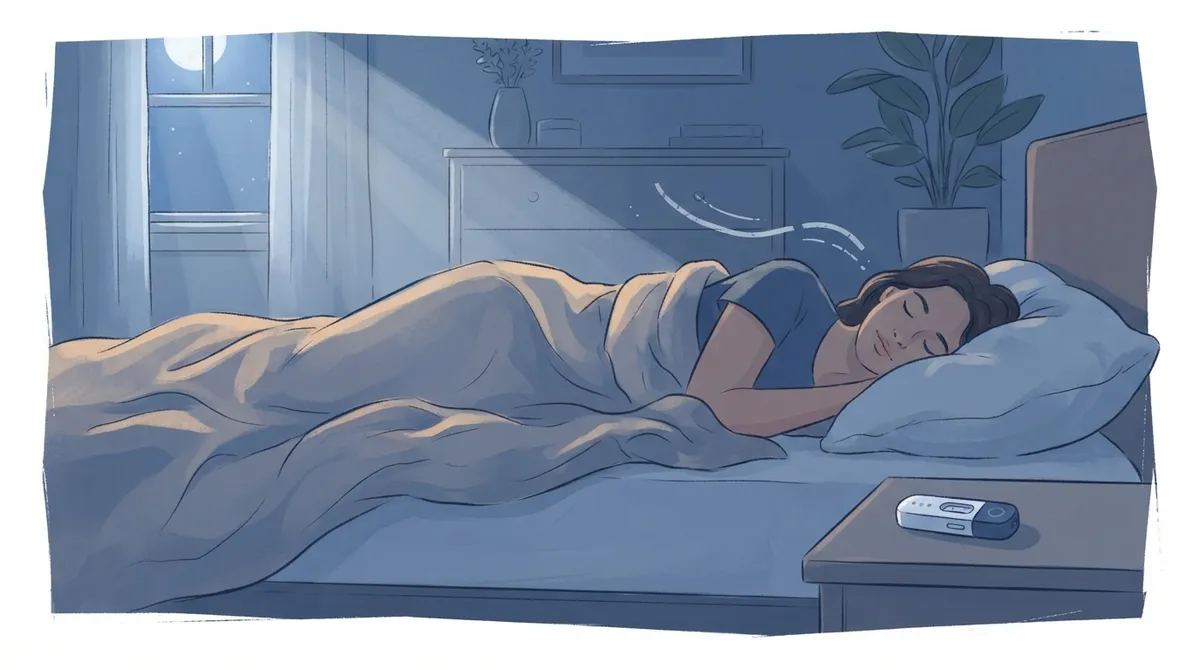
You went to bed on time. You stayed in bed for eight hours. Yet you wake up tired, drag through the afternoon, and rely on coffee to function. If this sounds familiar, one question may be on your mind: can sleep apnea cause daytime fatigue?
The short answer is yes. Obstructive sleep apnea (OSA) can cause daytime sleepiness and fatigue because repeated breathing interruptions break up your sleep and make it less restful. You may not even remember waking up. Still, your body pays the price the next day.
Fatigue has many possible causes, though, so it is not proof of sleep apnea by itself. This guide explains how sleep apnea drains your energy, which other signs to look for, how doctors confirm the problem, and when to get help in 2026. Primary care is often the best place to start, because a clinician can look at your whole health picture instead of guessing at one cause.
How Sleep Apnea Leads to Daytime Fatigue
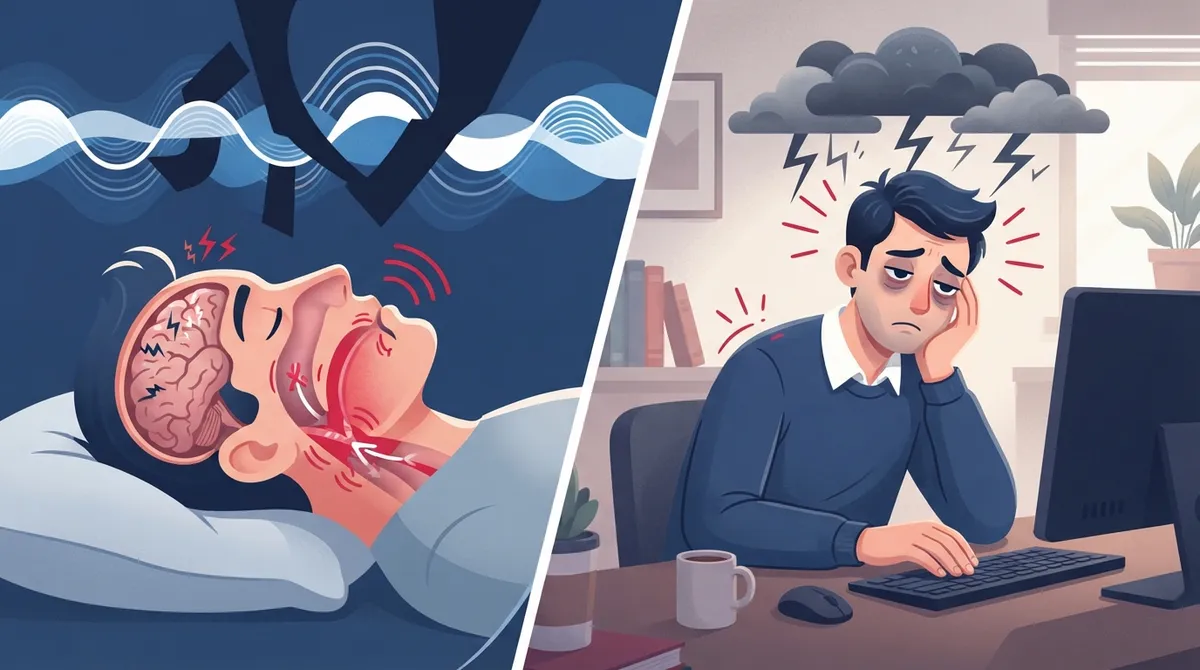
Obstructive sleep apnea happens when the airway narrows or closes during sleep. Breathing pauses or becomes shallow. Your brain senses the problem and briefly pulls you toward lighter sleep so you can breathe again.
These small awakenings can happen many times an hour. You may not remember any of them. But they fragment your sleep, which means your body spends less time in deep, restorative stages. The result is sleep that looks long on the clock but feels short in the body.
This is why sleep apnea can cause daytime fatigue even when you spend plenty of hours in bed. Quantity of sleep is not the same as quality of sleep.
Daytime Effects You Might Notice
Poor-quality sleep can affect more than your energy. Many people with sleep apnea notice changes in how they think and react during the day:
- Trouble concentrating or staying focused
- Problems learning new things or remembering details
- Slower reaction times
- Feeling unrefreshed after a full night in bed
- Dozing off during quiet activities such as reading or watching TV
These effects can touch work, school, parenting, and safety. That is why they deserve attention rather than being brushed off as stress or a busy schedule.
Fatigue vs. Sleepiness: Are They the Same?
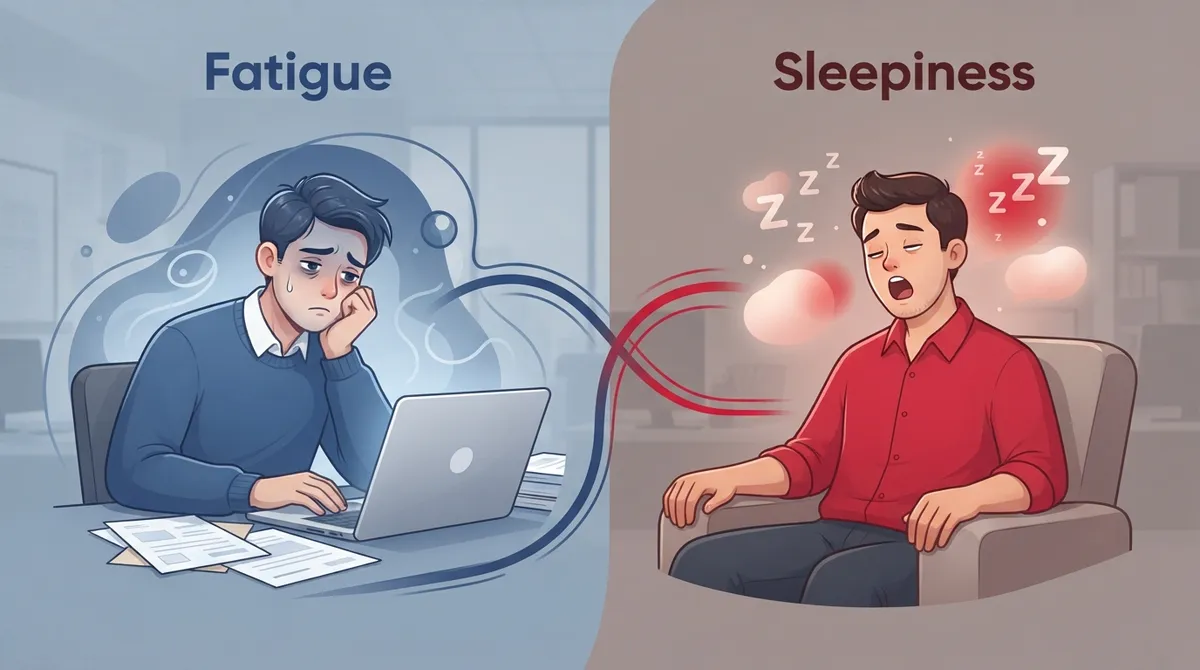
People often use these two words as if they mean the same thing. They do not, and the difference matters when you talk with a clinician.
|
Feature |
Sleepiness |
Fatigue |
|---|---|---|
|
What it feels like |
A strong urge to doze or fall asleep |
Low energy, exhaustion, or feeling worn out |
|
When it shows up |
Often during quiet or passive moments |
Can occur at any time, even when you are active |
|
Can resting fix it? |
A nap may help briefly |
Rest may not fully relieve it |
|
Linked to sleep apnea? |
Yes, commonly |
Yes, commonly |
Either symptom can occur with sleep apnea. Neither one proves you have it. Telling your provider which one you feel most helps them narrow down the cause.
Other Signs of Sleep Apnea Besides Fatigue
Fatigue is a common clue, but it is not the only one. Look for these additional signs, which you or a bed partner may notice:
- Loud, habitual snoring. Snoring that happens most nights deserves attention.
- Witnessed pauses in breathing. A partner may see you stop breathing for short periods.
- Gasping or choking during sleep. You may wake suddenly with a snort or gasp.
- Morning headaches. These often fade within a few hours of waking.
- Frequent nighttime awakenings. You may wake often or feel restless.
- Unrefreshing sleep. You wake tired no matter how long you slept.
Doctors also pay attention to related health conditions. For example, guidelines from the American Academy of Sleep Medicine (AASM) describe increased risk of moderate-to-severe OSA as excessive daytime sleepiness plus at least two of these: habitual loud snoring, witnessed apnea or gasping or choking, and diagnosed high blood pressure.
Sleep Apnea Can Look Different in Women
Symptoms vary from person to person. The National Heart, Lung, and Blood Institute (NHLBI) notes that fatigue, headaches, and insomnia may be reported more often by women. Because of this, you should not rule out an evaluation just because you do not feel classic, strong sleepiness. If several other signs are present, it is worth talking to a clinician.
Other Reasons You Might Feel Tired All Day
Sleep apnea is only one possible explanation. Persistent daytime fatigue has many causes, and a good clinician will look at all of them rather than assuming a single answer. Common possibilities include:
- Not getting enough sleep, or an irregular sleep schedule
- Other sleep disorders, such as insomnia or restless legs
- Side effects from medications
- Thyroid problems, anemia, or diabetes
- Low vitamin levels or poor nutrition
- Depression, anxiety, or chronic stress
- Hormone changes
This is one reason a whole-person approach works well. A primary care visit can sort through these possibilities in one place. At InCare, our team focuses on prevention and whole-body optimization. Learn more about primary care at InCare and how a careful review of your history can uncover the real source of your fatigue.
How Primary Care Evaluates Daytime Fatigue and Possible Sleep Apnea
Your evaluation usually begins with a conversation. A sleep-focused history helps your clinician understand what is going on. Expect questions about:
- How long you sleep and how well you sleep
- Snoring, gasping, or breathing pauses noticed by others
- Your current medications and health conditions
- How tiredness affects work, daily tasks, and driving
Your provider may also use the Epworth Sleepiness Scale, a short questionnaire that rates how likely you are to doze in everyday situations. According to the British Columbia adult OSA guideline, a score above 10 suggests significant daytime sleepiness. However, a score of 10 or less does not rule out sleepiness or sleep apnea. And a questionnaire alone cannot diagnose OSA.
Your care team may also check related health factors, such as weight, blood pressure, and metabolic health. If weight is a concern, InCare offers medical weight loss programs that may support better breathing and sleep for some patients. You can also read about whether weight loss can help sleep apnea.
How Sleep Apnea Is Diagnosed
Confirming sleep apnea requires objective testing alongside a full sleep evaluation. A good history is the first step, but it is not enough on its own. The two main testing options are:
|
Test Type |
Where It Happens |
Best For |
|---|---|---|
|
In-laboratory polysomnography |
Sleep center, overnight |
Considered the standard test; preferred for complex cases |
|
Home sleep apnea testing |
Your own bed |
Selected adults without major complications who are at increased risk of moderate-to-severe OSA |
The AASM identifies in-laboratory polysomnography as the standard test. Home testing is a reasonable option for carefully chosen, uncomplicated adults.
When In-Lab Testing Is Preferred
In-lab testing is usually the better choice in certain situations, including:
- Significant heart or lung disease
- Long-term opioid use
- A prior stroke
- Severe insomnia
- Suspected hypoventilation (breathing too shallowly)
A negative, unclear, or technically poor home test does not rule out sleep apnea if suspicion remains. In that case, the AASM recommends follow-up polysomnography.
What the Numbers Mean
Sleep specialists measure how many breathing events happen each hour. The AASM guideline describes OSA as at least 5 obstructive respiratory events per hour when typical symptoms are present, such as daytime sleepiness or fatigue. It also describes OSA as at least 15 events per hour even without symptoms. Your sleep study report and your clinician can explain what your results mean for you.
What Happens After a Diagnosis
If testing confirms sleep apnea, treatment can make a real difference in how you feel. Your care plan depends on how severe your condition is and what other health issues you have. Options may include lifestyle changes, weight management, positional therapy, and devices that keep the airway open during sleep. A specialist may also recommend other approaches based on your anatomy and needs.
Primary care helps keep everything coordinated. Your clinician can watch related conditions such as high blood pressure, support healthy habits, and refer you to a sleep specialist when needed. If you live in the Tampa Bay area, you may also want to explore our guide to the best sleep apnea doctor in Tampa and Riverview. Looking at your overall health matters too. A wellness visit is a good time to bring up sleep concerns.
When Fatigue Becomes a Safety Concern
Sometimes tiredness is more than an inconvenience. If you feel sleepy while driving or doing other safety-sensitive tasks, treat it as urgent. Do not drive or operate machinery while drowsy. Seek prompt clinical advice instead of waiting.
Drowsy driving puts you and others at risk. If you have nodded off at a red light, drifted in your lane, or caught yourself dozing behind the wheel, contact a clinician soon. If you feel unwell in other ways, such as chest pain or severe shortness of breath, seek urgent medical care right away.
Tips to Prepare for Your Appointment
A little preparation helps your clinician understand your symptoms. Before your visit, try the following:
- Track your sleep for one to two weeks. Note bedtimes, wake times, and how rested you feel.
- Ask a partner or family member what they notice. They may hear snoring or see breathing pauses you cannot.
- List your medications and supplements. Some can affect sleep or energy.
- Write down how fatigue affects your day. Include work, mood, memory, and driving.
- Share your health history. Mention high blood pressure, diabetes, or prior stroke.
Bringing this information helps your clinician decide whether sleep testing makes sense. It also saves time and leads to a more focused visit.
Why Choose InCare for Fatigue and Sleep Concerns
Unexplained fatigue is a whole-body question, and InCare approaches it that way. With locations in Tampa and Riverview, our team combines medical expertise with advanced technology to look for the root cause. We review your history, check for related health conditions, and guide you toward the right testing and follow-up. Learn more about our providers and find the location nearest you.
Patients rate us 4.8 out of 5 on Google, with comments about our friendly staff and attentive care. You can read InCare reviews on Google to see what our patients say. You can also follow our health tips on Instagram, Facebook, and TikTok.
Conclusion: Do Not Ignore Constant Tiredness
So, can sleep apnea cause daytime fatigue? Yes. Repeated breathing disruptions fragment your sleep, which leaves you tired, foggy, and less alert during the day. But fatigue has many causes, and only objective testing and a full evaluation can confirm sleep apnea.
If you wake up unrefreshed, snore loudly, or struggle to stay alert, take it seriously. Early evaluation can protect your energy, your health, and your safety. Book your appointment with InCare today, or contact our team with questions. We are here to help you find answers and feel like yourself again.
FAQs
Q: Can sleep apnea make you tired during the day even after a full night in bed?
A: Yes. Sleep apnea causes repeated breathing interruptions that fragment your sleep, often without you remembering. Even if you spend eight hours in bed, your sleep may not be restorative, which can leave you tired the next day.
Q: Can you have sleep apnea without feeling sleepy during the day?
A: Yes. Symptoms vary, and not everyone with sleep apnea reports obvious daytime sleepiness. Other signs, such as loud snoring, gasping during sleep, morning headaches, or witnessed breathing pauses, still warrant an evaluation.
Q: How do doctors test for sleep apnea?
A: Diagnosis requires objective testing along with a full sleep evaluation. In-laboratory polysomnography is the standard test, while home sleep apnea testing is an option for selected adults without complicating conditions. Questionnaires alone cannot confirm the diagnosis.
Q: What else can cause daytime fatigue if it is not sleep apnea?
A: Common causes include not enough sleep, other sleep disorders, medication side effects, and medical or mental health conditions such as thyroid problems, anemia, depression, or anxiety. A primary care clinician can assess these possibilities together.
Q: When should daytime sleepiness be treated as urgent?
A: Treat it as urgent if you feel drowsy while driving or operating machinery. Avoid these activities while sleepy and seek prompt clinical advice, since drowsiness can put you and others at risk.