Key Takeaways
- Florida has two gates for medical marijuana: the statute must list your condition, and a Florida-qualified physician must examine you and decide the likely benefits outweigh the risks.
- Florida law lists 13 qualifying categories, including cancer, epilepsy, glaucoma, HIV/AIDS, PTSD, ALS, Crohn's disease, Parkinson's disease, multiple sclerosis, and chronic nonmalignant pain.
- Chronic pain qualifies only if it is caused by, originates from, or persists beyond the usual course of a qualifying medical condition; general aches with no such link may not qualify.
- Anxiety, insomnia, and arthritis are not named in the statute and can qualify only if a physician finds them comparable to a listed condition, which is not automatic.
- The first certification exam must be in person, and patients generally need a new certification at least every 30 weeks; gather medical records and symptom history before your visit.
- Physicians generally may not certify marijuana for pregnant patients, and patients under 18 need a second physician to concur with the qualifying determination.
Many Florida adults ask the same question: does my diagnosis qualify me for medical marijuana? The honest answer has two parts. State law sets a list of conditions. But a diagnosis alone never settles the matter. A Florida-qualified physician must decide whether treatment is right for you.
That difference matters. Florida had 941,271 patients with active Medical Marijuana Use Registry ID cards in a state update dated September 11, 2026. Each of those patients passed through both gates: a qualifying condition and a physician's clinical judgment.
This guide compares the two. We explain what conditions qualify for medical marijuana in Florida, and we show how the physician's role shapes the outcome. You will see where common conditions fit, what the visit involves, and how a primary care clinic like InCare can support the process. This article is general information, not medical advice. Always confirm current rules with Florida's Office of Medical Marijuana Use and Florida Statutes §381.986.
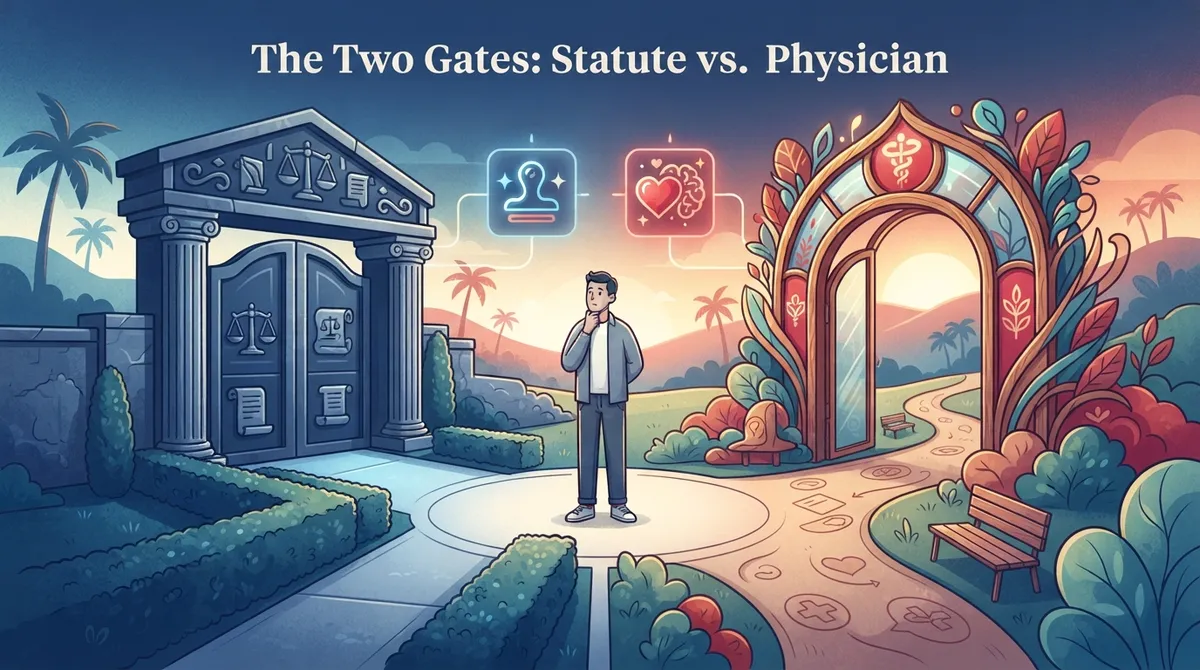
The Two Gates: Statute vs. Physician
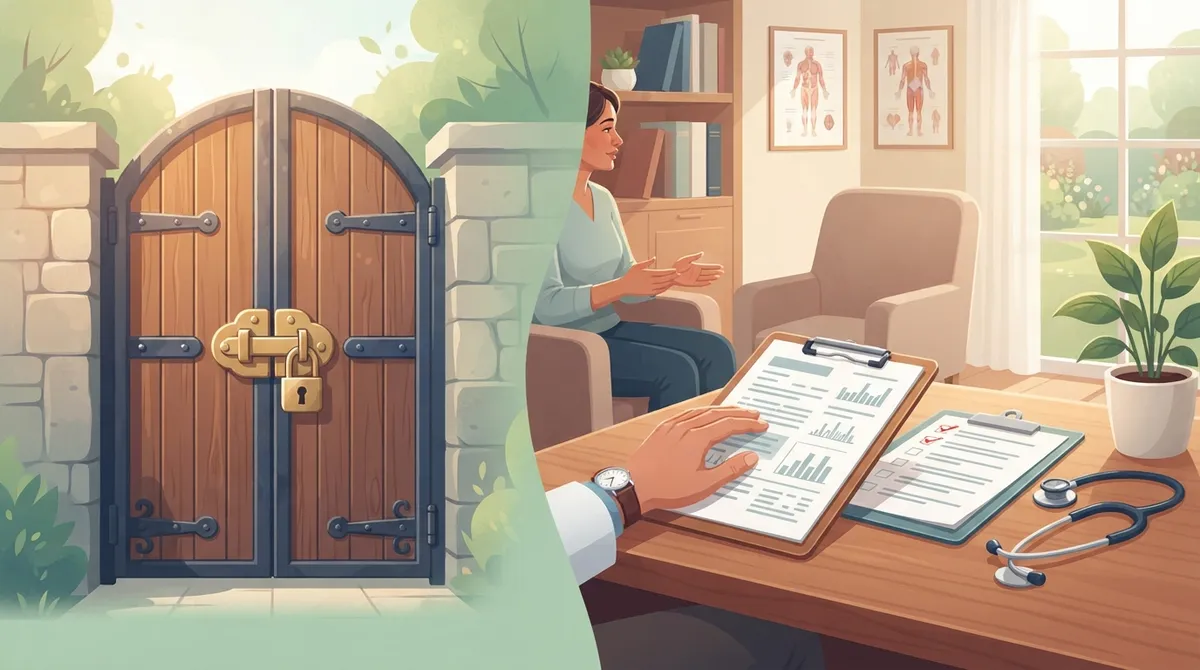
Think of Florida's system as two gates. You must pass both.
- Gate one is the statute. Florida law lists the conditions that can support a certification.
- Gate two is the physician. A Florida-qualified doctor must examine you, weigh benefits against risks, and document the decision.
Passing only the first gate is not enough. A person with a listed diagnosis can still be turned down if the doctor finds the risks outweigh the likely benefits. This is why the keyword "what conditions qualify for medical marijuana in Florida" only tells half the story.
What Conditions Qualify for Medical Marijuana in Florida?
Florida law describes 13 qualifying categories. The Florida Department of Health's 2025 Physician Certification Pattern Review uses the same count. Here is the full list in plain terms:
- Cancer
- Epilepsy
- Glaucoma
- HIV
- AIDS
- Post-traumatic stress disorder (PTSD)
- Amyotrophic lateral sclerosis (ALS)
- Crohn's disease
- Parkinson's disease
- Multiple sclerosis
- Medical conditions of the same kind or class as, or comparable to, the conditions above
- A terminal condition diagnosed by a physician other than the certifying physician
- Chronic nonmalignant pain
The first ten are named diseases. The last three are broader categories that need more explanation. Each one works differently, so the next sections cover them one by one.
Named Conditions vs. Broader Categories
The table below compares how each type of category works in practice.
|
Category Type |
Examples |
How Eligibility Works |
|---|---|---|
|
Named diseases |
Cancer, epilepsy, glaucoma, HIV, AIDS, PTSD, ALS, Crohn's, Parkinson's, MS |
The diagnosis is listed in the law. The physician still must find that benefits outweigh risks. |
|
Comparable conditions |
Conditions similar to the named diseases |
Not automatic. The physician must determine the condition is of the same kind or class. |
|
Terminal condition |
A diagnosis by a different physician |
Another physician must make the terminal diagnosis, not the certifying doctor. |
|
Chronic nonmalignant pain |
Pain linked to a qualifying condition |
Must be caused by, originate from, or persist beyond the usual course of a qualifying condition. |
Notice how much weight falls on the physician in the last three rows. The statute opens the door, but the doctor decides whether you walk through.
Does Chronic Pain Qualify?
This is the most common point of confusion. Chronic nonmalignant pain does appear on the list. But it is not a blanket pass for any long-lasting pain.
The pain must be caused by a qualifying medical condition, start from one, or continue beyond the usual course of one. For example, pain tied to a qualifying diagnosis may fit. General aches with no link to a listed condition may not.
If you live with ongoing pain, your first step is a thorough exam. A primary care doctor can look at your history, test results, and past treatments. That review shows whether the connection the law requires actually exists.
What About Anxiety, Insomnia, or Arthritis?
Patients often ask about conditions that are not named in the statute. Anxiety, insomnia, and arthritis are common examples.
None of these appears by name. They can only qualify through the comparable-condition category. That rule is not automatic. A qualified physician must decide that your condition is of the same kind or class as, or comparable to, the listed conditions.
This means two things for you:
- You cannot assume a condition qualifies just because it feels serious.
- You cannot assume it is excluded either. The physician's assessment decides.
If your trouble is poor sleep, a medical review may uncover other causes first. Our guide on how to know when to see a doctor for poor sleep explains when to seek care.
The Physician's Role: What Happens at the Visit
Gate two is where most of the real work happens. Florida law asks the certifying physician to do several things:
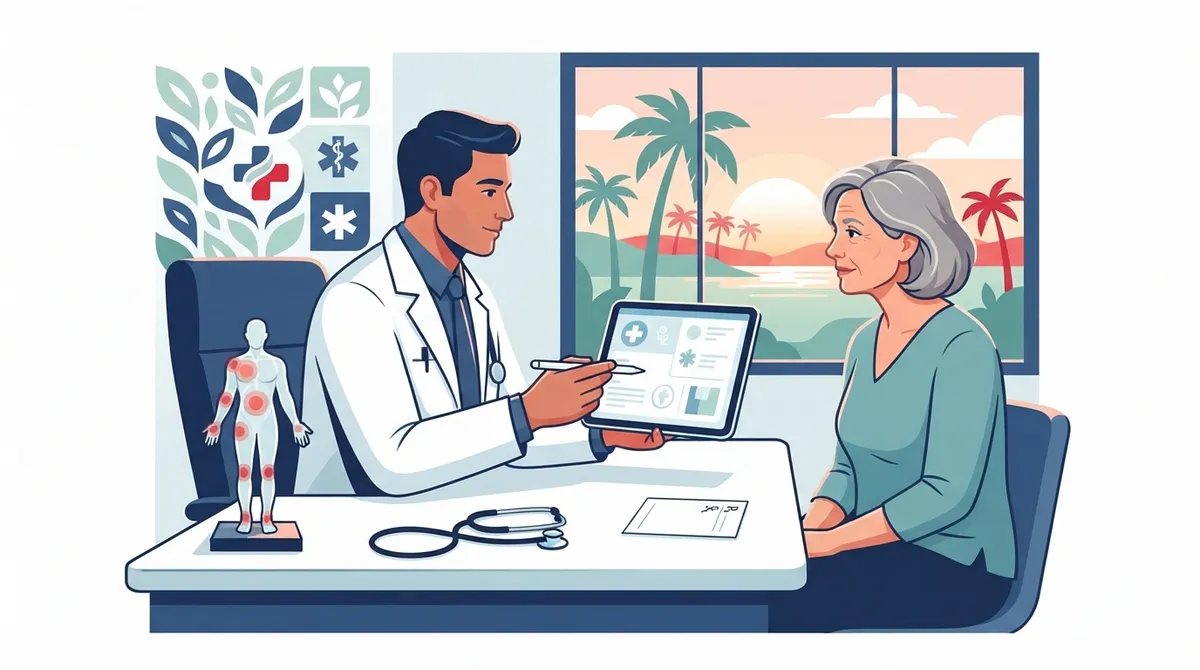
- Examine and assess you in person.
- Confirm you have a qualifying condition.
- Determine that the likely benefits outweigh the health risks.
- Review the state registry and prescription drug monitoring information.
- Document the decision in your medical record.
- Enter the certification in the Medical Marijuana Use Registry.
The first exam must be in person, with the physician and patient in the same room. Florida materials indicate that renewal evaluations may be done by telehealth, subject to applicable requirements. You generally need a new physician certification at least every 30 weeks.
A clear plan for your visit saves time. Our checklist on how to prepare and what to bring to a medical cannabis visit covers records and questions to have ready.
Certification vs. State ID Card
Many patients mix up two separate steps. A physician certification and a state ID card are not the same thing.
|
Step |
Who Handles It |
What It Means |
|---|---|---|
|
Physician certification |
Florida-qualified physician |
The doctor decides you qualify and enters you in the registry. |
|
Registry ID card |
State program |
The card you carry as a registered patient. |
You must also be a Florida permanent or seasonal resident. Seasonal residents can apply, which helps those who split the year between states.
For a full walkthrough of the process, see how to get Florida medical marijuana certification in Tampa. If you live south of Tampa, we also cover how to get a medical marijuana card in Riverview, FL.
Special Rules for Minors, Pregnancy, and Smokable Products
Some patients face extra requirements. The rules below are worth knowing before you book.
- Patients under 18: A second physician must concur with the qualifying determination. Stricter limits also apply.
- Pregnancy: Physicians generally may not certify marijuana for a pregnant patient. This is distinct from low-THC cannabis.
- Smokable marijuana: Additional documentation requirements apply, and patients under 18 face stricter limits.
These rules show why the physician gate matters so much. Safety checks are built into the process on purpose.
Why a Primary Care Clinic Is a Smart Starting Point
For busy adults and families, a primary care setting offers real advantages. Your doctor can see your whole health picture, not just one complaint.
That matters for three reasons:
- Medication review. A doctor can check your current prescriptions before adding anything new.
- Condition tracking. Ongoing records help show whether a qualifying condition is documented.
- Follow-up care. You can keep your preventive screenings and wellness care in one place.
InCare offers primary care, urgent care, and advanced wellness services in Tampa and Riverview, with telemedicine also available. Patients are drawn to the personalized, whole-body approach. If you are weighing options, our guide to eight signs of a reputable medical marijuana clinic in Tampa shows what to look for. InCare holds a 4.8 out of 5 rating on Google, and you can read InCare reviews on Google to see patient experiences.
Common Mistakes That Slow Approval
A few avoidable errors cause most delays. Watch for these:
- Arriving without medical records that document your condition.
- Assuming any chronic pain will qualify without a link to a listed condition.
- Skipping the in-person first visit.
- Confusing the physician certification with the state ID card.
Our article on nine cannabis card appointment mistakes to avoid in Tampa goes deeper on each one. If timing is a concern, read whether you can get same day cannabis certification in Tampa.
Statistics That Show the Scale
Florida's program is large and still growing, though more slowly than before. A news report citing Office of Medical Marijuana Use data counted 941,650 registered patients in September 2026. That compares with 924,797 a year earlier, which is about 1.8% growth.
These figures can differ by reporting date and by whether active cards are counted. Treat them as point-in-time snapshots, not a count of everyone ever certified. They do show one clear thing: hundreds of thousands of Floridians have gone through this process.
Conclusion: Know Your Condition, Then Talk to a Doctor
So what conditions qualify for medical marijuana in Florida? Thirteen categories appear in the law, from cancer and epilepsy to PTSD and chronic nonmalignant pain tied to a qualifying condition. But the list is only the first gate. A Florida-qualified physician makes the final call after a real exam and a careful risk review.
Start by gathering your records and writing down your symptoms and past treatments. Then sit down with a doctor who can look at your whole health picture. If you live in the Tampa Bay area, book an appointment with InCare to talk through your options, or contact our team with questions first. You can also follow InCare on Facebook, Instagram, and TikTok for wellness updates. For the official rules, review the Florida Statutes §381.986, since program details can change.
FAQs
Q: What medical conditions qualify for a medical marijuana card in Florida?
A: Florida law lists 13 qualifying categories: cancer, epilepsy, glaucoma, HIV, AIDS, PTSD, ALS, Crohn's disease, Parkinson's disease, multiple sclerosis, comparable conditions, a terminal condition diagnosed by another physician, and chronic nonmalignant pain. A Florida-qualified physician must still examine you and decide that the likely benefits outweigh the risks.
Q: Does chronic pain qualify for medical marijuana in Florida?
A: Only when it meets the law's requirements. The pain must be caused by, originate from, or persist beyond the usual course of a qualifying medical condition. It is not a blanket qualification for any chronic pain without that connection.
Q: Do I need an in-person appointment for my first Florida medical marijuana certification?
A: Yes. The initial examination must be done in person, with the physician and patient in the same room. Florida materials indicate renewal evaluations may be done by telehealth, subject to applicable requirements, and patients generally need a new certification at least every 30 weeks.
Q: Can anxiety, insomnia, or arthritis qualify under Florida's comparable-condition rule?
A: They are not named in the statute, so they can only qualify through the comparable-condition category. A qualified physician must determine that your condition is of the same kind or class as, or comparable to, the listed conditions. That decision is not automatic.
Q: Can minors or pregnant patients qualify for medical marijuana in Florida?
A: Patients under 18 need a second physician to concur with the qualifying determination and face stricter limits. Physicians generally may not certify marijuana for a pregnant patient, which is distinct from low-THC cannabis. Confirm current rules with Florida's Office of Medical Marijuana Use.