Key Takeaways
- Florida requires an in-person evaluation by a qualified physician, registration in the Medical Marijuana Use Registry, and an approved state patient card before you can buy medical cannabis from a licensed MMTC.
- Chronic pain alone does not guarantee eligibility in Florida; the pain must stem from a qualifying condition and persist beyond that condition's usual course.
- Research shows limited evidence overall, with the most consistent modest benefit for neuropathic (nerve-related) pain, so cannabis is best viewed as one tool within a broader care plan.
- Common side effects include dizziness, sedation, nausea, and memory or thinking problems; combining cannabis with opioids is linked to higher misuse risk, so disclose all medications and history to your doctor.
- Bring diagnosis records, imaging, specialist notes, a medication list, and a symptom log to your evaluation, and be fully honest about your mental health and any past substance use.
- Florida law requires follow-up evaluations at least every 30 weeks for continued certification, so track symptoms, sleep, and pain levels to review with your physician.
Living with a long-term health problem is hard. Pain, poor sleep, nerve symptoms, and stress can affect every part of your day. Many Tampa adults now ask whether medical cannabis for chronic conditions in Tampa could be a safe option. The answer depends on your diagnosis, your health history, and a careful review by a licensed physician.
Florida runs a regulated medical marijuana program. You cannot simply walk into a dispensary. You need an evaluation, a physician certification, state registry steps, and an approved patient card. The process is clear once you know each step.
This guide explains how to qualify, what the research says, and what to expect at each stage. It is written for busy adults who want clear, honest answers. It also shows why starting with a primary care team that knows your full health picture can make the process safer and smoother.
Understand How Florida's Medical Cannabis Program Works
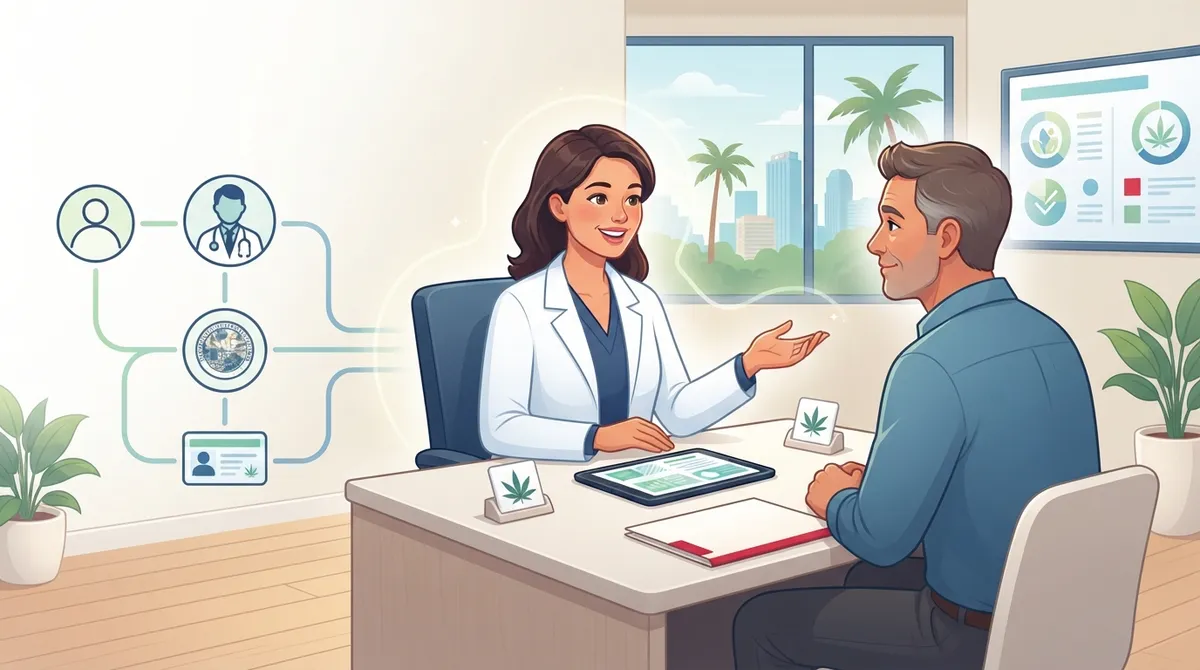
Florida's program is governed by Florida Statutes §381.986. The law sets who can qualify, who can certify patients, and how products are sold. Only licensed Medical Marijuana Treatment Centers (MMTCs) can dispense products to patients.
Three pieces must be in place before you can buy anything:
- A physician evaluation by a Florida-qualified doctor
- Registration in the state Medical Marijuana Use Registry
- An approved patient identification card from the state
Dispensary staff cannot diagnose you or replace your doctor. Your physician sets the treatment plan, and the dispensary fills it. Rules and fees can change, so always confirm current details with the Florida Office of Medical Marijuana Use (OMMU).
Step 1: Check Whether Your Condition Qualifies
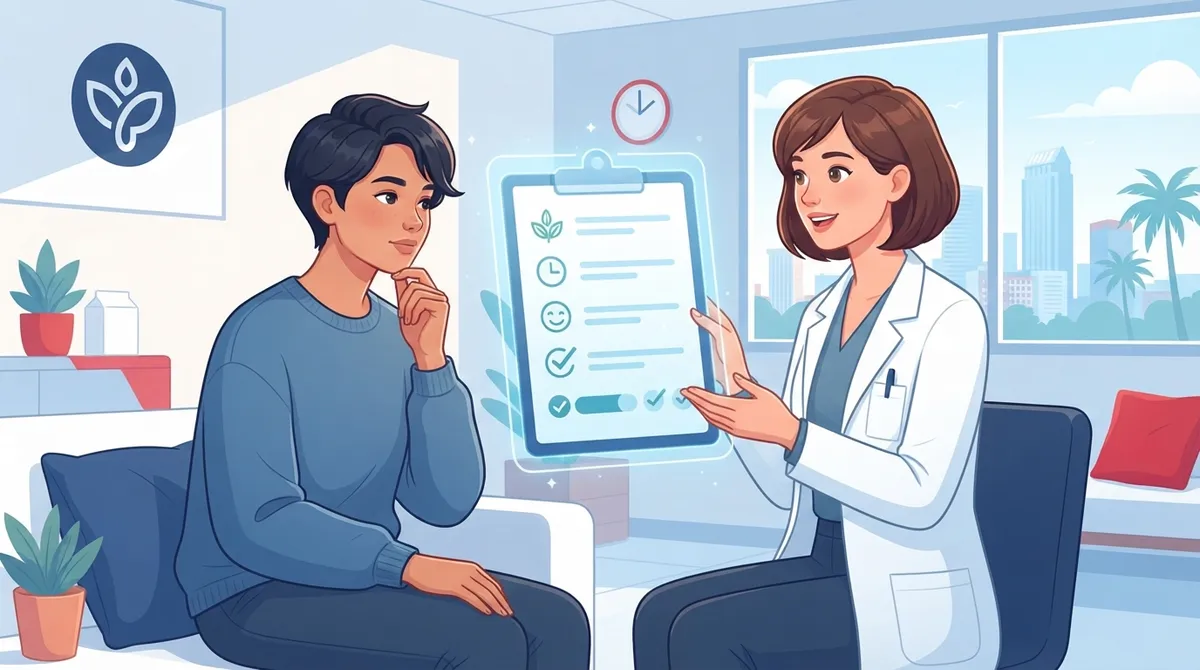
Florida law lists specific qualifying conditions. These include:
- Cancer
- Epilepsy
- Glaucoma
- HIV/AIDS
- Post-traumatic stress disorder (PTSD)
- Amyotrophic lateral sclerosis (ALS)
- Crohn's disease
- Parkinson's disease
- Multiple sclerosis
- Chronic nonmalignant pain
The law also allows certification for certain comparable conditions and for qualifying terminal conditions. A physician makes that call based on your records and exam.
What About Chronic Pain?
Chronic pain alone does not guarantee eligibility. Florida requires that chronic nonmalignant pain be caused by, or originate from, a qualifying medical condition. The pain must also continue beyond that condition's usual course.
For example, nerve pain tied to a qualifying diagnosis may fit the rule. General aches with no clear qualifying source may not. Your physician will review your history, your exams, and your imaging or lab results to decide.
|
Condition Type |
Typical Qualifying Path |
What Your Doctor Reviews |
|---|---|---|
|
Named condition (e.g., Crohn's, MS, Parkinson's) |
Listed directly in state law |
Diagnosis records and current symptoms |
|
Chronic nonmalignant pain |
Must stem from a qualifying condition and persist beyond its usual course |
Pain history, exam, prior treatments |
|
Comparable condition |
Physician judgment under the statute |
Medical rationale and documentation |
|
Terminal condition |
Qualifying terminal diagnosis |
Physician confirmation |
Step 2: Gather Your Medical Records
Good records speed up your visit and strengthen your evaluation. Bring anything that shows your diagnosis and past care. This includes imaging, specialist notes, medication lists, and a short log of your symptoms.
Our guide on what to bring to a medical cannabis visit walks through a simple checklist. Having these items ready helps your physician make a well-informed decision.
Also write down your questions. Think about your current medications, past pain treatments, and any side effects you have had. Be honest about your full health history, including mental health and any past substance use. This protects you.
Step 3: Book an In-Person Evaluation With a Qualified Physician
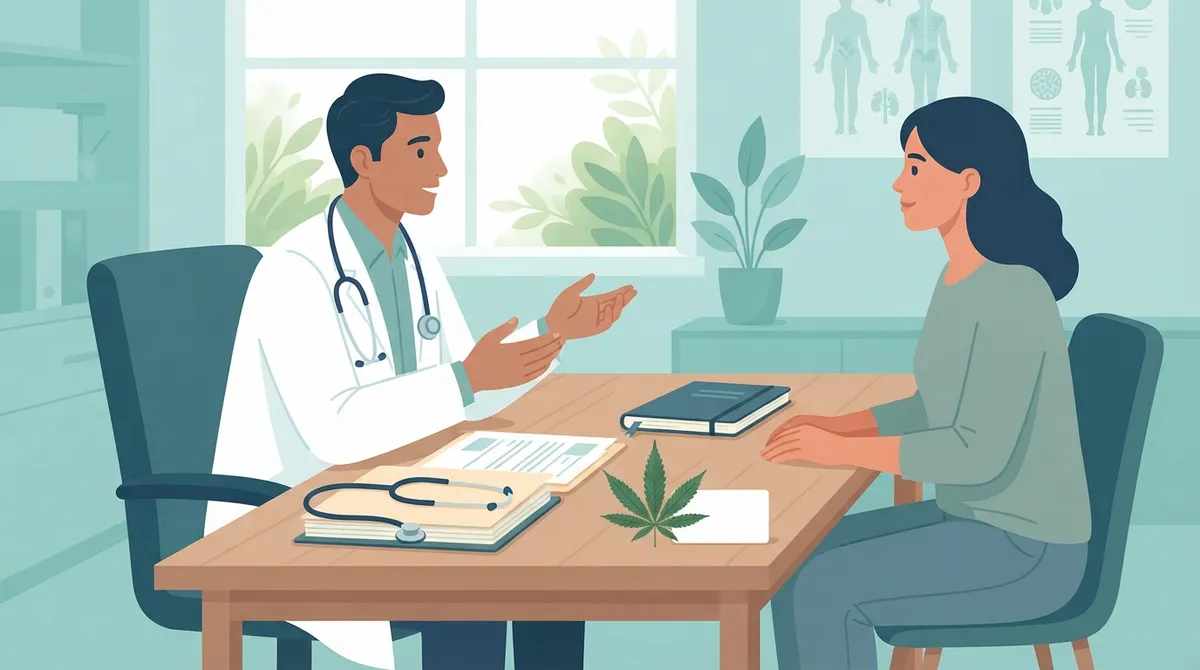
Florida law requires an initial in-person examination. The physician must assess you and decide whether certification is appropriate. A good evaluation is more than a quick form. It should include a real conversation about your goals, risks, and other treatment options.
Choosing the right clinic matters. Our article on the 8 signs of a reputable medical marijuana clinic in Tampa can help you spot a trustworthy provider. If you want a quick overview of the full process, see how to get a medical marijuana card in Tampa.
At InCare, medical cannabis evaluations sit inside a broader primary care practice. That means your physician can see your whole health picture, including your medications, chronic conditions, and screening history. This matters because cannabis can interact with other treatments. Care that is coordinated is safer care. You can also read 10 signs of compassionate medical cannabis care in Tampa to know what good care feels like.
Step 4: Complete State Registry and Card Steps
After your physician certifies you, the next steps involve the state. Your physician enters your certification in the Medical Marijuana Use Registry. You then complete your registration and apply for your patient card through the state process.
Florida residents and seasonal residents may qualify under state rules. You will need proof of identity and residency. Fees and processing times can change, so check with OMMU for current details.
Once your card is approved and your certification is active, you may purchase products from a licensed MMTC. Many patients wonder about speed. Timelines vary, and you can learn more in can you get same day cannabis certification in Tampa.
Step 5: Review the Evidence Before You Start
This step is where honesty matters most. Medical cannabis is not a cure-all. The research is limited and depends on the condition, the product, and the outcome measured.
The CDC notes some evidence of benefit for neuropathic pain. It also says the evidence is limited for most other types of acute and chronic pain. There is not enough evidence to say cannabis works better than other pain-management options.
The Agency for Healthcare Research and Quality (AHRQ) reports a similar picture. Some cannabis products with comparable THC and CBD levels may bring small, short-term pain improvement. The gains appear mainly in neuropathic pain. At the same time, these products raise the rate of common side effects such as dizziness, sedation, and nausea.
What This Means for You
- Cannabis may help some people with nerve-related pain, but benefits tend to be modest.
- It may not be the best first choice for every chronic condition.
- Results differ by product, dose, and person.
- It should be one tool within a larger care plan, not the only tool.
A thoughtful physician will talk about other options too, such as physical therapy, non-opioid medicines, lifestyle changes, and sleep care. If poor rest is part of your story, read how to know when to see a doctor for poor sleep.
Step 6: Weigh the Risks and Safety Concerns
Every treatment has trade-offs. Common side effects of medical cannabis include dizziness, sedation, nausea, and trouble with thinking or memory. These effects can affect work, driving, and daily tasks.
Talk to your physician about each of these topics before you start:
- Medication interactions: Cannabis can affect how other drugs work or feel.
- Opioid use: Using cannabis alongside opioids has been linked with a higher risk of opioid misuse.
- Driving: Do not drive while impaired. Plan ahead for safe transport.
- Pregnancy and breastfeeding: Discuss this with your doctor before using any product.
- Mental health history: Anxiety, depression, and other conditions deserve careful review.
- Public use rules: Florida limits where you may use products. Confirm current rules.
Starting low and going slow is a common safety approach. Your physician can guide your plan and adjust it over time.
Step 7: Plan for Follow-Up and Renewal
Medical cannabis is not a one-time visit. Florida law requires follow-up evaluations at least every 30 weeks for continued physician certification. These visits let your doctor check whether the treatment is helping and whether any side effects have appeared.
Use each follow-up well. Track your symptoms, sleep, pain levels, and daily function. Share what is working and what is not. If cannabis is not helping, your physician can help you change course. For renewal steps, see how to renew a medical marijuana card in Tampa.
Why Start With a Primary Care Team
Chronic conditions rarely come alone. Pain may connect to sleep problems, weight, blood pressure, or mood. A primary care setting looks at all of these together. This is the main advantage of starting with a full-service clinic rather than a single-purpose office.
InCare combines personalized primary care with advanced wellness services at locations in Tampa and Riverview. Patients can address cannabis certification, chronic disease management, prevention, and screening in one trusted place. If you are choosing a new doctor, our guide on how to choose the best primary care doctor in Tampa can help. Patients in the south part of the county can also read how to get a medical marijuana card in Riverview, FL.
You can learn more about us and see patient feedback. Read what neighbors say when you visit our InCare location on Google. You can also follow our updates on Instagram, Facebook, and TikTok.
Quick Checklist Before Your Visit
- Confirm your condition and gather diagnosis records.
- List all current medications and supplements.
- Write down your symptoms, goals, and questions.
- Bring a valid photo ID and proof of Florida residency.
- Check current fees and requirements with OMMU.
- Plan for an in-person exam and follow-ups every 30 weeks.
Conclusion
Medical cannabis for chronic conditions in Tampa follows a clear path: confirm eligibility, see a qualified physician in person, complete the state registry and card steps, and keep up with follow-ups. The evidence is mixed, so the best results come from honest conversations and careful monitoring. Cannabis works best as one part of a bigger plan that also supports sleep, movement, nutrition, and mental health.
Ready to take the next step? Book your InCare appointment today or contact our team with questions. InCare offers personalized, whole-body care in Tampa and Riverview so you can make safe, informed decisions about your health.
FAQs
Q: Can chronic pain qualify for a medical marijuana card in Tampa, Florida?
A: It can, but only in certain cases. Florida law requires chronic nonmalignant pain to be caused by or originate from a qualifying medical condition and to persist beyond that condition's usual course. A physician must examine you and decide whether certification is appropriate.
Q: How do I get a Florida medical marijuana card in Tampa?
A: You need an in-person evaluation and certification from a Florida-qualified physician. Your certification is entered in the state Medical Marijuana Use Registry, and you then complete the state card process. Confirm current steps and fees with the Florida Office of Medical Marijuana Use.
Q: Do I need to be a Florida resident to qualify for medical cannabis?
A: Florida residents and seasonal residents may qualify under state rules. You will need to show proof of identity and residency during the registration process. Check with the state for the latest documentation requirements.
Q: How often are follow-up visits required for medical cannabis in Florida?
A: Florida law requires follow-up evaluations at least every 30 weeks for continued physician certification. These visits help your doctor review your results and any side effects. Always verify current rules, since procedures can change.
Q: What does research say about medical cannabis for chronic pain?
A: Evidence is limited and depends on the product and condition. The CDC notes some benefit for neuropathic pain but limited evidence for most other pain types. Common side effects include dizziness, sedation, and nausea, so treatment should be individualized and monitored.