Key Takeaways
- If you have chest pain, severe trouble breathing, stroke signs, fainting, or severe bleeding, call 911 or go to the ER first; do not drive to urgent care.
- Choose primary care for annual physicals, vaccines, medication refills, and chronic conditions like diabetes or high blood pressure, since your clinician tracks your history over time.
- Choose urgent care for new, non-life-threatening problems needing same-day care, such as sprains, minor cuts, ear pain, urinary symptoms, or mild allergic reactions, especially when your primary doctor can't see you soon.
- If a symptom fits both settings, check whether your primary care office can see you within a day; if it can and symptoms are mild, start there for continuity.
- Urgent care is for single-issue visits and cannot replace a primary care doctor, so share visit summaries and test results with your regular clinician afterward.
- If you have no regular doctor, establish primary care now so screenings, vaccines, and family history are tracked and you know whom to call when you get sick.
You wake up with a sore throat, or your child twists an ankle at practice. Your regular doctor's schedule is full. The question hits fast: when should I see urgent care vs primary care? Picking the wrong setting can cost you time, money, and sometimes your health.
The answer depends on two things: how severe your symptoms are, and how fast you need care. Primary care is built for long-term health and non-urgent concerns. Urgent care is built for new, non-life-threatening problems that cannot wait. Emergency rooms handle true emergencies.
This guide walks you through a simple, step-by-step way to decide. You will learn which symptoms fit each setting, which warning signs mean you should call 911, and how to keep your care connected afterward. Whether you are a busy parent, a working professional, or someone who has never had a regular doctor, these steps will help you act with confidence.
Understand the Three Levels of Care
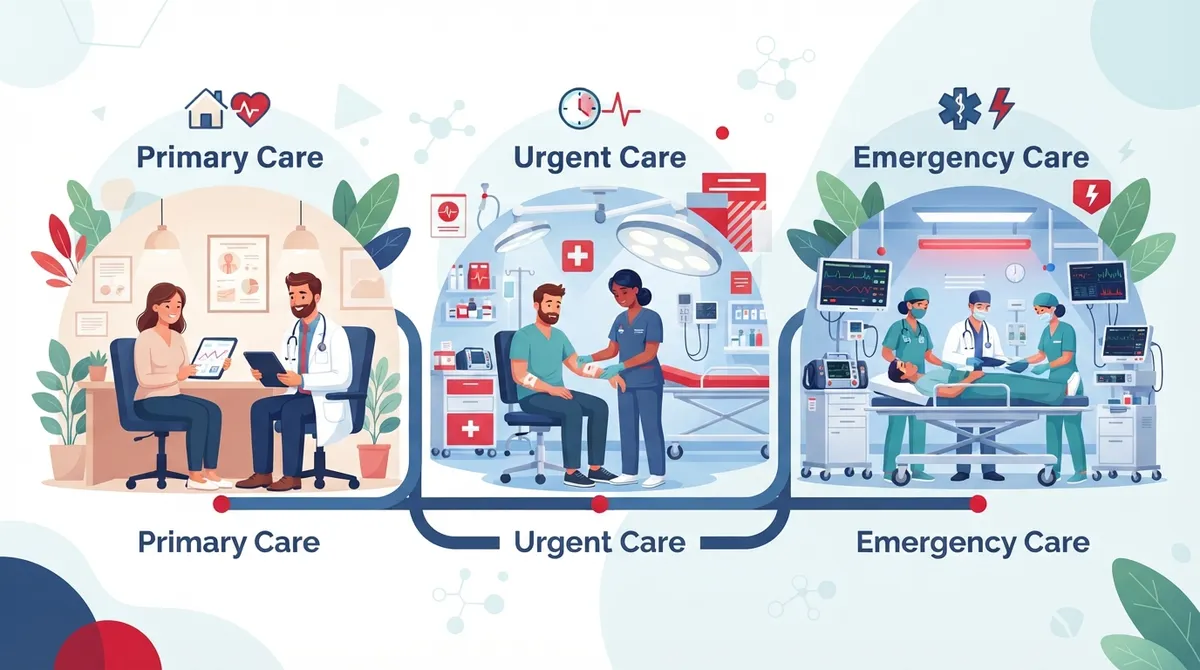
Most people think of two choices, but there are really three. Knowing the role of each one makes every decision easier.
- Primary care: Ongoing health management, prevention, chronic conditions, and non-urgent symptoms.
- Urgent care: Prompt evaluation of a non-life-threatening illness or injury when your regular clinician cannot see you soon.
- Emergency care: Severe or potentially life-threatening symptoms that need immediate attention.
The difference is based on severity and how quickly you need care. It is not simply whether a symptom is new. A mild cough can be handled by primary care. A cough with severe trouble breathing needs emergency care.
Millions of Americans use urgent care each year. A 2023 Urgent Care Association white paper, citing CDC data from 2021, reports that 26.5% of U.S. adults visited an urgent care or retail health clinic. That figure combines the two settings, but it shows how common these visits are.
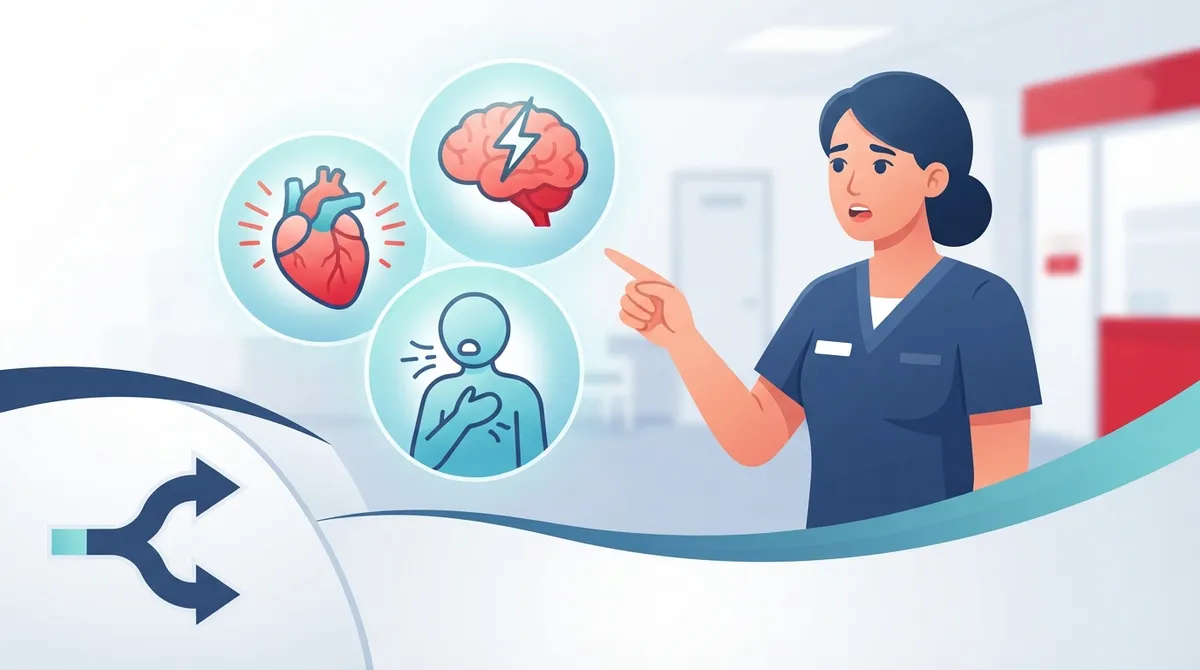
Step 1: Check for Emergency Warning Signs First
Before anything else, rule out an emergency. If you notice any of the signs below, do not drive to urgent care. Call 911 or go to the nearest emergency department.
- Chest pain or pressure
- Severe trouble breathing
- Stroke signs, such as sudden weakness, facial droop, or trouble speaking
- Severe bleeding that will not stop
- Loss of consciousness or fainting
- A severe allergic reaction, such as swelling of the face or throat
- A major injury, such as a suspected broken back or a deep head wound
- Sudden, severe pain
If you are unsure and the symptoms could be life-threatening, do not wait. Emergency care is always the safer choice in these cases. The MedlinePlus guide to recognizing medical emergencies offers a helpful reference list.
Step 2: Decide Whether Your Concern Is Routine or Sudden
Once you have ruled out an emergency, ask yourself one question: is this a routine need or a sudden problem?
Routine needs belong with primary care
Primary care is the right place for anything that is ongoing, preventive, or not time-sensitive. A primary care clinician knows your history, tracks changes over time, and coordinates follow-up. Examples include:
- Annual wellness visits and physicals
- Vaccinations and preventive screenings
- Medication refills and medication management
- Chronic conditions such as diabetes, high blood pressure, and asthma
- Weight concerns and nutrition planning
- Mild symptoms that have lasted a while without getting worse
At InCare, our primary care team focuses on prevention and whole-body health. That includes cancer screening, DNA gene testing, and personalized wellness plans, so small issues are caught before they become big ones.
Sudden problems may need urgent care
Urgent care fits a new illness or injury that needs attention today but is not life-threatening. It is a good choice when your primary care office is closed or cannot see you soon.
Step 3: Match Your Symptoms to the Right Setting
Use the table below as a quick reference. It covers common situations and where most people should start.
|
Situation |
Best Starting Point |
Why |
|---|---|---|
|
Annual physical or wellness visit |
Primary care |
Preventive care and long-term tracking |
|
Blood pressure or diabetes check-in |
Primary care |
Chronic conditions need continuity |
|
Cold, flu, or sore throat |
Primary care or urgent care |
Primary care if you can be seen soon; urgent care if not |
|
Ear pain or urinary symptoms |
Urgent care or same-day primary care |
Needs prompt evaluation and possibly testing |
|
Sprain or minor cut that may need stitches |
Urgent care |
Needs same-day hands-on treatment |
|
Mild allergic reaction or limited rash |
Urgent care |
Quick evaluation and treatment |
|
Chest pain or stroke signs |
Emergency room / 911 |
Potentially life-threatening |
Common urgent care concerns include cold or flu symptoms, sore throat, ear pain, urinary symptoms, limited rashes, mild allergic reactions, minor cuts, sprains, and some minor burns or fractures. Services vary by location, so it helps to call ahead and confirm the clinic can provide the tests or treatment you need.
For a deeper look at what these visits can handle, read what urgent care services can actually treat.
Step 4: Consider Timing, Access, and Your Schedule
Sometimes the symptom fits both settings. In that case, timing and access decide the answer. Ask yourself these questions:
- Can my primary care office see me today or tomorrow?
- Is it after hours, a weekend, or a holiday?
- Will waiting make my symptoms worse?
- Do I need a test or procedure that only a walk-in clinic can do right now?
If your primary care office can see you within a day and your symptoms are mild, start there. Your clinician already knows your history, which helps with accurate treatment. If the office cannot see you soon, or if waiting could cause harm, urgent care is a practical choice.
Busy families and working professionals often value flexibility. Same-day appointments can bridge the gap, giving you fast access without losing the benefit of a doctor who knows you. InCare also offers urgent care alongside primary care, so you can get prompt help and stay within one connected practice.
Step 5: Know the Limits of Urgent Care
Urgent care is useful, but it is not a replacement for a primary care relationship. Visits are usually focused on one problem. The clinician may not have your full medical history, your medication list, or your long-term goals.
Common mistakes include using urgent care for chronic condition management, skipping follow-up, or assuming a clinic can handle every injury. Our guide on urgent care mistakes that could cost you your health covers these pitfalls in detail.
Clinic capabilities and age limits also vary. Some centers may not treat very young children or handle certain imaging. A quick phone call before you go can save you a wasted trip.
Step 6: Follow Up After Any Urgent Care Visit
The visit does not end when you leave the clinic. Follow-up keeps your care safe and complete. Try these steps:
- Ask for a written visit summary and any test results.
- Share that information with your primary care clinician.
- Schedule a follow-up if symptoms persist, worsen, or need monitoring.
- Update your medication list if you received a new prescription.
This matters most when you have a chronic condition or take several medications. Coordinated care reduces errors and avoids repeated tests. To see why this matters, read about fragmented care versus coordinated care. You can also learn how to request your medical records so everything stays in one place.
What If You Do Not Have a Primary Care Doctor Yet?
Many Gen Z adults, young professionals, and women under 40 skip primary care entirely and rely on urgent care or online searches. That works in a pinch, but it leaves gaps. Without a regular clinician, no one tracks your screenings, vaccines, family history, or long-term trends.
Establishing care now makes future decisions simpler. When you get sick, you will know exactly who to call. Our article on whether you need a PCP explains the benefits, and our guide to finding the best primary care near you helps you choose well.
A strong primary care practice also offers more than sick visits. InCare combines technology with medical expertise, including body composition analysis, metabolic breath analysis, and medical weight loss programs. These tools help you move from reacting to symptoms to optimizing your health.
A Quick Decision Checklist
Keep this short list handy. It gives you a clear path when you feel unsure.
- Is this life-threatening? If yes, call 911 or go to the ER.
- Is it routine, preventive, or ongoing? Choose primary care.
- Is it new, non-life-threatening, and needs care today? Choose urgent care, or same-day primary care if available.
- Still unsure with no emergency signs? Call your primary care office, its after-hours line, or a nurse advice service.
Remember that a mild symptom can become serious. If your condition gets worse, change your plan and move to a higher level of care.
Why a Connected Practice Makes Choosing Easier
The hardest part of this decision is often not knowing where to turn. When your primary care and urgent care come from the same practice, the choice gets simpler. Your records are in one system. Your clinicians can see your history. Follow-up is built in.
That is the approach at InCare, with locations in Tampa and Riverview and virtual visits available. Patients can read real feedback on our testimonials page, and many share their experience through our InCare Google listing. You can also visit us on Google — InCare to read reviews and get directions. For updates and wellness tips, follow us on Instagram.
Conclusion
So, when should I see urgent care vs primary care? Choose primary care for prevention, ongoing conditions, and non-urgent concerns. Choose urgent care for a new, non-life-threatening problem that needs prompt attention. Choose the emergency room or call 911 for severe or life-threatening symptoms. When in doubt without emergency signs, call your clinician's office for guidance.
Most important, build a primary care relationship so every visit, urgent or routine, connects back to a team that knows you. That is how you get faster answers, safer treatment, and better long-term health.
Ready to get started? Book Now to schedule your visit at InCare, or contact our team with any questions about which type of care is right for you.
FAQs
Q: When should I go to urgent care instead of my primary care doctor?
A: Go to urgent care for a new, non-life-threatening illness or injury that needs prompt attention when your primary care office is closed or cannot see you soon. Examples include sprains, minor cuts, ear pain, and urinary symptoms.
Q: When should I go to the emergency room instead of urgent care?
A: Go to the emergency room or call 911 for chest pain, severe trouble breathing, stroke signs, severe bleeding, loss of consciousness, a severe allergic reaction, or sudden severe pain. These symptoms may be life-threatening and need immediate care.
Q: Should I see primary care or urgent care for a cold, flu, or fever?
A: If your primary care office can see you soon and your symptoms are mild, start there, since your clinician knows your history. If you cannot get a timely appointment or symptoms are worsening, urgent care is a reasonable option.
Q: Can urgent care replace a primary care doctor?
A: No. Urgent care is designed for short-term, single-issue problems. A primary care doctor manages your long-term health, preventive screenings, chronic conditions, and follow-up, which urgent care cannot provide on its own.
Q: What should I do if my primary care office is closed and I am unsure where to go?
A: If you have no emergency warning signs, call your primary care office's after-hours line or a nurse advice service for guidance. If your symptoms could be life-threatening, do not delay and call 911.