
Key Takeaways
- No vitamin or peptide regimen has been proven to slow human aging for the general population; begin with your health data and a clinician review, not a product.
- Vitamins work best to correct a documented or likely deficiency, and high doses of fat-soluble vitamins like A can accumulate and cause harm.
- FDA-approved peptide medicines are approved only for specific conditions; compounded and 'research use only' peptides are not reviewed for safety, effectiveness, or purity.
- Disclose every supplement and peptide you take to your clinician, since they can interact with prescription drugs, alter lab results, and affect surgical planning.
Search for longevity vitamins and peptides in Tampa, and you will find bold promises about slowing aging, restoring energy, and "optimizing" your body. The reality is more careful. No vitamin or peptide regimen has been proven to slow human aging for the general population. Some supplements help when a real need exists, and some peptides are approved medicines for specific conditions. Many others are marketed far ahead of the evidence.
This guide explains how to make smart choices in 2026. You will learn how a clinician-led approach works, which questions protect you, and where vitamins and peptides may or may not fit. Whether you are a busy parent, a wellness-minded professional, or a young adult curious about prevention, the best starting point is the same. Begin with your health data, not a product. At InCare, prevention-first primary care is built on that principle, using your history, labs, and goals to guide decisions.
What "Longevity Care" Really Means in Primary Care
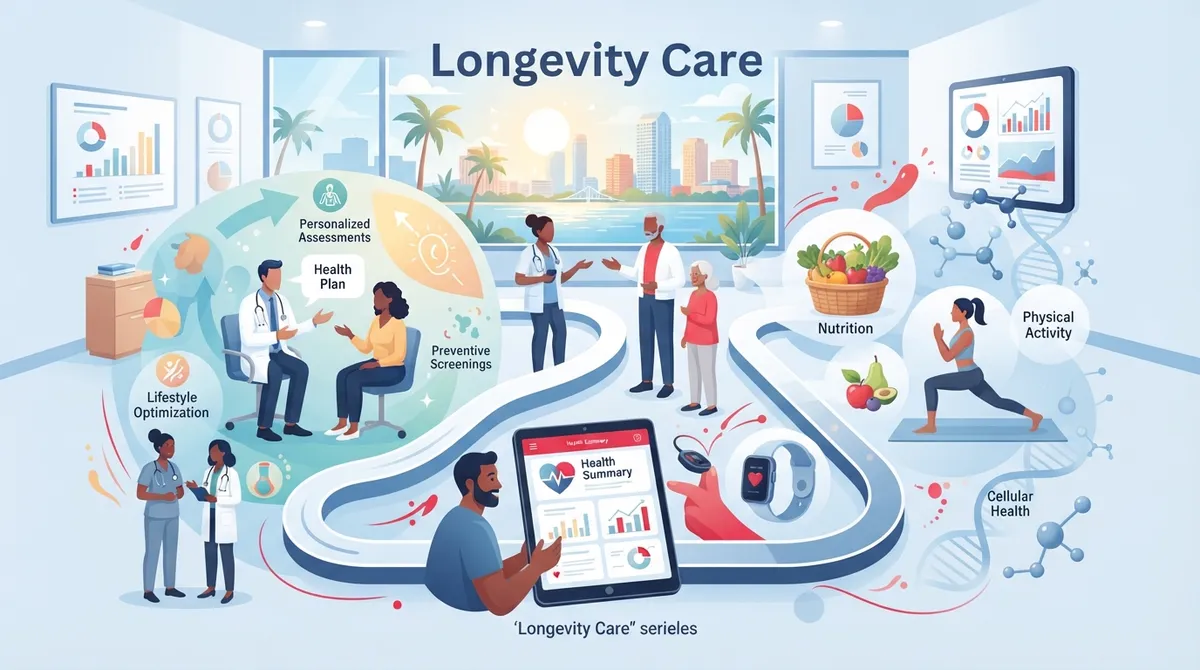
In a medical setting, longevity care means prevention and healthy aging. It is not a single product. It is a plan built around your risks and daily habits.
A strong longevity-focused visit usually includes:
- A review of cardiovascular and metabolic risk, family history, and current medications
- Age- and risk-appropriate screenings, including cancer screening
- Support for nutrition, physical activity, sleep, and tobacco cessation
- Targeted lab testing when it is clinically justified
- A clear discussion of any supplements, including doses and risks
Habits remain the foundation. Movement, sleep, food quality, and regular screening still do more for long-term health than any bottle or injection. For a deeper look at what a coordinated visit covers, see what a wellness checkup in Tampa, FL includes.

Step 1: Start With Testing and a Clinical Review
Vitamins work best when they fix a documented or likely gap. Taking high doses "just in case" is not a substitute for preventive care. Before you buy anything, ask for a clinician review.
What a Clinician Can Check
A primary care doctor can look at your diet, health conditions, and medications. They can then decide whether testing makes sense. Common examples include vitamin D, B12, iron, and metabolic markers, ordered only when your history supports it.
Why Testing Beats Guessing
Guessing can cost money and cause harm. Fat-soluble vitamins can build up in the body. Research has also raised safety concerns about high-dose vitamin A and about beta-carotene or vitamin E in some trial settings. A baseline test and a follow-up plan keep you safe.
Step 2: Understand What Vitamins Can and Cannot Do
The evidence on vitamins depends on the nutrient and the person. Here is a plain summary of what the research supports.
|
Topic |
What the Evidence Suggests |
|---|---|
|
Antioxidant vitamins for heart disease prevention |
Observational links to lower risk have not been consistently confirmed in randomized trials of people without a specific indication |
|
Vitamin D with calcium |
Shown to reduce hip fractures in some older populations; this should not be applied to all adults |
|
Fat-soluble vitamins at high doses |
Can accumulate in the body and cause harm |
|
General "anti-aging" vitamin stacks |
No established proof of slowing human aging |
In short, vitamins are tools for specific needs. They are not a universal longevity plan. If you are weighing a popular pairing, you may find it helpful to read how to decide if vitamin D3 and K2 supplements fit you. For a broader view, see quality longevity supplements under doctor care.
Step 3: Learn What "Peptide" Actually Means
"Peptide" is a broad word for short chains of amino acids. The label does not promise safety, effectiveness, or FDA approval. Some peptide-based medicines are FDA-approved for specific conditions. That fact does not mean other peptides sold for longevity, recovery, or anti-aging are approved or proven.
For most peptides promoted for anti-aging, human evidence is limited. Open questions include long-term safety, ingredient identity, purity, and immune reactions. If you want to see how clinicians weigh these questions, read how to understand peptides as explained by your doctor.
Approved Medicine vs. Wellness Marketing
It helps to separate three groups:
- FDA-approved peptide medicines for specific indications, prescribed for those uses.
- Compounded products made for a patient-specific medical need, which are not FDA-approved.
- "Research use only" products sold online, which are not meant for human self-treatment.
Our guide on FDA-approved vs. compounded peptides explains these differences in more detail.
Step 4: Know the Risks of Compounded and Research-Use Products
The FDA states that compounded drugs are not FDA-approved. The agency does not review them for safety, effectiveness, or quality before they are marketed. Compounding can be appropriate when a patient has a documented medical need. It is not the same as taking an approved product.
Products sold as "research use only" deserve extra caution. Federal regulators and state boards have been cracking down on these peptides. Avoid any product that cannot show where it was made or how it was tested. For help judging suppliers, see six ways to verify peptide quality before you try it, and common buying mistakes that put your health at risk.
Watch for these red flags:
- Promises of rejuvenation or guaranteed results
- Claims of FDA approval without proof
- No licensed clinician involved in your care
- No lab work, no follow-up, and no discussion of risks
- Pressure to buy a bundle or a long-term package on day one
Step 5: Ask the Right Questions Before You Start
A trustworthy Tampa clinician welcomes questions. Bring this list to your visit.
- What is my specific health reason for this vitamin or peptide?
- What does the human evidence show, and how strong is it?
- Is this product FDA-approved, compounded, or neither?
- How is the product sourced, tested, and verified for purity?
- What are the risks, side effects, and possible drug interactions?
- What labs will you order before and after I start?
- How will we decide whether it is working, and when will we stop?
You can find a longer checklist in 15 questions to ask a peptide therapy clinic in Tampa. If you are comparing clinics, how to vet peptide therapy in Tampa safely walks through the process step by step.
Step 6: Disclose Everything You Take
Tell your clinician about every supplement, vitamin, and peptide, including those you buy online. Supplements can interact with prescription medicines. They can also affect lab results and surgical planning. For example, some products change how the blood clots or how the liver processes drugs.
Coordinated care makes this easier. When one team sees your full picture, it can catch problems early. If you manage ongoing prescriptions, these prescription management tips can help you stay organized.
Step 7: Choose a Licensed Florida Clinician and Plan Follow-Up
Local care matters because it supports follow-up. A good Tampa-area clinician should be licensed in Florida. They should take a full medical history, explain evidence and risks plainly, and schedule regular check-ins. Be cautious of any clinic that sells a one-size-fits-all protocol.
This article does not endorse any particular treatment or promise any outcome. The available research does not verify local Tampa treatment statistics or outcomes. That is why a transparent, clinician-led conversation is your best safeguard.
What Good Follow-Up Looks Like
- Repeat labs at agreed intervals when a supplement is used for a deficiency
- A plan to stop or adjust if you see no benefit or have side effects
- Regular review of your screenings, blood pressure, and metabolic health
- Honest updates when new research changes the advice
If you are exploring options in the area, you may also want to review which named peptides are available in Tampa clinics and what monthly peptide therapy costs in Tampa so you can plan with realistic expectations.
How InCare Supports a Prevention-First Approach
InCare is a personalized clinic with locations in Tampa and Riverview. Care combines primary care, urgent care, cancer screenings, DNA gene testing, metabolic breath analysis, body composition analysis, and IV hydration. The focus is prevention and whole-body health, guided by a licensed clinician who explains options in plain language. You can visit us on Google — InCare to read patient reviews and see what neighbors say about the care they receive.
You can also follow practice updates on Instagram and Facebook, or watch short wellness videos on TikTok. For reliable background on supplement safety, the NIH Office of Dietary Supplements offers fact sheets on individual vitamins and minerals.
Conclusion: Evidence First, Products Second
The best approach to longevity vitamins and peptides in Tampa is simple. Start with a clinical review. Use testing to guide any vitamin. Treat peptides marketed for anti-aging with healthy skepticism. Insist on transparency about sourcing, risks, and follow-up. Build your plan on sleep, movement, nutrition, and screening, and add supplements only when they serve a clear purpose.
Ready to build a prevention-first plan with a clinician who listens? Book your appointment with InCare today, or contact our team with questions before your first visit.
FAQs
Q: What does a longevity-focused primary care visit in Tampa typically include?
A: It usually includes a review of your medical history, medications, and family risks, plus age-appropriate screenings. Your clinician may order labs when they are justified and will discuss nutrition, activity, sleep, and any supplements you take. The goal is prevention, not a single product.
Q: Can vitamins or supplements slow aging or prevent chronic disease?
A: No vitamin regimen has been established as a general way to slow human aging. Supplements help most when they correct a documented or likely deficiency. Randomized trials have not consistently shown that antioxidant vitamins prevent cardiovascular events in people without a specific indication.
Q: Are peptide therapies FDA-approved for longevity or anti-aging?
A: Some peptide-based medicines are FDA-approved, but only for specific conditions. That does not mean peptides marketed for longevity or anti-aging are approved or proven. Compounded products are not FDA-approved and are not reviewed by the agency for safety, effectiveness, or quality before marketing.
Q: How can I tell whether a peptide or supplement claim is evidence-based?
A: Look for human studies, clear sourcing, and a licensed clinician who explains risks openly. Be cautious of guaranteed results, claims of FDA approval without proof, or products labeled "research use only." Ask how the product is tested for identity and purity.
Q: Can supplements interact with prescription medications or affect lab tests?
A: Yes. Supplements can interact with prescription drugs and may change lab results or surgical risk. Always share every vitamin, supplement, and peptide you take with your clinician, especially before surgery or when starting a new medicine.