
Key Takeaways
- Starting CPAP is only the first step; early follow-up in the first weeks to months is recommended to troubleshoot leaks, dryness, and mask fit before patients quit.
- Medicare documentation requires a clinical reevaluation between day 31 and day 91 of therapy, with a benchmark of at least 4 hours of use on 70% of nights in a consecutive 30-day period.
- Repeat sleep testing is not routinely needed for patients who are doing well with no symptoms; it may be considered if symptoms return despite good adherence or health changes significantly.
- Primary care suits stable patients and whole-person health, while a sleep specialist is better for persistent symptoms, intolerance of PAP, unclear diagnosis, or interest in alternative treatments.
- A good follow-up visit reviews symptoms, sleep quality, device usage and efficacy data, comfort issues like mask fit and dryness, and related health such as blood pressure and weight.
- Bring your device data, a note on daytime symptoms, a list of comfort problems, and your current medicines to make follow-up visits more productive.
Starting CPAP is only the first step in managing sleep apnea. Many people leave their diagnosis visit with a device, a mask, and little guidance on what comes next. That gap is where problems begin. Leaks, dry nose, poor mask fit, and unclear results can lead patients to quit within weeks. Good sleep apnea follow up care in Riverview helps you avoid that outcome.
A common question is who should handle that follow-up: your primary care clinician or a sleep specialist. The honest answer is that both play roles, and the right choice depends on your situation. This article compares the two paths side by side. You will learn what follow-up should include, how often to be seen, when repeat testing makes sense, and when to ask for a specialist referral.
If you live near Riverview, Florida, InCare offers primary care that can serve as your home base for this ongoing care.

Why Sleep Apnea Follow-Up Matters
Sleep apnea is a chronic condition. Treatment works only when you use it, and it only keeps working when it fits your body and life. Follow-up visits check both.
The American Academy of Sleep Medicine (AASM) recommends adequate follow-up with troubleshooting and objective monitoring of treatment results and device use. Early follow-up in the first weeks to months after starting positive airway pressure (PAP) therapy is advised. Stable patients can then move to periodic reviews, and a yearly check is reasonable for many people.
Without follow-up, small issues grow. A mask that leaks may seem minor, but it can cause poor sleep and lead you to stop using the device. A visit can fix the problem in minutes.
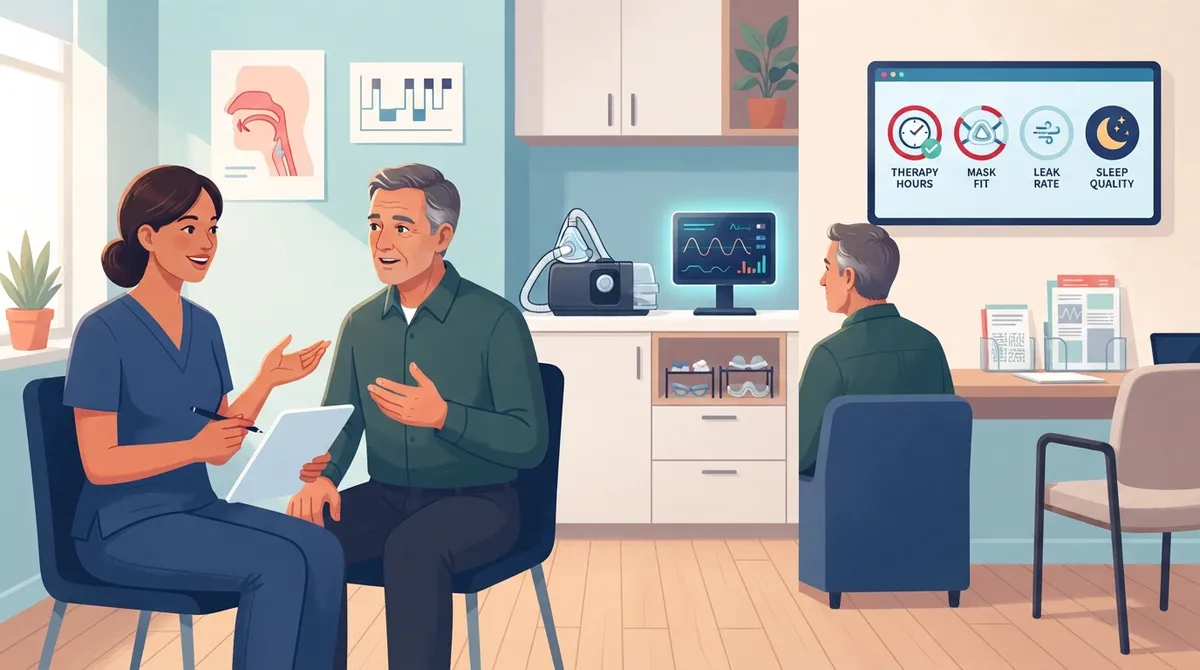
What a Good Follow-Up Visit Covers
Whether you see a primary care clinician or a specialist, a solid visit should review the same core items:
- Symptoms: daytime sleepiness, morning headaches, snoring, and any witnessed breathing pauses.
- Sleep quality: how rested you feel and how often you wake at night.
- Device data: hours of use per night and the efficacy readings your machine reports.
- Comfort issues: mask fit, air leaks, dry mouth, nasal congestion, and skin irritation.
- Related health: blood pressure, weight changes, and other conditions linked to sleep apnea.
The goal is simple. You should feel better, use your device most nights, and have no unresolved side effects.
Primary Care vs. Sleep Specialist: A Side-by-Side View
Both options can be right. This table shows how they differ in everyday practice.
|
Factor |
Primary Care Clinician |
Sleep Specialist |
|---|---|---|
|
Best for |
Stable patients doing well on therapy |
Complex cases or persistent problems |
|
Scope of care |
Whole-person health, including blood pressure, weight, and other conditions |
Focused on sleep disorders |
|
Access |
Often easier to schedule and already familiar with your history |
May involve a referral and longer waits |
|
Device troubleshooting |
Basic review of symptoms, usage, and comfort |
Deeper review of data and settings |
|
Testing decisions |
Can identify when repeat testing may be needed and refer |
Orders and interprets sleep studies directly |
|
Coordination |
Links sleep care with other medical needs |
Focuses on sleep, then reports back |
In many cases the best model is shared care. Your primary care clinician monitors your overall health and day-to-day progress. The sleep specialist steps in when something is not working or the picture is unclear.
The First Months After Starting PAP Therapy
The early period matters most. Habits form, problems surface, and many people decide whether the device is worth using.
What to Expect in Weeks One Through Twelve
- First two weeks: Expect an adjustment period. Some dryness, mild pressure discomfort, or mask irritation is common.
- Early check-in: Review how you feel, how many nights you used the device, and whether leaks or discomfort are interfering.
- Troubleshooting: Mask size changes, humidifier settings, and nasal care often solve common problems.
- Reevaluation: Confirm that symptoms have improved and that usage is consistent.
- Ongoing plan: Set a schedule for periodic reviews based on how well you are doing.
If you are working through this stage, our guide on how long sleep apnea treatment takes can help set realistic expectations.
Medicare and Adherence Requirements
If you use traditional Medicare, coverage for PAP therapy comes with documentation rules. The Centers for Medicare & Medicaid Services (CMS) describes a clinical reevaluation between day 31 and day 91 after therapy begins. That visit should document symptom improvement and objective adherence.
The commonly cited adherence benchmark is at least 4 hours of use per night on 70% of nights during a consecutive 30-day period within the first 3 months. Rules can change, so confirm current details with your clinician or equipment supplier. Missing that window can affect continued coverage, which is another reason to schedule early follow-up.
Adherence also matters beyond coverage. CMS Quality ID 279 measures whether adults with obstructive sleep apnea who are prescribed evidence-based therapy have their adherence assessed at least annually. This reflects a broader standard: checking use should be a routine part of care.
Common Problems and How Each Path Handles Them
Most barriers to success fall into a few categories. A primary care visit can address many of them, and a specialist can step in for the harder cases.
- Mask discomfort or leaks: Often solved with refitting or a different mask style.
- Dry mouth or nose: Humidifier changes and nasal treatment can help.
- Nasal congestion: Your clinician can look for allergies or other causes.
- Alcohol and sedating medicines: These can worsen breathing during sleep, and a review can flag them.
- Weight changes: Gains can raise pressure needs, while losses may change them. Both deserve attention.
- Not enough sleep time: Even good therapy cannot offset a very short sleep schedule.
For many people, weight is a key part of the picture. If that applies to you, see how weight loss may help sleep apnea and why a medically supervised approach can matter.
When Repeat Sleep Testing Makes Sense
Many patients assume they need a new sleep study every year. That is not the case. AASM guidance does not recommend routine repeat sleep testing for patients who are doing well and have no symptoms on PAP therapy.
Repeat polysomnography or a home sleep apnea test may be considered in specific situations:
- Symptoms persist or return despite good adherence.
- Your clinical situation changes, such as major weight change or new medical conditions.
- There is uncertainty about whether the current treatment is working.
This is where primary care and specialists work together. Your primary care clinician can recognize a change and refer you. The specialist can then decide which test fits. For more on testing choices, read about home versus in-lab sleep studies.
When to See a Sleep Specialist Instead
A referral makes sense in several cases. Consider asking for one if you notice any of the following:
- You still feel very sleepy despite using therapy most nights.
- You cannot tolerate PAP therapy even after adjustments.
- Your diagnosis is unclear or other sleep disorders are suspected.
- You want to explore other treatment options.
Persistent problems, diagnostic uncertainty, and interest in alternative treatment are standard reasons for specialist input. If you are weighing other options, our overview of alternatives to CPAP for sleep apnea explains what exists. You can also read how to choose between primary care and a sleep specialist for broader sleep concerns.
Finding Follow-Up Care in Riverview
The keyword mentions Riverview, and local access matters. InCare operates a Riverview location at 11922 Boyette Rd, Riverview, FL 33569, along with a Tampa office and virtual visits. That mix can make follow-up easier to fit into a busy schedule, especially for patients balancing work and family.
When you choose a clinic, confirm a few details before booking:
- Ask whether they manage ongoing sleep apnea follow-up.
- Ask how they coordinate with sleep specialists when needed.
- Confirm that they accept your insurance.
- Ask about appointment availability, including virtual options.
You may also find our guides on choosing a sleep apnea doctor in Riverview and finding the best sleep apnea doctor in Riverview helpful as you compare options. Patients also share their experiences on Google, and you can read InCare reviews on Google to see how others describe their care.
How to Prepare for Your Follow-Up Visit
A little preparation makes the visit far more useful. Bring the following:
- Your device data or a summary from the machine or its app.
- A short note about how you feel during the day.
- A list of problems, such as leaks, dryness, or discomfort.
- Your current medicines and supplements.
- Any questions about your mask, pressure, or equipment supplier.
If you are heading into a new consultation, you may want to review how to prepare for a sleep consultation. Also keep in mind that poor sleep has many causes, and our piece on when to see a doctor for poor sleep can help you decide what to raise.
Which Path Is Right for You?
Use this simple guide to decide where to start.
- Choose primary care first if you are stable, feel better, and want one place to manage your overall health and routine reviews.
- Choose a specialist if symptoms persist, you cannot tolerate therapy, or the diagnosis is uncertain.
- Choose shared care if you want the convenience of primary care with specialist backup for hard questions.
No single answer fits everyone. What matters is that someone is actively checking your results and acting on them. Regular follow-up is what turns a device in a box into effective treatment.
Take the Next Step
Sleep apnea follow up care in Riverview does not have to be complicated. A clear plan, early check-ins, and honest conversations about what is working make the difference. If you need help managing your treatment or want a primary care team to coordinate your sleep care, book an appointment with InCare or contact our team with your questions. You can also follow updates from InCare on Facebook, Instagram, and TikTok.
FAQs
Q: What happens at a sleep apnea follow-up appointment?
A: Your clinician reviews symptoms such as daytime sleepiness and snoring, checks your device usage and efficacy data, and asks about mask comfort, leaks, and dryness. They also look at related health factors like blood pressure and weight. The visit ends with adjustments to your equipment or plan as needed.
Q: How often should I see a doctor after starting CPAP?
A: AASM guidance recommends early follow-up in the first weeks to months after starting therapy. Once you are stable, yearly review is reasonable for many people. You may need more frequent visits if symptoms persist or you have trouble using the device.
Q: Do I need another sleep study if my symptoms improve?
A: Usually not. AASM guidance does not recommend routine repeat testing for patients who are doing well and have no symptoms on PAP therapy. Repeat testing may be considered if symptoms return despite good adherence or if your health changes significantly.
Q: What are the Medicare CPAP compliance requirements?
A: For fee-for-service Medicare, CMS describes a clinical reevaluation between day 31 and day 91 after therapy begins. The commonly specified benchmark is at least 4 hours per night on 70% of nights during a consecutive 30-day period within the first 3 months. Confirm current rules with your clinician or supplier.
Q: When should I see a sleep specialist instead of my primary care provider?
A: Consider a specialist if you remain very sleepy despite regular use, cannot tolerate PAP therapy, or have an unclear diagnosis. A referral is also appropriate if you want to explore alternative treatments. Primary care can coordinate this referral and continue managing your overall health.