
Key Takeaways
- Glutathione is a useful biomarker for disease severity in lupus and autoimmune hepatitis, but current evidence does not prove supplements can treat or cure autoimmune disease on their own.
- Lower glutathione levels are likely a consequence of chronic inflammation and oxidative stress rather than a root cause of autoimmune disease, so supplements cannot replace prescribed disease-modifying medications.
- Oral glutathione has the best short-term safety data at 500 mg daily; liposomal and IV forms lack strong independent research specific to autoimmune conditions and IV requires medical supervision.
- Excess antioxidant activity can disrupt immune signaling, so more glutathione is not always better—discuss dosing and potential interactions with biologics or immunosuppressants before starting supplements.
- Sulfur-rich foods like garlic, onions, and cruciferous vegetables naturally support glutathione production without supplement costs or risks; pair this with sleep, exercise, and avoiding smoking for broader autoimmune wellness.
- Always discuss glutathione supplementation with your doctor alongside your full medication list, kidney/liver function, and disease activity level before considering it as part of your care plan.
If you live with lupus, autoimmune hepatitis, or another autoimmune condition, you have likely searched for ways to ease inflammation beyond your prescribed medication. Glutathione and autoimmune health often come up together in wellness circles, especially among people who want to feel more in control of their symptoms. Understanding what the science actually shows can help you make smarter decisions with your care team.
Glutathione is your body's most important internal antioxidant. It helps clean up cellular damage, calm inflammation, and support your immune system. Research has found lower glutathione levels in people with certain autoimmune diseases, which raises real questions about its role in these conditions. At the same time, this connection does not mean supplements can replace proven treatment. This guide breaks down what current research says, what it does not say, and how to think about glutathione as part of a broader wellness plan through your primary care provider.

What Is Glutathione and Why Does It Matter for Autoimmune Health
Glutathione (GSH) is a small molecule made from three amino acids. Your cells produce it naturally to fight oxidative stress, which happens when harmful molecules called free radicals build up faster than your body can clear them.
This antioxidant exists in two forms: reduced glutathione (GSH) and oxidized glutathione (GSSG). The balance between these two forms tells researchers a lot about how well your cells are handling stress and inflammation.
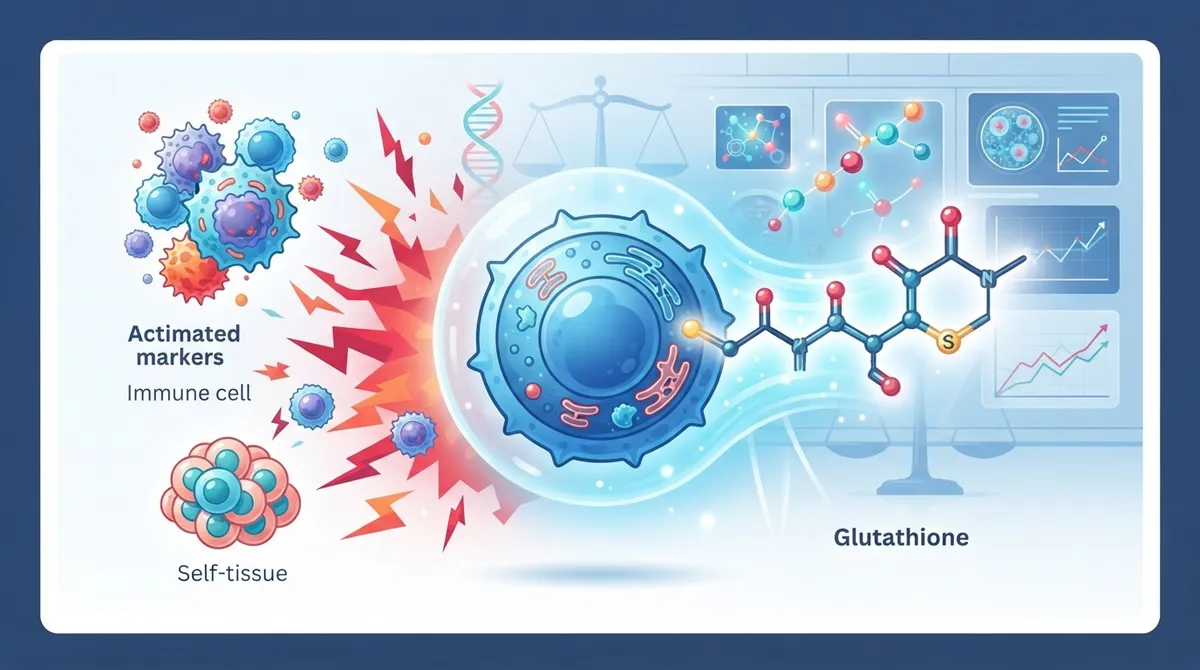
In autoimmune disease, the immune system mistakenly attacks healthy tissue. This process creates chronic inflammation, which increases oxidative stress throughout the body. Glutathione plays several key roles during this process:
- Regulating how immune cells communicate with each other
- Controlling cell death (apoptosis) in damaged or overactive cells
- Reducing oxidative damage to tissues and organs
- Supporting liver function and detox pathways
- Helping balance T-cell activity, which is often disrupted in autoimmune disease
What the Research Actually Shows About Glutathione and Autoimmune Disease
Scientists have studied glutathione levels in several autoimmune conditions. The findings are interesting, but they come with important limits that patients need to understand.
Glutathione and Lupus (SLE)
A widely cited 2009 review in Autoimmunity Reviews found that glutathione depletion may contribute to abnormal T-cell function in people with systemic lupus erythematosus (SLE). Lower glutathione levels have also been linked to increased disease severity, including associations with lupus nephritis, a serious kidney complication of lupus.
A more recent 2022 systematic review looked at 15 studies on glutathione and curcumin in lupus patients. It found potential benefits, including effects on autoantibodies and T-cell regulation. However, the review quality was mixed, and the authors could not draw firm conclusions about using glutathione as a standard treatment.
Glutathione and Autoimmune Liver Disease
Autoimmune hepatitis is another condition where glutathione has drawn research attention. Studies comparing patients with autoimmune hepatitis and alcoholic cirrhosis found significantly lower whole-blood glutathione levels compared to healthy people. Oxidative injury markers were also higher in these patients.
Interestingly, glutathione levels appeared to drop further as liver fibrosis progressed from mild disease to more severe cirrhosis. This suggests glutathione may serve as a useful marker of disease severity, even if it is not yet proven as a treatment.
Key Takeaway From Current Evidence
Most experts agree that glutathione is more useful right now as a biomarker than as a treatment. It helps researchers understand disease activity, but it has not been proven to prevent, cure, or reliably control autoimmune disease on its own.
Comparing What We Know: Glutathione Research Summary
|
Autoimmune Condition |
Glutathione Finding |
Strength of Evidence |
|---|---|---|
|
Systemic Lupus Erythematosus (SLE) |
Lower glutathione linked to T-cell dysfunction and disease severity |
Moderate; mechanistic, not treatment-proven |
|
Lupus Nephritis |
Associated with glutathione depletion in some studies |
Limited; needs more research |
|
Autoimmune Hepatitis |
Lower whole-blood glutathione, higher oxidative injury |
Moderate; biomarker-level evidence |
|
General Autoimmune Inflammation |
Oxidative stress and antioxidant imbalance commonly observed |
Emerging; mechanistic evidence |
Oral, Liposomal, or IV Glutathione: What Should You Know
Patients often ask which form of glutathione works best. The honest answer is that research on all three forms is still limited, especially for autoimmune conditions specifically.
1. Oral Glutathione
Oral glutathione has the most favorable short-term safety data. Small studies have tested around 500 mg daily for 4 to 8 weeks with generally good tolerance. Some people report mild stomach upset, gas, or loose stools.
2. Liposomal Glutathione
Liposomal formulas are designed to improve absorption compared to standard oral capsules. However, there is not enough independent, high-quality research to confirm these products work better for autoimmune symptoms specifically.
3. Intravenous (IV) Glutathione
IV glutathione delivers the antioxidant directly into the bloodstream, bypassing digestion. While this may sound more effective, IV administration carries more uncertainty around long-term safety and appropriate dosing. It should only be considered under the supervision of a licensed medical provider, not as a self-directed treatment.
Safety Considerations Before Trying Glutathione Supplements
If you have an autoimmune condition, talk with your doctor before starting any supplement, including glutathione. Here are important factors your provider will want to review:
- Your current medications, especially immunosuppressants or biologic drugs
- Kidney or liver function, since these organs process glutathione and its byproducts
- Pregnancy or breastfeeding status, as safety data is limited
- Quality and sourcing of the supplement, since products vary widely
- Whether the supplement could delay or replace effective disease-modifying treatment
- Your specific autoimmune diagnosis and disease activity level
A 2025 review pointed out something many people overlook: too much antioxidant activity, sometimes called reductive stress, can also disrupt immune signaling. This means more is not always better when it comes to antioxidants like glutathione.
Building a Smarter Autoimmune Wellness Plan
Rather than relying on a single supplement, most primary care providers recommend a broader strategy for managing autoimmune disease. This approach focuses on proven strategies first, with supplements considered as a possible addition, not a replacement.
Evidence-Based Steps for Autoimmune Wellness
- Stay consistent with prescribed disease-modifying medications
- Attend regular follow-up visits to track disease activity and lab markers
- Prioritize quality sleep, since poor sleep worsens inflammation
- Engage in physical activity suited to your symptoms and energy levels
- Avoid smoking, which increases oxidative stress and immune dysfunction
- Eat a balanced diet rich in antioxidants from whole foods
- Stay current on recommended vaccinations, especially if on immunosuppressants
- Monitor cardiovascular and bone health, which autoimmune disease can affect
Diet is one of the simplest ways to support your body's natural glutathione production. Foods rich in sulfur, like garlic, onions, and cruciferous vegetables, provide building blocks your cells use to make glutathione on their own.
Testing Options for Oxidative Stress and Glutathione Levels
If you are curious about your own glutathione status, several tests can provide insight. These are typically ordered through a primary care provider familiar with autoimmune conditions and wellness testing.
|
Test Type |
What It Measures |
Best For |
|---|---|---|
|
Whole Blood Glutathione |
Total GSH and GSSG levels |
General oxidative stress screening |
|
Oxidative Stress Panel |
Multiple markers of cellular damage |
Broader picture of inflammation |
|
Liver Function Tests |
Enzyme levels tied to liver health |
Monitoring autoimmune hepatitis |
|
Autoimmune Antibody Panels |
Specific antibodies linked to disease activity |
Tracking lupus and related conditions |
These tests work best when interpreted alongside your full medical history. A qualified provider can help you understand what your results actually mean for your treatment plan.
Why Personalized Primary Care Matters for Autoimmune Patients
Autoimmune disease looks different in every patient. What works for one person's lupus flare may not help someone with autoimmune hepatitis. This is why cookie-cutter wellness advice, including generic glutathione recommendations, often falls short.
At InCare, our Tampa and Riverview teams take a whole-body approach to chronic and autoimmune conditions. Providers like Dr. Pramjeet Ahluwalia and Dr. Naveen Paddu work with patients to build care plans that combine proven medical treatment with wellness services designed to support overall health.
Services such as DNA gene testing and body composition analysis can offer additional insight into your unique health profile. For patients exploring supportive options like IV hydration and vitamin drips, our clinical team can help you understand what fits safely alongside your existing treatment.
We also encourage patients managing chronic conditions to read more about how primary doctors help manage chronic illnesses and to explore our glutathione facts guide for a deeper look at general wellness use. If you're comparing delivery methods, our article on glutathione pills versus IV drips can help clarify your options.
Common Myths About Glutathione and Autoimmune Disease
Misinformation spreads quickly online, especially around trending wellness topics. Here are some myths worth clearing up:
- Myth: Glutathione can cure lupus or rheumatoid arthritis. Fact: No major guideline supports this claim.
- Myth: More glutathione is always better. Fact: Excess antioxidant activity may disrupt normal immune signaling.
- Myth: IV glutathione is risk-free because it's "natural." Fact: IV administration carries its own risks and requires medical supervision.
- Myth: Low glutathione always causes autoimmune disease. Fact: It may be a consequence of inflammation, not necessarily the root cause.
- Myth: Supplements can replace prescribed autoimmune medication. Fact: Stopping proven treatment for supplements alone can be dangerous.
How to Start the Conversation With Your Doctor
Bringing up glutathione during your next appointment does not need to feel awkward. Most providers welcome informed questions about wellness options.
- Write down your specific autoimmune diagnosis and current medications
- List any supplements you currently take or are considering
- Ask about relevant lab testing to check oxidative stress markers
- Discuss realistic expectations based on current research
- Request a follow-up plan to monitor any changes safely
Our team at InCare values these conversations because they lead to safer, more personalized care. Patients often mention how much they appreciate the guidance from our office staff, including office manager Beth, who helps coordinate care between visits.
Final Thoughts on Glutathione and Autoimmune Care
Glutathione plays a real, measurable role in oxidative stress and immune function. Research in lupus and autoimmune hepatitis shows meaningful associations between low glutathione and disease severity. Still, current evidence does not support glutathione supplements as a cure or stand-alone treatment for autoimmune disease.
The safest path forward combines proven medical care with informed, doctor-guided wellness choices. If you want to explore how glutathione and other wellness tools might fit into your personal health plan, our providers at InCare in Tampa and Riverview are ready to help. You can get in touch with our care team to ask questions, or go ahead and schedule your visit today to start building a plan that works for your body.
Curious what other patients say about their experience? You can visit us on Google — InCare to read reviews from real patients in Tampa and Riverview. You can also follow our wellness tips and clinic updates on Facebook, Instagram, and TikTok for more health education content.
FAQs
Q: Can glutathione help autoimmune diseases such as lupus or rheumatoid arthritis?
A: Research shows a link between low glutathione and disease severity in lupus, but current evidence does not prove glutathione supplements can treat or cure autoimmune disease. It should be discussed with your doctor as a possible supportive measure, not a replacement for prescribed treatment.
Q: Does low glutathione cause autoimmune disease, or is it a consequence of inflammation?
A: Most research suggests low glutathione is more likely a consequence of chronic inflammation and oxidative stress rather than a direct cause of autoimmune disease. It may still serve as a useful marker for tracking disease activity.
Q: Is oral, liposomal, or intravenous glutathione best for autoimmune conditions?
A: Oral glutathione has the most established short-term safety data, while liposomal and IV forms lack strong independent research specific to autoimmune disease. IV glutathione should only be used under medical supervision due to unclear long-term safety.
Q: Is glutathione safe with immunosuppressants or biologic medications?
A: Potential interactions have not been fully studied, so it's important to review any supplement plans with your prescribing physician before starting glutathione alongside immunosuppressants or biologics.
Q: Can diet and lifestyle naturally increase glutathione levels?
A: Yes, sulfur-rich foods like garlic, onions, and cruciferous vegetables provide the building blocks your body needs to produce glutathione naturally. Adequate sleep, regular movement, and avoiding smoking also support healthy antioxidant levels.