
Key Takeaways
- Appetite control medication is not a stand-alone fix; FDA-approved options work best as part of a full clinician-guided care plan that includes nutrition, activity, and sleep.
- Eligibility is individualized: clinicians often consider treatment at BMI 30 or higher, or BMI 27 or higher with a weight-related condition like high blood pressure, type 2 diabetes, or sleep apnea.
- Compounded products are made by pharmacies and are not FDA-approved as finished products, and brands like Wegovy and Ozempic are approved for different uses despite sharing semaglutide.
- Some weight-loss medicines are meant for ongoing use, so stopping may lead to weight regain; discuss expected treatment duration with your clinician before starting.
If you are searching for appetite control medication in Tampa, you are likely tired of fighting constant hunger on your own. You may have tried diets, apps, and workout plans. Yet the cravings keep coming back. That experience is common, and it is not a sign of weak willpower. Appetite is controlled by hormones, brain signals, sleep, stress, and genetics.
The term "appetite control medication" is broad. In primary care, it usually means prescription medicine used to treat overweight or obesity as part of a full care plan. It is not a stand-alone fix. According to CDC data, Florida's adult obesity rate was 29.6% in 2024, and 65.5% of Florida adults were overweight or obese (these are statewide figures, not Tampa-specific).
This guide compares two paths: doctor-guided prescription treatment and self-directed lifestyle change. You will learn how each works, who qualifies, what risks to discuss, and how to decide. At InCare, we believe the strongest results come from combining both under clinical supervision.

What Does Appetite Control Medication Actually Mean?
There is no single "appetite pill." The phrase covers several FDA-approved medicines that help people with obesity or weight-related health problems. They work in different ways. Some reduce hunger signals in the brain. Others slow digestion or block fat absorption.
The National Institute of Diabetes and Digestive and Kidney Diseases (NIDDK) lists these options for long-term weight management:
- Orlistat: reduces how much fat your body absorbs from food.
- Phentermine-topiramate: a combination that reduces appetite and increases fullness.
- Naltrexone-bupropion: acts on brain pathways tied to hunger and cravings.
- Liraglutide and semaglutide: GLP-1 medicines that affect appetite and food intake.
- Tirzepatide: acts on both GIP and GLP-1 pathways.
Setmelanotide is also FDA-approved, but only for obesity caused by certain rare genetic conditions. It is not used for routine weight management.
If you want to understand how the newer injectable options work, read our guides on semaglutide's mechanism of action and how tirzepatide works inside your body.
Path One: Doctor-Guided Prescription Treatment
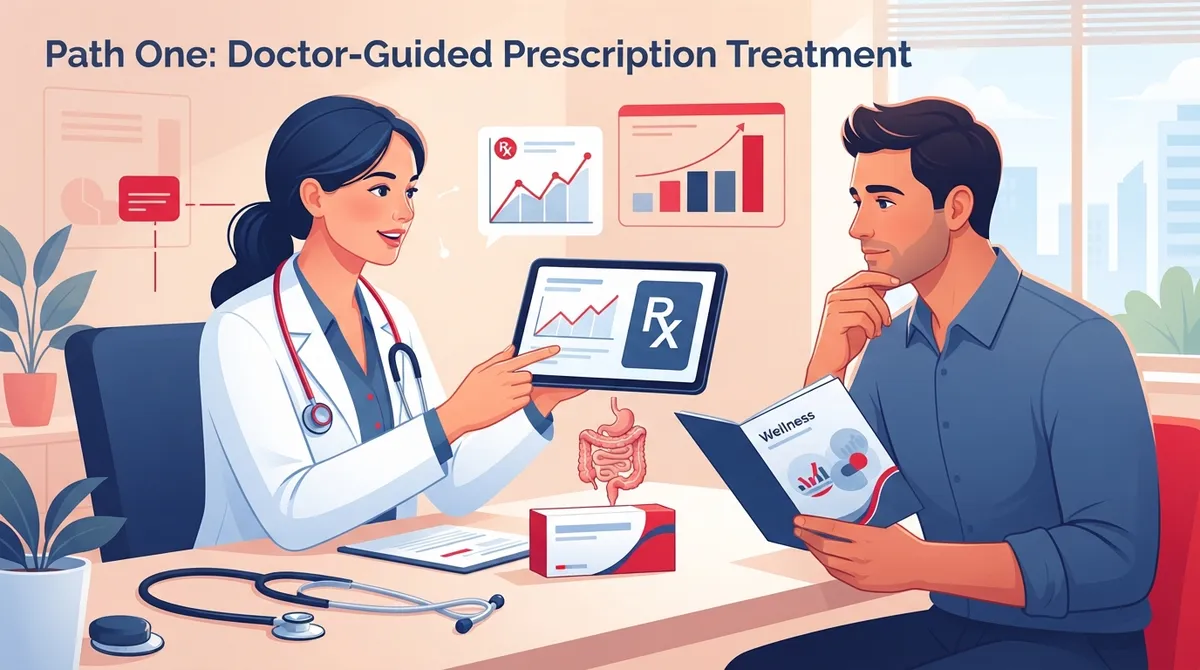
Prescription treatment begins with a medical evaluation. A licensed clinician reviews your health history, current medications, goals, and risks. This step matters because these medicines are not right for everyone.
Who Typically Qualifies
Prescribing criteria are individualized. For adults, clinicians often consider treatment when:
- BMI is 30 or higher, or
- BMI is 27 or higher with a weight-related condition, such as high blood pressure, type 2 diabetes, or sleep apnea.
Your clinician should always confirm current product labeling. Eligibility is never based on a number alone.
What Safe Oversight Includes
Good treatment requires follow-up. Your clinician will consider contraindications, side effects, drug interactions, and pregnancy plans. For example, several medicines have specific restrictions tied to conditions such as a history of medullary thyroid cancer, uncontrolled hypertension, seizure disorders, opioid use, or malabsorption.
Ongoing visits also let your care team adjust doses slowly, track your response, and decide whether to continue. Many patients also want to know what monitoring looks like once treatment starts. Our article on how to know when weight loss medication is working explains the signs to watch for.
Benefits of the Prescription Path
- Targets the biology behind hunger, not just behavior.
- Comes with lab work, screening, and medication review.
- Allows safe dose changes over time.
- Connects weight care with related conditions like blood pressure and blood sugar.
Limits of the Prescription Path
- Side effects can occur, including nausea or digestive upset with some options.
- Cost and insurance coverage vary widely.
- Some medicines are meant for ongoing use, so stopping may lead to weight regain.
That last point is important. To learn more, see why weight returns after stopping tirzepatide.
Path Two: Self-Directed Lifestyle Change
Self-care is the foundation of any weight plan. It includes nutrition, movement, sleep, and stress habits. For many people with mild weight concerns, these steps are enough.
What Self-Care Can Do Well
- Improve energy, mood, and blood sugar control.
- Cost little or nothing to begin.
- Build habits that last for life.
- Lower risk for heart disease and diabetes.
Where Self-Care Often Falls Short
Biology can fight back. When you lose weight, hunger hormones often rise and fullness hormones often fall. This makes it hard to keep eating less, even with strong motivation. People with obesity, insulin resistance, or hormone imbalances often hit a wall with lifestyle changes alone.
Poor sleep can also drive hunger. If you suspect it affects you, see how to know when to see a doctor for poor sleep.
Side-by-Side Comparison
|
Factor |
Doctor-Guided Medication |
Self-Directed Lifestyle |
|---|---|---|
|
How it works |
Targets appetite and hunger signals |
Relies on habits and willpower |
|
Medical screening |
Yes, labs and history reviewed |
No, unless you seek it |
|
Safety monitoring |
Ongoing follow-up visits |
Self-monitored |
|
Cost |
Varies; insurance may or may not cover |
Low to moderate |
|
Best for |
Obesity or weight-related conditions |
Mild weight concerns, prevention |
|
Main risk |
Side effects and interactions |
Plateaus and frustration |
Prescription vs. Off-Label vs. Compounded: Know the Difference
Patients in Tampa often hear about several versions of the same medicine. It helps to know the terms:
- FDA-approved use: The product is approved for a specific condition, such as chronic weight management.
- Off-label use: A clinician prescribes an approved drug for a different purpose. This requires careful judgment.
- Compounded products: Made by a pharmacy and not FDA-approved as finished products. Quality and sourcing can vary.
Brand names and formulations are not interchangeable just because they share an active ingredient. For example, Wegovy and Ozempic both contain semaglutide, but they are approved for different uses. Always discuss sourcing and safety with a licensed clinician and pharmacist. Our guide on compounded semaglutide mistakes to avoid covers this in more detail.
How a Primary Care Approach Changes the Outcome
Weight is rarely a stand-alone issue. It connects to blood pressure, cholesterol, blood sugar, sleep, hormones, and mental health. Primary care brings these pieces together in one place.
At InCare, our Tampa and Riverview team combines medical expertise with advanced tools. We offer weight loss programs, metabolic breath analysis, body composition analysis, DNA gene testing, and full primary care. This lets us build a plan around your biology, not a generic template. Learn more about how a primary care doctor aids weight loss and what a weight management clinic actually does.
This integrated model is especially helpful for busy families, working professionals, and anyone who wants one trusted team instead of several disconnected visits. You can also see what patients say when you visit us on Google — InCare and read our reviews.
What to Discuss Before Starting Any Appetite Medication
Come to your visit prepared. These questions help you and your clinician decide together:
- What are my health risks and my full medication list?
- Which option fits my goals and medical history?
- What side effects should I expect, and when should I call?
- How long will treatment likely last?
- What will it cost, and does my insurance cover it?
- What nutrition and activity support will I receive?
Cost is a major concern for many patients. For help planning, see how to budget for tirzepatide costs in 2026 and what semaglutide costs in Tampa and Riverview.
Who Should Be Extra Careful
Certain people need closer review before starting any appetite-control medication:
- People who are pregnant, planning pregnancy, or breastfeeding.
- Those with a history of medullary thyroid cancer or related conditions.
- Patients with seizure disorders, uncontrolled high blood pressure, or opioid use.
- Anyone taking multiple prescription medicines.
A thorough medication review reduces risk. Our prescription management tips can help you keep your list organized and accurate.
Lifestyle Still Matters on Medication
Medication works best alongside healthy habits. These medicines are meant to support, not replace, good nutrition, movement, sleep, and stress care. Many patients find that appetite medicine makes habits easier to follow, because constant hunger no longer drives every decision.
A practical plan often includes:
- Protein-rich meals to protect muscle while losing weight.
- Regular walking or strength training.
- Consistent sleep and stress management.
- Regular check-ins to adjust your plan.
For lasting results, review how to keep weight off for good.
The Verdict: Which Path Wins?
For most people with obesity or weight-related health conditions, the answer is not either-or. The best results often come from pairing clinician-guided medication with strong lifestyle support. Self-care alone may be enough for mild concerns. Medication alone, without follow-up, is rarely the safest approach.
The key is choosing a team that evaluates your whole health, explains risks honestly, and stays with you over time. If you want to understand how a medical program differs from dieting, read how medical weight loss is different from dieting. You can also follow our updates on Instagram and Facebook, or watch wellness tips on TikTok.
Conclusion
Appetite control medication in Tampa can be a safe, effective tool when it is prescribed and monitored by a licensed clinician. It works best when combined with nutrition, activity, sleep, and regular follow-up. Self-directed change builds the foundation, while medical care addresses the biology that willpower alone cannot override.
If you are ready to explore your options, InCare offers personalized primary care and weight loss programs at our Tampa and Riverview locations, plus virtual visits. Our team will review your health, discuss safe options, and build a plan around your goals. Book your appointment today or contact our team with questions. This article is for education only and is not medical advice. Please consult a licensed clinician before starting any medication.
FAQs
Q: What appetite control medications are available in Tampa?
A: FDA-approved options for long-term weight management include orlistat, phentermine-topiramate, naltrexone-bupropion, liraglutide, semaglutide, and tirzepatide. Which one fits you depends on your health history, goals, and risks, so a licensed clinician must guide the choice.
Q: Who qualifies for prescription weight-loss medication?
A: Adults are commonly considered when BMI is 30 or higher, or 27 or higher with a weight-related condition such as high blood pressure or type 2 diabetes. Your clinician will confirm current product labeling and review your full medical history before prescribing.
Q: Do I still need diet and exercise while taking appetite control medication?
A: Yes. These medicines are designed to be used alongside nutrition, physical activity, sleep, and ongoing medical care. They are not a stand-alone substitute for healthy habits.
Q: Are compounded weight-loss medications the same as FDA-approved ones?
A: No. Compounded products are made by pharmacies and are not FDA-approved as finished products, and brand names and formulations are not interchangeable. Discuss sourcing and safety with a licensed clinician and pharmacist before starting.
Q: How long do people take appetite control medication?
A: Duration varies by medication and individual response. Some medicines are intended for long-term use, and stopping may lead to weight regain, so your clinician should review whether to continue at regular follow-up visits.