
Key Takeaways
- Combining a GLP-1 drug with another peptide depends on the exact substance, your health conditions, current medications, and goal; no blanket rule says all combinations are safe.
- "Peptide therapy" is a broad marketing label, so ask which specific peptide is proposed, what it is approved for, what studies support it, and who manufactures it.
- Wellness-marketed peptides such as BPC-157, ipamorelin, and CJC-1295 have limited or no human evidence when combined with GLP-1 medicines and are not FDA-approved for weight loss.
- Trial results for a purpose-built product like CagriSema do not prove that separately sourced peptides are safe together, and compounded products carry added quality and dosing risks.
- Start with a primary care review, change one thing at a time, and monitor side effects closely, since overlapping gastrointestinal effects and hypoglycemia risk can make symptoms hard to attribute.
Many patients in Tampa and Riverview now ask the same question: can GLP-1 be combined with peptide therapy? The short answer is that it depends on the exact substance, the reason for treatment, and the patient's full health picture. There is no single rule that covers every combination.
The confusion starts with the words themselves. GLP-1 medicines such as semaglutide and liraglutide are peptide-based drugs. Tirzepatide acts on both GIP and GLP-1 receptors. So "peptide therapy" is a broad marketing label, not one standardized treatment. Some pairings are being studied in clinical trials. Many others, sold in wellness settings, have little human evidence behind them.
This guide gives you ten clear facts to help you ask better questions. Whether you are a busy parent, a wellness-minded professional, or someone exploring options for the first time, safe care starts with accurate information and medical oversight.

1. GLP-1 Medicines Are Already Peptide-Based
A peptide is a short chain of amino acids. GLP-1 receptor agonists fit that description. Semaglutide and liraglutide mimic a natural gut hormone that helps control blood sugar, appetite, and digestion. Tirzepatide goes a step further by also acting on the GIP receptor.
That means adding "peptide therapy" to a GLP-1 plan is not like adding a vitamin. You are layering one active drug on another. Each carries its own effects, risks, and monitoring needs. For a deeper look at how these drugs work, read our guide on semaglutide's mechanism of action and our overview of how tirzepatide works inside your body.
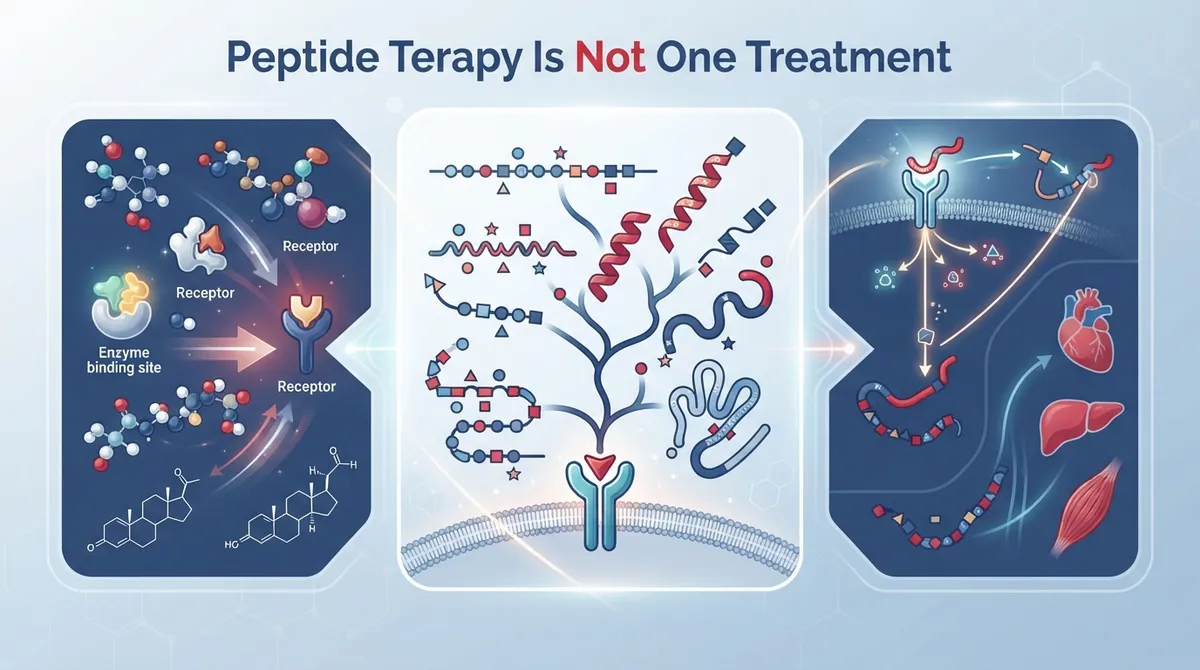
2. "Peptide Therapy" Is Not One Treatment
When a clinic or website says "peptide therapy," it could mean almost anything. The term covers FDA-approved drugs, investigational compounds, and products sold with no clear approval. Each has a different level of evidence.
Before you consider any combination, ask which specific peptide is being discussed. Ask what it is approved for, what studies support it, and who makes it. Vague answers are a warning sign. Our resource on peptides explained by your doctor can help you frame those questions.
3. The Answer Depends on the Specific Substance
Whether another peptide can be used alongside a GLP-1 medicine depends on several factors:
- The exact GLP-1 drug and its approved use
- The specific peptide being added and its regulatory status
- Your other medical conditions, such as diabetes or kidney disease
- Your current medications and supplements
- Your treatment goal, such as weight loss, recovery, or metabolic health
No evidence-based rule says all peptide combinations are safe or helpful. Each pairing needs individual review by a qualified clinician.
4. Wellness-Marketed Peptides Have Limited Human Evidence
Peptides such as BPC-157, ipamorelin, CJC-1295, and TB-500 are often promoted for recovery, body composition, or anti-aging. Human evidence for combining them with GLP-1 medicines is limited or absent. They are not FDA-approved for weight loss or general wellness. Their quality, dosing, interactions, and long-term safety can be uncertain.
That does not mean every patient question deserves a dismissal. It means these products deserve careful, honest discussion. You can learn more in our articles on ipamorelin's FDA approval status, BPC-157's FDA approval status, and CJC-1295 safety.
Quick Comparison of Commonly Discussed Peptides
|
Substance |
Regulatory Status |
Human Evidence with GLP-1 |
|---|---|---|
|
Semaglutide, liraglutide, tirzepatide |
FDA-approved for specific uses |
Extensive for their own indications |
|
Tesamorelin |
FDA-approved for HIV-associated lipodystrophy |
Combination use for weight loss not established |
|
CagriSema (semaglutide plus cagrilintide) |
Investigational fixed-dose combination |
Trial data exist for this specific product |
|
BPC-157, TB-500 |
Not FDA-approved |
Limited or absent |
|
Ipamorelin, CJC-1295 |
Not FDA-approved for weight loss or wellness |
Limited or absent |
5. Some Combinations Are Being Studied as Purpose-Built Medicines
Researchers are testing designed combinations. One example is CagriSema, a fixed-dose pairing of semaglutide with the amylin analogue cagrilintide. A 2026 review of obesity combination pharmacotherapy reported about 17.4% placebo-adjusted total body-weight loss at 68 weeks for cagrilintide-semaglutide in the REDEFINE 1 trial.
This result matters, but it must be read carefully. It applies to one specific, investigational, manufacturer-designed product. It does not show that patients should combine separately sourced peptides in routine care. A tested formulation is very different from mixing products from different sources.
If you are comparing current options, our guide to tirzepatide vs. semaglutide explains how the two approved medicines differ.
6. Tesamorelin Has a Narrow Approved Use
Tesamorelin is an FDA-approved peptide for reducing excess abdominal fat in adults with HIV-associated lipodystrophy. It is not approved for general weight loss. Using it with a GLP-1 drug for wellness or weight loss goes beyond that approval and requires individualized clinician review.
If you are curious about this option, see our guide on tesamorelin peptide care in Tampa.
7. Side Effects Can Overlap and Add Up
GLP-1 medicines commonly cause gastrointestinal effects, including nausea, vomiting, diarrhea, constipation, and abdominal pain. Significant symptoms can lead to dehydration, which can contribute to kidney problems. If you also take glucose-lowering medicines, hypoglycemia risk may change.
Adding another peptide can make it harder to tell which product caused a new symptom. That is why clinicians usually change one thing at a time and monitor closely. Watch for these warning signs and call your clinician promptly if they appear:
- Persistent vomiting or inability to keep fluids down
- Severe or lasting abdominal pain
- Dizziness, fainting, or signs of low blood sugar
- Reduced urination or unusual swelling
- Injection-site reactions or rash
Our articles on semaglutide side effects and managing gastrointestinal effects offer practical guidance.
8. Compounded Products Carry Extra Uncertainty
The FDA states that compounded drugs are not FDA-approved. The agency does not review them for safety, effectiveness, or quality before they are marketed. The FDA has reported dosing errors and adverse-event reports tied to compounded semaglutide and tirzepatide.
As of May 31, 2026, the FDA reported receiving 990 adverse-event reports associated with compounded semaglutide. The agency notes that reporting may be incomplete, so the true number could differ. For patients, the lesson is simple: know the exact product, its source, and its labeling. Our guide on FDA-approved versus compounded peptides explains the differences in plain language.
9. Primary Care Review Is the Safest Starting Point
A primary care clinician sees your whole health picture. That matters when two active treatments may interact. A careful review should include:
- Verify the exact product, ingredients, and source.
- Review your full medication, supplement, and health history.
- Clarify your treatment goal and whether a better-supported option exists.
- Order baseline labs when appropriate.
- Start one change at a time and set a monitoring schedule.
- Reassess results and side effects at planned follow-ups.
This approach protects you from guesswork. It also fits the needs of busy families and professionals who want efficient, organized care. Learn what to ask in our list of 15 questions to ask a peptide therapy clinic, or explore our resource on evaluating peptide stacks alongside GLP-1 medications.
10. Never Add, Stop, or Change Peptides on Your Own
Stopping or switching a GLP-1 medicine can change appetite, weight, and blood sugar. Adding an unapproved peptide can introduce unknown risks. Both decisions should involve a qualified prescriber who knows your history.
If you are already using a GLP-1 drug and have questions about another peptide, bring the product label, the source, and your full medication list to your visit. Honest conversations lead to safer plans. For common pitfalls, see 7 mistakes when you combine peptides with GLP-1 drugs.
How InCare Approaches GLP-1 and Peptide Questions
At InCare, we combine primary care expertise with advanced wellness services in Tampa and Riverview. Our approach centers on prevention, personalized planning, and evidence-based decisions. We review your history, discuss your goals, and explain what is known and what is still uncertain.
Our weight loss programs use technology such as metabolic breath analysis and body composition tracking to guide care. Patients who want to understand their options can start with our overview of GLP-1 and peptide therapy in Tampa. You can also read what neighbors say about their visits when you visit us on Google — InCare, where our Tampa and Riverview team holds a 4.8 rating. Follow our wellness updates on Instagram or Facebook, and see short health tips on TikTok.
Conclusion
So, can GLP-1 be combined with peptide therapy? Sometimes, under the right conditions, and only after careful review. Purpose-built combinations may one day offer new options, but trial results for one product do not prove that separately sourced peptides are safe together. Wellness-marketed peptides often lack strong human evidence, and compounded products add quality concerns.
The safest path is clear: identify the exact products, review your whole health history, add one change at a time, and monitor closely. If you want a trusted team to guide that process in Tampa or Riverview, Book Now to schedule a visit, or contact our team with your questions.
FAQs
Q: Can you take another peptide while using semaglutide or tirzepatide?
A: It depends on the specific peptide, your health conditions, and your other medications. There is no general rule that all combinations are safe. A qualified prescriber should review the exact product and your full history before you add anything.
Q: Are GLP-1 medications considered peptide therapy?
A: Yes, in a technical sense. Semaglutide and liraglutide are peptide-based drugs, and tirzepatide acts on both GIP and GLP-1 receptors. However, "peptide therapy" is also used as a broad marketing term for many different products with very different levels of evidence.
Q: Is it safe to combine GLP-1 drugs with BPC-157, ipamorelin, or CJC-1295?
A: Human evidence for these combinations is limited or absent. These products are not FDA-approved for weight loss or general wellness, and their quality, dosing, and long-term safety can be uncertain. Discuss any such plan with a clinician before starting.
Q: Can tesamorelin be used with a GLP-1 medication?
A: Tesamorelin is FDA-approved for reducing excess abdominal fat in adults with HIV-associated lipodystrophy, not for general weight loss. Using it with a GLP-1 drug for wellness goals is not established by that approval and requires individualized clinician review.
Q: Are compounded GLP-1 drugs FDA-approved?
A: No. The FDA states that compounded drugs are not FDA-approved and are not reviewed for safety, effectiveness, or quality before marketing. The agency has reported dosing errors and adverse-event reports involving compounded semaglutide and tirzepatide.