Key Takeaways
- Patient-centered care shifts decision-making from provider-led to shared, resulting in better health outcomes, higher patient satisfaction, and lower long-term healthcare costs compared to traditional disease-focused models.
- The model treats patients as whole persons by considering biological, psychological, and social factors rather than just symptoms, enabling providers to identify root causes and deliver more effective, personalized treatment plans.
- Shared decision-making empowers patients to actively participate in choosing treatment options, significantly increasing treatment adherence and commitment because patients helped create their own care plans.
- Patient-centered practices reduce healthcare costs by prioritizing preventive care and early detection, avoiding costly emergency interventions, hospital readmissions, and unnecessary procedures.
- Eight core principles define patient-centered care: timely access, trusted professionals, care continuity, family involvement, transparent communication, respect for preferences, emotional support, and consideration of environmental needs.
- To find a patient-centered provider, look for active listening, written personalized care plans, clear explanation of treatment options, easy access to medical records, and coordinated care across multiple services.
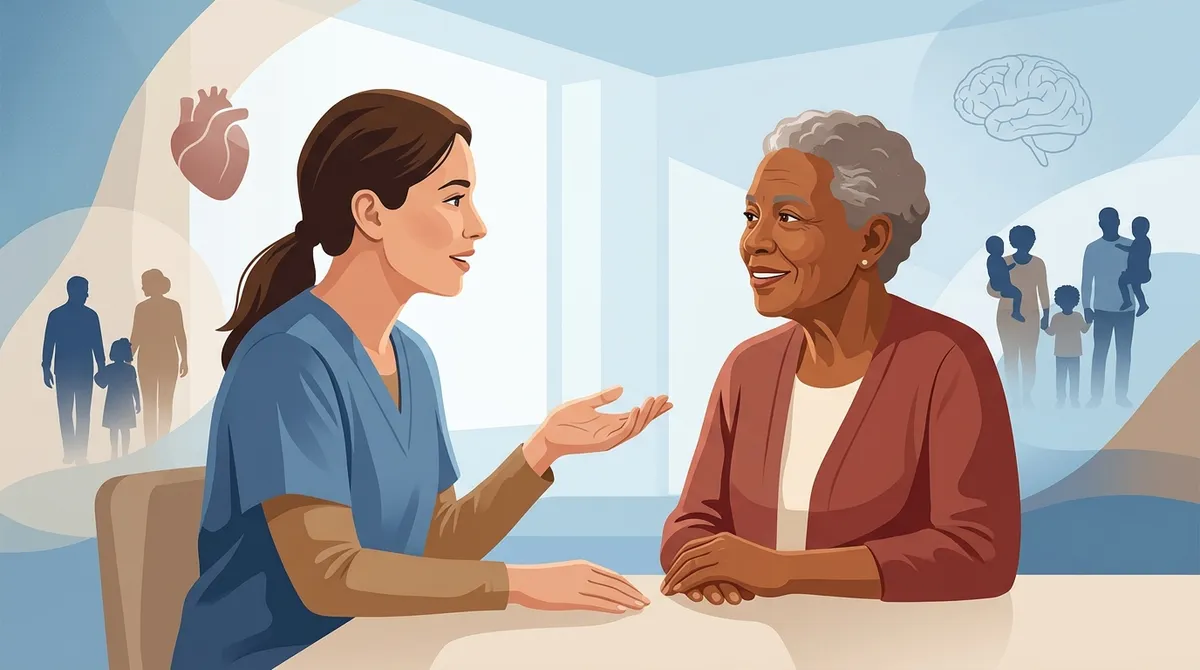
Healthcare has changed dramatically in recent years. The old model — where doctors made decisions and patients simply followed orders — is being replaced by something far more effective. That something is patient-centered care. This approach puts you, the patient, at the heart of every health decision. It treats you as a whole person, not just a set of symptoms. And the results speak for themselves: better health outcomes, higher satisfaction, and lower long-term costs.
Whether you are managing a chronic condition, seeking preventive screenings, or simply trying to optimize your wellness, understanding patient-centered care can help you get more from your healthcare experience. This article explains what patient-centered care means, why it matters, and how it is transforming primary care for patients of all ages and backgrounds.

What Is Patient-Centered Care?
Patient-centered care is a healthcare model that treats each person as a unique individual. It focuses on your values, preferences, and personal goals — not just your diagnosis. Instead of a one-size-fits-all approach, your provider builds a care plan around you. This means your voice matters. Your concerns are heard. Your priorities guide the treatment.
This model creates a genuine partnership between you and your healthcare provider. It considers the full picture of your health — biological, psychological, and social factors — rather than just treating the presenting condition. Learn more about what comprehensive primary care means and how it applies to your daily health.

The 8 Core Principles of Patient-Centered Care
The Picker Institute identified eight foundational principles that define true patient-centered care. These principles serve as a roadmap for any healthcare provider committed to putting patients first.
- Timely access to healthcare advice — You can reach your provider when you need guidance, without long delays.
- Treatment by trusted professionals — You receive care from qualified, compassionate providers you can rely on.
- Care continuity — Your care is coordinated and consistent over time, not fragmented across providers.
- Family involvement — Loved ones can be included in care decisions when appropriate.
- Transparent communication — Your provider explains diagnoses, options, and outcomes clearly and honestly.
- Respect for patient preferences — Your values and personal goals shape your treatment plan.
- Empathy and emotional support — Your emotional well-being is taken seriously alongside your physical health.
- Consideration of environmental and physical needs — Your care setting and daily life circumstances are factored into your plan.
These eight principles form the backbone of the patient-centered model. You can explore how they apply across primary care physician services in a modern clinical setting.

Patient-Centered vs. Traditional Disease-Focused Care
Understanding the difference between these two models can help you choose the right healthcare provider. The table below highlights the key distinctions.
Feature Traditional Care Patient-Centered Care Focus Disease or symptom Whole person and lifestyle Decision-making Provider-led Shared between patient and provider Treatment plan Standardized protocols Personalized to patient goals Patient role Passive recipient Active participant Communication style One-directional Open, two-way dialogue Family involvement Limited Encouraged when appropriate Preventive focus Reactive (treat illness) Proactive (prevent illness)
This shift in approach has profound implications for your health outcomes. You are more likely to follow through with care when you helped create the plan. Read more about the difference between fragmented and coordinated care to understand why continuity matters so much.

Key Benefits of Patient-Centered Care
Research consistently shows that patient-centered care delivers measurable advantages over traditional models. Here are the most significant benefits you can expect.
Improved Health Outcomes
Engaged patients who receive personalized treatment plans are more likely to follow through with their care. When your treatment aligns with your values and lifestyle, you are more motivated to stick with it. Studies confirm that this leads to better clinical results across a wide range of conditions.
This is especially relevant for managing chronic illnesses. You can learn more about how primary care doctors help manage chronic conditions using a personalized approach.
Higher Patient Satisfaction
When patients feel heard and respected, they report higher satisfaction with their care. This is not just about feeling good — satisfied patients are more likely to keep appointments, communicate openly, and take an active role in their own wellness. The result is a more productive relationship between you and your provider.
Lower Healthcare Costs
Patient-centered care reduces healthcare costs by focusing on prevention and reducing unnecessary procedures. It also leads to shorter hospital stays. By catching problems early — through preventive screenings and wellness visits — you avoid costly interventions down the road. Learn why preventive health care is key to a longer life.
Better Self-Management Skills
This model actively teaches patients to manage their own health between visits. You learn to recognize warning signs, track symptoms, and make healthier daily choices. Over time, this builds confidence and reduces dependence on emergency or reactive care.
How Patient-Centered Care Addresses the Whole Person
One of the defining features of this approach is its attention to the biopsychosocial model of health. That means your provider considers:
- Biological factors — Your medical history, genetics, and physical conditions
- Psychological factors — Stress, mental health, and emotional well-being
- Social factors — Family dynamics, work environment, and lifestyle habits
This holistic view allows your provider to identify root causes rather than just managing surface-level symptoms. Services like DNA gene testing and metabolic breath analysis are examples of tools that support this whole-person view of health.
Shared Decision-Making in Primary Care
Shared decision-making is one of the most powerful tools in patient-centered care. It means your provider presents you with clear options, explains the risks and benefits of each, and involves you in choosing the best path forward. You are not just a bystander — you are a decision-maker.
This is especially important for conditions that offer multiple treatment approaches, or for lifestyle-based interventions like medical weight loss programs. When you are part of the decision, you are far more likely to commit to the plan.
Families also play a key role. A parent bringing a child in for care, or an adult child helping an aging parent navigate treatment options, can be an important part of the decision-making team. Explore how family medicine supports whole-family health through this collaborative model.
Patient-Centered Care Across Key Wellness Services
The patient-centered model applies across every type of care — from routine checkups to advanced wellness services. The table below shows how this approach shapes specific services.
Service Patient-Centered Application Key Benefit Annual Wellness Visit Personalized health goals discussion Early detection and prevention Cancer Screening Risk-based screening recommendations Earlier intervention Weight Loss Program Tailored plans based on body composition and lifestyle Sustainable long-term results DNA Gene Testing Genetic insights inform personalized care Proactive disease prevention IV Hydration Therapy Custom nutrient blends based on individual needs Optimized energy and recovery Urgent Care Same-day access, coordinated with primary care history Continuity and faster recovery
You can explore cancer screening services and IV hydration therapy options that are delivered within a patient-centered framework.
What to Look for in a Patient-Centered Practice
Not all healthcare providers practice true patient-centered care. Here are the signs you have found the right fit.
- Your provider listens without interrupting and asks follow-up questions
- You receive a written care plan that reflects your personal goals
- Your provider explains options clearly before recommending treatment
- You have easy access to your medical records and test results
- Follow-up communication is prompt and clear
- The practice offers coordinated care across multiple services
You can also review 7 signs you've found the right primary care practice to evaluate your current provider relationship.
How InCare Delivers Patient-Centered Primary Care
InCare, serving patients across Tampa and Riverview, Florida, was built around the principles of patient-centered care from day one. With advanced technology, a compassionate team of providers, and a full suite of wellness services, InCare treats every patient as an individual with unique needs and goals. You can visit InCare's profile on Google to read reviews from real patients who have experienced this approach firsthand. Stay connected and follow InCare's wellness tips on Facebook and Instagram for ongoing health education and updates.
Whether you need urgent care, a comprehensive wellness visit, or an advanced service like body composition analysis, InCare's patient-first model ensures that your care plan is built around you — not a generic template.
Outcomes Comparison: Patient-Centered vs. Traditional Models
Health Metric Traditional Model Patient-Centered Model Treatment adherence Lower (passive patient role) Higher (active participation) Preventive screenings completed Inconsistent Regular, personalized schedule Patient satisfaction scores Moderate Significantly higher Hospital readmission rates Higher Reduced through coordinated follow-up Long-term health costs Higher (reactive care) Lower (preventive focus)
Steps to Get Started with Patient-Centered Care
Transitioning to a patient-centered care model is easier than you think. Here is a simple roadmap to follow.
- Find a provider who listens — Look for a clinic that emphasizes shared decision-making and personalized care plans.
- Prepare for your visit — Write down your health goals, current concerns, and any questions before your appointment.
- Ask questions — Do not hesitate to ask why a test or treatment is recommended and what your alternatives are.
- Share your full story — Tell your provider about your lifestyle, stress levels, and family history. Context matters.
- Review your care plan — Make sure the plan reflects your goals and that you understand each step.
- Stay engaged between visits — Follow up, track your progress, and communicate changes in your health promptly.
You can also explore how to make preventive care work for your health and what happens during an annual wellness visit to set realistic expectations.
For more patient wellness content, follow InCare on TikTok where the team shares practical health tips, service highlights, and patient education videos.
Why This Approach Matters More Than Ever in 2026
In 2026, patients have more healthcare choices than ever before. Telemedicine, AI-powered health assessments, and advanced diagnostic tools are now widely available. But technology alone is not enough. What transforms healthcare from transactional to transformational is the relationship between patient and provider.
Patient-centered care ensures that new technologies serve your needs — not the other way around. Whether it is a AI-powered health assessment or a personalized annual physical exam, every tool should be used in service of your individual health journey.
The research is clear: person-centered care in primary care settings results in improved health outcomes, better psychological outcomes, improved health system outcomes, and higher patient satisfaction rates. This is not just a trend — it is the future of effective healthcare.
Conclusion
Patient-centered care is not just a philosophy — it is a proven approach that delivers real, measurable results. It improves health outcomes, increases treatment adherence, reduces costs, and creates more satisfying experiences for both patients and providers. Most importantly, it gives you the power to take control of your own health journey.
If you are ready to experience healthcare that truly puts you first, the team at InCare is here to help. From comprehensive primary care to advanced wellness services, every visit is designed around your goals. Schedule your appointment today and discover the difference that patient-centered care can make in your life. You can also contact InCare directly to learn more about available services across Tampa and Riverview, Florida.
FAQs
Q: What are the main benefits of patient-centered care in primary care settings?
A: Patient-centered care improves health outcomes, increases treatment adherence, reduces unnecessary procedures, and leads to higher patient satisfaction. It also supports better self-management skills and lowers long-term healthcare costs by prioritizing prevention over reactive treatment.
Q: How is patient-centered care different from traditional disease-focused care?
A: Traditional care focuses primarily on diagnosing and treating a specific disease or symptom. Patient-centered care, by contrast, treats the whole person — considering biological, psychological, and social factors — and involves the patient as an active partner in all healthcare decisions.
Q: What is shared decision-making and why does it matter?
A: Shared decision-making is a process where the provider presents all available treatment options and the patient actively participates in selecting the best approach based on their values and preferences. Research shows this increases treatment adherence and leads to better health outcomes.
Q: How does patient-centered care reduce healthcare costs?
A: By focusing on preventive care, early detection, and personalized treatment plans, patient-centered care reduces the need for costly emergency interventions and hospital admissions. Coordinated follow-up care also lowers readmission rates and minimizes unnecessary diagnostic procedures.
Q: How can I tell if my primary care provider practices patient-centered care?
A: Signs of a patient-centered provider include active listening, transparent communication about treatment options, personalized care plans that reflect your goals, and easy access to your health records. You should also feel comfortable asking questions and feel that your preferences are respected.