Key Takeaways
- Florida does not rank medical marijuana doctors, so no official 'best in Tampa' list exists. Verify any physician's active, unrestricted Florida license through the Department of Health lookup before booking.
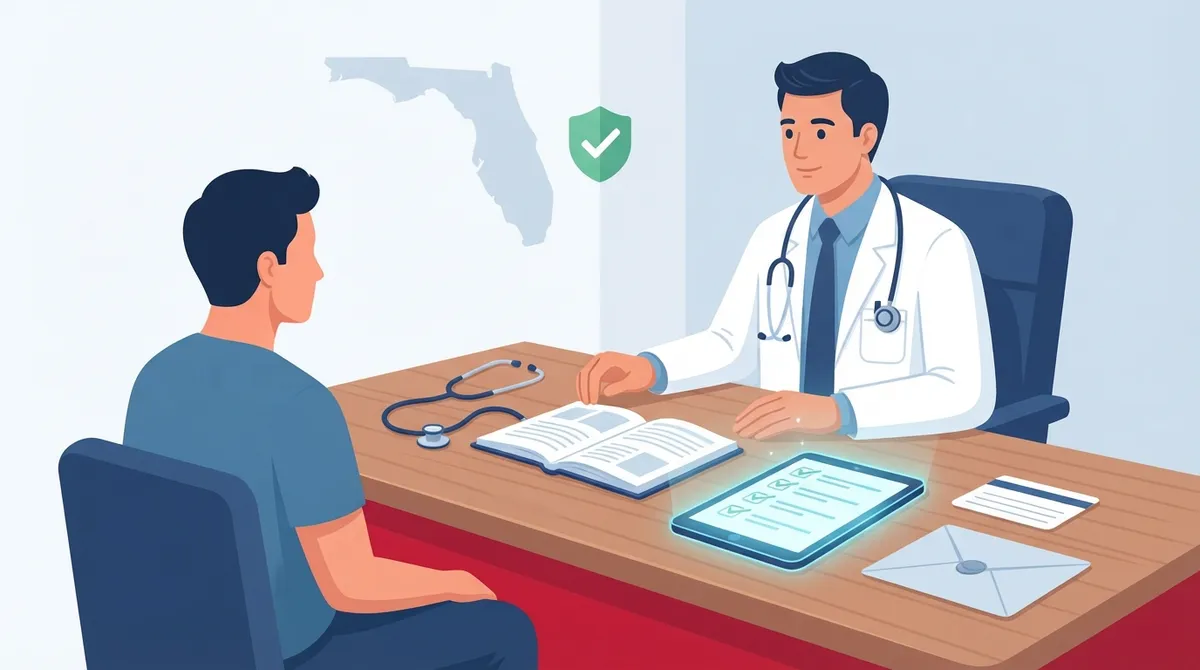
- Florida requires an in-person physical exam for the first certification, and the doctor must record that likely benefits outweigh risks and obtain your signed consent.
- A physician certification is not a state card: the doctor enters you in the Medical Marijuana Use Registry, then you apply separately to OMMU and pay a state fee.
- Avoid practices that guarantee approval, offer certification without an exam, or hide fees; reputable clinics explain risks, ask about your medications, and quote prices plainly.
If you search for the best medical marijuana doctor in Tampa, you will find many names and bold claims. No official ranking exists. No state agency crowns one physician above the rest. The better question is this: how do you find a qualified, honest, and caring doctor who fits your health needs?
This guide gives you a clear way to answer that question. You will learn what Florida law requires of doctors, how to check a license, what a good visit looks like, and which warning signs to avoid. You will also see why a primary care setting can be a smart place to start. Florida had 779,673 qualifying patients in its registry in 2025, according to a 2026 study in JMIR Public Health and Surveillance. Many people are asking these same questions, and the right doctor can make the process smooth and safe.
Why There Is No Official Answer to the Best Medical Marijuana Doctor in Tampa
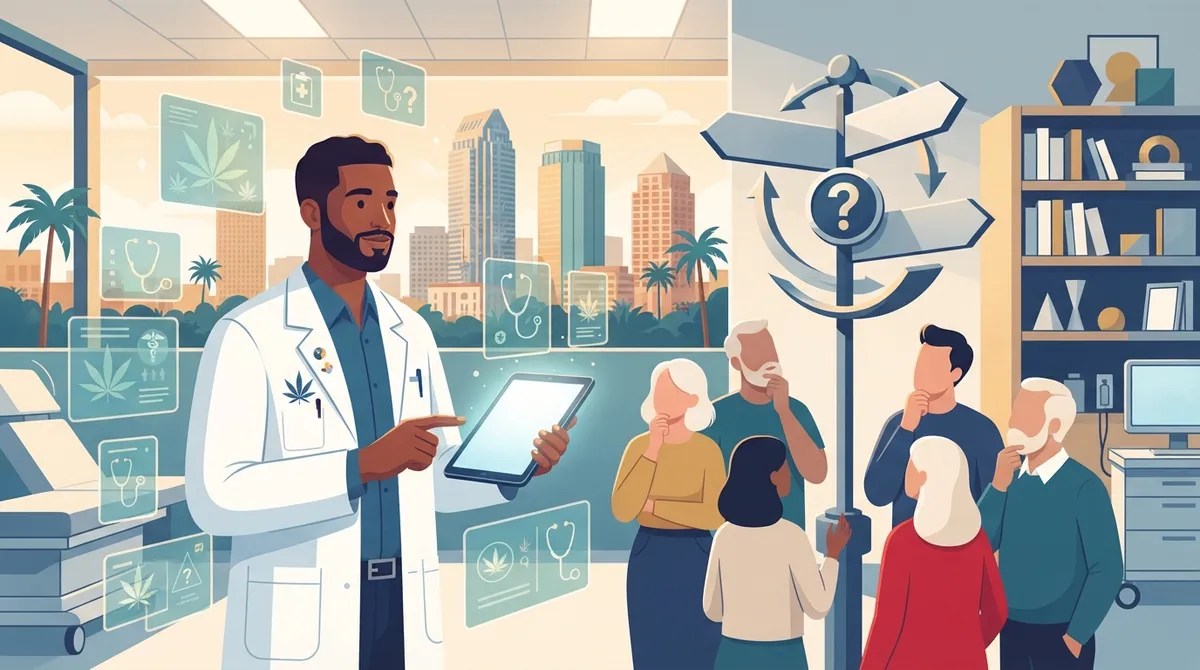
People often want one name. That is understandable, but it is not realistic. Florida does not rank certifying physicians. Online lists and review pages vary widely, and some are paid placements. A glowing ad is not proof of quality.
So the best medical marijuana doctor in Tampa is the one who meets the legal standards, treats you with respect, and explains your options clearly. You can judge those traits yourself with a few simple checks.
What the research can and cannot tell you
The available sources do not support a reliable Tampa-only ranking. They also do not show a standard local price for a visit. Fees differ by practice. That is why asking direct questions matters more than trusting a top-ten list.
What Florida Law Requires of a Qualified Physician
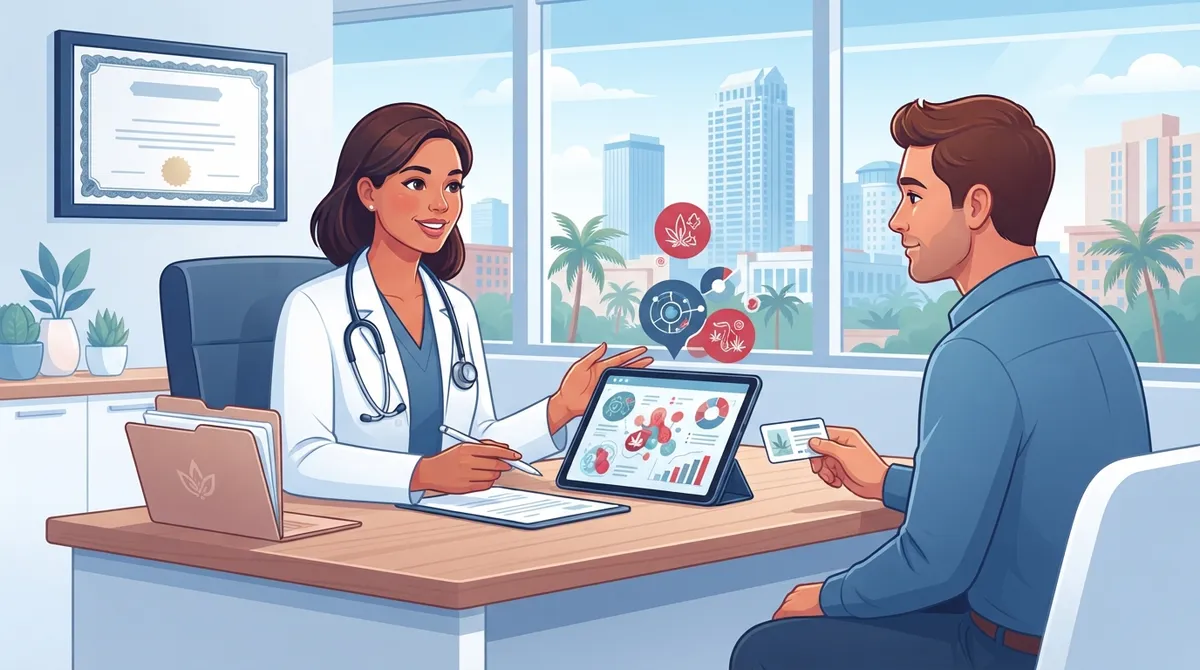
Florida sets clear rules for doctors who can certify patients. Knowing these rules helps you spot a legitimate practice fast.
- Active license: The doctor must hold an active, unrestricted Florida medical or osteopathic physician license.
- State training: The doctor must finish a two-hour course and exam required by the state, and repeat it as required for license renewal.
- Registry access: The doctor enters your certification into Florida's Medical Marijuana Use Registry.
- Documentation: The doctor must review your history, diagnose a qualifying condition, and record that likely benefits outweigh the health risks.
These duties come from Florida Statutes section 381.986 and guidance from the state Office of Medical Marijuana Use (OMMU). You can confirm any physician's license through the Florida Department of Health license lookup. This takes only a few minutes and is the single best first step.
How Do You Compare Doctors? A Practical Checklist
Use the table below when you speak with a Tampa-area practice. It turns a vague search into a clear comparison.
|
What to Check |
What a Good Answer Looks Like |
Warning Sign |
|---|---|---|
|
License status |
Active Florida license you can verify online |
Vague or missing credentials |
|
Initial visit |
In-person physical exam |
Offer to certify without seeing you |
|
Fees |
Clear price for the doctor visit, separate from the state card fee |
Hidden charges or confusing bundles |
|
Medical review |
Asks about history, medications, and risks |
Rushed visit with no questions |
|
Follow-up |
Plan for renewals and check-ins |
No ongoing care |
|
Promises |
Honest talk about benefits and risks |
Guaranteed approval or guaranteed results |
What Happens at the Visit
Florida requires an in-person physical exam for your first certification. After that, a physician who has already examined you in person may handle later renewal exams by telehealth, subject to the law and clinical judgment. Here is the usual path from start to finish.
- Gather your records. Bring prior medical records, a list of medications, and photo ID. Our guide on how to prepare and what to bring to a medical cannabis visit covers this in more detail.
- Complete the in-person exam. The doctor reviews your history, checks your health, and looks at the state prescription drug monitoring database.
- Receive a diagnosis. The doctor decides whether you have a qualifying condition and whether likely benefits outweigh risks.
- Give informed written consent. The doctor must explain risks and obtain your signed consent.
- Registry entry. The doctor enters your certification into the Medical Marijuana Use Registry.
- Apply for your state card. You submit a separate application to OMMU and pay the state fee.
A certification is not a card
Many people mix these up. The physician certification is the doctor's part. The identification card is a separate state application you complete after registry entry. You also must meet Florida residency rules. Plan for both steps, and confirm the doctor's fee separately from the state card fee.
Which Conditions Qualify in Florida?
Florida law lists specific qualifying conditions. These include cancer, epilepsy, glaucoma, HIV or AIDS, post-traumatic stress disorder, ALS, Crohn's disease, Parkinson's disease, multiple sclerosis, terminal conditions, and chronic nonmalignant pain tied to a qualifying condition. The law also allows conditions of the same kind or class, or comparable conditions, as the statute describes.
In the 2025 registry analysis, the most common categories per 100,000 patients were PTSD (81,519), chronic pain (24,081), and multiple sclerosis (12,938). These numbers show how varied patient needs are. Your doctor decides whether your own condition qualifies, based on your records and exam.
Why a Primary Care Setting Can Help
A medical marijuana certification is a medical decision. It works best when your doctor sees the whole picture. A primary care clinic looks at your medications, chronic conditions, sleep, mood, and long-term goals together. That context helps keep care safe.
This matters for busy families, young professionals, and wellness-minded adults who want one trusted team instead of scattered visits. A clinic that also offers primary care can coordinate with your other treatment, order labs when needed, and support follow-up. If you are still choosing a main doctor, see our guide on how to choose the best primary care doctor in Tampa.
At InCare, patients in Tampa and Riverview receive personalized, prevention-focused care. You can read what patients say by visiting our InCare location on Google. Our team can explain how certification fits into your wider health plan. For a closer look at the process, read how MMJ certification in Tampa works in 2026.
Signs of a Reputable Practice
Good clinics share a few habits. Look for these traits as you compare options.
- They explain risks and alternatives, not only benefits.
- They ask about your other medications and health conditions.
- They quote fees plainly and separate state costs from their own.
- They are willing to say no if you do not qualify.
- They offer a plan for follow-up and renewals.
For a longer list, see 8 signs of a reputable medical marijuana clinic in Tampa and 10 signs of compassionate medical cannabis care in Tampa.
Common Mistakes to Avoid
A few missteps cause most of the frustration patients report. Avoid these and your experience will go more smoothly.
- Choosing by price alone. The cheapest visit is not always the best care.
- Skipping the license check. It takes minutes and protects you.
- Believing guarantees. No honest doctor can promise approval or a medical outcome.
- Confusing the two fees. The doctor fee and the state card fee are separate.
- Arriving unprepared. Missing records can slow your visit.
Our article on 9 cannabis card appointment mistakes to avoid in Tampa goes deeper on each of these.
Timing, Renewals, and Staying Organized
Plan ahead so your certification never lapses. Keep a calendar reminder for your renewal window and book early. If your first exam was in person, your doctor may be able to handle later exams by telehealth, which saves time for busy schedules. Ask your practice how they handle renewals before you commit. For help, see how to renew a medical marijuana card in Tampa.
If you want the full walkthrough from first call to card, read how to get Florida medical marijuana certification in Tampa. You can also follow state guidance directly through the Florida Office of Medical Marijuana Use, which posts current rules, since fees and procedures can change.
Final Thoughts: Choose the Right Doctor for You
The best medical marijuana doctor in Tampa is not a single name on a list. It is a licensed, transparent clinician who examines you in person, explains the risks, charges fairly, and supports you over time. Use the checklist in this article, verify credentials, and ask direct questions. If a practice makes big promises, walk away.
If you want a team that treats your whole health, not just one visit, we are here to help. Book your appointment with InCare today, or contact our Tampa team with questions. You can also follow our updates on Instagram, Facebook, and TikTok.
FAQs
Q: How do I find a qualified medical marijuana doctor in Tampa?
A: Start by verifying that the physician holds an active, unrestricted Florida license through the Florida Department of Health license lookup. Then compare the practice on in-person exam requirements, clear fees, and follow-up care. Avoid any provider that guarantees approval.
Q: Does Florida require an in-person visit for the first certification?
A: Yes. Florida law requires an in-person physical examination for a patient's initial certification. A physician who has already examined you in person may conduct later renewal exams by telehealth, subject to applicable law and clinical judgment.
Q: What is the difference between a physician certification and a state identification card?
A: The certification is the doctor's entry into Florida's Medical Marijuana Use Registry. The identification card is a separate application you submit to the Office of Medical Marijuana Use after registry entry. Each step has its own fee, so confirm both costs.
Q: How much does a medical marijuana doctor visit cost in Tampa?
A: There is no reliable standard local price, because fees vary by practice. Ask the clinic for its physician fee up front and remember the state card application fee is separate. Confirm current state fees with the Office of Medical Marijuana Use.
Q: What conditions qualify for medical marijuana in Florida?
A: Qualifying conditions include cancer, epilepsy, glaucoma, HIV or AIDS, PTSD, ALS, Crohn's disease, Parkinson's disease, multiple sclerosis, terminal conditions, and chronic nonmalignant pain related to a qualifying condition. The law also covers conditions of the same kind or class. Your physician makes the final determination.