Key Takeaways
- KPV is a tripeptide (3 amino acids: lysine, proline, valine) with molecular formula C16H30N4O4, derived from positions 11-13 of alpha-MSH, making it one of the smallest peptides studied in inflammation research.
- Early laboratory and animal studies show KPV may reduce inflammatory markers like TNF-α, IL-6, and NF-κB activity, but no large-scale human clinical trials currently exist to confirm safety or effectiveness for any condition.
- Most KPV products sold online are labeled for research use only and lack pharmaceutical-grade quality standards, meaning there is no guarantee of purity, accurate dosing, or sterility regardless of the defined chemical structure.
- KPV's small size and defined chemical identity alone do not guarantee safety or efficacy; products making bold claims about treating conditions without human trial data or third-party testing certificates are major red flags.
- Before considering any KPV product, ask your primary care provider whether it's pharmaceutical grade, what clinical evidence supports it for your specific health goal, and how it might interact with your current medications.
- KPV should be considered investigational, not an established treatment; a knowledgeable licensed provider can help you evaluate whether it fits into a broader prevention-focused wellness strategy compared to proven alternatives.
If you have spent time researching peptide therapy, you may have come across the term "KPV peptide structure" in wellness clinic materials or online forums. This small molecule has drawn attention because of its simple chemical makeup and its link to anti-inflammatory research. But understanding the structure of KPV is only the first step. Knowing what the science actually supports, and what remains unproven, matters even more for anyone considering it as part of a wellness plan.
At InCare, our providers in Tampa and Riverview believe patients deserve clear, honest information about peptides and other emerging wellness topics. This article breaks down the KPV peptide structure in plain language, explains what research has found so far, and outlines the questions you should ask before considering any peptide product.
What Is KPV Peptide Structure?
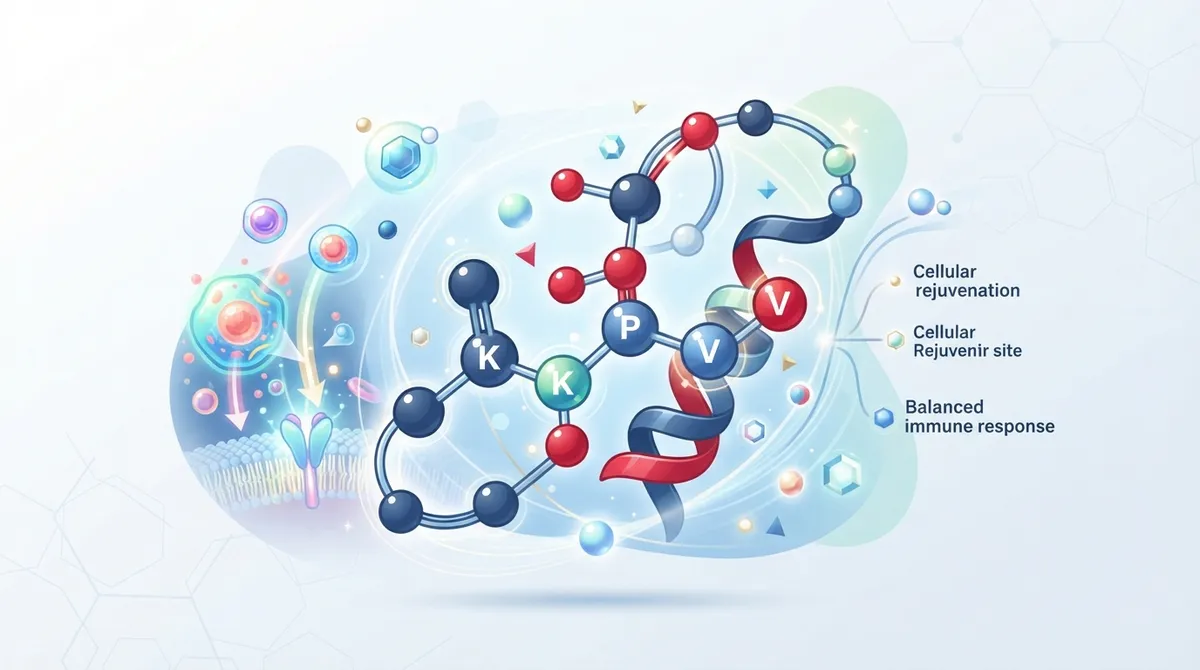
KPV is a very small peptide made of just three amino acids. Its name comes from the one-letter codes for these amino acids: lysine (K), proline (P), and valine (V). Scientists write its full chemical structure as H-Lys-Pro-Val-OH, which simply means it has a free amino group at one end and a free acid group at the other, connected by two peptide bonds.
Because it contains only three amino acids, KPV is classified as a tripeptide. This makes it one of the smallest peptides studied in wellness and inflammation research. Its small size allows it to be manufactured with relative simplicity compared to larger, more complex peptide chains.
Molecular Formula and Weight
According to PubChem, the National Institutes of Health database for chemical compounds, KPV is listed under the name "MSH (11-13)" with Compound ID 125672. Its molecular formula is C16H30N4O4, and its molecular weight is approximately 342.43 grams per mole. These figures confirm that KPV has a well-defined and verifiable chemical identity, which is an important starting point for any serious discussion about its use.
How Is KPV Related to Alpha-MSH?
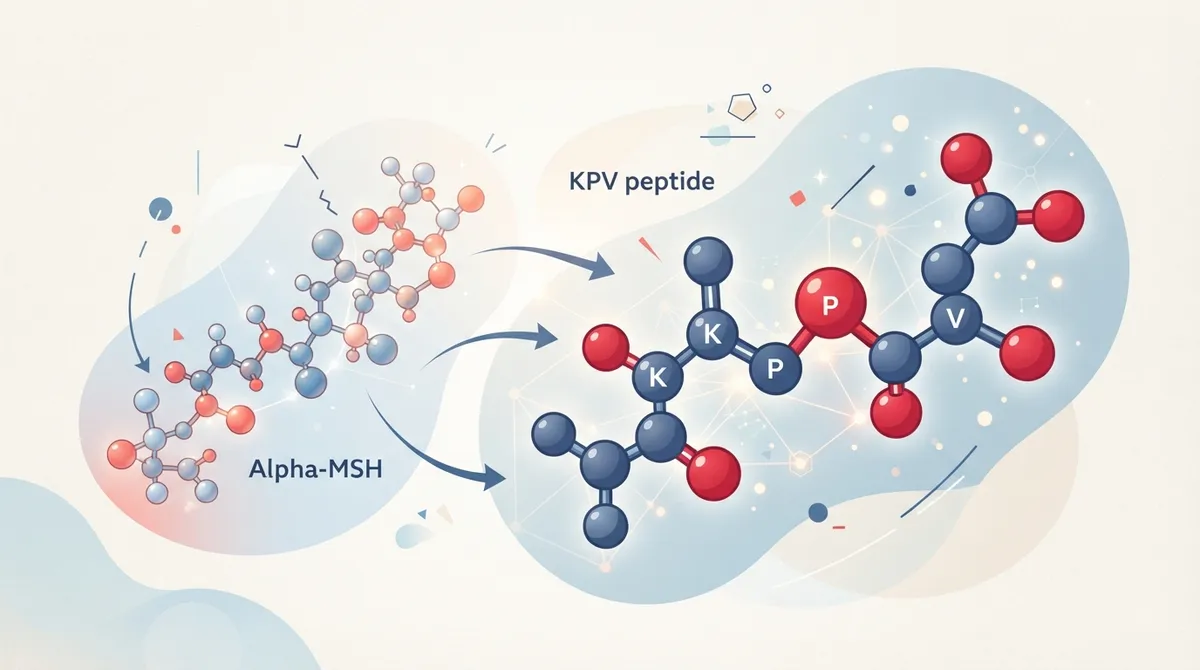
KPV is not a completely new or synthetic invention. It corresponds to the last three amino acids, positions 11 through 13, of a larger hormone called alpha-melanocyte-stimulating hormone, or alpha-MSH. Alpha-MSH is a 13-amino-acid peptide that comes from a larger precursor protein called proopiomelanocortin, often abbreviated as POMC.
Alpha-MSH is best known for its role in skin pigmentation, since it activates melanocortin receptors that trigger melanin production. However, researchers noticed that the C-terminal fragment, KPV, appeared to retain some of alpha-MSH's anti-inflammatory signaling without activating those same pigment-producing receptor pathways. This distinction is part of why KPV has attracted interest separate from the parent hormone.
Why the Distinction Matters
Understanding this relationship helps clarify a common misconception. Some assume that because KPV comes from alpha-MSH, it will cause tanning or skin darkening like some melanocortin-based products marketed for cosmetic tanning. Current research suggests this is not the primary pathway KPV appears to use. Instead, studies have focused on its potential role in calming certain inflammatory signals, a very different area of interest than pigmentation.
What Does Research Say About KPV's Biological Activity?
Laboratory and animal studies have looked at how KPV might influence inflammation at a cellular level. Some of the more frequently cited findings include:
- Reduced activity of NF-κB, a protein complex that controls how cells respond to inflammatory signals.
- Lower levels of certain inflammatory messengers, including tumor necrosis factor alpha (TNF-α), interleukin-6 (IL-6), and interleukin-1 beta (IL-1β).
- Decreased nitric oxide production in some experimental models, which is often linked to inflammatory tissue responses.
- Reduced accumulation of certain white blood cells in mouse models of induced inflammation.
A study published in the Journal of Pharmacology and Experimental Therapeutics in 2003 reported that KPV reduced polymorphonuclear leukocyte accumulation in a mouse model of crystal-induced peritonitis. Interestingly, the same study found that KPV did not raise cAMP levels in the macrophage system tested, suggesting its mechanism may differ from other anti-inflammatory pathways already known to researchers.
A separate 2007 study examined KPV in two different mouse models of intestinal inflammation, including dextran sulfate sodium colitis. Researchers reported improved outcomes and reduced inflammatory changes in the treated animals. These are meaningful early findings, but they remain limited to laboratory and animal settings.
Important Limitations of Current Evidence
It is essential to be clear about what this research does and does not show. The precise mechanism behind KPV's effects is still not fully understood and may vary depending on the tissue type or experimental model used. Most of the available evidence comes from cell cultures and animal studies, not large-scale human clinical trials.
There is currently no substantial body of randomized, controlled human research confirming KPV's safety or effectiveness for any specific condition. This means KPV should be considered investigational, not an established or approved treatment, when discussed in a primary care or wellness setting.
KPV Structure Compared to Other Common Peptides
Peptide size and structure vary widely, which affects how a peptide behaves and how it may be studied. The table below offers a simple comparison to help put KPV's structure in context.
|
Peptide |
Number of Amino Acids |
Relationship to Parent Molecule |
Primary Research Focus |
|---|---|---|---|
|
KPV |
3 (tripeptide) |
C-terminal fragment of alpha-MSH |
Preclinical anti-inflammatory signaling |
|
Alpha-MSH |
13 |
Derived from POMC precursor protein |
Pigmentation, receptor activation |
|
BPC-157 |
15 |
Fragment of body protection compound found in gastric juice |
Preclinical tissue repair research |
|
Thymosin Beta-4 fragments |
Varies by fragment |
Derived from thymosin beta-4 protein |
Preclinical wound healing research |
This kind of comparison shows that KPV's small size sets it apart structurally, but like many peptides discussed in wellness circles, its human clinical evidence base is still developing. If you are exploring options like peptide therapy in Tampa, it helps to understand these distinctions before making any decisions.
Why Chemical Structure Alone Does Not Guarantee Safety or Results
Having a clearly defined molecular structure, like KPV's C16H30N4O4 formula, tells us the compound is chemically identifiable. It does not tell us whether a specific product is high quality, correctly dosed, or safe for human use. This distinction is one of the most important points patients should understand.
Many products sold online as "KPV peptide" are labeled for research purposes only and are not regulated as pharmaceutical-grade substances. This means there is no guarantee of purity, concentration accuracy, or sterility. Buying an unregulated product based solely on its published molecular structure is a significant gap that primary care providers want patients to understand clearly.
Questions to Ask Before Considering Any Peptide Product
- Is this product manufactured under pharmaceutical-grade quality standards, or is it labeled for research use only?
- What clinical evidence, if any, supports its use for my specific health goal?
- Has my primary care provider reviewed my full medical history and current medications for possible interactions?
- Are there established, proven treatment options that should be considered first?
- What monitoring or follow-up would be needed if I chose to explore this option?
Working through these questions with a licensed provider is a far safer approach than relying on marketing claims or forum discussions. A knowledgeable clinician can help you weigh the current state of the science against your personal health needs.
How InCare Approaches Peptide and Wellness Conversations
At InCare, our providers believe every wellness conversation should start with accurate information and end with a plan that fits your individual health picture. Whether you are curious about peptide science, interested in DNA gene testing, or exploring options like medically supervised weight loss, our team takes time to explain what the evidence actually shows.
Patients in Tampa and Riverview also turn to InCare for services such as cancer screenings, IV hydration and vitamin drips, and body composition analysis, all designed around a whole-body, prevention-first philosophy. If you are trying to understand where investigational compounds like KPV fit into a broader wellness strategy, our primary care team can help you make sense of the options responsibly.
We also encourage patients to explore honest, doctor-reviewed content on topics like what happens during an annual wellness visit or how to make preventive care work for your health, since a strong foundation of preventive care often matters more than any single emerging compound.
Safety Considerations and Red Flags to Watch For
Because KPV is not FDA-approved for any specific medical condition, it is important to approach any product claims with a healthy dose of skepticism. A few warning signs to watch for include:
- Products claiming to "cure" or "treat" conditions like inflammatory bowel disease or skin conditions without any human clinical trial data to back it up.
- Sellers who cannot provide third-party testing or purity certificates for their product.
- Websites that blur the line between research chemical sales and medical advice.
- Lack of any licensed medical provider involved in dosing or monitoring recommendations.
If you come across a product or clinic making bold claims about KPV without acknowledging these limitations, consider that a signal to look elsewhere for guidance. Reliable wellness care should always be transparent about what is proven and what is still under investigation.
The Bottom Line on KPV Peptide Structure
KPV is a well-defined tripeptide, built from lysine, proline, and valine, and derived from the C-terminal end of alpha-MSH. Its molecular formula, C16H30N4O4, and molecular weight of about 342.43 grams per mole are documented in scientific databases like PubChem. Early laboratory and animal research has explored its potential role in calming certain inflammatory pathways, but this evidence has not yet advanced to reliable human clinical trials.
For patients curious about peptide science, the smartest first step is an honest conversation with a primary care provider who understands both the chemistry and the current limitations of the research. Structure alone does not equal safety, efficacy, or FDA approval. It is simply the starting point for asking better questions.
If you want to explore peptide-related wellness topics in a setting grounded in medical expertise, our team welcomes your questions at both the Tampa and Riverview locations. You can also follow along with patient stories and health tips on Facebook, Instagram, and TikTok, or see what current patients are saying by visiting our Visit us on Google — InCare profile.
Ready to have a straightforward, science-based conversation about your wellness goals? Reach out to our team today, or go ahead and schedule your visit online to get started.
FAQs
Q: What is the amino-acid sequence of the KPV peptide?
A: KPV is made of three amino acids in this order: lysine, proline, and valine. Its standard chemical form is written as H-Lys-Pro-Val-OH, reflecting a free amino group at one end and a free acid group at the other.
Q: What is the molecular formula and weight of KPV?
A: According to PubChem, KPV has the molecular formula C16H30N4O4 and a molecular weight of approximately 342.43 grams per mole. It is listed under Compound ID 125672.
Q: How is KPV related to alpha-MSH?
A: KPV corresponds to amino acids 11 through 13 at the C-terminal end of alpha-melanocyte-stimulating hormone, a 13-amino-acid peptide derived from proopiomelanocortin. Research suggests KPV may retain some anti-inflammatory activity without triggering the pigmentation effects tied to full melanocortin receptor activation.
Q: Is KPV clinically proven to treat inflammatory bowel disease or skin conditions?
A: No. Current evidence is limited to laboratory and animal studies, including mouse models of colitis and induced inflammation. There is no established body of human clinical trial evidence confirming KPV as a proven treatment for any condition.
Q: What should I ask my primary care provider before considering a KPV product?
A: Ask whether the product is pharmaceutical grade or labeled for research use only, what clinical evidence supports its use, and how it might interact with your current health conditions or medications. A licensed provider can help you weigh these factors against proven treatment options.