Key Takeaways
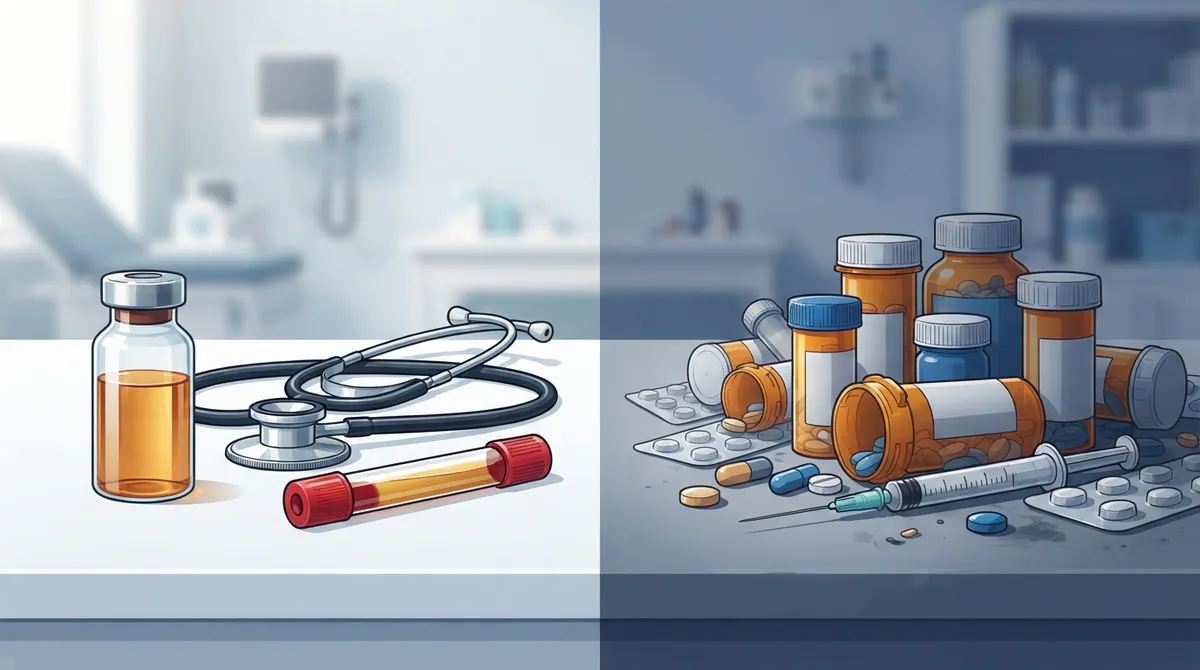
- TRT is a prescribed treatment for adults with confirmed low testosterone (hypogonadism), aiming to restore normal levels, while steroid misuse means non-prescribed, often supraphysiologic doses to build muscle or boost performance.
- Testosterone itself is an anabolic-androgenic steroid, so the difference lies in medical purpose, dose, product source, and oversight rather than the molecule alone.
- Diagnosing low testosterone requires both symptoms and consistently low levels; the AUA suggests a total testosterone below 300 ng/dL confirmed by two separate early-morning blood tests.
- Prescribed TRT requires monitoring, with the AUA recommending testosterone checks every 6 to 12 months once treatment is established, plus attention to blood counts, hematocrit, and blood pressure.
- Exogenous testosterone can suppress sperm production, so men who want to conceive should discuss fertility goals with a specialist before starting TRT.
- Anabolic steroid misuse carries serious risks including heart attack, stroke, liver damage, kidney failure, psychiatric problems, and reduced fertility, with risks rising at higher doses and longer use.
Many people hear the words "testosterone therapy" and "steroids" and assume they mean the same thing. That confusion is understandable, because testosterone itself is an anabolic-androgenic steroid. So what is the difference between TRT and steroids? The answer lies in the purpose, the dose, and the level of medical oversight.
TRT, or testosterone replacement therapy, is a prescribed treatment for adults with confirmed low testosterone, also called hypogonadism. The goal is to bring levels back toward a normal range and keep them there safely. Steroid misuse, by contrast, usually means taking high doses without a medical reason to build muscle or boost performance. This article explains how the two differ, what the risks look like, and how a primary care clinic such as InCare in Tampa and Riverview can help you sort fact from myth. If you have been wondering what is the difference between TRT and steroids, the sections below give clear, evidence-based answers.
The Short Answer: What Is the Difference Between TRT and Steroids?
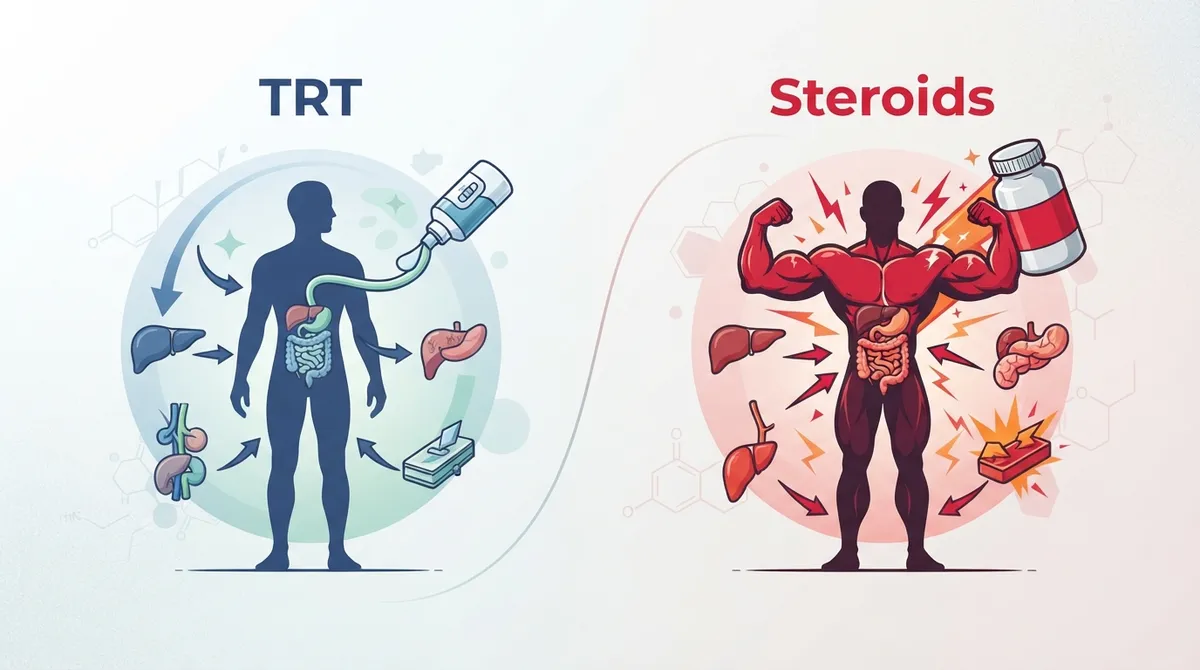
The main difference between TRT and steroids is medical purpose and dose. TRT treats a diagnosed testosterone deficiency using a prescribed amount that aims to restore normal levels. Steroid misuse uses non-prescribed drugs, often at much higher doses, to change physique or performance.
Here is the key point many articles miss: the substance is not always what separates them. Testosterone is itself an anabolic-androgenic steroid. A doctor prescribing it for a confirmed deficiency is practicing medicine. Someone injecting large amounts from an unregulated source to gain muscle is misusing a drug. The molecule can be the same, but the goals, the dose, the safety checks, and the product quality are very different.

Is TRT Considered a Steroid?
Technically, yes. Testosterone belongs to the class of anabolic-androgenic steroids (AAS). But in everyday language, "steroids" usually means the misuse of these drugs, not prescribed hormone therapy. That is why the label alone can mislead.
Think of it like caffeine. A cup of coffee and a handful of caffeine pills share the same compound. The dose and the reason for use change everything. TRT is a replacement strategy. It supplies what the body is not making enough of. Misuse is an enhancement strategy. It pushes hormone levels far above what the body would ever produce naturally.
TRT vs Steroids: Side-by-Side Comparison
|
Factor |
Prescribed TRT |
Anabolic Steroid Misuse |
|---|---|---|
|
Purpose |
Treat confirmed low testosterone |
Build muscle or boost performance |
|
Diagnosis needed |
Yes, symptoms plus repeated lab tests |
No |
|
Typical dose |
Aims for a normal (physiologic) range |
Often far above normal (supraphysiologic) |
|
Product source |
Regulated pharmacy products |
Often unregulated or illicit sources |
|
Monitoring |
Regular labs and clinical follow-up |
Usually none |
|
Pattern of use |
Ongoing, adjusted by a clinician |
Often cycles or drug combinations |
|
Legal status |
Legal with a prescription |
Illegal without a prescription |
How Doctors Diagnose Low Testosterone Before TRT
A responsible clinic does not hand out TRT because someone feels tired. Fatigue, low drive, and reduced muscle mass can have many causes. The American Urological Association (AUA) guideline says a diagnosis needs two things together: symptoms or signs of deficiency, and consistently low testosterone on lab tests.
The AUA suggests a total testosterone below 300 ng/dL is a reasonable cutoff. The guideline also calls for two separate early-morning blood measurements to confirm the result. Testosterone naturally varies through the day and from one day to the next, so one reading is not enough.
What a Good Evaluation Includes
- A full review of symptoms, health history, and current medications
- Two early-morning testosterone blood tests
- A search for causes of low testosterone, such as sleep problems, weight gain, medication effects, or other medical conditions
- A talk about treatment goals, risks, and fertility plans
If you suspect low testosterone, our guide on when to see a doctor for low libido can help you decide when to get checked. A related read on the blood tests needed for TRT explains what to expect from the lab work.
How TRT Works: Goals, Dosing, and Monitoring
Prescribed TRT aims to restore testosterone to a physiologic range, meaning the level a healthy body would normally make. The dose is chosen for the individual and adjusted based on lab results and how the patient feels. The aim is steady, safe levels, not peak levels.
Monitoring is a core part of the treatment. The AUA recommends checking testosterone levels every 6 to 12 months once treatment is established. Clinicians may also check blood counts and hematocrit, blood pressure, symptoms, and other markers based on the patient and the treatment type.
Why Monitoring Matters
Testosterone can raise the number of red blood cells and can affect blood pressure. Regular checks catch these changes early. Skipping follow-up is one of the most common errors patients make, which we cover in 5 TRT follow-up mistakes Riverview patients should avoid.
How Steroid Misuse Differs in Dose and Pattern
Nonmedical anabolic steroid use commonly involves supraphysiologic doses, meaning amounts well above what the body makes on its own. Users may also "cycle" drugs on and off, or combine several compounds at once. Products often come from outside regulated channels, so purity and strength are uncertain.
There is also no clinician reviewing lab work or watching for early warning signs. That lack of oversight is a big part of why misuse carries such a high risk, even when the starting substance overlaps with prescribed testosterone.
Health Risks of Anabolic Steroid Misuse
The National Institute on Drug Abuse (NIDA) links anabolic steroid misuse to a range of serious problems. Some effects can be long-lasting or even permanent. The research does not give one single rate for these outcomes, but the pattern of harm is well documented.
- Heart and blood vessels: high blood pressure, impaired heart function, heart attacks, and strokes
- Liver: liver damage and tumors
- Kidneys: kidney failure
- Mental health: mood swings, aggression, and other psychiatric problems
- Reproductive health: reduced sperm production, shrunken testicles, and fertility problems
These risks rise with higher doses, longer use, and unmonitored combinations. If you are thinking about performance products, read our look at peptides for athletes and the gap between hype and medical reality for a grounded view.
Is TRT Risk-Free? What the Latest Evidence Shows
No. Prescribed TRT is safer than misuse because of oversight, but it still has risks. It is not a casual wellness product, and it is not right for everyone.
The TRAVERSE Trial
The 2023 TRAVERSE trial studied 5,246 men aged 45 to 80. All had symptoms, two fasting testosterone levels below 300 ng/dL, and existing or elevated cardiovascular risk. Major cardiovascular events occurred in 7.0% of the testosterone group and 7.3% of the placebo group, a hazard ratio of 0.96. That result did not show more heart events with testosterone in this group. However, atrial fibrillation, acute kidney injury, and pulmonary embolism were more frequent in the testosterone group.
FDA Labeling Updates in 2025
The FDA announced class-wide labeling changes in 2025. It removed the class-wide boxed-warning language about increased adverse cardiovascular outcomes. At the same time, it required or added warnings that testosterone products can raise blood pressure. In TRAVERSE, topical testosterone gel was linked to a mean systolic blood pressure increase of 1.0 mm Hg at 36 months, compared with a 0.5 mm Hg decrease on placebo, a 1.5 mm Hg difference between groups.
The takeaway: TRT needs ongoing blood pressure checks and individual risk review. Our post on the side effects of TRT goes deeper on what to watch for.
TRT and Fertility: An Important Caution
Exogenous testosterone, meaning testosterone from outside the body, can suppress the signals that tell the testes to make sperm. That can lower sperm counts and impair fertility. For this reason, TRT is generally not appropriate for men who are actively trying to conceive unless a specialist guides the plan.
Anyone who may want children now or in the future should raise this before starting treatment. Alternatives exist, and a careful clinician will walk through them. You can learn more in our article on whether testosterone therapy is worth it.
Who Should and Should Not Consider TRT
TRT is meant for people with a confirmed medical deficiency. It is not a general anti-aging pill, a bodybuilding aid, or a fix for normal age-related changes. FDA labeling keeps a limitation of use for age-related low testosterone without an associated medical condition.
TRT May Be Worth Discussing If You:
- Have clear symptoms such as low libido, persistent fatigue, or reduced muscle mass
- Have two early-morning tests showing low testosterone
- Have had other causes reviewed and addressed
- Understand the risks, monitoring needs, and fertility effects
TRT Is Not Appropriate If You:
- Have normal testosterone and want to build muscle or improve performance
- Are actively trying to conceive without specialist guidance
- Are unwilling to commit to regular labs and follow-up visits
Why Medical Supervision Makes the Difference
Safe testosterone care depends on a clinician who looks at the whole person. That means confirming the diagnosis, choosing the right product and dose, and following labs and blood pressure over time. It also means looking at sleep, weight, stress, and other health factors that can affect hormones.
At InCare, hormone care sits inside full primary care. Patients in Tampa and Riverview can have their symptoms evaluated, labs ordered, and treatment options reviewed in one place. If you want to understand the process, see how to start medically supervised TRT in Tampa safely and what to look for in a TRT clinic in Riverview. You can also read what patients say by visiting InCare on Google.
Questions to Ask Before Starting Testosterone Therapy
- What tests confirm that my testosterone is truly low?
- Have other causes of my symptoms been checked?
- How will my dose be chosen and adjusted?
- How often will you check my labs and blood pressure?
- How will this treatment affect my fertility?
- What happens if I want to stop?
Clear, direct answers to these questions are a sign of a trustworthy clinic. You can follow InCare for health tips on Instagram, Facebook, and TikTok.
Take the Next Step With InCare
Knowing the difference between TRT and steroids helps you make safer choices. TRT is a monitored medical treatment for a confirmed deficiency. Steroid misuse is unsupervised, high-dose use that carries serious risks. If you have symptoms that worry you, start with a proper evaluation instead of guessing.
InCare offers personalized primary care and wellness services in Tampa and Riverview, including lab testing and hormone-related guidance. Book your visit now to talk with a provider, or contact our team with questions before you schedule.
FAQs
Q: What is the main difference between TRT and anabolic steroid use?
A: TRT is a prescribed treatment for confirmed low testosterone, with a dose aimed at restoring normal levels and regular lab monitoring. Anabolic steroid misuse is nonmedical use, often at much higher doses, to change physique or performance. The key differences are the medical purpose, the dose, and the level of oversight.
Q: How is low testosterone diagnosed before starting TRT?
A: The American Urological Association recommends symptoms or signs of deficiency plus low testosterone on lab tests. A total testosterone below 300 ng/dL is a reasonable cutoff, confirmed with two separate early-morning measurements. A clinician should also look for underlying causes before treatment.
Q: Can TRT affect fertility or sperm count?
A: Yes. Testosterone from outside the body can suppress sperm production and impair fertility. TRT is generally not appropriate for men actively trying to conceive without specialist guidance, so fertility goals should be discussed before starting.
Q: How often should testosterone levels be monitored on TRT?
A: The AUA recommends checking testosterone levels every 6 to 12 months once treatment is established. Monitoring may also include blood counts or hematocrit, blood pressure, and symptom review, depending on the patient and the treatment.
Q: Is TRT appropriate for aging or bodybuilding?
A: No. TRT is not a general anti-aging or bodybuilding treatment for people with normal testosterone. FDA labeling keeps a limitation of use for age-related low testosterone without an associated medical condition, so treatment should follow a proper clinical evaluation.