Key Takeaways
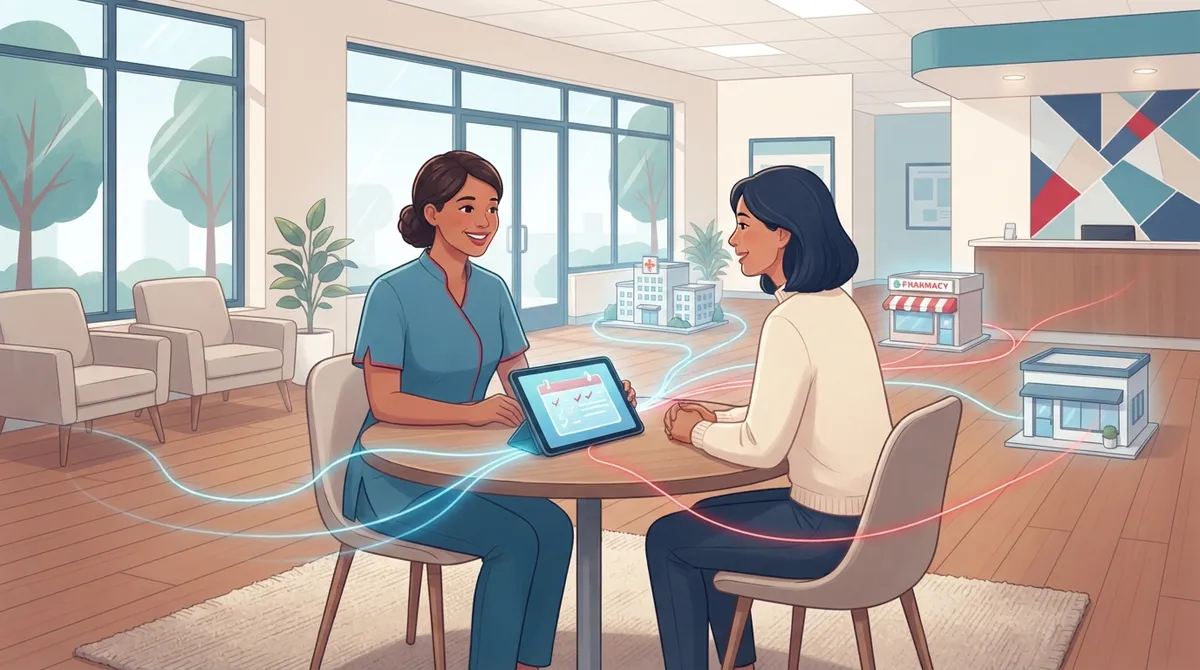
- Strong primary care is defined by four core functions, the "4 Cs": first-contact access, continuity, comprehensiveness, and coordination of care across specialists, hospitals, and pharmacies.
- Before joining a clinic, ask how soon you can get a sick-visit appointment, whether you will see the same provider each time, and whether virtual visits and a patient portal are available.
- Continuity matters: a clinician who knows your history can spot changes sooner, avoid repeat testing, and tailor advice to your goals.
- Check how a clinic handles referrals and test results, looking for follow-up, shared records, and a clear point person who tracks everything.
- Judge access by practical signs: online or phone booking without long waits, same-day sick visits, responsive messaging, and extended hours or urgent-care options.
- The best choice for most busy adults blends a traditional clinic's personal relationships with a modern clinic's convenience, technology, and proactive prevention.
Choosing a primary care clinic is one of the most important health decisions you will make in 2026. Yet many people pick a clinic based on a quick search or an insurance list. They rarely stop to ask what actually separates a good clinic from an average one. The answer matters because your primary care team is often your first call for almost every health concern, from a sore throat to a cancer screening.
So what makes a good primary care clinic? Authoritative sources, including the National Academies and the Agency for Healthcare Research and Quality (AHRQ), describe high-quality primary care as whole-person, accessible, coordinated, and built on lasting relationships. In practice, clinics tend to fall into two models: a traditional model and a modern, technology-enabled model. This article compares both so you can see which qualities truly matter.
Whether you are a busy parent, a young professional, or someone who wants to be proactive about your health, you will find a clear checklist here. You will also learn what to ask before you become a patient.
What Makes a Good Primary Care Clinic? The 4 Cs Framework
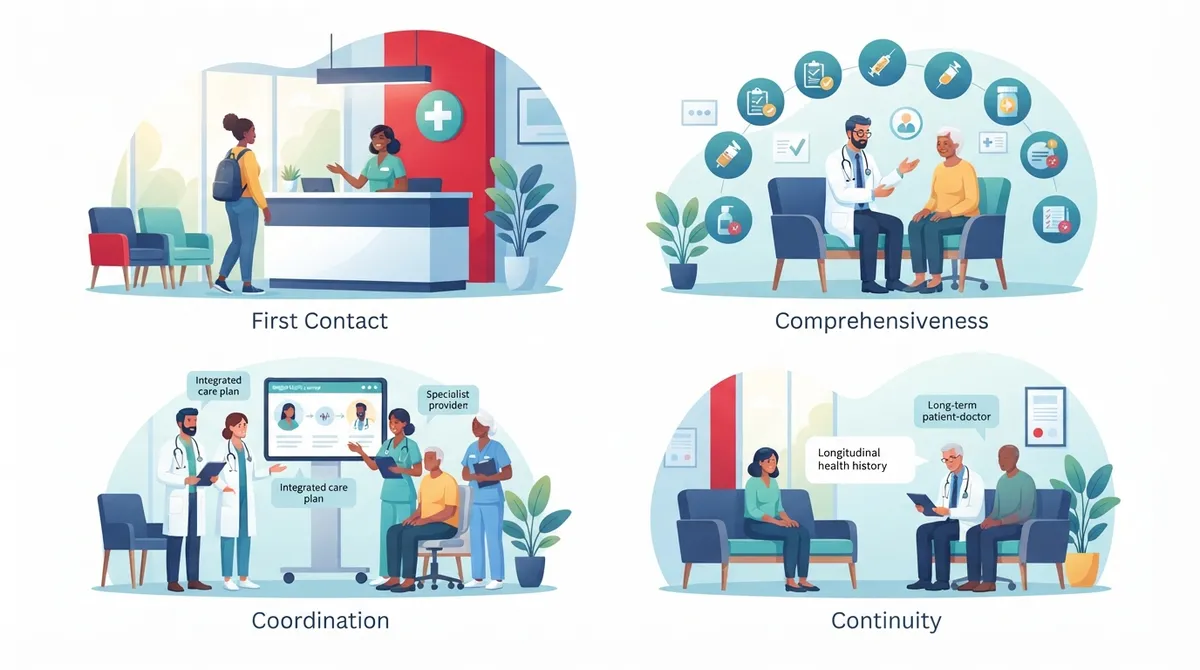
Experts often describe primary care using four core functions, sometimes called the "4 Cs." A good clinic does all four well, and it helps to understand each one before comparing models.
- First-contact access: The clinic is a practical first stop for most health needs, and you can reach it without long delays.
- Continuity: You build an ongoing relationship with a clinician or care team who knows your history.
- Comprehensiveness: The clinic handles a broad range of needs, including prevention, acute illness, and chronic conditions.
- Coordination: The clinic connects your care across specialists, hospitals, pharmacies, and community services.
The National Academies defines high-quality primary care as whole-person, integrated, accessible, and equitable care delivered by interprofessional teams. AHRQ adds that a strong clinic also focuses on quality and safety. Keep these ideas in mind as we compare the two models below. For a deeper look at this topic, see What Does Quality Primary Care Actually Look Like?
Traditional vs. Modern Primary Care: Side-by-Side Comparison
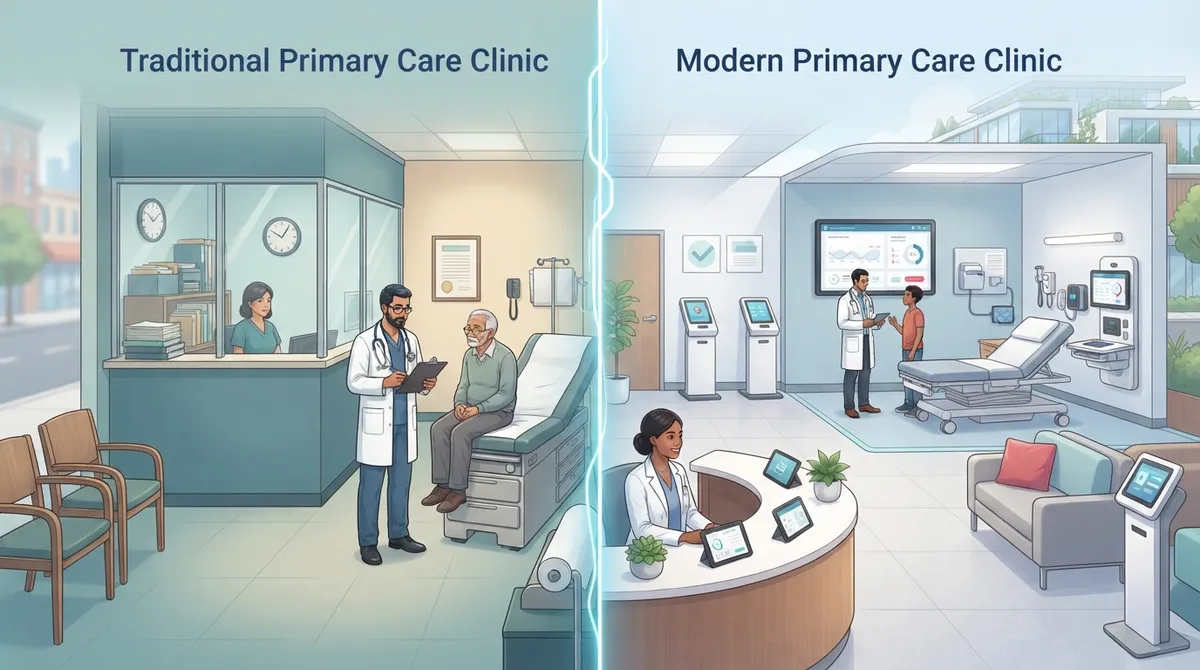
Both models can deliver good care. The difference often comes down to convenience, technology, and how broad the services are. The table below summarizes the most common contrasts.
|
Feature |
Traditional Clinic |
Modern, Technology-Enabled Clinic |
|---|---|---|
|
Appointment access |
Phone scheduling, limited hours, longer waits |
Online booking, same-day options, extended access |
|
Communication |
Phone calls and in-person visits |
Portals, telehealth, and electronic messaging |
|
Services under one roof |
Core primary care, often with referrals for most testing |
Primary care, urgent care, screenings, and wellness services together |
|
Prevention focus |
Often visit-driven and reactive |
Proactive, with risk assessment and personalized plans |
|
Testing and diagnostics |
Frequently sent to outside facilities |
More testing and analysis available on site |
|
Care coordination |
Depends on the individual office |
Typically supported by digital records and tracking tools |
Neither column is automatically better. A traditional clinic with a caring, consistent clinician can still deliver excellent care. However, a modern clinic often removes the friction that causes people to delay appointments. That convenience matters for busy families and working adults.
Access: Can You Actually Get Care When You Need It?
Access is more than having a clinic on a map. The research is clear that useful access includes timely appointments, urgent-care options, extended hours, and easy ways to contact the care team by phone or electronic message. A clinic that is hard to reach will not support your health, no matter how skilled the doctors are.
Signs of Strong Access
- You can book online or by phone without a long wait.
- Same-day or next-day appointments are available for sick visits.
- Virtual visits are an option when you cannot travel.
- The care team responds to messages within a reasonable time.
If you live near Tampa or Riverview, local convenience also matters. Our guide on same day primary care vs. urgent care in Riverview explains how to match the right visit to your need. You can also compare options in Primary Care vs. Urgent Care: Which One Do You Need?
Continuity: Building a Relationship That Lasts
Continuity means you see the same clinician or small team over time. This relationship has real value. A doctor who knows your history can spot changes sooner, avoid repeated tests, and understand your goals. You also feel more comfortable raising sensitive concerns.
Traditional clinics often excel here, especially smaller practices where patients see the same provider for years. Modern clinics can match this by pairing a named provider with digital tools that keep your records current. The key question is simple: will you have a consistent care team, or will you see a different person every time?
When you first join a clinic, take time to learn how new patients are welcomed. Our article on how to establish care with a new doctor in 2026 walks through the process step by step.
Comprehensiveness: One Clinic for Many Needs
A good primary care clinic addresses prevention and wellness, short-term illness, and long-term conditions. It should also meet most common physical and behavioral health needs or arrange the right referral when it cannot. The best breadth depends on the patients it serves.
Services a Strong Clinic Should Offer
- Annual physicals and preventive screenings
- Care for acute problems such as infections and minor injuries
- Ongoing management of conditions like high blood pressure and diabetes
- Vaccinations and routine lab work
- Support for mental and behavioral health concerns
- Referrals to trusted specialists when needed
Modern clinics often expand this list. They may add weight management, advanced screenings, and wellness testing so that more of your needs are met in one place. That approach saves time and keeps your records in a single system. To learn what a routine visit should cover, read What Happens During an Annual Physical Exam?
Coordination: Connecting the Dots Across Your Care
Coordination is where many clinics fall short. Your primary care team should communicate with specialists, hospitals, pharmacies, and community services. They should track referrals and test results so nothing gets lost. They should also support you during transitions, such as returning home after a hospital stay.
Ask any clinic how it handles referrals. A good answer includes follow-up, shared records, and a clear point person. For a closer look at why this matters, see Fragmented Care vs. Coordinated Care: Which Wins? and How to Get Better Primary Care Coordination of Care.
Patient-Centered Care: Are You Part of the Decisions?
Patient-centered care respects your values, culture, preferences, and circumstances. You should be included in decisions and care planning. Your clinician should explain options in plain language and support you in managing your own health.
Watch for these signals during your first visit:
- The provider listens without rushing you.
- Treatment choices are explained, not simply announced.
- Your personal goals shape the plan.
- Questions are welcomed, and answers are clear.
Patient reviews can reveal a lot about this quality. You can see what real patients say about InCare on Google, where the clinic holds a 4.8 out of 5 rating across 359 reviews. Patients often praise the friendly staff and the quality of care from the physicians.
Prevention and Technology: Where Modern Clinics Stand Out
Prevention is the heart of primary care. The goal is to find problems early, or stop them before they start. Modern clinics often use technology to make prevention more precise. Examples include body composition analysis, metabolic testing, and genetic insights that help tailor a plan to you.
InCare is a strong example of this approach. The clinic combines state-of-the-art technology with medical expertise to deliver primary care, urgent care, and advanced wellness services in Tampa and Riverview, Florida. Services range from cancer screenings and weight loss programs to DNA gene testing and IV hydration therapy, all focused on prevention and whole-body health. This breadth lets patients handle everyday needs and long-term goals under one roof, which is a major advantage over fragmented care. You can read more about how to choose a primary care doctor in Tampa in 2026.
Technology should always support the human relationship, not replace it. The best modern clinics pair smart tools with a caring team. They use data to guide decisions while keeping you at the center of the conversation.
Quality and Safety: The Quiet Signs of a Good Clinic
Quality and safety are harder to see, but they matter. A strong clinic works to improve over time, follows up reliably, and pays attention to equitable care for all patients. AHRQ includes quality and safety as one of the five core attributes of a patient-centered medical home.
You can look for quiet signs of quality:
- Clear follow-up after tests and referrals
- Careful medication review at each visit
- A willingness to explain mistakes or delays openly
- Staff who are organized, respectful, and well trained
Good medication habits are a big part of safety. Our guide to prescription management tips for better health in 2026 shows what to expect from a careful clinic.
Which Model Wins? A Practical Verdict
The honest answer is that the best clinic is the one that delivers all four Cs while fitting your life. A traditional clinic wins on familiarity and long-standing relationships. A modern clinic wins on convenience, breadth, and proactive prevention. For most busy adults and families in 2026, a clinic that blends both strengths is the strongest choice.
That blend is what InCare offers. Patients receive a personal relationship with their physician, along with online access, same-day options, and advanced wellness tools. If you are comparing options in the Tampa Bay area, our guide on how to choose the best primary care near you in Tampa can help you decide.
Questions to Ask Before You Join a Clinic
Use this short list during your first call or visit. The answers will quickly show you how a clinic operates.
- How soon can I get a sick-visit appointment?
- Will I see the same provider each time?
- Do you offer virtual visits and a patient portal?
- Which preventive screenings and wellness services do you provide?
- How do you handle specialist referrals and test results?
- Do you support behavioral health concerns or refer me appropriately?
You can also follow InCare for health tips and updates on Instagram, Facebook, and TikTok.
Conclusion
A good primary care clinic makes care easy to reach, builds a lasting relationship, covers a broad range of needs, and coordinates your care across settings. It also respects your preferences and works hard on quality and safety. Traditional clinics can deliver these strengths through personal connection, while modern clinics add convenience, technology, and proactive prevention. The best choice for many people combines both.
If you are ready to experience primary care that does all of this, InCare is here for you in Tampa and Riverview. Book your appointment today, or contact our team with any questions. Taking that first step now can set the foundation for better health all year long.
FAQs
Q: What should I look for when choosing a primary care clinic?
A: Look for easy access to appointments, a consistent care team, a broad range of services, and strong coordination with specialists. You should also feel heard and included in decisions. Clear communication and reliable follow-up are good signs of quality.
Q: What services should a good primary care clinic offer?
A: A good clinic provides preventive care and screenings, treatment for acute illness, and ongoing management of chronic conditions. It should also address common behavioral health needs or refer you appropriately. Many modern clinics add wellness services so more of your needs are met in one place.
Q: How important is it to see the same primary care provider over time?
A: Continuity is very important. A provider who knows your history can spot changes earlier, avoid repeat testing, and tailor advice to your goals. Over time, this relationship builds trust and supports better health decisions.
Q: How can I tell whether a clinic is easy to access?
A: Ask how quickly you can get a sick visit, whether online booking and virtual visits are available, and how fast the team responds to messages. Extended hours and urgent-care options are also helpful signs. A clinic that makes these answers clear is likely designed with access in mind.
Q: What is a patient-centered medical home?
A: It is a care model that organizes primary care around five attributes: comprehensive, patient-centered, coordinated, accessible, and quality- and safety-focused care. The goal is a team-based approach that supports your whole health. Many strong clinics follow these principles even if they use different names for them.